Sarga 55
अकम्पन-प्रेषणम् तथा कपि-राक्षस-रणवर्णनम् (Akampana Dispatched; The Vanara–Rakshasa Battle and Omens)
युद्धकाण्ड
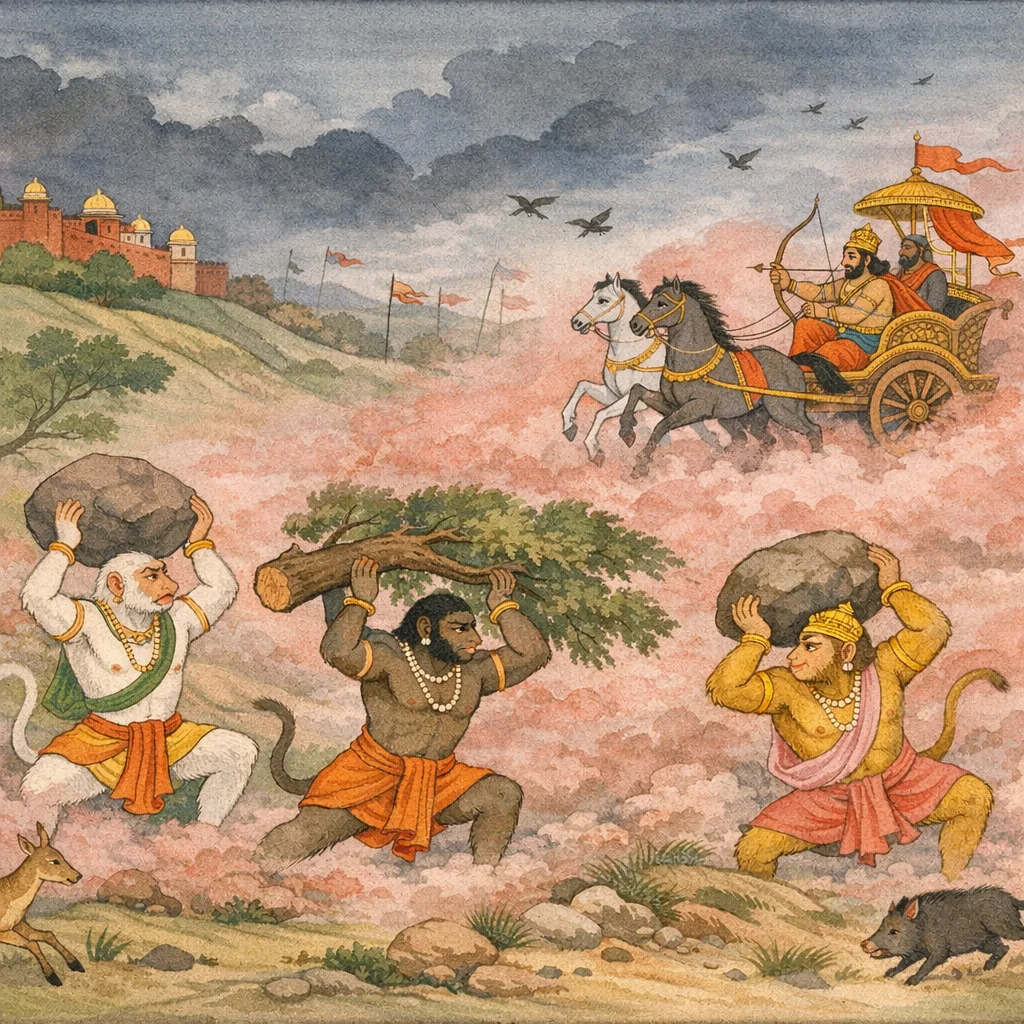
After hearing that Vajradaṃṣṭra has been slain by Vāli’s son (Angada), Rāvaṇa addresses the army chief and orders the immediate deployment of Akampana, praising him as a disciplined commander, protector, and war-loving strategist skilled in all weapons. The rakṣasa forces rush out under command, and Akampana advances on a gold-adorned chariot, described through cloud-and-thunder imagery that amplifies martial atmosphere. As he charges forth, ominous reversals appear: despite fair weather, the day turns cloudy; harsh winds rise; birds and beasts cry in fearsome tones, while Akampana disregards these utpātas and enters the battlefield. The engagement escalates into a deafening clash where dust reddens the sky and obscures banners, weapons, horses, and even combatants’ forms; in this confusion, fighters strike friend and foe alike until blood dampens the dust and the ground becomes strewn with bodies and limbs. The sarga culminates in close-quarters violence using trees, rocks, maces, darts, and bar-like arms, while Akampana rallies the rakṣasas and Vānara leaders—Kumuda, Nala, and Mainda—countercharge and crush enemy ranks.
Shlokas
Verse 1
वज्रदंष्ट्रंहतंश्रुत्वावालिपुत्रेणरावणः ।बलाध्यक्षमुवाचेदंकृताञ्जलिमुपस्थितम् ।।।।
Hearing that Vajradaṃṣṭra had been slain by Vāli’s son, Rāvaṇa addressed the army-commander who stood before him with joined palms.
Verse 2
शीघ्रंनिर्यान्तुदुर्धर्षाराक्षसाभीमविक्रमाः ।अकम्पनंपुरस्कृत्यसर्वशस्त्रप्रकोविदम् ।।।।
"Let the formidable Rākṣasas—terrible in valor and hard to withstand—march out at once, placing Akampana in the forefront, for he is skilled in every weapon-discipline."
Verse 3
एषशास्ताचगोप्ताचनेताचयुधिसत्तमः ।भूतिकामश्चमेनित्यंनित्यंचसमरप्रियः ।।।।
He is a chastiser of foes, a protector, and a leader—pre-eminent in battle; ever seeking the welfare of my cause and ever devoted to the love of war.
Verse 4
एषजेष्यतिकाकत्स्थौसुग्रीवंचमहाबलम् ।वानरांश्चापरान् घोरान् हनिष्यतिपरन्तपः ।।।।
This scorcher of enemies will conquer the sons of Kakutstha (Rāma and Lakṣmaṇa), and mighty Sugrīva too; he will also destroy the other dreadful Vānara forces.
Verse 5
परिगृह्यसःताम् I ज्ञाम् रावणस्यमहाबल ।बलम् सम्प्रेरयामासःतदालघुपराक्रमः।। ।।
Having accepted Rāvaṇa’s command, the mighty (Akampana)—swift in initiative—then dispatched the forces.
Verse 6
ततोनानाप्रहरणाभीमाक्षाभीमदर्शनाः ।निष्पेतूराक्षसामुख्याबलाध्यक्षप्रचोदिताः ।।।।
Thereupon, the foremost Rākṣasas—bearing diverse weapons, terrible-eyed and fearsome in appearance—rushed forth, urged on by the army’s commander.
Verse 7
रथमास्थायविपुलंतप्तकाञ्चनभूषणम् ।मेघाभोमेघवर्णश्चमेघस्वनमहास्वनः ।।।।राक्षसैःसम्वृतोघोरैस्तदानिर्यात्यकम्पनः ।
Then Akampana set out, mounted on a vast chariot adorned with gleaming gold; cloud-like in form and hue, with a thunderous voice, and surrounded by fearsome Rākṣasas.
Verse 8
नहिकम्पयितुंशक्यःसुरैरपिमहामृधे ।।।।अकम्पनस्ततस्तेषामादित्यइवतेजसा ।
In that great battle, Akampana could not be made to waver even by the gods; among them he blazed with radiance like the sun.
Verse 9
तस्यनिर्धावमानस्यसम्रब्धस्ययुयुत्सया ।।।।अकस्माद्दैन्यमागच्छद्धयानांरथवाहिनाम् ।
As he charged forward, fiercely intent on fighting, sudden dejection came upon the horses that drew his chariot.
Verse 10
व्यस्फुरन्नयनंचास्यसव्यंयुद्धाभिनदनिनः ।।।।विवर्णोमुखवर्णश्चगद्गदश्चाभवत्स्वनः ।
Though a lover of battle, his left eye began to twitch; his face grew pale, and his voice turned choked and unsteady.
Verse 11
अभवत्सुदिनेकालेदुर्दिनंरूक्षमारुतम् ।।।।ऊचुःखगमृगाःसर्वेवाचःक्रूराभयावहाः ।
In what had been a bright, fair time, the day turned dark and the wind grew harsh; birds and beasts everywhere uttered cruel, fearsome cries.
Verse 12
ससिंहापचित्कन्धःशार्दूलसमविक्रमः ।।।।तानुत्पातानचिन्स्सैवनिर्जगामरणाजिरम् ।
With shoulders like a lion’s and valor equal to a tiger’s, he ignored those evil portents and went out to the battlefield.
Verse 13
तथानिर्गच्छतस्तस्यरक्षसस्सहराक्षसैः ।।।।बभूवसुमहान्नादःक्षोभयन्निवसागरम् ।
As that rākṣasa marched out together with his host, a tremendous roar arose, as though it would churn the ocean itself.
Verse 14
तेनशब्देनवित्रस्तावानराणांमहाचमूः ।।।।द्रुमशैलप्रहाराणांयोद्धुंसमुपतिष्ठतं ।
Startled by that roar, the great vanara host—wielding trees and rocks as weapons—stood ready to fight.
Verse 15
तेषांयुद्धंमहारौद्रंसञ्जज्ञेकपिरक्षसाम् ।।।।रामरावणयोरर्धेसमभित्यक्तजीविनाम् ।
Then a most dreadful battle erupted between monkeys and rākṣasas—fighters who had staked their very lives for the cause of Rāma and of Rāvaṇa respectively.
Verse 16
सर्वेह्यतिबलाःशूराःसर्वेपर्वतसन्निभाः ।।।।हरयोराक्षसाश्चैवपरस्परजिघांसवः ।
All were extraordinarily strong and heroic, all resembling mountains—vanaras and rākṣasas alike—each intent on slaying the other.
Verse 17
तेषांविवर्धतांशब्दःसंयुगेऽतितरस्विनाम् ।।।।शुश्रुवेसुमहान् कोपादन्योन्यमभिगर्जताम् ।
In that battle, as the impetuous fighters raged and roared at one another in wrath, a vast and swelling din was heard.
Verse 18
रजश्चारुणवर्णाभंसुभीममभवद् भृशम् ।।।।उद्धतंहरिरक्षोभिःसंरुरोधदिशोदश ।
A terrifying dust-cloud, red-hued in appearance, rose up at once; churned up by the Vānaras and the Rākṣasas, it spread out and shrouded all ten directions.
Verse 19
अन्योन्यंरजसातेनकौशेयोद्धूतपाण्डुना ।।।।सम्वृतानिचभूतानिददृशुर्नरणाजिरे ।
In that battlefield, wrapped in the pale dust—like silk shaken and whitened in the wind—living beings could no longer see one another.
Verse 20
नध्वजोनपताकावाचर्मवातुरगोऽपिवा ।।।।आयुधंस्यन्दनोवापिददृशेतेनरेणुना ।
Through that dust, neither standards nor banners were visible—nor shields, nor even horses; weapons and chariots too could not be seen.
Verse 21
शब्दश्चसुमहांस्तेषांनर्दतामभिधावताम् ।।।।श्रूयतेतुमुलोयुद्धेनरूपाणिचकाशिरे ।
As they roared and rushed upon one another, a vast and tumultuous din was heard in the battle—yet no forms could be made out.
Verse 22
हरीनेवसुसंरुष्टाहरयोजघ्नुराहवे ।।।।राक्षसाराक्षसांश्चापिनिजघ्नुस्तिमिरेतदा ।
Then, in that darkness, the Vānaras—enraged—struck even Vānaras in the fray; and the Rākṣasas likewise struck even their fellow Rākṣasas.
Verse 23
तेपरांश्चविनिघ्नन्तःस्वांश्चवानरराक्षसाः ।।।।रुधिरार्द्रांतदाचक्रुर्महींपङ्कानुलेपनाम् ।
Striking down both enemies and their own, the Vānaras and the Rākṣasas then made the earth wet with blood, smeared as though with mud.
Verse 24
ततस्तुरुधिरौघेणसिक्तंह्यपगतंरजः ।।।।शरीरशवसङ्कीर्णाबभूवचवसुन्धरा ।
Then, drenched by torrents of blood, the dust settled and vanished; and the earth appeared strewn with bodies and severed limbs.
Verse 25
द्रुमशक्तिगदाप्रासैश्शिलापरिघतोमरैः ।।।।हरयोराक्षसाश्चैवस्तूर्णंजघ्नुरन्योन्यमोजसा ।
With trees, spears, maces, and darts—along with rocks, iron bars, and javelins—the Vānaras and the Rākṣasas swiftly struck one another with fierce force.
Verse 26
बाहुभिःपरिघाकारैर्युध्यन्तःपर्वतोपमाः ।।।।हरयोभीमकर्माणोराक्षसान्झघ्नुराहवे ।
Fighting with arms like iron bars, the Vānaras—mountain-like and terrible in deed—struck down the Rākṣasas in the battle.
Verse 27
राक्षसास्त्वभिसङ्क्रुद्धाःप्रासतोमरपाणयः ।।।।कपीन्निजघ्निरेतत्रशस्त्रःपरमदारुणैः ।
There, the Rākṣasas—enraged—wielding spears and javelins, struck down the Vānaras with exceedingly dreadful weapons.
Verse 28
अकम्पनस्सुसङ्क्रुद्धोराक्षसानांचमूपतिः ।।।।सम्हर्षयतितान्सर्वान्राक्षसाभनिमविक्रमान् ।
Akampana, the enraged commander of the Rākṣasa host, roused and heartened all those Rākṣasas of dreadful prowess.
Verse 29
हरयस्त्वपिरक्षांसिमहाद्रुममहाश्मभिः ।।।।विदारयन्त्यभिक्रम्यशस्त्राण्याच्छिद्यवीर्यतः ।
Yet the Vānaras too, advancing in counter-attack, tore apart the Rākṣasas with great trees and massive rocks—snatching away their weapons by sheer strength.
Verse 30
एतस्मिन्नन्तरेवीराहरयःकुमुदोनलः ।।।।मैन्दश्चपरमक्रुद्धाश्चक्रुर्वेगमनुत्तमम् ।
Meanwhile, the heroic Vānaras—Kumuda, Nala, and Mainda—furious to the utmost, surged forward with unsurpassed speed.
Verse 31
तेतुवृक्षैर्महावीराराक्षसानांचमूमुखे ।।।।कदनंसुमहच्चक्रुर्लीलयाहरिपुङ्गवाः ।ममन्थूराक्षसान् सर्वेवानरागणशोभृशम् ।।।।
Then those great heroes—the foremost of the Vānaras—using trees, created a mighty slaughter at the very front of the Rākṣasa host, as if in sport; indeed, the Vānara companies crushed the Rākṣasas again and again with overwhelming force.
Frequently Asked Questions
The pivotal action is Rāvaṇa’s rapid militarized response—dispatching Akampana—followed by the battlefield’s ethical breakdown under dust and confusion, where misrecognition leads to indiscriminate strikes, illustrating how war conditions can erode discernment between ally and enemy.
The sarga juxtaposes command rhetoric (praise of competence and loyalty) with utpāta signs and the fog-of-war, implying that leadership must acknowledge uncertainty: courage and agency persist, yet uncontrolled conditions can produce unintended harm, demanding disciplined perception and restraint.
Rather than a named monument, the text highlights the cultural motif of utpāta (ominous natural signs) and the archetypal battlefield (raṇājira), using dust, noise, banners, chariots, and weapon-objects as mapping markers for how war is experienced and narrated.