Sarga 53
युद्धकाण्डे त्रिपञ्चाशः सर्गः — धूम्राक्षवधश्रवणं, वज्रदंष्ट्रप्रेषणं, अङ्गद-राक्षसयुद्धम् (Ravana Dispatches Vajradamshtra; Portents and Angada’s Assault)
युद्धकाण्ड
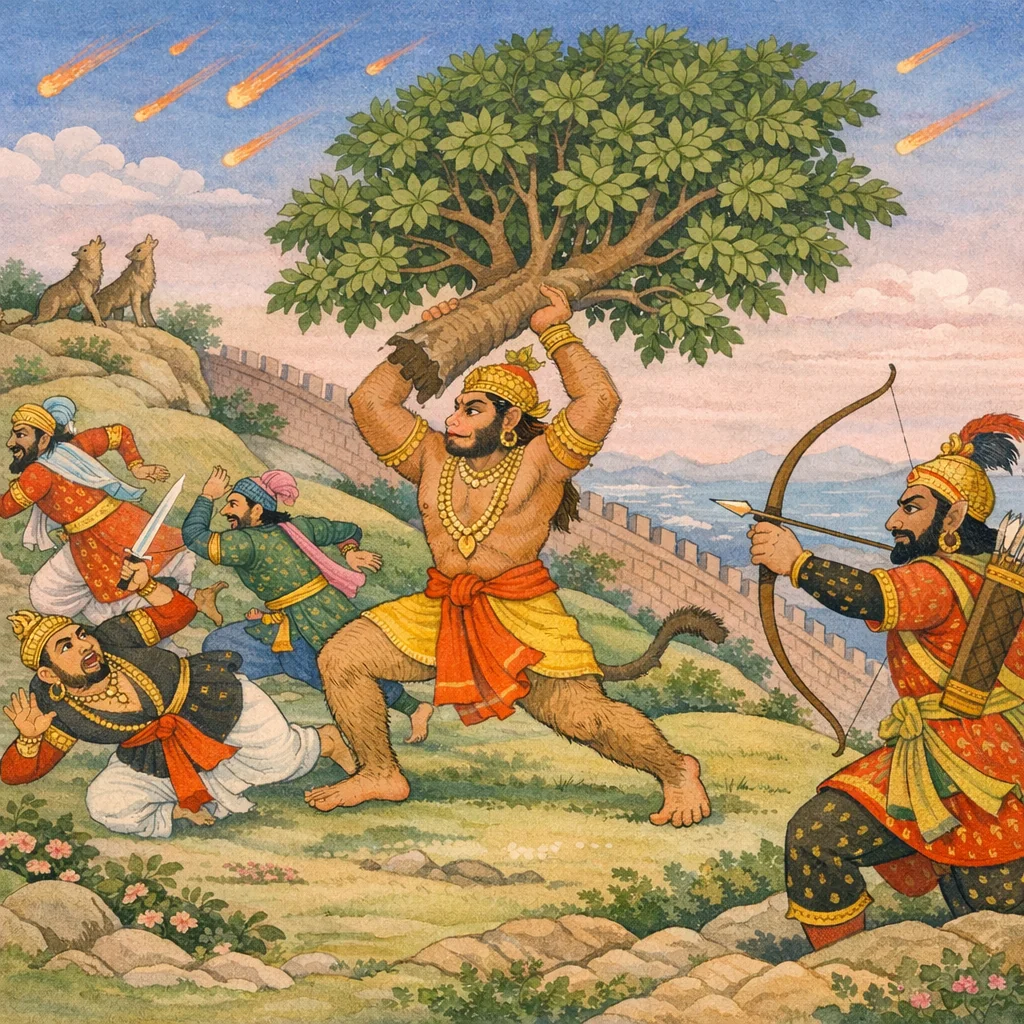
This sarga pivots from intelligence to mobilization: Rāvaṇa, hearing of Dhūmrākṣa’s death, is described in tightly compressed similes of wrath—hissing like a serpent and exhaling “hot, long breaths”—before issuing a direct command to the Rākṣasa warrior Vajradaṃṣṭra to advance and kill Rāma and Sugrīva along with the Vānara forces. The text then shifts to martial logistics and spectacle: Rākṣasa leaders appear in ornate raiment; troops mount elephants and other conveyances, and a fully equipped column exits the southern gate where Aṅgada is stationed. As the host departs, omen-lore intrudes: meteors fall, jackals cry, and fierce animals signal impending Rākṣasa deaths, creating a narrative counterpoint between human confidence and cosmic warning. Despite portents, Vajradaṃṣṭra rallies courage and enters battle. The Vānaras respond with victory-cries that fill the ten directions, and the engagement escalates into close combat—trees, rocks, fists, and knees replace formal weapons. Vajradaṃṣṭra’s arrow-work terrifies the Vānara ranks until Aṅgada, enraged, seizes a tree and devastates the Rākṣasa formations; the battlefield becomes strewn with bodies, ornaments, and weapons, and the shaken Rākṣasa host is likened to a rain cloud buffeted by wind.
Shlokas
Verse 1
धूम्राक्षंनिहतंश्रुत्वारावणोराक्षसेश्वरः ।क्रोधेनमहताऽविष्टोनिश्श्वसन्नुरगोयथा ।।।।दीर्घमुष्णंविनिश्श्वस्यक्रोधेनकलुषीकृतः ।अब्रवीद्राक्षसंक्रूरंवज्रदंष्ट्रंमहाबलम् ।।।।
Hearing that Dhūmrākṣa had been slain, Rāvaṇa, lord of the Rākṣasas, was seized by a great rage; he hissed like a serpent. Drawing a long, hot breath, his mind darkened by anger, he addressed the cruel Rākṣasa Vajradaṃṣṭra, a warrior of immense strength.
Verse 2
धूम्राक्षंनिहतंश्रुत्वारावणोराक्षसेश्वरः ।क्रोधेनमहताऽविष्टोनिश्श्वसन्नुरगोयथा ।।6.53.1।।दीर्घमुष्णंविनिश्श्वस्यक्रोधेनकलुषीकृतः ।अब्रवीद्राक्षसंक्रूरंवज्रदंष्ट्रंमहाबलम् ।।6.53.2।।
Breathing out long and hot in fury, his mind darkened by wrath, Rāvaṇa spoke to the cruel Rākṣasa Vajradaṃṣṭra, a warrior of great strength.
Verse 3
गच्छत्वंवीर निर्याहिराक्षसैःपरिवारितः ।जहिदाशरथिंरामंसुग्रीवंवानरैःसह ।।।।
“Go forth, hero—march out surrounded by the rākṣasas. Slay Rāma, the son of Daśaratha, and Sugrīva along with the vānaras.”
Verse 4
तथेत्युक्त्वाद्रुततरंमायावीराक्षसेश्वरम् ।निर्जगामबलैस्सार्दंबहुभिःपरिवारितः ।।।।नागैरश्वैःखरैरुष्ट्रैःसंयुक्तस्सुसमाहितः ।पताकाध्वजचित्रैश्चरथैश्चसमलङ्कृतः ।।।।
“So be it,” he said; then the deceitful lord of the rākṣasas swiftly marched out, accompanied by troops and surrounded by many attendants.
Verse 5
तथेत्युक्त्वाद्रुततरंमायावीराक्षसेश्वरम् ।निर्जगामबलैस्सार्दंबहुभिःपरिवारितः ।।6.53.4।।नागैरश्वैःखरैरुष्ट्रैःसंयुक्तस्सुसमाहितः ।पताकाध्वजचित्रैश्चरथैश्चसमलङ्कृतः ।।6.53.5।।
He advanced in well-ordered array—joined with elephants, horses, donkeys, and camels—and with chariots richly adorned with colorful banners and flags.
Verse 6
ततोविचित्रकेयूरमुकुटैश्चविभूषितः ।तनुत्राणिचसमावृत्यसधनुर्निर्ययौद्रुतम् ।।।।
Then, adorned with splendid armlets and a crown, and having donned protective armor, he swiftly went forth with bow in hand.
Verse 7
पताकालङ्कृतंदीप्तंतप्तकाञ्चनभूषितम् ।रथंप्रदक्षिणंकृत्वासमारोहच्चमूपतिः ।।।।
The commander of the host, after reverently circling his flag-adorned chariot clockwise, mounted it—radiant and ornamented with gleaming, heated-gold fittings.
Verse 8
यष्टिभिस्तोमरैचशित्रैश्शूलैश्चमुसलैरपि ।भिण्डिपालैश्चपाशैश्चशक्तिभिःपट्टसैरपि ।।।।खडगैश्चक्रैर्गदाभिश्चनिशितैश्चपरश्वधैः ।पदातयश्चनिर्यान्तिविविधाःशस्त्रपाणयः ।।।।
Foot-soldiers, bearing many kinds of weapons—staves, tomaras, tridents, clubs, bhindipālas, nooses, spears and paṭṭasas, as well as swords, discs, maces, and sharp axes—marched out in array.
Verse 9
यष्टिभिस्तोमरैचशित्रैश्शूलैश्चमुसलैरपि ।भिण्डिपालैश्चपाशैश्चशक्तिभिःपट्टसैरपि ।।6.53.8।।खडगैश्चक्रैर्गदाभिश्चनिशितैश्चपरश्वधैः ।पदातयश्चनिर्यान्तिविविधाःशस्त्रपाणयः ।।6.53.9।।
Foot-soldiers, bearing many kinds of weapons—staves, tomaras, tridents, clubs, bhindipālas, nooses, spears and paṭṭasas, as well as swords, discs, maces, and sharp axes—marched out in array.
Verse 10
विचित्रवाससस्सर्वेदीप्ताराक्षसपुङ्गवाः ।गजामदोत्कटाश्शूराश्चलन्तइवपर्वताः ।।।।
All the foremost Rākṣasa leaders, clad in splendid and varied garments and shining with martial splendor, advanced like moving mountains—like elephants made fierce by the intoxication of musth.
Verse 11
तेयुद्धकुशलैरूढास्तोमराङ्कुशपाणिभिः ।अन्येलक्षणसंयुक्ताश्शूरारूढामहाबलाः ।।।।
Some were mounted with warriors skilled in battle, bearing lances and goads in their hands; others—marked by auspicious features—rode forth as mighty heroes.
Verse 12
तद्राक्षसबलंसर्वंविप्रस्थितमशोभत ।प्रावृटकालेयथामेघानर्दमानास्सविद्युतः ।।।।निस्सृतादक्षिणद्वारादङ्गदोयत्रयूथपः ।
Then the entire Rākṣasa host, setting out in full array, appeared splendid—like thunderous monsoon clouds lit with lightning. They poured out through the southern gate, where Aṅgada, the Vānara leader, was stationed.
Verse 13
तेषांनिष्क्रममाणानामशुभंसमजायत ।।।।आकाशाद्विघनात्तीव्रादुल्काश्चाभ्यन्यपतंस्तदा ।वमन्त्यःपावकज्वालाशशिवाघोरंववाशिरे ।।।।
As they marched out, evil omens arose: from the sky, from dense and violent cloud-masses, meteors fell; tongues of fire seemed to flare forth, and dreadful jackals howled.
Verse 14
तेषांनिष्क्रममाणानामशुभंसमजायत ।।6.53.13।।आकाशाद्विघनात्तीव्रादुल्काश्चाभ्यन्यपतंस्तदा ।वमन्त्यःपावकज्वालाशशिवाघोरंववाशिरे ।।6.53.14।।
Then fierce beasts seemed to proclaim the doom of the Rākṣasas; and as the warriors rushed forward, they stumbled there—an ominous and dreadful sign.
Verse 15
व्याहरन्तमृगाघोरारक्षसांनिधनंतदा ।समापतन्तोयोधास्तुप्रास्खलन् स्तत्रदारुणम् ।।।।
Then fierce beasts seemed to proclaim the doom of the Rākṣasas; and as the warriors rushed forward, they stumbled there—an ominous and dreadful sign.
Verse 16
एतानौत्पातिकान् दृष्टवावज्रदंष्ट्रोमहाबलः ।धैर्यमालम्भ्यतेजस्वीनिर्जगामरणोत्सुकः ।।।।
Seeing these ominous portents, the mighty Vajradaṃṣṭra—brilliant and high-spirited—steadied himself with resolve and sallied out, eager for battle.
Verse 17
तांस्तुनिष्क्रमतोदृष्टवावानराजितकाशिनः ।प्रणेदुस्सुमहानादान्पूरयांश्चदिशोदश ।।।।
But when the Vānaras saw them coming out, confident of victory, they raised tremendous roars, filling all ten directions.
Verse 18
ततःप्रवृत्तंतुमुलंहरीणांराक्षसैस्सह ।घोराणांभीमरूपाणामन्योन्यवथकाङ् क्षिणाम् ।।।।
Then a tumultuous battle began between the Vānara hosts and the Rākṣasas—dreadful and terrifying in form—each side intent on the other’s destruction.
Verse 19
निष्पतन्तोमहोत्साहोभिन्नदेहशिरोधराः ।रुधिरोक्षितसर्वाङ्गान्यपतन्थरणीतले ।।।।
Surging forward with great ardor for battle, they collapsed upon the ground—bodies shattered, heads severed, and every limb drenched in blood.
Verse 20
केचिदन्योन्यमासाद्यशूराःपरिघपाणयः ।चिक्षिपुर्विविधंशस्त्रंसमरेष्न्विवर्तिनः ।।।।
Some heroes—whose hands were like iron clubs and who never turned back in battle—closed upon one another and hurled weapons of many kinds.
Verse 21
द्रुमाणांचशिलानांचशस्त्राणांचापिनिस्स्वनः ।।।।श्रूयतेसुमहांस्तत्रघोरोहृदयभेदसः ।
There was heard a tremendous and terrifying din that seemed to split the heart—the clashing of trees, rocks, and weapons.
Verse 22
रथनेमिस्वनस्तत्रधनुषश्चापिनिस्वसत् ।।।।शङ्खभेरीमृदङ्गानांबभूवतुमुलःस्वनः ।
There arose a tumultuous roar: the rattle of chariot-wheels, the twang and hiss of bows, and the blare of conches, kettle-drums, and mṛdaṅgas.
Verse 23
केचिदस्त्राणिसन्सृज्यबाहुयुद्धमकुर्वत ।तलैश्चचरणैश्चापिमुष्टिभिश्चद्रुमैरपि ।।।।जानुभिश्चहताःकेचिद्भिन्नदेहाश्चराक्षसाः ।शिलाभिश्चूर्णिताःकेचिद्वानरैर्युद्धदुर्मदैः ।।।।
Some, casting aside weapons, fought hand-to-hand—striking with palms, feet, fists, even with trees and knees. Some Rākṣasas were smashed, their bodies broken; and some were pulverized by rocks hurled by the battle-maddened Vānaras.
Verse 24
केचिदस्त्राणिसन्सृज्यबाहुयुद्धमकुर्वत ।तलैश्चचरणैश्चापिमुष्टिभिश्चद्रुमैरपि ।।6.53.23।।जानुभिश्चहताःकेचिद्भिन्नदेहाश्चराक्षसाः ।शिलाभिश्चूर्णिताःकेचिद्वानरैर्युद्धदुर्मदैः ।।6.53.24।।
Vajradaṃṣṭra ranged about the battlefield, fiercely assailing the Vānaras with arrows—like Death himself, noose in hand, moving at the time of the world’s destruction.
Verse 25
वज्रदंष्ट्रोभृशंबाणै: रणेवित्रासयन्हरीन् ।चचारलोकसंहारेपाशहस्तइवान्तकः ।।।।
Vajradaṃṣṭra ranged about the battlefield, fiercely assailing the Vānaras with arrows—like Death himself, noose in hand, moving at the time of the world’s destruction.
Verse 26
बलवन्तोऽस्त्रविदुषोनानाप्रहरणारणे ।जघ्नुर्वानरसैन्यानिराक्षसाःक्रोधमूर्छिताः ।।।।
Mighty Rākṣasas, skilled in weaponry and armed with varied missiles, maddened by anger, struck down the Vānara forces in the battle.
Verse 27
निघ्नतोराक्षसान्दृष्टवासर्वान्वालिसुतोरणे ।क्रोधेनवदिगुणाविष्टःसंवर्तकइवानलः ।।।।
Seeing them cutting down the Vānara host, Vāli’s son (Aṅgada) in the battle was seized by a doubled fury, blazing like the fire of dissolution at the world’s end, and set himself to destroy the Rākṣasas.
Verse 28
तान् राक्षसगणान्सर्वान्वृक्षमुद्यम्यवीर्यवान् ।अङ्गदःक्रोधताम्राक्षःसिंहःक्षुद्रमृगानिव ।।।।कारकदनंघोरंशक्रतुल्यपराक्रमः ।।।।
Valiant Aṅgada—his eyes reddened with anger, and his prowess like Indra’s—seized a tree and wrought a terrible slaughter among all those rākṣasa ranks, like a lion among lesser beasts.
Verse 29
तान् राक्षसगणान्सर्वान्वृक्षमुद्यम्यवीर्यवान् ।अङ्गदःक्रोधताम्राक्षःसिंहःक्षुद्रमृगानिव ।।6.53.28।।कारकदनंघोरंशक्रतुल्यपराक्रमः ।।6.53.29।।
“So be it,” he said; then the deceitful lord of the rākṣasas swiftly marched out, accompanied by troops and surrounded by many attendants.
Verse 30
अङ्गदाभिहतास्तत्रराक्षसाभीमविक्रमाः ।विभिन्नशिरसःपेतुर्विकृताइवपादपाः ।।।।
There, the rākṣasas of dreadful might—struck down by Aṅgada—fell with shattered heads, like trees hacked and mangled.
Verse 31
रथैरश्वैर्ध्वजैश्चित्रैश्शरैर्हरिरक्षसाम् ।रुधिरेणसञ्छन्नाभूमिर्भयकरातदा ।।।।
Then the ground became dreadful to behold—covered in blood, strewn with chariots, horses, colorful standards, and the bodies of vānaras and rākṣasas.
Verse 32
हारकेयूरवस्स्रैश्चशत्रैश्चसमलङ्कृता ।भूमिर्भातिरणेतत्रशारदीवयथानिशा ।।।।
There on the battlefield, the earth—“adorned” with necklaces, armlets, garments, and weapons—shone like an autumn night.
Verse 33
अङ्गदस्यचवेगेनतद्राक्षसबलंमहत् ।प्राकम्पततदातत्रपवनेनाम्बुदोयथा ।।।।
Then, by Aṅgada’s onrush, that great rākṣasa host trembled there—like a rain-cloud shaken by the wind.
Frequently Asked Questions
The pivotal action is Rāvaṇa’s command decision after receiving news of Dhūmrākṣa’s death: he escalates the war by ordering Vajradaṃṣṭra to kill Rāma and Sugrīva along with the Vānara host, shifting from reactive grief to strategic retaliation.
The sarga juxtaposes human resolve with omen-signs: even when portents warn of destruction, leaders may proceed through anger or duty; the implied instruction is to read warning signals (internal and external) and to discipline wrath, since unchecked krodha accelerates collective ruin.
The southern gate (दक्षिणद्वार) of Laṅkā is the key tactical landmark, marked as the egress point of the Rākṣasa army and the station of Aṅgada; culturally, the chapter highlights wartime soundscapes (conch and drums) and utpāta traditions (meteors, jackals) as battlefield semiotics.