Sarga 37
लङ्काद्वारव्यूहवर्णनम् / Disposition at the Gates of Lanka
युद्धकाण्ड
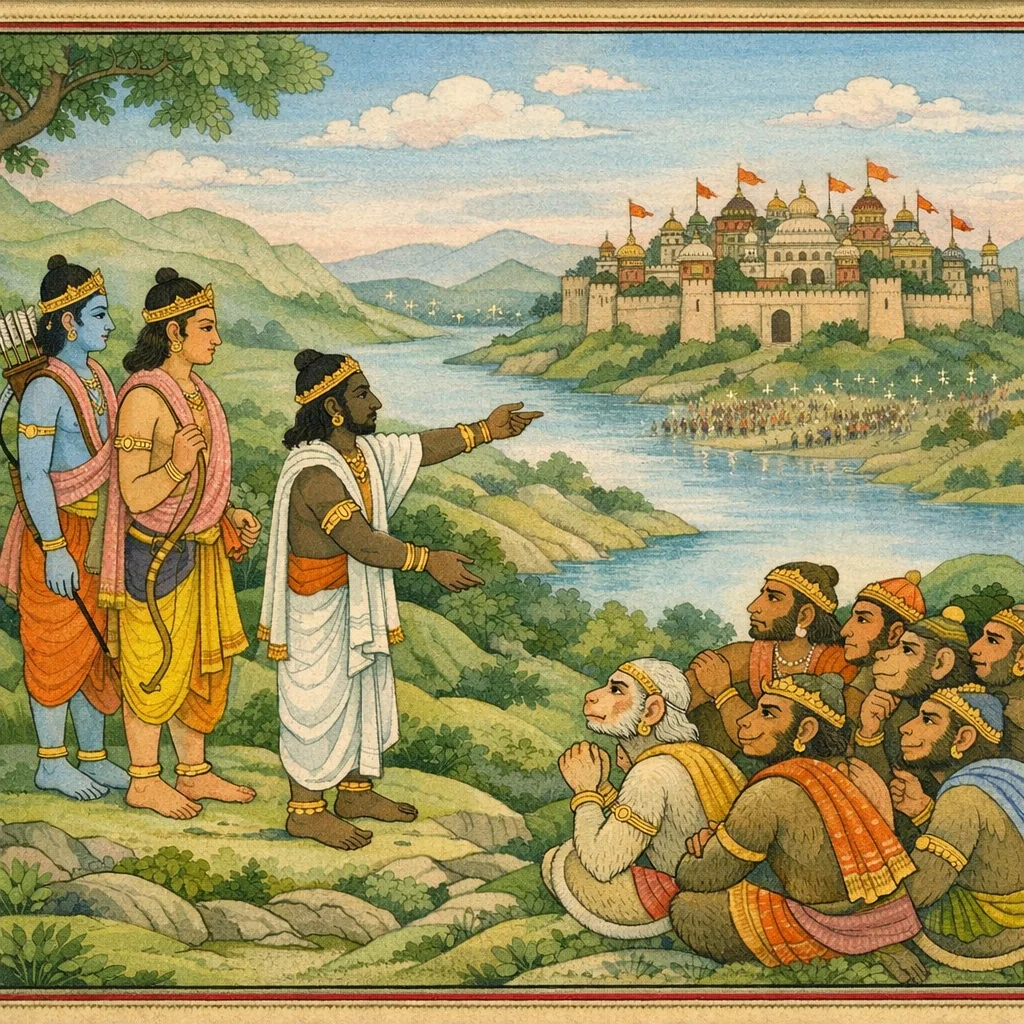
Sarga 37 constructs a tactical “digital map” of Laṅkā immediately prior to assault. The vānaras and allied leaders (Sugrīva, Hanumān, Jāmbavān, Aṅgada, Nala, and others) reach the enemy city and deliberate on mission-success. Vibhīṣaṇa reports ministerial reconnaissance: his envoys infiltrated Laṅkā in bird-form, observed Rāvaṇa’s fortifications and troop organization, and returned with structured intelligence. The rākṣasa defense is spatially distributed—Prahasta at the eastern gate; Mahāpārśva and Mahodara at the southern gate; Indrajit at the western gate with diverse weapon-bearers; Rāvaṇa himself at the northern gate, agitated yet heavily guarded; Virūpākṣa positioned in the city’s middle. Quantitative force descriptions follow (elephants, chariots, cavalry, and massive infantry), underscoring the scale of conflict. Rāma then issues operational assignments: Nīla to counter Prahasta in the east; Aṅgada to engage the southern commanders; Hanumān to press the west; Rāma with Lakṣmaṇa to force entry at the north where Rāvaṇa stands; Sugrīva, Jāmbavān, and Vibhīṣaṇa to hold the center. Finally, a recognition protocol is declared—vānaras should not assume human guise; only seven (Rāma, Lakṣmaṇa, and select allies including Vibhīṣaṇa) fight in human form—after which Rāma resolves to climb Suvela and advance with the army toward Laṅkā.
Shlokas
Verse 1
नरवानरराजौतौसतुवायुसुतःकपिः ।जाम्बवानृक्षराजश्चराक्षसश्चविभीषणः ।।।।अङ्गदोवालिपुत्रश्चसौमित्रिश्शरभःकपिः ।सुषेणस्सहदायादोमैन्दोद्विविदएवच ।।।।गजोगवाक्षःकुमुदोनलोऽथपनसस्तथा ।अमित्रविषयंप्राप्तास्समवेतास्समर्धयन् ।।।।
Sugrīva, king of men and Vānaras, along with Hanumān the son of Vāyu, Jāmbavān the lord of bears, and the Rākṣasa Vibhīṣaṇa; and also Aṅgada the son of Vāli, Saumitrī (Lakṣmaṇa), the Vānara Śarabha, Suṣeṇa with his kinsmen, Mainda and Dvivida, Gaja, Gavākṣa, Kumuda, Nala, and Panasa—having reached the enemy’s stronghold, assembled together and deliberated.
Verse 2
नरवानरराजौतौसतुवायुसुतःकपिः ।जाम्बवानृक्षराजश्चराक्षसश्चविभीषणः ।।6.37.1।।अङ्गदोवालिपुत्रश्चसौमित्रिश्शरभःकपिः ।सुषेणस्सहदायादोमैन्दोद्विविदएवच ।।6.37.2।।गजोगवाक्षःकुमुदोनलोऽथपनसस्तथा ।अमित्रविषयंप्राप्तास्समवेतास्समर्धयन् ।।6.37.3।।
Aṅgada, Vālin’s son, and Saumitrī (Lakṣmaṇa), along with the monkey Śarabha; and Suṣeṇa with his kinsmen, as well as Mainda and Dvivida too—(all were assembled).
Verse 3
नरवानरराजौतौसतुवायुसुतःकपिः ।जाम्बवानृक्षराजश्चराक्षसश्चविभीषणः ।।6.37.1।।अङ्गदोवालिपुत्रश्चसौमित्रिश्शरभःकपिः ।सुषेणस्सहदायादोमैन्दोद्विविदएवच ।।6.37.2।।गजोगवाक्षःकुमुदोनलोऽथपनसस्तथा ।अमित्रविषयंप्राप्तास्समवेतास्समर्धयन् ।।6.37.3।।
Gaja, Gavākṣa, Kumuda, Nala, and Panasa likewise reached the enemy’s domain; gathered together, they deliberated on the course of action.
Verse 4
इयंसालक्षयतेलङ्कापुरीरावणपालिता ।सासुरोरगगन्धर्वैरमरैरपिदुर्जया ।।।।
“This city of Laṅkā, ruled by Rāvaṇa, is now in sight. It appears unconquerable—even to the gods, the nāgas, and the gandharvas, and even to the immortals.”
Verse 5
कार्यसिद्धिंपुरस्कृत्यमन्द्रयध्वंविनिर्णये ।नित्यंसन्निहितोह्यत्ररावणोराक्षसाधिपः ।।।।
“Keeping the success of our mission foremost, deliberate and decide your course of duty. For Rāvaṇa, lord of the rākṣasas, is ever present here.”
Verse 6
तथातेषुब्रुवाणेषुरावणावरजोऽब्रवीत् ।वाक्यमग्राम्यपदवत्पुष्कलार्धंविभीषणः ।।।।
As they spoke among themselves, Vibhīṣaṇa—Rāvaṇa’s younger brother—addressed them with courteous words, rich in meaning.
Verse 7
अनलश्शरभश्चैवसम्पातिःप्रघसस्तथा ।गत्वालङ्कांममामात्याःपुरींपुनरिहागताः ।।।।
“My ministers—Anala, Śarabha, Sampāti, and Praghasa—went to the city of Laṅkā and then returned here again.”
Verse 8
भूत्वाशकुनयस्सर्वेप्रविष्टाश्चरिपोर्भलम् ।विधानंविहितंयच्चतद्धृष्टवासमुपस्थिताः ।।।।
“All of them took the form of birds and penetrated deep within, observed the enemy’s strength and the arrangements that had been made, and then returned to report.”
Verse 9
संविधानंयथाहुस्तेरावणस्यदुरात्मनः ।राम तद्ब्रुवतस्सर्वंयथात्त्वेनमेशृणु ।।।।
“Rāma, they have told me—exactly as it is—how the evil-minded Rāvaṇa has organized his forces. Listen to me now in full.”
Verse 10
पूर्वंप्रहस्तस्सबलोद्वारमासाद्यतिष्ठति ।दक्षिणंचमहावीर्यौमहापार्श्वमहोदरौ ।।।।
At the eastern gate, the powerful Prahasta stands with his forces; and at the southern gate stand the great warriors Mahāpārśva and Mahodara.
Verse 11
इन्द्रजित्पश्चिमंद्वारंराक्षसैर्भहुभिर्वृतः ।पट्टसासिधनुष्मद्भिश्शूलमुद्गरपाणिभिः ।।।।नानाप्रहरणैश्शूरैरावृतोरावणात्मजः ।
At the western gate stood Indrajit, Rāvaṇa’s son, surrounded by many Rākṣasas—heroes bearing swords and bows, spears and maces, and weapons of many kinds.
Verse 12
राक्षसानांसहस्रैस्तुबहुभिश्शस्त्रपाणिभिः ।।।।युक्तःपरमसंविग्नोराक्षर्भहुभिर्वृतः ।उत्तरंनगरद्वारंरावणस्स्वयमास्थितः ।।।।
At the northern gate of the city, Rāvaṇa himself stood—highly agitated—surrounded by many Rākṣasas in their thousands, all bearing weapons.
Verse 13
राक्षसानांसहस्रैस्तुबहुभिश्शस्त्रपाणिभिः ।।6.37.12।।युक्तःपरमसंविग्नोराक्षर्भहुभिर्वृतः ।उत्तरंनगरद्वारंरावणस्स्वयमास्थितः ।।6.37.13।।
This verse repeats the same report: Rāvaṇa, greatly agitated, stands at the city’s northern gate, surrounded by many thousands of weapon-bearing Rākṣasas.
Verse 14
विरूपाक्षस्तुमहताशूलखडगधनुष्मता ।बलेनराक्षसैस्सार्थंमध्यमंगुल्ममास्थितः ।।।।
Virūpākṣa, with a great force armed with spears, swords, and bows, held a central formation within the city along with the Rākṣasas.
Verse 15
एतानेवंविधान्गुल्मान् लङ्कायांसमुदीक्ष्यते ।मामकामन्त्रिणस्सर्वेपुनशशीघ्रमिहागताः ।।।।
Having carefully surveyed these troop-formations within Laṅkā, all those counselors of mine returned here again at once.
Verse 16
गजानांचसाहस्रंचरथानामयुतंपुरे ।हयानामयुतेद्वेचसाग्राकोटीचरक्षसाम् ।।।।विक्रान्ताबलवन्तश्चसंयुगेष्वाततायिनः ।इष्टाराक्षसराजस्यनित्यमेतेनिशाचराः ।।।।
In the city there were ten thousand elephants, ten thousand chariots, and twenty thousand horses; and more than a crore of Rākṣasas besides—valiant and strong, fierce in battle. These night-roamers were ever dear to the Rākṣasa-king.
Verse 17
गजानांचसाहस्रंचरथानामयुतंपुरे ।हयानामयुतेद्वेचसाग्राकोटीचरक्षसाम् ।।6.37.16।।विक्रान्ताबलवन्तश्चसंयुगेष्वाततायिनः ।इष्टाराक्षसराजस्यनित्यमेतेनिशाचराः ।।6.37.17।।
This verse repeats the same military accounting and characterization: Laṅkā holds vast forces—elephants, chariots, horses, and more than a crore of Rākṣasas—valiant, strong, and ever favored by the Rākṣasa-king.
Verse 18
एकैकस्यात्रयुद्धार्थेराक्षसस्यविशाम्पते ।परीवारस्सहस्राणांसहस्रमुपतिष्ठते ।।।।
O lord of men, for each single Rākṣasa here in battle, an attendant host—thousands upon thousands—stands ready in support.
Verse 19
एतांप्रवृत्तिंलङ्कायांमन्त्रिप्रोक्तांविभीषणः ।एवमुक्त्वामहाबाहूराक्षसांस्तानदर्शयत् ।।।।
Mighty-armed Vibhīṣaṇa, having thus spoken, conveyed to Rāma the intelligence about Laṅkā that had been reported by the ministers, and then pointed out those Rākṣasas.
Verse 20
लङ्कायांसचिवैस्सर्वंरामायप्रत्यवेदयत् ।रामंकमलपत्राक्षमिदमुत्तरमब्रवीत् ।।।।रावणावरजःश्रीमान् रामप्रियचिकीर्षया ।
The illustrious younger brother of Rāvaṇa reported to Rāma everything (he had learned) about Laṅkā from the ministers; then, looking at lotus-eyed Rāma and wishing to do what would please him, he spoke this further reply.
Verse 21
कुबेरंतुयदाराम रावणःप्रत्ययुध्यत ।।।।षष्टिश्शतसहस्राणितदानिर्यान्तिरक्षसाः ।राक्रमेणवीर्येणतेजसासत्त्वगौरवात् ।।।।सदृशाय्येऽत्रदर्पेणरावणस्यदुरात्मनः ।
“Rāma, when Rāvaṇa once attacked Kubera, then sixty hundred-thousands of Rākṣasas marched out—matching that evil-minded Rāvaṇa in pride, and comparable to him in prowess, strength, radiance, and hardihood.”
Verse 22
कुबेरंतुयदाराम रावणःप्रत्ययुध्यत ।।6.37.21।।षष्टिश्शतसहस्राणितदानिर्यान्तिरक्षसाः ।राक्रमेणवीर्येणतेजसासत्त्वगौरवात् ।।6.37.22।।सदृशाय्येऽत्रदर्पेणरावणस्यदुरात्मनः ।
“Rāma, when Rāvaṇa attacked Kubera, sixty hundred-thousands of Rākṣasas set forth then—equal to him in pride, and comparable in prowess, valor, radiance, and toughness.”
Verse 23
अत्रमन्युर्नकर्तव्योरोषयेत्वांनभीषये ।।।।समर्थोह्यसिवीर्येणसुराणामपिनिग्रहे ।
“In this matter, you should not give way to anger. I speak not to provoke you or frighten you; for by your valor you are capable even of subduing the gods.”
Verse 24
तद्भवांश्चतुरङ्गेणबलेनमहातावृतः ।।।।व्यूह्येदंवानरानीकंनिर्मथिष्यतिरावणम् ।
“And you, surrounded by this great fourfold force, should array this Vānara host in formation; thus you will crush Rāvaṇa.”
Verse 25
रावणावरजेवाक्यमेवंब्रुवतिराघवः ।।।।शत्रूणांप्रतिघातार्थमिदंवचनमब्रवीत् ।
As Rāvaṇa’s younger brother spoke thus, Rāghava (Rāma) issued these words, aiming at the repulse and destruction of the enemies.
Verse 26
पूर्वद्वारेतुलङ्कायानीलोवानरपुङ्गवः ।।।।प्रहस्तप्रतियोद्धास्याद्वानरैर्बहुभिर्वृतः ।
“At Laṅkā’s eastern gate, let Nīla, the foremost of Vānaras, stand ready to fight Prahasta, surrounded by many Vānara warriors.”
Verse 27
अङ्गदोवालिपुत्रस्तुबलेनमहतावृतः ।।।।दक्षिणेबाधतांद्वारेमहापार्श्वमहोदरौ ।
“And let Aṅgada, Vālin’s son, surrounded by a great force, press the fight at the southern gate against Mahāpārśva and Mahodara.”
Verse 28
हनुमान्पश्चिमद्वारंनिपीड्यपवनात्मजः ।।।।प्रविशत्वप्रमेयात्माबहुभिःकपिभिर्वृतः ।
Let Hanumān—the Wind-god’s son, of immeasurable might—press upon the western gate and enter, surrounded by many vānara warriors.
Verse 29
दैत्यदावनसङ्घानामृषीणांचमहात्मनाम् ।।।।विप्रकारप्रियःक्षुद्रोवरदानबलान्वितः ।परिक्रमतियःसर्वान्लोकान्सन्तापयन्प्रजाः ।।।।तस्याहंराक्षसेन्द्रस्यस्वयमेववधेधृतः ।उत्तरंनगरद्वारमहंसौमित्रिणासह ।।।।निपीड्याभिप्रवेक्ष्यामिसबलोयत्ररावणः ।
That lord of rākṣasas—base and fond of injuring others, empowered by the strength of boons—harasses the peoples of all worlds, even hosts of Daityas, Dānavas, and great sages. I myself am resolved to bring about his death. I, with Saumitri (Lakṣmaṇa) and our forces, will press upon and force entry through the northern city-gate, where Rāvaṇa is.
Verse 30
दैत्यदावनसङ्घानामृषीणांचमहात्मनाम् ।।6.37.29।।विप्रकारप्रियःक्षुद्रोवरदानबलान्वितः ।परिक्रमतियःसर्वान्लोकान्सन्तापयन्प्रजाः ।।6.37.30।।तस्याहंराक्षसेन्द्रस्यस्वयमेववधेधृतः ।उत्तरंनगरद्वारमहंसौमित्रिणासह ।।6.37.31।।निपीड्याभिप्रवेक्ष्यामिसबलोयत्ररावणः ।
Let the mighty lord of vānara-s, and the valiant king of bears, and also the rākṣasa king’s younger brother hold the central position in the battle-array.
Verse 31
दैत्यदावनसङ्घानामृषीणांचमहात्मनाम् ।।6.37.29।।विप्रकारप्रियःक्षुद्रोवरदानबलान्वितः ।परिक्रमतियःसर्वान्लोकान्सन्तापयन्प्रजाः ।।6.37.30।।तस्याहंराक्षसेन्द्रस्यस्वयमेववधेधृतः ।उत्तरंनगरद्वारमहंसौमित्रिणासह ।।6.37.31।।निपीड्याभिप्रवेक्ष्यामिसबलोयत्ररावणः ।
And in this battle the vānara warriors should not assume human form; let this be our agreed sign of recognition within the vānara host.
Verse 32
वानरेन्द्रश्चबलवानृक्षराजश्चवीर्यवान् ।।।।राक्षसेन्द्रानुजश्चैवगुलोभवतुमध्यम: ।
Let the mighty lord of vānara-s, and the valiant king of bears, and also the rākṣasa king’s younger brother hold the central position in the battle-array.
Verse 33
नचैवमानुषंरूपंकार्यंहरिभिराहवे ।।।।एषाभवतुसंङञान् युद्धेऽस्मिन् वानरेबले ।
And in this battle the vānara warriors should not assume human form; let this be our agreed sign of recognition within the vānara host.
Verse 34
वानराएवनश्चिह्नंस्वजनेऽस्मिन् भविष्यति ।।।।वयंतुमानुषेणैवसप्तयोत्प्यामहेपरान् ।अहमेषममभ्रात्रालक्ष्मणेनमहौजसौ ।।।।आत्मनापञ्चमश्चायंसखाममविभीषणः ।
Among our own, the vānara form itself will be our sign of recognition. But as for us, seven will fight the enemy in human form—myself and my mighty brother Lakṣmaṇa, and as the fifth among us by my side, my friend Vibhīṣaṇa.
Verse 35
वानराएवनश्चिह्नंस्वजनेऽस्मिन् भविष्यति ।।6.37.34।।वयंतुमानुषेणैवसप्तयोत्प्यामहेपरान् ।अहमेषममभ्रात्रालक्ष्मणेनमहौजसौ ।।6.37.35।।आत्मनापञ्चमश्चायंसखाममविभीषणः ।
But we shall fight the enemies only in human guise—seven in all: I myself, my mighty brother Lakṣmaṇa, and as the fifth, this friend of mine, Vibhīṣaṇa.
Verse 36
सरामःकृत्यसिध्यर्थएवमुक्त्वाविभीषणम् ।।।।सुवेलारोहणेबुद्धिश्चकारमतिमान्मतिम् ।रमणीयतरंदृष्टवासुवेलस्यगिरेस्तटम् ।।।।
Thus, Rāma—wise and intent on accomplishing the mission—having spoken to Vibhīṣaṇa, resolved to ascend Suvela; and seeing the mountain’s slopes as exceedingly beautiful, he proceeded.
Verse 37
सरामःकृत्यसिध्यर्थएवमुक्त्वाविभीषणम् ।।6.37.36।।सुवेलारोहणेबुद्धिश्चकारमतिमान्मतिम् ।रमणीयतरंदृष्टवासुवेलस्यगिरेस्तटम् ।।6.37.37।।
Then wise Rāma, seeing the exceedingly beautiful slopes of Mount Suvela, set his mind upon ascending it.
Verse 38
ततस्तुरामोमहताबलेनप्रच्छाद्यसर्वांपृथिवींमहात्मा ।प्रहृष्टरूपोऽभिजगामलङ्कांकृत्वामतिंसोऽरिवधेमहात्मा ।।।।
Thereafter the great-souled Rāma, with his vast army spread across the earth, advanced toward Laṅkā—his countenance bright with confidence—having firmly resolved upon the destruction of the enemy.
Frequently Asked Questions
The key action is the transformation of reconnaissance into a disciplined assault plan: Rāma assigns opponents and gates to specific leaders, ensuring combat is organized rather than indiscriminate, and institutes a recognition rule to prevent friendly confusion during the chaos of siege warfare.
The chapter teaches that righteous outcomes depend on truthful intelligence, clear command structure, and controlled force. Even in war, dharma operates through accountability—leaders listen, verify, allocate duties, and restrain deception that could harm allies.
Laṅkā is presented as a fortified, gate-structured city with distinct eastern, southern, western, and northern entry points, while Suvela mountain functions as an operational vantage and staging ground for Rāma’s advance.