Sarga 31
मायाशिरोप्रदर्शनम् (The Display of the Illusory Head of Rāma)
युद्धकाण्ड
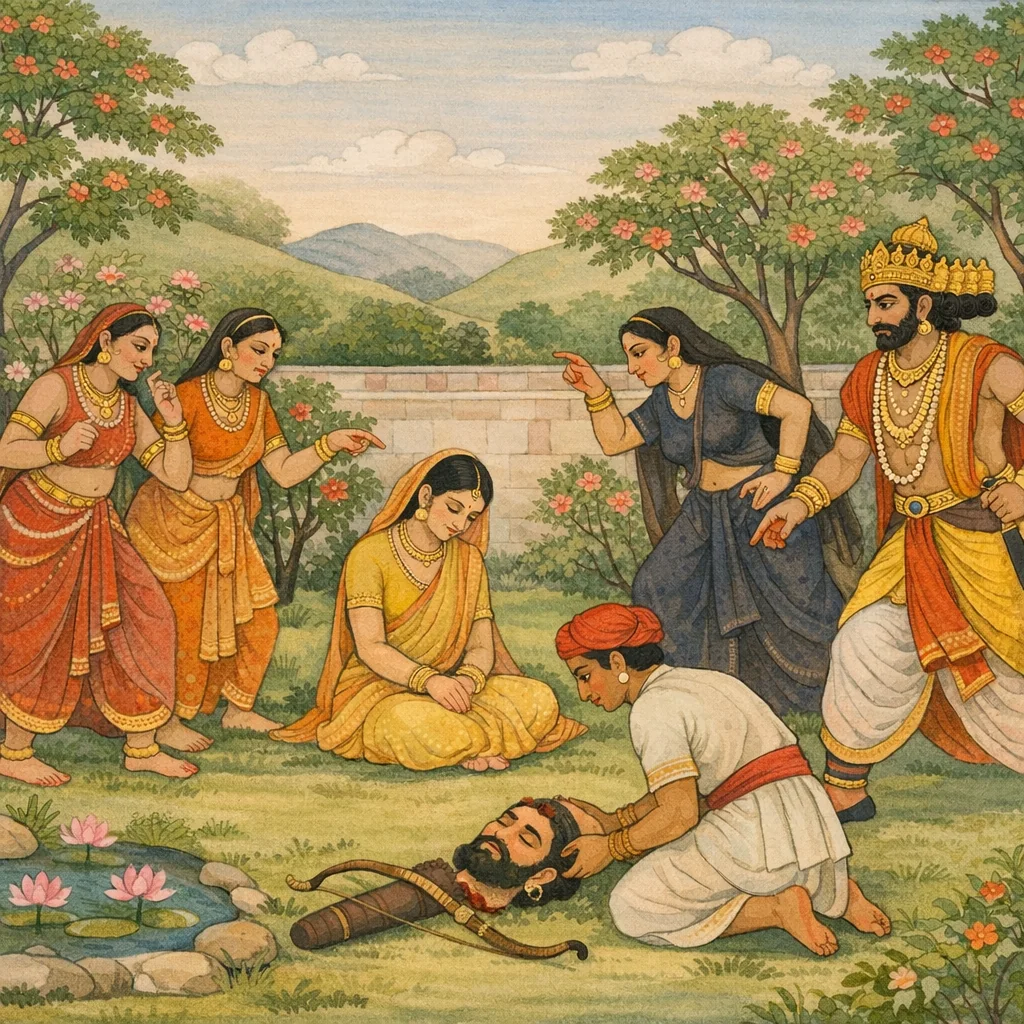
Sarga 31 opens with Laṅkā’s spies reporting to Rāvaṇa that Rāma’s “unshakeable” host is positioned on Suvela, poised to strike. Perturbed, Rāvaṇa convenes counsel, then chooses a psychological operation rather than open engagement: he summons the māyā-adept rākṣasa Vidyujjihva and orders the fabrication of an illusory head of Rāghava along with his bow. Rāvaṇa proceeds to Aśokavanikā, driven by the intent to break Sītā’s resolve, and finds her seated on the ground, head bowed, absorbed in contemplation of her husband amid rākṣasī guards. He addresses her with coercive rhetoric—claiming Rāma and leading vānaras have been slain in a night attack led by Prahasta—then escalates the deception by having the counterfeit head placed before her, followed by the famed bow. The chapter’s technical focus is propaganda as warfare: intimidation, misinformation, and staged “evidence” designed to induce surrender, contrasted with Sītā’s steadfastness implied by her prior posture and singular devotion.
Shlokas
Verse 1
ततस्तमक्षोभ्यबलंलङ्काधिपतयेचराः ।सुवेलेराघवंशैलेनिविष्टंप्रत्यवेदयन् ।।।।
Then the spies reported to the lord of Laṅkā that Rāghava, with an unshakable army, had taken position on Mount Suvela.
Verse 2
चाराणांरावणश्श्रुत्वाप्राप्तंरामंमहाबलम् ।जातोद्वेगोऽभवत्किञ्चित्सचिवानिदमब्रवीत् ।।।।
Hearing from his spies that mighty Rāma had arrived, Rāvaṇa became somewhat alarmed and spoke these words to his ministers.
Verse 3
मन्त्रिणश्शीघ्रमायान्तुसर्वेवैसुसमाहिताः ।अयंनोमन्त्रकालोहिसम्प्रप्ताइतिराक्षसाः ।।।।
“Let all the ministers come at once, fully composed. The time for counsel has arrived for us,” thus spoke the rākṣasas.
Verse 4
तस्यतद्वचनंश्रुत्वामन्त्रिणोऽभ्यागमन् द्रुतम् ।ततस्समन्त्रयामासराक्षसैस्सचिवैस्सह ।।।।
Hearing his words, the ministers quickly came; then he consulted together with the rākṣasas and his counsellors.
Verse 5
मन्त्रयित्वासदुर्धर्षःक्षमंयत्समनन्तरम् ।विसर्जयित्वासचिवान्प्रविवेशस्वमालयम् ।।।।
Thereafter, the unassailable Rāvaṇa reflected on what would be proper to do next; dismissing his ministers, he entered his own residence.
Verse 6
ततोराक्षसमाहूयविद्युज्जिह्वंमहाबलम् ।मायाविदंमहामायःप्राविशद्यत्रमैथिली ।।।।
Then the great illusionist Rāvaṇa summoned the mighty rākṣasa Vidyujjihva, skilled in magical arts, and proceeded to the place where Maithilī (Sītā) was.
Verse 7
विद्युज्जिह्वंचमायाज्ञमब्रवीद्राक्षसाधिपः ।मोहयिष्यावहेसीतांमाययाजनकात्मजाम् ।।।।
The lord of the rākṣasas said to Vidyujjihva, who was expert in illusion: “By a magical trick we shall delude Sītā, Janaka’s daughter.”
Verse 8
शिरोमायामयंगृह्यराघवस्यनिशाचर: ।त्वंमांसमुतिष्ठस्वमहच्चसशरंधनुः ।।।।
“O night-roaming rākṣasa, take an illusory head of Rāghava, and come stand before me—also bearing the great bow with an arrow.”
Verse 9
एवमुक्तस्तथेत्याहविद्युज्जिह्वोनिशाचरः ।दर्शयामासतांमायांसुप्रयुक्तांसरावणे ।।।।तस्यतुष्टोऽभवद्राजाप्रददौचविभूषणम् ।
Thus addressed, the night-roamer Vidyujjihva replied, “So be it,” and displayed to Rāvaṇa the illusion deftly executed. The king, pleased with him, bestowed an ornament.
Verse 10
अशोकवनिकायांतुसीतादर्शनलालसः ।वैरृतानामधिपतिस्संविवेशमहाबलः ।।।।
Eager to see Sītā, the mighty lord of the Rākṣasas entered the Aśoka grove.
Verse 11
ततोदीनामदैन्यार्हांददर्शधनदानुजः ।।।।अधोमुखींशोकपरामुपविष्टांमहीतले ।भर्तारमेवध्यायन्तीमशोकवविकांगताम् ।।।।
Then Dhanada’s younger brother (Rāvaṇa) saw Sītā—sorrowful though undeserving of such misery—seated on the ground with her face cast down, overwhelmed with grief, thinking only of her husband in the Aśoka grove.
Verse 12
ततोदीनामदैन्यार्हांददर्शधनदानुजः ।।6.31.11।।अधोमुखींशोकपरामुपविष्टांमहीतले ।भर्तारमेवध्यायन्तीमशोकवविकांगताम् ।।6.31.12।।
As she sat closely watched on every side by dreadful rākṣasī women, he approached Sītā with delight, praising himself, and spoke to Janaka’s daughter these shameless words.
Verse 13
उपास्यमानांघोराभीराक्षसीभिरितस्ततः ।उपसृत्यततस्सीतांप्रहर्षंनामकीर्तयन् ।।।।इदंचवचनंधृष्टमुवाचजनकात्मजाम् ।
As she sat closely watched on every side by dreadful rākṣasī women, he approached Sītā with delight, praising himself, and spoke to Janaka’s daughter these shameless words.
Verse 14
सान्त्व्यमानामयाभद्रेयमुपाश्रित्यवल्गसे ।खरहन्तासतेभर्ताराघवस्समरेहतः ।।।।
“O gentle lady, though I try to placate you, you keep clinging to the one you boast of—your husband Rāghava, slayer of Khara; he has been killed in battle.”
Verse 15
छिन्नंतेसर्वतोमूलंदर्पस्तेनिहतोमया ।व्यसनेनात्मनस्सीते ममभार्याभविष्यसि ।।।।
“Your support has been cut off on every side; your pride is crushed by me. O Sītā, of your own helpless circumstance you will become my wife.”
Verse 16
विसृजेमांमतिंमूढे: किंमृतेनकरिष्यसि ।भवस्वभद्रे: भार्याणांसर्वेसामीश्वरीमम ।।।।
“Foolish woman—abandon this thought. What will you do with a husband who is (as good as) dead? O fair one, become the queen over all my wives.”
Verse 17
अल्पपुण्ये: निवृत्तार्थे: मूढे: पण्डितमानिनि: ।शृणुभर्तृवधंसीते: घोरंवृत्रवधंयथा ।।।।
“O woman of scant merit, withdrawn from life’s aims—foolish one who fancies herself learned—O Sītā, hear of your husband’s dreadful killing, like the slaying of Vṛtra.”
Verse 18
समायातस्समुद्रान्तंमांहन्तुंकिलराघवः ।वानरेन्द्रप्रणीतेनबलेनमहतावृतः ।।।।
“Rāghava, indeed, has reached the sea-shore to kill me—surrounded by a vast host led by the lord of the Vānaras.”
Verse 19
सन्निविष्टस्समुद्रस्यपीड्यतीरमथोत्तरम् ।बलेनमहतारामोव्रजत्यस्तंदिवाकरे ।।।।
“Then, as the sun set, Rāma encamped with his great army on the ocean’s northern shore, pressing upon the coastline in readiness to strike.”
Verse 20
अथाध्वनिपरिश्रान्तमर्धरात्रेस्थितंबलम् ।सुखसुप्तंसमासाद्यचारित्रंप्रथमंचरैः ।।।।
“Then, when their army—wearied from the march—had halted at midnight and was sleeping soundly, my foremost spies approached and learned their full condition and movements.”
Verse 21
तत्प्रहस्तप्रणीतेनबलेनमहतामम ।बलमस्यहतंरात्रौयत्ररामस्सलक्ष्मणः ।।।।
“There, in the night, my great force led by Prahasta struck down their troops—where Rāma was, together with Lakṣmaṇa.”
Verse 22
पट्टसान्परिघांश्चक्रान्दण्डान्महायशान् ।बाणजालानिशूलानिभास्वरान्कूटमुद्गरान् ।।।।यष्टीश्चतोमरान् शक्तीश्चक्राणिमुसलानिच ।उद्यम्योद्यम्यरक्षोभिर्वानरेषुनिपातितां ।।।।
“Again and again the Rākṣasas lifted and hurled upon the Vānaras spears, iron bars, discs, heavy staves, showers of arrows, tridents, shining iron mallets, clubs, lances, śaktis, more discs, and maces.”
Verse 23
पट्टसान्परिघांश्चक्रान्दण्डान्महायशान् ।बाणजालानिशूलानिभास्वरान्कूटमुद्गरान् ।।6.31.22।।यष्टीश्चतोमरान् शक्तीश्चक्राणिमुसलानिच ।उद्यम्योद्यम्यरक्षोभिर्वानरेषुनिपातितां ।।6.31.23।।
“Again and again the Rākṣasas lifted and hurled upon the Vānaras spears, iron bars, discs, heavy staves, showers of arrows, tridents, shining iron mallets, clubs, lances, śaktis, more discs, and maces.”
Verse 24
अथसुप्तस्यरामस्यप्रहस्तेनप्रमाथिना ।असक्तंकृतहस्तेनशिरश्छिन्नंमहासिना ।।।।
“Then Prahasta—skilled and formidable—severed the head of sleeping Rāma with a great sword, without hesitation or attachment.”
Verse 25
विभीषणस्समुत्पत्यनिगृहीतोयदृच्छया ।दिशःप्रव्राजितस्सर्वैस्सर्लक्ष्मणःप्लवगैस्सहा ।।।।
“When Vibhīṣaṇa sprang up, he was seized unexpectedly; and Lakṣmaṇa—along with the vānara hosts—was driven to scatter in all directions.”
Verse 26
सुग्रीवोग्रीनयासीतेभग्नयाप्लवगाधिपः ।निरस्तहनुकश्शेतेहनुमान्राक्षसैर्हतः ।।।।
“O Sītā! Sugrīva, lord of the vānara-s, lies with his neck broken; and Hanumān lies with his jaw shattered—slain by the rākṣasas.”
Verse 27
जाम्बवानथजानुभ्यामुत्पतन्निहतोयुधि ।पट्टसैर्बहुभिश्छिन्नोनिकृत्तःपादपोयथा ।।।।
“And Jāmbavān, rising up upon his knees in battle, was cut down by many paṭṭasa-weapons, felled like a tree.”
Verse 28
मैन्दश्चद्विविदश्चोभौनिहतौवानरर्षभौ ।।।।निश्श्वसन्तौरुदन्तौचरुधिरेणसमुक्षितौ ।असिनाव्यायतौछिन्नौमध्येह्यरिनिषूदनौ ।।।।
“Mainda and Dvivida—both bulls among the vānara-s, slayers of foes—lie struck down: gasping, crying out, drenched in blood, their great bodies cleft in the middle by a sword.”
Verse 29
मैन्दश्चद्विविदश्चोभौनिहतौवानरर्षभौ ।।6.31.28।।निश्श्वसन्तौरुदन्तौचरुधिरेणसमुक्षितौ ।असिनाव्यायतौछिन्नौमध्येह्यरिनिषूदनौ ।।6.31.29।।
“Mainda and Dvivida—both bulls among the vānara-s, slayers of foes—lie struck down: gasping, crying out, drenched in blood, their great bodies cleft in the middle by a sword.”
Verse 30
अनुतिष्ठतिमेदिन्यांपनसःपनसोयथा ।।।।नाराचैर्बहुभिश्चिन्नश्शेतेदर्यांदरीमुखः ।कुमुदस्तुमहातेजानिष्कूजन्सायकै: कृतः ।।।।
“Panasa lies on the earth like a fallen jackfruit tree; Darīmukha lies on the ground, shattered by many steel-pointed arrows; and Kumuda, though radiant in might, has been torn open by shafts and lies silent.”
Verse 31
अनुतिष्ठतिमेदिन्यांपनसःपनसोयथा ।।6.31.30।।नाराचैर्बहुभिश्चिन्नश्शेतेदर्यांदरीमुखः ।कुमुदस्तुमहातेजानिष्कूजन्सायकै: कृतः ।।6.31.31।।
“Panasa lies on the earth like a fallen jackfruit tree; Darīmukha lies on the ground, shattered by many steel-pointed arrows; and Kumuda, though radiant in might, has been torn open by shafts and lies silent.”
Verse 32
अङ्गदोबहुभिश्छिन्नश्शरैरासाद्यराक्षसैः ।पतितोरुधिरोद्गारीक्षितौनिपतिताङ्गदः ।।।।
“Angada, assailed by the rākṣasas and cut by many arrows, has fallen upon the earth—spitting blood—his armlets slipped down as he lay.”
Verse 33
हरयोमथितानागैरथजातैस्तथापरे ।शयितामृदिताश्चाश्वैर्यायुवेगैरिवाम्बुदाः ।।।।
“Some vānara-s were crushed by elephants, others by masses of chariots; and some, struck down and trampled by horses, lay scattered—like clouds torn apart by the force of the wind.”
Verse 34
प्रहृताश्चपरेत्रस्ताहस्यमानाजघन्यतः ।अभिद्रुतास्तुरक्षोभिस्सिंहैरिवमहाद्विपाः ।।।।
Some, struck and terrified, were chased from behind—hard pressed by the rākṣasas—like great elephants harried by lions.
Verse 35
सागरेपतिताःकेचित्केचिग्दगनमाश्रिताः ।ऋक्षावृक्षानुपारूढावानरींवृत्तिमाश्रिताः ।।।।
Some plunged into the sea; some sought refuge in the sky. The bears, resorting to the ways of the vānaras, climbed up into trees.
Verse 36
सागरस्यचतीरेषुशैलेषुचवनेषुच ।पिङ्गलास्तेविरूपाक्षैर्बहुभिर्बहवोहताः ।।।।
On the seashore, on the mountains, and in the forests, many of those tawny-eyed vānaras were slain by numerous fierce-eyed rākṣasas.
Verse 37
एवंतवहतोभर्ताससैन्योममसेनया ।क्षतजार्द्रंरजोध्वस्तमिदंचस्याहृतंशिरः ।।।।
“Thus your husband, together with his army, has been slain by my forces; and here is his head—wet with blood and smeared with dust—brought back.”
Verse 38
ततःपरमदुर्धर्षोरावणोराक्षसेश्वरः ।सीतायामुपशन्त्यांराक्षसीमिदमब्रवीत् ।।।।
Then Rāvaṇa, the rākṣasa-lord, hard to assail, spoke these words to a rākṣasī while Sītā listened.
Verse 39
राक्षसंक्रूरकर्माणंविद्युज्जिह्वंत्वमानय ।येनतद्राघवशिरस्सङ्ग्रामात्स्वयमाहृतम् ।।।।
“Bring here the rākṣasa Vidyujihva, of cruel deeds—he who himself brought that head of Rāghava from the battlefield.”
Verse 40
विद्युज्जिह्वस्ततोगृह्यशिरस्तत्सशरासनम् ।प्रणामंशिरसाकृत्वारावणस्याग्रतस्थितः ।।।।
Then Vidyujihva, holding that head together with the bow, bowed with his head in salutation and stood before Rāvaṇa.
Verse 41
तमब्रवीत्ततोराजारावणोराक्षसंस्थितम् ।विद्युज्जिह्वंमहाजिह्वंसमीपपरिवर्तिनम् ।।।।
Then King Rāvaṇa spoke to that rākṣasa Vidyujihva—great-tongued—who had come close and stood nearby.
Verse 42
अग्रतःकुरुसीतायाश्शीघ्रंदाशरधेशशिरः ।अवस्थांपश्चिमांभर्तुःकृपणासाधुपश्यतु ।।।।
“Quickly place the head of Daśaratha’s son before Sītā. Let that pitiable woman see her husband’s final condition.”
Verse 43
एवमुक्तंतुतद्रक्षशशिरस्तत्प्रियदर्शनम् ।उपनिक्षिप्यसीतायाःक्षिप्रमन्तरधीयत ।।।।
Having said so, that rākṣasa quickly placed the pleasing-to-behold head beside Sītā and at once vanished from sight.
Verse 44
रावणश्चापिचिक्षेपभस्वरंकार्मुकंमहत् ।त्रिषुलोकेषुविख्यातंसीतामिदमुवाचह ।।।।
Rāvaṇa too cast down the great, radiant bow—famous in the three worlds—and then spoke these words to Sītā.
Verse 45
इदंतुतवरामस्यकार्मुकंज्यासमायुतम् ।इहप्रहस्तेनानीतंहत्वातंनिशिमानुषम् ।।।।
“This is your Rāma’s bow, strung with its bowstring. Prahasta has brought it here, having killed that human in the night.”
Verse 46
सविद्युज्जिह्वेनसहैवतच्छिरोधनुश्चभूमौविनिकीर्यरावणः ।विदेहराजस्यसुतांयशस्विनींततोऽब्रवीत्तांभवमेवशानुगा ।।।।
Then Rāvaṇa, together with Vidyujjihva, set that head and the bow down upon the ground; and he said to the illustrious daughter of the king of Videha: “Now become obedient to my will.”
Frequently Asked Questions
The pivotal action is Rāvaṇa’s deliberate use of deception—manufacturing an illusory severed head and staging it before Sītā—to compel consent. The ethical dilemma centers on whether victory-seeking strategy can justify coercion and falsehood, positioning propaganda as a form of violence against moral agency.
The chapter illustrates that adharmic power often substitutes intimidation for truth and seeks to collapse inner resolve rather than defeat an opponent openly. By juxtaposing Sītā’s single-minded remembrance of her husband with Rāvaṇa’s manipulative speech, it frames steadfastness and integrity as resistance to coercive narratives.
Suvela marks the vānaras’ strategic positioning near Laṅkā; the northern seashore encampment situates the invasion logistics; and Aśokavanikā functions as the cultural-symbolic space of captivity and moral testing, where staged objects (the ‘head’ and famed bow) are used as instruments of psychological control.