Sarga 29
शुकसारणनिग्रहः / Ravana Rebukes Suka and Sārana; Spies Reconnoiter Rama’s Camp
युद्धकाण्ड
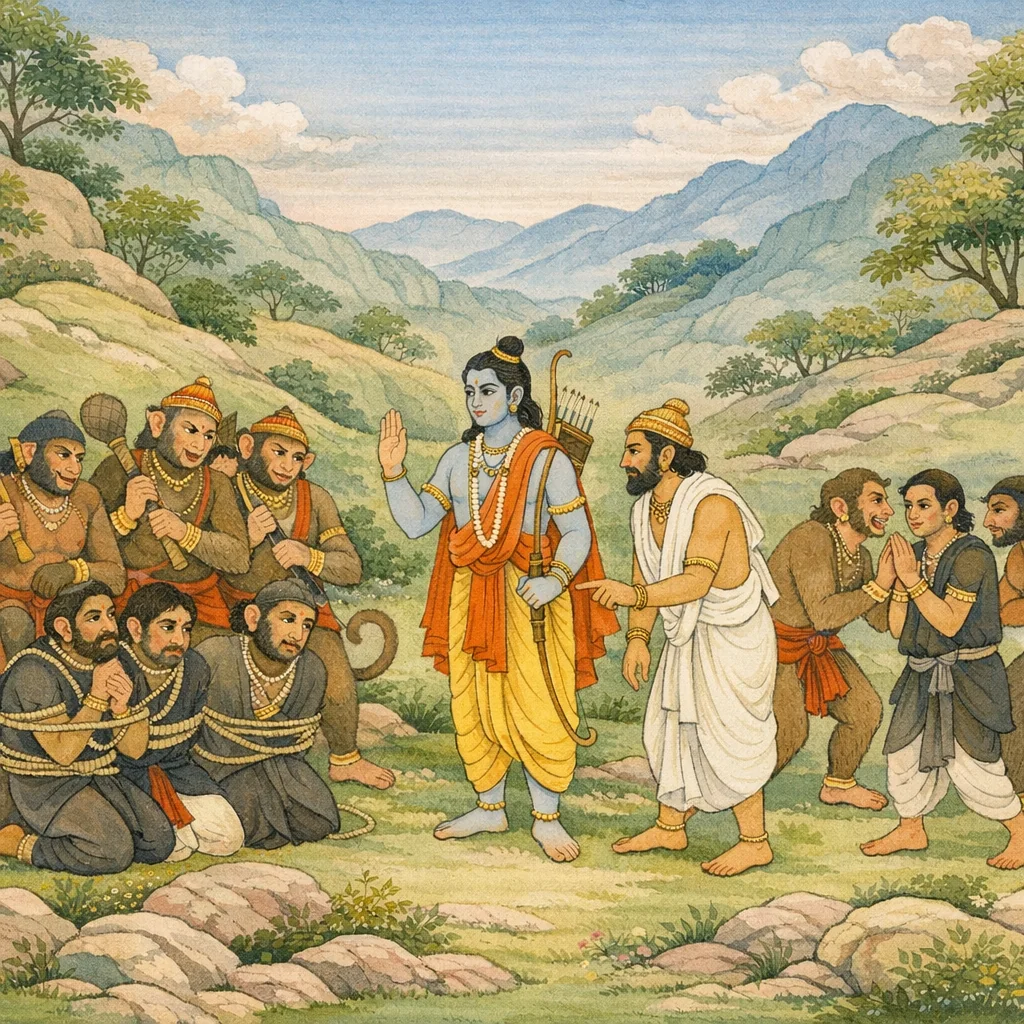
Sarga 29 stages a court-to-camp intelligence cycle central to cāra-nīti. After hearing Śuka’s report describing the assembled vānaras and Rāma’s principal allies—Lakṣmaṇa as Rāma’s ‘right arm’, Sugrīva, Aṅgada, Hanūmān, Jāmbavān, and other commanders—Rāvaṇa becomes inwardly shaken yet outwardly furious. He rebukes Śuka and Sārana for praising the enemy before war, framing the impropriety as a ministerial failure of rājanīti and loyalty. He threatens punishment, then restrains himself by recalling their prior services, dismissing them rather than executing them. Turning to operational policy, Rāvaṇa orders Mahodara to summon expert spies and commands them to examine Rāma’s intentions, routines, and inner circle. The spies depart under Śārdūla’s lead, reach the Suvela region in disguise, and are recognized by the righteous Vibhīṣaṇa; Śārdūla is seized. As vānaras move to kill the intruders, Rāma’s compassion intervenes, releasing Śārdūla and the others. Harassed and terrified, they return to Laṅkā and report the formidable force stationed near Suvela, closing the sarga with a strategic assessment delivered to Daśagrīva.
Shlokas
Verse 1
शुकेनतुसमाख्यातान्दृष्ट्वासहरियूथपान् ।समीपस्थंचरामस्यभ्रातरंस्वंविभीषणम् ।।।।लक्ष्मणंचमहावीर्यंभुजंरामस्यदक्षिणं ।सर्ववानरराजंचसुग्रीवंभीमविक्रमम् ।।।।अङ्गदंचापिबलिनंवज्रहस्तात्मजात्मजम् ।हनूमन्तंचविक्रान्तंजाम्बवन्तंचदुर्जयम् ।।।।सुषेणंकुमुदंनीलंनलंचप्लवगर्षभम् ।गजंगवाक्षंशरभंमैन्दंचद्विविदंतथा ।।।।किञ्चिदाविग्नहृदयोजातक्रोधश्चरावणः ।भर्त्सयामासतौवीरौकथान्तेशुकसारणौ ।।।।
Then Rāvaṇa, hearing Śuka’s report and seeing the Vānara commanders—Vibhīṣaṇa standing near Rāma, mighty Lakṣmaṇa as Rāma’s right arm, Sugrīva the king of the Vānaras, Angada, the valiant Hanūmān, unconquerable Jāmbavān, and also Suṣeṇa, Kumuda, Nīla, Nala, Gaja, Gavākṣa, Śarabha, Mainda, and Dvivida—became inwardly shaken and rose in anger; and at the end of their account he began to rebuke the two heroes, Śuka and Sāraṇa.
Verse 2
शुकेनतुसमाख्यातान्दृष्ट्वासहरियूथपान् ।समीपस्थंचरामस्यभ्रातरंस्वंविभीषणम् ।।6.29.1।।लक्ष्मणंचमहावीर्यंभुजंरामस्यदक्षिणं ।सर्ववानरराजंचसुग्रीवंभीमविक्रमम् ।।6.29.2।।अङ्गदंचापिबलिनंवज्रहस्तात्मजात्मजम् ।हनूमन्तंचविक्रान्तंजाम्बवन्तंचदुर्जयम् ।।6.29.3।।सुषेणंकुमुदंनीलंनलंचप्लवगर्षभम् ।गजंगवाक्षंशरभंमैन्दंचद्विविदंतथा ।।6.29.4।।किञ्चिदाविग्नहृदयोजातक्रोधश्चरावणः ।भर्त्सयामासतौवीरौकथान्तेशुकसारणौ ।।6.29.5।।
“Go from here and observe Rāma’s resolve; examine also those close to him—his ministers and the allies who have come to him out of affection.”
Verse 3
शुकेनतुसमाख्यातान्दृष्ट्वासहरियूथपान् ।समीपस्थंचरामस्यभ्रातरंस्वंविभीषणम् ।।6.29.1।।लक्ष्मणंचमहावीर्यंभुजंरामस्यदक्षिणं ।सर्ववानरराजंचसुग्रीवंभीमविक्रमम् ।।6.29.2।।अङ्गदंचापिबलिनंवज्रहस्तात्मजात्मजम् ।हनूमन्तंचविक्रान्तंजाम्बवन्तंचदुर्जयम् ।।6.29.3।।सुषेणंकुमुदंनीलंनलंचप्लवगर्षभम् ।गजंगवाक्षंशरभंमैन्दंचद्विविदंतथा ।।6.29.4।।किञ्चिदाविग्नहृदयोजातक्रोधश्चरावणः ।भर्त्सयामासतौवीरौकथान्तेशुकसारणौ ।।6.29.5।।
Then those night-ranging spies—ever roaming outside—came before Daśagrīva (Rāvaṇa) and reported the mighty host of fearsome strength, encamped near Mount Suvela.
Verse 4
शुकेनतुसमाख्यातान्दृष्ट्वासहरियूथपान् ।समीपस्थंचरामस्यभ्रातरंस्वंविभीषणम् ।।6.29.1।।लक्ष्मणंचमहावीर्यंभुजंरामस्यदक्षिणं ।सर्ववानरराजंचसुग्रीवंभीमविक्रमम् ।।6.29.2।।अङ्गदंचापिबलिनंवज्रहस्तात्मजात्मजम् ।हनूमन्तंचविक्रान्तंजाम्बवन्तंचदुर्जयम् ।।6.29.3।।सुषेणंकुमुदंनीलंनलंचप्लवगर्षभम् ।गजंगवाक्षंशरभंमैन्दंचद्विविदंतथा ।।6.29.4।।किञ्चिदाविग्नहृदयोजातक्रोधश्चरावणः ।भर्त्सयामासतौवीरौकथान्तेशुकसारणौ ।।6.29.5।।
He beheld Suṣeṇa, Kumuda, Nīla, and Nala—the bull among the leaping hosts—along with Gaja, Gavākṣa, Śarabha, Mainda, and likewise Dvivida.
Verse 5
शुकेनतुसमाख्यातान्दृष्ट्वासहरियूथपान् ।समीपस्थंचरामस्यभ्रातरंस्वंविभीषणम् ।।6.29.1।।लक्ष्मणंचमहावीर्यंभुजंरामस्यदक्षिणं ।सर्ववानरराजंचसुग्रीवंभीमविक्रमम् ।।6.29.2।।अङ्गदंचापिबलिनंवज्रहस्तात्मजात्मजम् ।हनूमन्तंचविक्रान्तंजाम्बवन्तंचदुर्जयम् ।।6.29.3।।सुषेणंकुमुदंनीलंनलंचप्लवगर्षभम् ।गजंगवाक्षंशरभंमैन्दंचद्विविदंतथा ।।6.29.4।।किञ्चिदाविग्नहृदयोजातक्रोधश्चरावणः ।भर्त्सयामासतौवीरौकथान्तेशुकसारणौ ।।6.29.5।।
Rāvaṇa, his heart somewhat shaken and anger newly kindled, then began to rebuke those two brave envoys—Śuka and Sāraṇa—at the end of their report.
Verse 6
अधोमुखौतौप्रणतावब्रवीच्छुकसारणौ ।रोषगद्गदयावाचासंरब्धंपरुषंवचः ।।।।
With his voice choked by anger, Rāvaṇa spoke indignantly and harshly to Śuka and Sāraṇa, who stood before him with bowed faces in supplication.
Verse 7
नतावत्सदृशंनामसचिवैरुपजीविभिः ।विप्रियंनृपतेर्वक्तुंनिग्रहेप्रग्रहेप्रभोः ।।।।
“It is not fitting,” he said, “for ministers who live by the favor of their lord to speak displeasing words to a king who has the power both to restrain and to reward.”
Verse 8
रिपूणांप्रतिकूलानांयुद्धार्थमभिवर्तताम् ।उभाभ्यांसदृशंनामवक्तुमप्रस्तवेस्तवम् ।।।।
“When we are setting out for war against hostile enemies, is it proper for you two to offer praise of them at such an untimely moment?”
Verse 9
आचार्यागुरवोवृद्धावृथावांपर्युपासिताः ।सारंयद्राजशास्त्राणामनुजीव्यंनगृह्यते ।।।।
“Teachers, elders, and venerable guides have been attended upon by you in vain—since you have not grasped the living essence of political science (rājaśāstra).”
Verse 10
गृहीतोवानविज्ञातोभारोऽज्ञानस्यवाह्यते ।ईदृशै: सचिवैर्युक्तोमूर्खैर्दिष्ट्यधराम्यहम् ।।।।
Though you have grasped (the facts), you have not understood their meaning; thus the burden of ignorance is being carried. Joined with ministers as foolish as you, it is only by sheer fortune that I still hold this kingdom.
Verse 11
किंनुमृत्योर्भयंनास्तिवक्तुंमांपरुषंवचः ।यस्यमेशासतोजिह्वाप्रयच्छतिशुभाशुभम् ।।।।
Have you no fear of death, to speak harshly to me—me, at whose command your very tongue could be made to yield good or ill?
Verse 12
अप्येवदहनंस्पृष्टवावनेतिष्ठन्तिपादपाः ।राजदोषपरामृष्टास्तिष्ठन्तेनापराधिनः ।।।।
Even after being touched by fire, trees may still stand in the forest; but those who incur the king’s punitive displeasure do not stand unpunished.
Verse 13
हन्यामहंत्विमौपापौशत्रुपक्षप्रशंसकौ ।यदिपूर्वोपकारैस्तुनक्रोधोमृदुतांव्रजेत् ।।।।
I would have slain these two sinners, who praise the enemy’s side—if my anger had not been softened by remembering their earlier services.
Verse 14
अपध्वंसतगच्छध्वंसन्निकर्षाद्इतोमम ।नहिवांहन्तुमिच्छामिस्मराम्युपकृतानिवाम् ।।।।हतावेवकृतघ्नौतौमयिस्नेहपराङ्मुखौ ।
Begone—get away from my presence at once. I do not wish to kill you, for I remember the services you rendered. Yet you two, ungrateful and turned away from affection toward me, are as good as slain.
Verse 15
एवमुक्तौतुसव्रीळौतावुभौशुकसारणौ ।रावणंजयशब्देनप्रतिनन्द्याभिनिस्सृतौ ।।।।
Thus addressed, the two—Śuka and Sāraṇa—felt ashamed; after acclaiming Rāvaṇa with the cry “Victory!”, they withdrew and departed.
Verse 16
अब्रवीत्सदशग्रीव: समीपस्थंमहोदरम् ।उपस्तापयमेशीघ्रंचारान्नीतिविशारदान् ।।।।
Then Daśagrīva (Rāvaṇa) said to Mahodara, who stood nearby: “Quickly bring to me spies who are skilled in policy.”
Verse 17
महोदरस्तथोक्तस्तुशीघ्रमाज्ञापयच्चरान् ।।।।ततश्चारास्संत्वरिताःप्राप्ताःपार्थिवशासनात् ।उपस्थिताःप्राञ्जलयोवर्धयित्वाजयशिषाः ।।।।
Thus instructed, Mahodara promptly issued orders to the spies.
Verse 18
महोदरस्तथोक्तस्तुशीघ्रमाज्ञापयच्चरान् ।।6.29.17।।ततश्चारास्संत्वरिताःप्राप्ताःपार्थिवशासनात् ।उपस्थिताःप्राञ्जलयोवर्धयित्वाजयशिषाः ।।6.29.18।।
Thereupon, the spies hurried in at the king’s command; standing with folded hands, they offered the blessing of victory and remained in attendance.
Verse 19
तानब्रवीत्ततोवाक्यंरावणोराक्षसाधिपः ।चारान्प्रत्यायितान् शूरान्भक्तान्विगतसाध्वसान् ।।।।
Then Rāvaṇa, lord of the Rākṣasas, addressed those spies—trusted, valiant, devoted, and free from fear.
Verse 20
इतोगच्छतरामस्यव्यवसायंपरीक्षथ ।मन्त्रिष्वभ्यन्तरायेऽस्यप्रीत्यातेनसमागताः ।।।।
“Go from here and observe Rāma’s resolve; examine also those close to him—his ministers and the allies who have come to him out of affection.”
Verse 21
कथंस्वपितिजागर्तिकिमन्यच्चकरिष्यति ।विज्ञायनिपुणंसर्वमागन्तव्यमशेषतः ।।।।
“See how he sleeps and how he wakes, and what else he intends to do; learn everything precisely and completely, and then return.”
Verse 22
चारेणविदितश्शत्रुःपण्डितैर्वसुधाधिपैः ।युद्धेस्वल्पेनयत्नेनसमासाद्यनिरस्यते ।।।।
“Wise rulers, learning of the enemy through spies, can meet him in war and drive him off with only slight effort.”
Verse 23
चारास्तुतेतथेत्युक्त्वाप्रहृष्टाराक्षसेश्वरम् ।शार्दूलमग्रतःकृत्वाततश्चक्रुःप्रदक्षिणम् ।।।।
The spies, delighted, replied “So be it.” Placing Śārdūla in front, they circumambulated the lord of the Rākṣasas in reverence and departed.
Verse 24
ततस्तेतंमहात्मानंचाराराक्षससत्तमम् ।कृत्वाप्रदक्षिणंजग्मुर्यत्ररामस्सलक्ष्मणः ।।।।
Then the spies respectfully circumambulated that great-souled foremost of Rākṣasas, and went on to the place where Rāma stood together with Lakṣmaṇa.
Verse 25
तेसुवेलस्यशैलस्यसमीपेरामलक्ष्मणौ ।प्रच्छन्नाददृशुर्गत्वाससुग्रीवविभीषणौ ।।।।
Reaching the vicinity of Mount Suvela in disguise, they saw Rāma and Lakṣmaṇa, together with Sugrīva and Vibhīṣaṇa.
Verse 26
प्रेक्षमाणाश्चमूंतांतुबभूवुर्भयविक्लबाः ।तेतुधर्मात्मनादृष्टाराक्षसेन्द्रेणराक्षसा ।।।।
As they looked upon that army, those Rākṣasas became shaken with fear; but the righteous Vibhīṣaṇa, lord among Rākṣasas, recognized them at once.
Verse 27
विभीषणेनतत्रस्थानिगृहीतायदृच्छया ।शार्दूलोग्राहितस्त्वेकःपापोऽयमितिराक्षसः ।।।।
By chance, Vibhīṣaṇa seized them there; and Śārdūla alone was specifically caught, with the cry, “This one is a wicked Rākṣasa.”
Verse 28
मोचितस्सोऽपिरामेणवध्यमानःप्लवङ्गमैः ।अनृशंस्येनरामेणमोचिताराक्षसाःपरे ।।।।
Though the monkeys sought to kill him, he too was released by Rāma; and, through Rāma’s compassion, the other Rākṣasas as well were set free.
Verse 29
वानरैरर्दितास्तेतुविक्रान्तैर्लघुविक्रमैः ।पुनर्लङ्कामनुप्राप्ताश्वसन्तोनष्टचेतसः ।।।।
Harried by the bold and swift vānara warriors, those Rākṣasas returned again to Laṅkā, gasping and shaken out of their wits.
Verse 30
ततोदशग्रीवमुपस्थितास्तेचाराबहिर्नित्यचरानिशाचराः ।गिरेस्सुवेलस्यसमीपवासिनंन्यवेदयन्भीमबलंमहाबलाः ।।।।
Then those night-ranging spies—ever roaming outside—came before Daśagrīva (Rāvaṇa) and reported the mighty host of fearsome strength, encamped near Mount Suvela.
Frequently Asked Questions
Rāvaṇa weighs punishing ministers who deliver unwelcome intelligence versus acknowledging prior service; later, Rāma faces the wartime choice of executing captured spies or releasing them, choosing compassionate restraint.
The sarga contrasts coercive kingship driven by anger with principled leadership guided by self-control: intelligence is necessary for policy, but the moral quality of command is revealed by how power treats the vulnerable—even enemies.
Suvela mountain functions as the strategic staging zone near which Rāma’s forces are encamped; courtly protocol is also marked through pradakṣiṇā (circumambulation) as a sign of reverence before the spies depart.