Sarga 27
वानर-ऋक्ष-सेना-प्रशंसा (Cataloguing the Vanara and Bear Forces)
युद्धकाण्ड
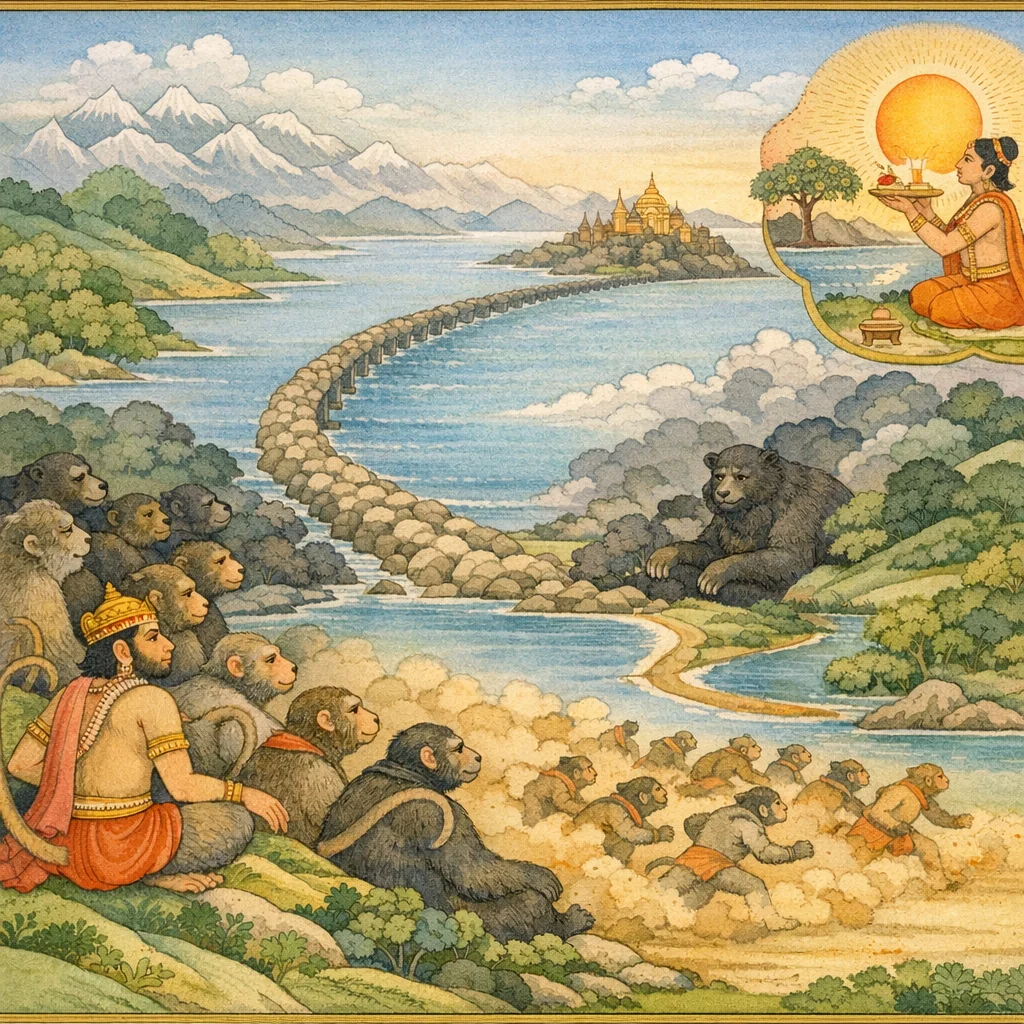
This sarga functions as a martial catalogue and visual briefing: a speaker (addressing the rākṣasa king as “rājan”) describes the allied vanara and ṛkṣa forces assembled for Rāghava’s cause, emphasizing their willingness to risk life (rāghavārthe parākrāntāḥ). The passage identifies prominent leaders and troop-types with vivid similes and genealogical notes: Hara distinguished by a multicolored, radiant tail; the ferocious bears likened to dark storm-clouds; their lord Dhūmra dwelling at Ṛkṣavān and drinking the Narmadā; Jāmbavān, mountain-like and superior among leaders, famed for aiding Indra in the deva–asura war and receiving boons; Dhamba, a fearsome harīśvara surrounded like Indra; Sannadana, described as the vanara ‘grandfather’ with colossal measurements who once fought Indra without defeat; Krōdhana/Krathana residing on Kailāsa near Kubera’s Jambū tree; Pramathi leading a dust-whirling, swift army; Gavākṣa surrounded by Golāṅgūla troops after seeing the bridge; Kesarin reveling on a golden mountain amid perpetual fruits and honey; and Śatabalī, sun-worshipping and intent on crushing Laṅkā. The chapter closes by stressing the incalculable scale of allied forces and their capacity to reshape the earth’s mountains—an epic rhetoric of deterrence and morale.
Shlokas
Verse 1
तांस्तुतेऽहंप्रवक्ष्यामिप्रेक्षमाणस्ययूथपान् ।राघवार्थेपराक्रान्तायेनरक्षन्तिजीवितम् ।।।।
I shall describe to you those troop-leaders you are looking upon—heroes who, for Rāghava’s cause, advance with full might and do not cling to their own lives.
Verse 2
स्निग्धायस्यबहुव्यामावालालाङ्गूलमाश्रिताः ।ताम्राःपीतास्सिताश्श्वेताःप्रकीर्णाघोरकर्मणः ।।।।प्रगृहीताःप्रकाशन्तेसूर्यस्येवमरीचयः ।पृथिव्यांचानुकृष्यन्तेहरोनामैषयूथपः ।।।।
His tail is covered with glossy hairs, many fathoms long—scattered in hues of copper-red, yellow, pale, and white—belonging to one of fearsome deeds.
Verse 3
स्निग्धायस्यबहुव्यामावालालाङ्गूलमाश्रिताः ।ताम्राःपीतास्सिताश्श्वेताःप्रकीर्णाघोरकर्मणः ।।6.27.2।।प्रगृहीताःप्रकाशन्तेसूर्यस्येवमरीचयः ।पृथिव्यांचानुकृष्यन्तेहरोनामैषयूथपः ।।6.27.3।।
Grasped and brandished, they blaze like the sun’s rays; and they trail along the earth—this troop-leader is named Hara.
Verse 4
यंपृष्ठतोऽनुगच्छन्तिशतशोऽथसहस्रशः ।द्रुमानुद्यम्यसहसालङ्कारोहणतत्पराः ।।।।यूथपाहरिराजस्यकिङ्करास्समुपस्थिताः ।
Behind him march troops in hundreds and thousands, hoisting trees with force, intent on scaling Laṅkā; these attendants and fighters of the Monkey-king (Sugrīva) stand ready at command.
Verse 5
नीलानिवमहामेघांस्तिष्ठतोयांस्तुपश्यसि ।।।।असिताञ्जनसङ्काशान् युद्धेसत्यपराक्रमान् ।असङ् ख्येयाननिर्देश्यान्परंपारमिवोदधेः ।।।।पर्वतेषुचयेकेचिद्विषमेषुनदीषुच ।एतेत्वामभिवर्तन्तेराजन्नृक्षास्सुदारुणाः ।।।।
O King, those you see standing like dark thunderclouds—black as collyrium, of unfailing valor in war—are innumerable and beyond description, like the far shore of the sea. From mountains and from difficult river-terrain, those exceedingly fierce bears are advancing upon you.
Verse 6
नीलानिवमहामेघांस्तिष्ठतोयांस्तुपश्यसि ।।6.27.5।।असिताञ्जनसङ्काशान् युद्धेसत्यपराक्रमान् ।असङ् ख्येयाननिर्देश्यान्परंपारमिवोदधेः ।।6.27.6।।पर्वतेषुचयेकेचिद्विषमेषुनदीषुच ।एतेत्वामभिवर्तन्तेराजन्नृक्षास्सुदारुणाः ।।6.27.7।।
O King, standing in their midst is one with terrifying eyes and a dreadful aspect—like the rain-god Parjanya encircled on every side by clouds. He dwells on the excellent mountain Ṛkṣavat, drinking the waters of the Narmadā; he is the overlord of all the bears, the troop-chief named Dhūmra.
Verse 7
नीलानिवमहामेघांस्तिष्ठतोयांस्तुपश्यसि ।।6.27.5।।असिताञ्जनसङ्काशान् युद्धेसत्यपराक्रमान् ।असङ् ख्येयाननिर्देश्यान्परंपारमिवोदधेः ।।6.27.6।।पर्वतेषुचयेकेचिद्विषमेषुनदीषुच ।एतेत्वामभिवर्तन्तेराजन्नृक्षास्सुदारुणाः ।।6.27.7।।
Some are on the mountains, and some in rugged ground and along the rivers. Those exceedingly fierce bears are advancing toward you, O King.
Verse 8
एषांमध्येस्थितोराजन्भीमाक्षोभीमदर्शनः ।पर्जन्यइवजीमूतैस्समन्तात्परिवारितः ।।।।ऋक्षवन्तंगिरिश्रेष्ठमध्यास्तेनर्मदांपिबन् ।सर्वऋक्षाणामधिपतिर्धूम्रोनामैषयूथपः ।।।।
O King, standing in their midst is one with terrifying eyes and a dreadful aspect—like the rain-god Parjanya encircled on every side by clouds. He dwells on the excellent mountain Ṛkṣavat, drinking the waters of the Narmadā; he is the overlord of all the bears, the troop-chief named Dhūmra.
Verse 9
एषांमध्येस्थितोराजन्भीमाक्षोभीमदर्शनः ।पर्जन्यइवजीमूतैस्समन्तात्परिवारितः ।।6.27.8।।ऋक्षवन्तंगिरिश्रेष्ठमध्यास्तेनर्मदांपिबन् ।सर्वऋक्षाणामधिपतिर्धूम्रोनामैषयूथपः ।।6.27.9।।
He dwells on the excellent mountain Ṛkṣavat, drinking the waters of the Narmadā. This troop-leader, named Dhūmra, is the lord of all the bears.
Verse 10
यवीयानस्यतुभ्रातापश्यैनंपर्वतोपमम् ।भ्रात्रासमानोरूपेणविशिष्टस्तुपराक्रमैः ।।।।सएषजाम्बवान्नाममहायूथपयूथपः ।प्रक्रान्तोगुरुवर्तीचसम्प्रहारेष्वमर्षण ।।।।
See this one, mountain-like in stature—he is the younger brother of that leader; in form he resembles his brother, yet in prowess he is distinguished. He is Jāmbavān by name, a great commander among commanders—bold in action, respectful toward elders, and unyielding in close combat.
Verse 11
यवीयानस्यतुभ्रातापश्यैनंपर्वतोपमम् ।भ्रात्रासमानोरूपेणविशिष्टस्तुपराक्रमैः ।।6.27.10।।सएषजाम्बवान्नाममहायूथपयूथपः ।प्रक्रान्तोगुरुवर्तीचसम्प्रहारेष्वमर्षण ।।6.27.11।।
See this one, mountain-like in stature—he is the younger brother of that leader; in form he resembles his brother, yet in prowess he is distinguished. He is Jāmbavān by name, a great commander among commanders—bold in action, respectful toward elders, and unyielding in close combat.
Verse 12
एतेनसाह्यंसुमहत्कृतंशक्रस्यधीमता ।देवासुरेजाम्बवतालब्धाश्चबहवोवराः ।।।।
By this wise Jāmbavān, great assistance was rendered to Śakra (Indra) in the war of Devas and Asuras; and in return, many boons were obtained.
Verse 13
आरुह्यपर्वताग्रेभ्योमहाभ्रविपुला: शिलाः ।मुञ्चन्तिविपुलाकारानमृत्योरुद्विजन्तिच ।।।।राक्षसानांचसदृशाःपिशाचानांचरोमशाः ।एतस्यसैन्याबहवोविचरन्त्यग्नितेजसः ।।।।
Climbing the mountain-peaks, they hurl vast boulders—like great masses of cloud—and, huge of form, they do not shrink even from death. Many in his host roam about, hairy-bodied and blazing like fire, resembling Rākṣasas and Piśācas in their fearsome appearance.
Verse 14
आरुह्यपर्वताग्रेभ्योमहाभ्रविपुला: शिलाः ।मुञ्चन्तिविपुलाकारानमृत्योरुद्विजन्तिच ।।6.27.13।।राक्षसानांचसदृशाःपिशाचानांचरोमशाः ।एतस्यसैन्याबहवोविचरन्त्यग्नितेजसः ।।6.27.14।।
Climbing the mountain-peaks, they hurl vast boulders—like great masses of cloud—and, huge of form, they do not shrink even from death. Many in his host roam about, hairy-bodied and blazing like fire, resembling Rākṣasas and Piśācas in their fearsome appearance.
Verse 15
यंत्वेनमभिसम्रब्धंप्लवमानमिवस्थितम् ।प्रेक्षन्तेवानरास्सर्वेस्थितायूथपयूथपम् ।।।।एषराजन् सहस्राक्षंपर्युपास्तेहरीश्वरः ।बलेनबलसम्पन्नोदम्भोनामैषयूथपः ।।।।
All the Vānaras watch him—the commander over commanders—whether he stands firm or springs about in agitation. O King, this lord of the monkeys is attended by a powerful host, like Sahasrākṣa (Indra) surrounded by his forces; this troop-leader is named Dambha.
Verse 16
यंत्वेनमभिसम्रब्धंप्लवमानमिवस्थितम् ।प्रेक्षन्तेवानरास्सर्वेस्थितायूथपयूथपम् ।।6.27.15।।एषराजन् सहस्राक्षंपर्युपास्तेहरीश्वरः ।बलेनबलसम्पन्नोदम्भोनामैषयूथपः ।।6.27.16।।
All the Vānaras watch him—the commander over commanders—whether he stands firm or springs about in agitation. O King, this lord of the monkeys is attended by a powerful host, like Sahasrākṣa (Indra) surrounded by his forces; this troop-leader is named Dambha.
Verse 17
यःस्थितंयोजनेशैलंगच्छन्पार्श्वेनसेवते ।ऊर्ध्वंतथैवकायेनगतःप्राप्नोतियोजनम् ।।।।यस्मान्नपरमंरूपंचतुष्पादेषुविद्यते ।श्रुतस्संन्नादनोनामवानराणांपितामहाः ।।।।येनयुद्धंपुरादत्तंरणेशक्रस्यधीमता ।पराजयश्चनप्राप्तस्सोऽयंयूथपयूथपः ।।।।
He who, even while standing a yojana away, can brush a mountain with his flanks as he moves—who likewise, rising upward with his very body, can reach the height of a yojana—(such is his vast measure).
Verse 18
यःस्थितंयोजनेशैलंगच्छन्पार्श्वेनसेवते ।ऊर्ध्वंतथैवकायेनगतःप्राप्नोतियोजनम् ।।6.27.17।।यस्मान्नपरमंरूपंचतुष्पादेषुविद्यते ।श्रुतस्संन्नादनोनामवानराणांपितामहाः ।।6.27.18।।येनयुद्धंपुरादत्तंरणेशक्रस्यधीमता ।पराजयश्चनप्राप्तस्सोऽयंयूथपयूथपः ।।6.27.19।।
Among all four-footed beings, none is known to possess a greater form than he. He is famed as Sannādana, the grandsire of the Vānaras.
Verse 19
यःस्थितंयोजनेशैलंगच्छन्पार्श्वेनसेवते ।ऊर्ध्वंतथैवकायेनगतःप्राप्नोतियोजनम् ।।6.27.17।।यस्मान्नपरमंरूपंचतुष्पादेषुविद्यते ।श्रुतस्संन्नादनोनामवानराणांपितामहाः ।।6.27.18।।येनयुद्धंपुरादत्तंरणेशक्रस्यधीमता ।पराजयश्चनप्राप्तस्सोऽयंयूथपयूथपः ।।6.27.19।।
He it was who long ago gave battle to Śakra (Indra) in war; and defeat did not come upon that wise one. Such is this chief among troop-commanders.
Verse 20
यस्यविक्रममाणस्यशक्रस्येवपराक्रमः ।एषगन्धर्वकन्यायामुत्पन्नःकृष्णवर्त्मनः ।।।।तदादेवासुरेयुद्धेसाह्यार्थंत्रिदिवौकसाम्
In valor as he advances, his prowess is like that of Śakra himself. He was born from a Gandharva maiden, through Kṛṣṇavartman; and in the ancient war of gods and demons he arose to aid the dwellers of heaven.
Verse 21
यस्यवैश्रवणोराजाजम्बूमुपनिषेवते ।।।।योराजापर्वतेन्द्राणांबहुकिन्नरसेविनाम् ।विहारसुखदोनित्यंभ्रातुस्तेराक्षसाधिप ।।।।तत्रैषवसतिश्रीमान्बलवान्वानरर्षभः ।युद्धेष्वकत्थनोनित्यंक्रोधनोनामयूथपः ।।।।
Near whose Jambū tree the king Vaiśravaṇa (Kubera) stays in attendance.
Verse 22
यस्यवैश्रवणोराजाजम्बूमुपनिषेवते ।।6.27.21।।योराजापर्वतेन्द्राणांबहुकिन्नरसेविनाम् ।विहारसुखदोनित्यंभ्रातुस्तेराक्षसाधिप ।।6.27.22।।तत्रैषवसतिश्रीमान्बलवान्वानरर्षभः ।युद्धेष्वकत्थनोनित्यंक्रोधनोनामयूथपः ।।6.27.23।।
O lord of Rākṣasas—(on) that king of mountains, frequented by many Kinnaras, your brother ever finds the pleasure of roaming.
Verse 23
यस्यवैश्रवणोराजाजम्बूमुपनिषेवते ।।6.27.21।।योराजापर्वतेन्द्राणांबहुकिन्नरसेविनाम् ।विहारसुखदोनित्यंभ्रातुस्तेराक्षसाधिप ।।6.27.22।।तत्रैषवसतिश्रीमान्बलवान्वानरर्षभः ।युद्धेष्वकत्थनोनित्यंक्रोधनोनामयूथपः ।।6.27.23।।
There dwells this illustrious and mighty bull among Vānaras—ever unboastful in battles—named Krodhana, a commander of troops.
Verse 24
वृतःकोटिसहस्रेणहरीणांसमुपस्थितः ।एषैवाशंसतेलङ्कांस्वेनानीकेनमर्दितुम् ।।।।
Surrounded and attended by a thousand crores of Vānaras, he indeed intends—with his own host—to crush Laṅkā.
Verse 25
योगङ्गामनुपर्येतित्रासयन्गजयूथपान् ।हस्तिनांवानराणांचपूर्ववैरमनुस्मरन् ।।।।एषयूथपतिर्नेतागच्छन् गिरिगुहाशयः ।गजान्योधयतेवन्यान्गिरींश्चैवमहीरुहान् ।।।।
He roams along the Gaṅgā, terrifying the leaders of elephant-herds, remembering the ancient enmity between elephants and Vānaras.
Verse 26
योगङ्गामनुपर्येतित्रासयन्गजयूथपान् ।हस्तिनांवानराणांचपूर्ववैरमनुस्मरन् ।।6.27.25।।एषयूथपतिर्नेतागच्छन् गिरिगुहाशयः ।गजान्योधयतेवन्यान्गिरींश्चैवमहीरुहान् ।।6.27.26।।
This troop-commander and leader, dwelling in mountain-caves, ranges about and battles wild elephants—moving through mountains and great trees alike.
Verse 27
हरीणांवाहिनीमुख्योनदींहैमवतीमनु ।उशीरबीजमाश्रित्यपर्वतंमन्दरोपमम् ।।।।रमतेवानरश्रेष्ठोदिविशक्रइवस्वयम् ।
The chief of the monkeys’ host—best among the Vānaras—makes his abode on Mount Uśīrabīja, Mandara-like, by the river Haimavatī, and sports there like Indra himself in heaven.
Verse 28
एनंशतसहस्राणांसहस्रमनुवर्तते ।वीर्यविक्रमदृप्तानांनर्दतांबलशालिनाम् ।।।।
A thousand from among hundreds of thousands follow him—mighty warriors, roaring aloud, exultant in valor and prowess.
Verse 29
सएषनेताचैतेषांवानराणांमहात्मनाम् ।सएषदुर्धरोराजन्प्रमाथीनामयूथपः ।।।।
He is the leader of these great-souled Vānaras; and he—hard to withstand, O King—is the troop-commander named Pramāthi.
Verse 30
वातेनेवोद्धतंमेघंयमेनमनुपश्यसि ।अनीकमभिसंरब्धंवानराणांतरस्विनाम् ।।।।उद्दूतमरुणाभासंपवनेनसमन्ततः ।विवर्तमानंबहुधायत्रैतद्बहुळंरजः ।।।।
The one you see there is like a cloud driven up by the wind: it is the impetuous Vanara host, roused for battle. All around, wind-whirled dust—reddish in hue—rises thickly and spins in many eddies where that army surges.
Verse 31
वातेनेवोद्धतंमेघंयमेनमनुपश्यसि ।अनीकमभिसंरब्धंवानराणांतरस्विनाम् ।।6.27.30।।उद्दूतमरुणाभासंपवनेनसमन्ततः ।विवर्तमानंबहुधायत्रैतद्बहुळंरजः ।।6.27.31।।
These fearsome, black-faced, cow-tailed ‘Golāṅgūla’ monkeys—by the hundreds of thousands—having seen the bridge built, surround the swift troop-leader named Gavākṣa, himself a Golāṅgūla, and advance with vigor to crush Laṅkā.
Verse 32
एतेऽसितमुखाघोरागोलाङ्गूलामहाबलाः ।शतंशतहस्राणिदृष्ट्वावैसेतुबन्धनम् ।।।।गोलाङ्गूलंमहावेगंगवाक्षंनामयूधपम् ।परिवार्याभिवर्तन्तेलङ्कांमर्दितुमोजसा ।।।।
These fearsome, black-faced, cow-tailed ‘Golāṅgūla’ monkeys—by the hundreds of thousands—having seen the bridge built, surround the swift troop-leader named Gavākṣa, himself a Golāṅgūla, and advance with vigor to crush Laṅkā.
Verse 33
एतेऽसितमुखाघोरागोलाङ्गूलामहाबलाः ।शतंशतहस्राणिदृष्ट्वावैसेतुबन्धनम् ।।6.27.32।।गोलाङ्गूलंमहावेगंगवाक्षंनामयूधपम् ।परिवार्याभिवर्तन्तेलङ्कांमर्दितुमोजसा ।।6.27.33।।
Surrounding the troop-leader named Gavākṣa—himself a Golāṅgūla, swift in motion—they advance with force, intent on crushing Laṅkā by their might.
Verse 34
भ्रमराचरितायत्रसर्वकालफलद्रुमाः ।।।।यंसूर्यस्तुल्यपर्णाभमनुपर्येतिपर्वतम् ।यस्यभासासदाभान्तितद्वर्णामृगपक्षिणः ।।।।यस्यप्रस्थंमहात्मानोनत्यजन्तिमहर्षयः ।सर्वकालफलावृक्षास्सदाफलसमन्विताः ।।।।मधूनिचमहार्हाणियस्मिन्पर्वतसत्तमे ।तत्रैवरमतेराजन्रम्येकाञ्चनपर्वते ।।।।मुख्योवानरमुख्यानांकेसरीनामयूथपः ।
O King, on that splendid mountain where honeybees roam and trees bear fruit in every season—whose foliage glows sunlike, and whose radiance makes birds and beasts shine with the same hue—whose high plateau great sages do not abandon, and where priceless honey is found: there, on that delightful golden mountain, the foremost among Vanara chiefs, the troop-leader named Kesari, delights.
Verse 35
भ्रमराचरितायत्रसर्वकालफलद्रुमाः ।।6.27.34।।यंसूर्यस्तुल्यपर्णाभमनुपर्येतिपर्वतम् ।यस्यभासासदाभान्तितद्वर्णामृगपक्षिणः ।।6.27.35।।यस्यप्रस्थंमहात्मानोनत्यजन्तिमहर्षयः ।सर्वकालफलावृक्षास्सदाफलसमन्विताः ।।6.27.36।।मधूनिचमहार्हाणियस्मिन्पर्वतसत्तमे ।तत्रैवरमतेराजन्रम्येकाञ्चनपर्वते ।।6.27.37।।मुख्योवानरमुख्यानांकेसरीनामयूथपः ।
O king, there is that excellent mountain where the trees bear fruit in every season and are thronged by bees; the Sun seems to move around it, as its foliage gleams like sunlight. By its radiance, deer, birds, and other creatures shine with that very hue. Great sages and high-souled ones do not abandon its plateau. On that best of mountains are ever-fruitful trees, always laden with ripe produce, and precious honey as well. There, on that delightful golden mountain, dwells Kesari—the foremost leader among the chiefs of the Vānaras.
Verse 36
भ्रमराचरितायत्रसर्वकालफलद्रुमाः ।।6.27.34।।यंसूर्यस्तुल्यपर्णाभमनुपर्येतिपर्वतम् ।यस्यभासासदाभान्तितद्वर्णामृगपक्षिणः ।।6.27.35।।यस्यप्रस्थंमहात्मानोनत्यजन्तिमहर्षयः ।सर्वकालफलावृक्षास्सदाफलसमन्विताः ।।6.27.36।।मधूनिचमहार्हाणियस्मिन्पर्वतसत्तमे ।तत्रैवरमतेराजन्रम्येकाञ्चनपर्वते ।।6.27.37।।मुख्योवानरमुख्यानांकेसरीनामयूथपः ।
O king, there is that excellent mountain where the trees bear fruit in every season and are thronged by bees; the Sun seems to move around it, as its foliage gleams like sunlight. By its radiance, deer, birds, and other creatures shine with that very hue. Great sages and high-souled ones do not abandon its plateau. On that best of mountains are ever-fruitful trees, always laden with ripe produce, and precious honey as well. There, on that delightful golden mountain, dwells Kesari—the foremost leader among the chiefs of the Vānaras.
Verse 37
भ्रमराचरितायत्रसर्वकालफलद्रुमाः ।।6.27.34।।यंसूर्यस्तुल्यपर्णाभमनुपर्येतिपर्वतम् ।यस्यभासासदाभान्तितद्वर्णामृगपक्षिणः ।।6.27.35।।यस्यप्रस्थंमहात्मानोनत्यजन्तिमहर्षयः ।सर्वकालफलावृक्षास्सदाफलसमन्विताः ।।6.27.36।।मधूनिचमहार्हाणियस्मिन्पर्वतसत्तमे ।तत्रैवरमतेराजन्रम्येकाञ्चनपर्वते ।।6.27.37।।मुख्योवानरमुख्यानांकेसरीनामयूथपः ।
O king, there is that excellent mountain where the trees bear fruit in every season and are thronged by bees; the Sun seems to move around it, as its foliage gleams like sunlight. By its radiance, deer, birds, and other creatures shine with that very hue. Great sages and high-souled ones do not abandon its plateau. On that best of mountains are ever-fruitful trees, always laden with ripe produce, and precious honey as well. There, on that delightful golden mountain, dwells Kesari—the foremost leader among the chiefs of the Vānaras.
Verse 38
षष्टिर्गिरिसहस्राणांरम्याःकाञ्चनपर्वता ।।।।तेषांमध्येगिरिवरस्त्वमिवानघरक्षसाम् ।तत्रैतेकपिलाश्श्वेतास्ताम्रास्यामधुपिङ्गलाः ।।।।निवसन्त्युत्तमगिरौतीक्ष्णदंष्ट्रानखायुधाः ।सिंहाइवचतुर्दंष्ट्राव्याघ्राइवदुरासदाः ।।।।सर्वेवैश्वानरसमाज्वलिताशीविषोपमाः ।सुदीर्घाञ्चितलाङ्गूलामत्तमातङ्गसन्निभाः ।।।।महापर्वतसङ्काशामहाजीमूतनिस्स्वनाः ।वृत्तपिङ्गलरक्ताक्षाभीमाभीमगतिस्वराः ।।।।मर्दयन्तीवतेसर्वेतस्थुर्लङकासमीक्ष्यते ।
There are sixty thousand delightful golden mountains; and among them this one is the best—just as you, O blameless one, stand pre-eminent among the rākṣasas.
Verse 39
षष्टिर्गिरिसहस्राणांरम्याःकाञ्चनपर्वता ।।6.27.38।।तेषांमध्येगिरिवरस्त्वमिवानघरक्षसाम् ।तत्रैतेकपिलाश्श्वेतास्ताम्रास्यामधुपिङ्गलाः ।।6.27.39।।निवसन्त्युत्तमगिरौतीक्ष्णदंष्ट्रानखायुधाः ।सिंहाइवचतुर्दंष्ट्राव्याघ्राइवदुरासदाः ।।6.27.40।।सर्वेवैश्वानरसमाज्वलिताशीविषोपमाः ।सुदीर्घाञ्चितलाङ्गूलामत्तमातङ्गसन्निभाः ।।6.27.41।।महापर्वतसङ्काशामहाजीमूतनिस्स्वनाः ।वृत्तपिङ्गलरक्ताक्षाभीमाभीमगतिस्वराः ।।6.27.42।।मर्दयन्तीवतेसर्वेतस्थुर्लङकासमीक्ष्यते ।
There dwell those vānaras—some tawny, some white, some copper-faced, and some honey-golden in hue.
Verse 40
षष्टिर्गिरिसहस्राणांरम्याःकाञ्चनपर्वता ।।6.27.38।।तेषांमध्येगिरिवरस्त्वमिवानघरक्षसाम् ।तत्रैतेकपिलाश्श्वेतास्ताम्रास्यामधुपिङ्गलाः ।।6.27.39।।निवसन्त्युत्तमगिरौतीक्ष्णदंष्ट्रानखायुधाः ।सिंहाइवचतुर्दंष्ट्राव्याघ्राइवदुरासदाः ।।6.27.40।।सर्वेवैश्वानरसमाज्वलिताशीविषोपमाः ।सुदीर्घाञ्चितलाङ्गूलामत्तमातङ्गसन्निभाः ।।6.27.41।।महापर्वतसङ्काशामहाजीमूतनिस्स्वनाः ।वृत्तपिङ्गलरक्ताक्षाभीमाभीमगतिस्वराः ।।6.27.42।।मर्दयन्तीवतेसर्वेतस्थुर्लङकासमीक्ष्यते ।
They dwell upon that excellent mountain—armed with sharp fangs and claws—like lions with formidable teeth, and like tigers, perilous to approach.
Verse 41
षष्टिर्गिरिसहस्राणांरम्याःकाञ्चनपर्वता ।।6.27.38।।तेषांमध्येगिरिवरस्त्वमिवानघरक्षसाम् ।तत्रैतेकपिलाश्श्वेतास्ताम्रास्यामधुपिङ्गलाः ।।6.27.39।।निवसन्त्युत्तमगिरौतीक्ष्णदंष्ट्रानखायुधाः ।सिंहाइवचतुर्दंष्ट्राव्याघ्राइवदुरासदाः ।।6.27.40।।सर्वेवैश्वानरसमाज्वलिताशीविषोपमाः ।सुदीर्घाञ्चितलाङ्गूलामत्तमातङ्गसन्निभाः ।।6.27.41।।महापर्वतसङ्काशामहाजीमूतनिस्स्वनाः ।वृत्तपिङ्गलरक्ताक्षाभीमाभीमगतिस्वराः ।।6.27.42।।मर्दयन्तीवतेसर्वेतस्थुर्लङकासमीक्ष्यते ।
All of them are like blazing fire, like flaming venomous serpents; with very long, upraised tails, they resemble rutting elephants in might.
Verse 42
षष्टिर्गिरिसहस्राणांरम्याःकाञ्चनपर्वता ।।6.27.38।।तेषांमध्येगिरिवरस्त्वमिवानघरक्षसाम् ।तत्रैतेकपिलाश्श्वेतास्ताम्रास्यामधुपिङ्गलाः ।।6.27.39।।निवसन्त्युत्तमगिरौतीक्ष्णदंष्ट्रानखायुधाः ।सिंहाइवचतुर्दंष्ट्राव्याघ्राइवदुरासदाः ।।6.27.40।।सर्वेवैश्वानरसमाज्वलिताशीविषोपमाः ।सुदीर्घाञ्चितलाङ्गूलामत्तमातङ्गसन्निभाः ।।6.27.41।।महापर्वतसङ्काशामहाजीमूतनिस्स्वनाः ।वृत्तपिङ्गलरक्ताक्षाभीमाभीमगतिस्वराः ।।6.27.42।।मर्दयन्तीवतेसर्वेतस्थुर्लङकासमीक्ष्यते ।
Vast as great mountains, roaring like mighty thunder-clouds, with round tawny-red eyes, dreadful in their movement and their cries— they all stood gazing at Laṅkā, as though ready to crush it.
Verse 43
एषचैषामधिपतिर्मध्येतिष्ठतिवीर्यवान् ।।।।जयार्थीनित्यमादित्यमुपतिष्ठतिबुद्धिमान् ।नाम्नापृथिव्यांविख्यातोराजन् शतबलीतियः ।।।।एषैवाशंसतेलङ्कांस्वेनानीकेनमर्दितुम् ।
This valiant one stands in their midst as their commander. Seeking victory, the wise hero ever worships the Sun. Known on earth by the name Śatabali, O king, he intends—together with his own host—to crush Laṅkā.
Verse 44
एषचैषामधिपतिर्मध्येतिष्ठतिवीर्यवान् ।।6.27.43।।जयार्थीनित्यमादित्यमुपतिष्ठतिबुद्धिमान् ।नाम्नापृथिव्यांविख्यातोराजन् शतबलीतियः ।।6.27.44।।एषैवाशंसतेलङ्कांस्वेनानीकेनमर्दितुम् ।
O King, this wise warrior—renowned on earth by the name Śatabali—ever worships the Sun, seeking victory; and he declares that with his own host he will crush Laṅkā.
Verse 45
विक्रान्तोबलवान् शूरःपौरुषेस्वेव्यवस्थितः ।रामप्रियार्थंप्राणानांदयांनकुरुतेहरिः ।।।।
Indomitable, strong, and heroic, he stands firm in his own manly resolve; for the sake of pleasing Rāma, that Vānara will show no tenderness even toward his own life.
Verse 46
गजोगवाक्षोगवयोनलोनीलश्चवानरः ।एकैकएवयोधानांकोटीभिर्दशभिर्वृतः ।।।।
Gaja, Gavākṣa, Gavaya, Nala, and the Vānara Nīla—each one of these troop-leaders is attended by ten crores of warriors.
Verse 47
तथाऽऽन्येवानरश्रेष्ठाविन्ध्यपर्वतवासिनः ।नशक्यन्तेबहुत्वात्तुसङ् ख्यातुंलघुविक्रमाः ।।।।
So too there are other foremost Vānaras dwelling on the Vindhya mountains; because of their sheer multitude, those swift and powerful fighters cannot even be counted.
Verse 48
सर्वेमहाराजमहाप्रभावास्सर्वेमहाशैलनिकाशकायाः ।सर्वेसमर्थापृथिवींक्षणेनकर्तुंप्रविध्वस्तविकीर्णशैलाम् ।।।।
O great king, all of them are mighty in power; all have bodies like great mountains; all are capable, in an instant, of making the earth strewn with shattered and scattered mountains.
Frequently Asked Questions
The sarga frames a decisive ethical action rather than a dilemma: the allied forces explicitly renounce concern for personal survival (jīvitam na rakṣanti) in service of Rāghava’s righteous objective, presenting self-sacrifice as legitimate when aligned with dharma and collective protection.
The upadeśa is that righteous ends require disciplined coalition and steadfast courage: power is morally meaningful when governed by loyalty, service to elders, non-boastfulness in war, and a shared commitment to restore order (maryādā) rather than mere conquest.
Key landmarks used to anchor the ‘digital map’ include Laṅkā, Ṛkṣavān mountain, Narmadā and Gaṅgā rivers, Kailāsa and the Jambū tree associated with Kubera, Haimavatī river, Uśīrabīja mountain, and Vindhya residences—each locating troop origins and reputations within an epic sacred geography.