Sarga 20
दूत-नीति, शुक-प्रसङ्गः (Envoy-Ethics and the Episode of Śuka)
युद्धकाण्ड
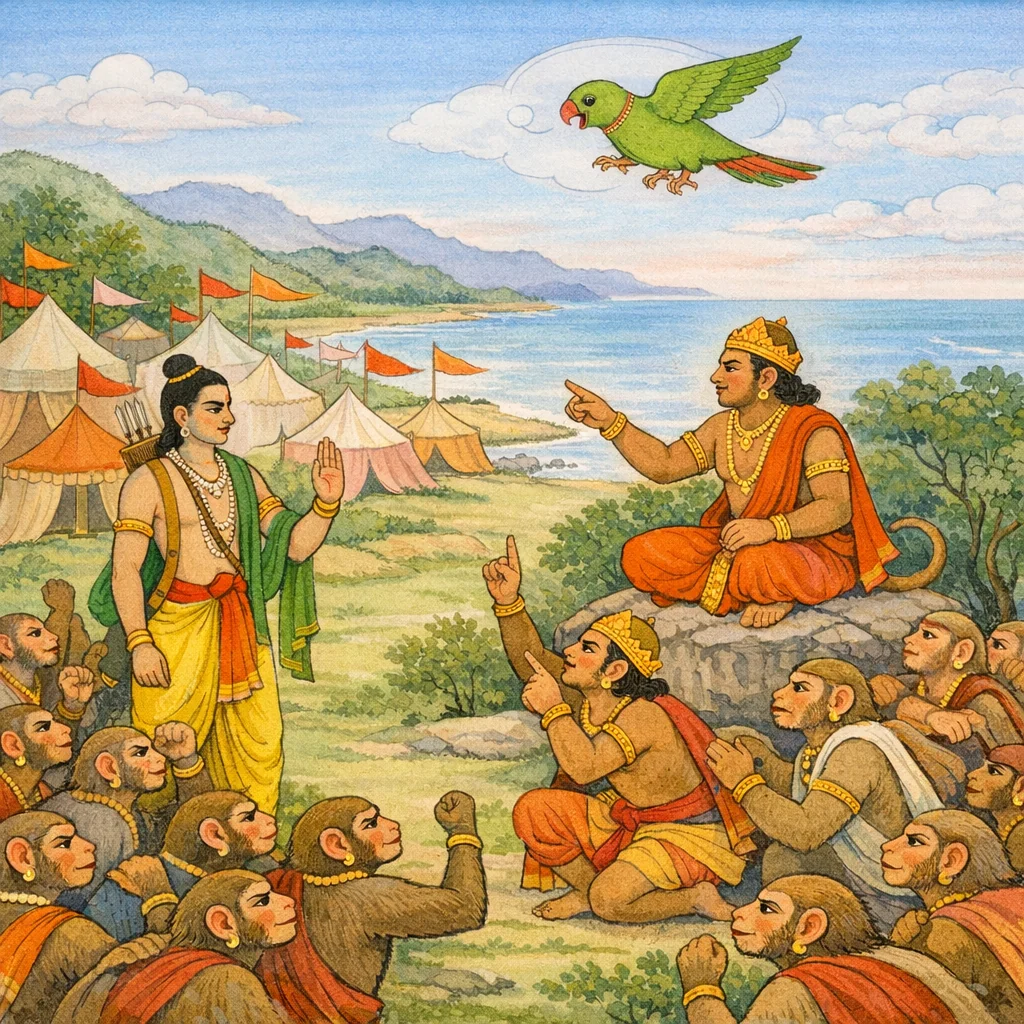
Sarga 20 stages a compact sequence of reconnaissance, diplomatic messaging, and a public test of wartime ethics. The rākṣasa spy Śārdūla enters Sugrīva’s encampment, observes the bannered army, and reports to Rāvaṇa that the vānaras and bears approach Laṅkā like a second, immeasurable ocean; he also notes Rāma and Lakṣmaṇa stationed by the seashore and the vast spread of forces. Rāvaṇa then commissions Śuka to deliver a calculated message to Sugrīva: praising his lineage and strength while minimizing Rāvaṇa’s wrongdoing and asserting Laṅkā’s invincibility—an attempt at psychological deterrence and alliance-fracture. Śuka transforms into a bird, speaks from the sky, and is assaulted by enraged vānaras; he invokes the rule that envoys should not be killed and distinguishes between a faithful messenger and one who adds unauthorized speech. Rāma intervenes to uphold dūta-dharma and orders Śuka released. When Śuka resumes speech from safety, Sugrīva replies with a firm counter-message to be conveyed to Rāvaṇa: a declaration of inevitable defeat, the impossibility of escape even through concealment or divine refuge, and a moral indictment tied to Sītā’s abduction and Jatāyu’s killing. Angada suspects Śuka is a spy who has assessed the army, urging capture; the scene thus balances security concerns with normative restraint, making envoy-protection a didactic centerpiece within the war setting.
Shlokas
Verse 1
ततोनिविष्टांध्वजिनींसुग्रीवेणाभिपालिताम् ।ददर्शराक्षसोऽभ्येत्यशार्दूलोनामवीर्यवान् ।।।।
Then the valiant rākṣasa named Śārdūla came in and beheld the army encamped there, under Sugrīva’s command, marked by its standards.
Verse 2
चारोराक्षसराजस्यरावणस्यदुरात्मनः ।तांदृष्ट्वासर्वतोव्यग्रंप्रतिगम्यसराक्षसः ।।।।प्रविश्यलङ्कांवेगेनरावणंवाक्यमब्रवीत् ।
A rākṣasa who served as the wicked king Rāvaṇa’s spy, having surveyed the camp in its bustle on all sides, swiftly returned and entered Laṅkā, and then addressed Rāvaṇa.
Verse 3
एषवानरऋक्षौघोलङ्कांसमभिवर्तते ।अगाधश्चाप्रमेयश्चद्वितीयइवसागरः ।।।।
This vast host of monkeys and bears is advancing toward Laṅkā—deep and immeasurable, like a second ocean.
Verse 4
पुत्रौदशरथस्येमौभ्रातरौरामलक्ष्मणौ ।।।।उत्तमौरूपसम्पन्नौसीतायाःपदमागतौ ।एतौसागरमासाद्यसन्निविष्टौमहाद्युती ।।।।
These two brothers—Rāma and Lakṣmaṇa, the illustrious sons of Daśaratha—noble and handsome, have arrived, setting their course toward Sītā. Reaching the seashore, the two radiant heroes have encamped there.
Verse 5
पुत्रौदशरथस्येमौभ्रातरौरामलक्ष्मणौ ।।6.20.4।।उत्तमौरूपसम्पन्नौसीतायाःपदमागतौ ।एतौसागरमासाद्यसन्निविष्टौमहाद्युती ।।6.20.5।।
Having reached the ocean, the two heroes of great splendor have taken up their position there.
Verse 6
बलंचामाकाशमावृत्यसर्वतोदशयोजनम् ।तत्त्वभूतंमहाराज क्षिप्रंवेदितुमर्हसि ।।।।
And the army, spreading everywhere, seems to fill the sky for ten yojanas. O great king, you ought to learn the true state of affairs at once.
Verse 7
तवदूतामहाराजक्षिप्रमर्हन्त्यवेक्षितुम् ।उपप्रदानंसान्त्वंवाभेदोवात्रप्रयुज्यताम् ।।।।
O great king, your agents should quickly observe them; let measures be applied there—whether inducement, conciliation, or sowing division.
Verse 8
शार्दूलस्यवचश्श्रुत्वारावणोराक्षसेश्वरः ।उवाचसहसाव्यग्रस्सम्प्रधार्यार्थमात्मनः ।।।।शुकंनामतदारक्षोवाक्यमर्थविदांवरम् ।
Hearing Śārdūla’s words, Rāvaṇa, lord of the Rākṣasas, became agitated; after considering his own course of action, he spoke then to the Rākṣasa named Śuka, foremost among those skilled in discerning meaning.
Verse 9
सुग्रीवंब्रूहिगत्वाशुराजानंवचनान्मम ।यथासन्देशमक्लीबंश्लक्ष्णयापरयागिरा ।।।।
Go quickly and speak to King Sugrīva on my behalf; deliver the message as instructed—fearlessly, yet in a refined and gentle manner.
Verse 10
त्वंवैमहाराजकुलप्रसूतोमहाबलश्चर् क्षरजस्सुतश्च ।नकश्चिदार्थस्तवनास्त्यनर्थस्तथाहिमेभ्रातृसमोहरीश ।।।।
You indeed are born of a royal lineage—mighty, and the son of Ṛkṣarajas. No benefit is lacking to you, nor has any harm been done to you by me; for you are like a brother to me, O lord of vānaras.
Verse 11
अहंयद्यहरंभार्यांराजपुत्रस्यधीमतः ।किंतत्रतवसुग्रीव: किष्किन्धांप्रतिगम्यताम् ।।।।
Even if I carried off the consort of that wise prince, what is that to you, Sugrīva? Let Kishkindhā be returned to—go back there.
Verse 12
नहीयंहरिभिर्लङ्काशक्याप्राप्तुंकथञ्चन ।देवैरपिसगन्धर्वैःकिंपुनर्नरवानरैः ।।।।
This Laṅkā cannot be reached by the vānaras in any way—indeed, not even by the gods together with the gandharvas; how much less, then, by men and vānaras.
Verse 13
सतथाराक्षसेन्द्रेणसन्दिष्टोरजनीचरः ।शुकोविहङ्गमोभूत्वातूर्णमाप्लुत्यचाम्बरम् ।।।।
Thus instructed by the lord of rākṣasas, the night-roaming Śuka became a bird and swiftly sprang up into the sky.
Verse 14
सगत्वादूरमध्वानमुपर्युपरिसागरम् ।संस्थितोह्यम्बरेवाक्यंसुग्रीवमिदमब्रवीत् ।।।।
Having gone a long distance, high above the ocean, he stationed himself in the sky and spoke these words to Sugrīva.
Verse 15
सर्वमुक्तंयथादिष्टंरावणेनदुरात्मना ।तंप्रापयन्तंवचनंतूर्णमाप्लुत्यवानराः ।।।।प्रापद्यन्तदिवंक्षिप्रंलोप्तुंहन्तुंचमुष्टिभि: ।
He conveyed in full what the evil-minded Rāvaṇa had instructed. As he was delivering the message, the vānaras at once leapt up and quickly surged into the air, seeking to strike and kill him with their fists.
Verse 16
सतैःप्लवङ्गैःप्रसभंनिगृहीतोनिशाचरः ।गगनाद्भूतलेचाशुपरिगृह्यनिपातितः ।।।।
Seized violently by hundreds of vānaras, the night-roaming rākṣasa was at once grabbed and hurled down from the sky onto the ground.
Verse 17
वानरैःपीड्यमानस्तुशुकोवचनमब्रवीत् ।नदूतान्घ्नन्तिकाकुत्स्थ वार्यन्तांसाधुवानराः ।।।।
Pressed hard by the vānaras, Śuka spoke: “O Rāma of the Kakutstha line, messengers should not be slain; it would be right to restrain these vānaras.”
Verse 18
यस्तुहित्वामतंभर्तुस्स्वमतंसम्प्रभाषते ।अनुक्तवादीदूतस्सन् सदूतोवधमर्हति ।।।।
“But an envoy who sets aside his lord’s intent and speaks out his own view—uttering what the king did not authorize—such a ‘messenger’ deserves punishment by death.”
Verse 19
शुकस्यवचनंश्रुत्वारामस्तुपरिदेवितम् ।उवाचमावधिष्टेतिघ्नतश्शाखामृगर्षभान् ।।।।
Hearing Śuka’s plea, Rāma addressed the foremost of the tree-dwelling vānaras who were crying out to strike, saying, “Do not kill him.”
Verse 20
सचपत्रलघुर्भूत्वाहरिभिर्दर्शितेभये ।अन्तरिक्षेस्थितोभूत्वापुनर्वचनमब्रवीत् ।।।।
Then Śuka, becoming light-winged and, with the fear shown by the vānaras now withdrawn, remained poised in the open sky and again began to speak.
Verse 21
सुग्रीव:स त्त्वसम्पन्न: महाबलपराक्रम: ।किंमयाखलुवक्तव्योरावणोलोकरावणः ।।।।
“O Sugrīva—rich in courage and mighty in strength—what, then, should I convey from you to Rāvaṇa, the one who makes the world wail?”
Verse 22
सएवमुक्तःप्लवगाधिपस्तदाप्लवङ्गमानामृषभोमहाबलः ।उवाचवाक्यंरजनीचरस्यचारंशुकंतूर्णमदीनसत्त्वः ।।।।
Thus addressed, Sugrīva—the powerful lord of the vānaras, best among the leaping hosts, undaunted in spirit—quickly spoke his words to Śuka, the rākṣasa’s spy.
Verse 23
नमेऽसिमित्रंनतथानुकम्प्योनचोपकर्तापिनमेप्रियोऽसि ।अरिश्चरामस्यसहानुबन्धस्ततोऽसिवालीववधार्हवध्यः ।।।।
“You are no friend of mine, nor worthy of my compassion; you are not my benefactor, nor are you dear to me. You are an enemy bound up with Rāma’s enemy—therefore, like Vālī, you are fit to be slain.”
Verse 24
निह्नन्म्यहंत्वांससुतंसबन्धुंसज्ञातिवर्गरजनीचरेश ।लङ्काञ्चसर्वांमहताबलेनक्षिप्रंकरिष्यामिसमेत्यभस्म ।।।।
“O lord of the night-rangers! I will slay you along with your sons, your kinsmen, and your entire clan; and with great force I will swiftly come and reduce all of Laṅkā to ashes.”
Verse 25
नमोक्षयसेरावण: राघवस्यसुरैस्सहेन्द्रैदपिमूढगुप्तः ।अन्तर्हितस्सूर्यपथंगतोऽवा ।तथैवपातालमनुप्रविष्टः ।।।।गिरीशपादम्बुजसङ्गतोवाहतोऽसिरामेणसहानुजस्त्वम् ।।।।
O deluded Rāvaṇa! Even if you hide—though guarded even by the gods with Indra—whether you vanish from sight, flee into the sun’s path, enter Pātāla below, or even cling to the lotus-feet of Lord Śiva for refuge, you will not escape Rāghava. Rāma will slay you, together with your younger brother.
Verse 26
नमोक्षयसेरावण: राघवस्यसुरैस्सहेन्द्रैदपिमूढगुप्तः ।अन्तर्हितस्सूर्यपथंगतोऽवा ।तथैवपातालमनुप्रविष्टः ।।6.20.25।।गिरीशपादम्बुजसङ्गतोवाहतोऽसिरामेणसहानुजस्त्वम् ।।6.20.26।।
O deluded Rāvaṇa! Even if you hide—though guarded even by the gods with Indra—whether you vanish from sight, flee into the sun’s path, enter Pātāla below, or even cling to the lotus-feet of Lord Śiva for refuge, you will not escape Rāghava. Rāma will slay you, together with your younger brother.
Verse 27
तस्यतेत्रिषुलोकेषुनपिशाचंनराक्षसम् ।त्रातारमनुपश्यामिनगन्धर्वंनचासुरम् ।।।।
For you, I see no savior in the three worlds—no piśāca, no rākṣasa, no gandharva, and no asura.
Verse 28
अवधीर्यजरावृद्दंगृध्रराजंजटायुषम् ।किंनुतेरामसान्निध्येसकाशेलक्ष्मणस्यवा ।।।।हृतासीताविशालाक्षीयांत्वंगृह्यनबुध्यसे ।
Disregarding the aged king of vultures, Jaṭāyu, you seized wide-eyed Sītā—yet you do not understand: why did you dare take her while Rāma was near, or even in Lakṣmaṇa’s presence?
Verse 29
महाबलंमहात्मानंदुर्धर्षममरैरपि ।नबुध्यसेरघुश्रेष्ठंयस्तेप्राणान्हरिष्यति ।।।।
You fail to recognize the best of the Raghu line—great in strength, great-souled, and unconquerable even for the immortals—who will take away your life.
Verse 30
ततोऽब्रवीद्वालिसुतस्त्वङ्गदोहरिसत्तमः ।नायंदूतोमहाराजचारिकःप्रतिभातिमे ।।।।
Then Aṅgada, Vāli’s son and foremost among the monkeys, said: “O King, it seems to me this is not a messenger, but a spy.”
Verse 31
तुलितंहिबलंसर्वमनेनात्रैवतिष्ठता ।गृह्यतांमागमल्लङ्कामेतद्दिममरोचते ।।।।
Standing here, he has surely gauged our entire strength. Let him be seized; let him not return to Laṅkā—this is what I think best.
Verse 32
ततोराज्ञासमादिष्टास्समुत्पत्यवलीमुखाः ।जगृहुश्चबबन्धुश्चविलपन्तमनाथवत् ।।।।
Then, commanded by the king, the monkey-leaders sprang up, seized him, and bound him, as he wailed like one without protection.
Verse 33
शुकस्तुवानरैश्चण्डैस्तत्रतैस्सम्प्रपीडितः ।व्याचुक्रोशमहात्मानंरामंदशरथात्मजम् ।।।।
But Śuka, harshly pressed there by those monkeys, cried out to the great-souled Rāma, Daśaratha’s son.
Verse 34
लुप्येतेमेबलात्पक्षौभिद्येतेमेतथाऽक्षिणी ।।।।यांचरात्रिंमरिष्यामिजायेरात्रिंचयामहम् ।एतस्मिन्नन्तरेकालेयन्मयाह्यशुभंकृतम् ।।।।सर्वंत्वमुपपद्येधाजह्यांचेद्यदिजीवितम् ।
“If my wings are forcibly torn and my eyes likewise injured, then from the night I was born until the night I die—whatever inauspicious deed I have done in that interval—may you incur it all, even if I must abandon my life.”
Verse 35
लुप्येतेमेबलात्पक्षौभिद्येतेमेतथाऽक्षिणी ।।6.20.34।।यांचरात्रिंमरिष्यामिजायेरात्रिंचयामहम् ।एतस्मिन्नन्तरेकालेयन्मयाह्यशुभंकृतम् ।।6.20.35।।सर्वंत्वमुपपद्येधाजह्यांचेद्यदिजीवितम् ।
Having reached the ocean, the two heroes of great splendor have taken up their position there.
Verse 36
नाघातयत्तदारामश्श्रुत्वातत्परिदेवनम् ।वानरानब्रवीद्रामोमुच्यतांदूतआगतः ।।।।
Then Rāma, hearing that lament, forbade them to strike him and said to the Vānaras: “Let him be released—he has come as an envoy.”
Frequently Asked Questions
The dilemma is whether an enemy envoy (Śuka) may be harmed when he is suspected of espionage. The vānaras attack him, but Śuka appeals to dūta-immunity; Rāma resolves the conflict by prohibiting killing and ordering release, prioritizing maryādā over immediate retaliation.
The chapter teaches that dharma regulates even hostile encounters: speech must remain authorized (a true envoy must not add private opinions), and righteous leadership restrains allies to preserve ethical legitimacy, making victory an extension of order rather than uncontrolled violence.
Laṅkā is framed as the fortified objective, while the seashore (sāgara-tīra) marks the allied staging ground. Cultural-political concepts—dūta-nīti and the inviolability of messengers—function as institutional landmarks within the narrative’s war geography.