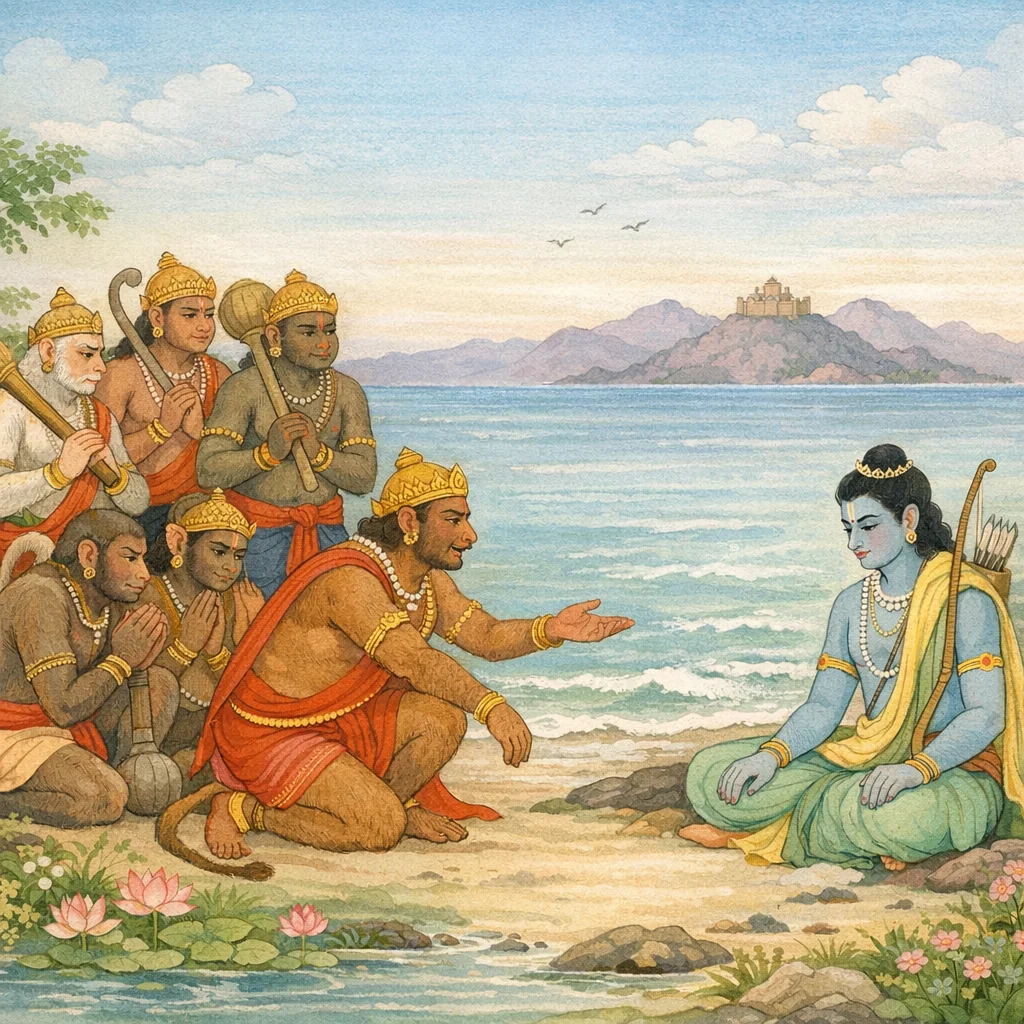
Sarga 2
युद्धकाण्डे द्वितीयः सर्गः — Sugriva’s Counsel: From Grief to Strategy (Bridge to Lanka)
युद्धकाण्ड
This sarga is structured as Sugrīva’s sustained upadeśa to a sorrow-stricken Rāma. He rebukes Rāma’s grief as unworthy of a kṣatriya leader and frames sorrow as a force that erodes śaurya and destroys outcomes. The counsel pivots from psychological restoration (abandon despondency; adopt resolute energy and even controlled wrath) to operational reasoning: with Sītā’s location known and Laṅkā identified atop Trikūṭa, there is no rational basis for paralysis. Sugrīva emphasizes coalition strength—Vānara leaders are capable, motivated, and even willing to enter fire for Rāma’s cause—then advances the central logistical thesis: Laṅkā cannot be subdued without first constructing a setu across the dreadful ocean (Varuṇa’s abode). He repeatedly offers a victory-criterion: once the bridge is built and the army crosses, victory should be considered effectively secured. The chapter closes with confidence-signs (nimitta) and reassurance that no foe in the three worlds can face Rāma when he takes up the bow.
Shlokas
Verse 1
तंतुशोकपरिद्यूनंरामंदशरथात्मजम् ।उवाचवचनंश्रीमान् सुग्रीवश्शोकनाशनम् ।।।।
To Rāma, Daśaratha’s son, worn down by grief, the illustrious Sugrīva spoke words meant to dispel sorrow.
Verse 2
किंत्वंसन्तप्यसेवीर यथान्यःप्राकृतस्तथा ।मैवंभूस्त्यजसन्तापंकृतघ्नइवसौहृदम् ।।।।
Why do you burn with grief, O hero, like an ordinary man? Do not be so—cast off this anguish, as an ungrateful person casts off friendship.
Verse 3
सन्तापस्यचतेस्थानंनहिपश्यामिराघव ।प्रवृत्तावुपलब्धायांज्ञातेचनिलयेरिपोः ।।।।
Rāghava, I see no place for grief in you now—when the needed intelligence has been obtained and the enemy’s stronghold has been identified.
Verse 4
मतिमान्शास्त्रवित्प्राज्ञःपण्डितश्चासिराघव ।त्यजेमांपापिकांबुद्धिंकृतात्मेवार्थदूषणीम् ।।।।
Rāghava, you are intelligent, learned in the śāstras, wise and discerning; cast away this sinful thought—like a disciplined man rejects a mind that corrupts what is right and meaningful.
Verse 5
समुद्रंलङ्घयित्वातुमहानक्रसमाकुलम् ।लङ्कामारोहयिष्यामोहनिष्यामश्चतेरिपुम् ।।।।
Once we cross the ocean—teeming with great crocodiles—and ascend to Laṅkā, we will destroy your enemy.
Verse 6
निरुत्साहस्यदीनस्यशोकपर्याकुलात्मनः ।सर्वार्थाव्यवसीदन्तिव्यसनंचाधिगच्छति ।।।।
For one who has lost spirit, who is dejected and whose mind is shaken by grief, every undertaking collapses—and misfortune closes in.
Verse 7
इमेशूरास्समर्थाश्चसर्वनोहरियूथपाः ।त्वत्प्रियार्थंकृतोत्साहाःप्रवेष्टुमपिपावकम् ।एषांहर्षेणजानामितर्कश्चास्मिन् दृढोमम ।।।।
All these leaders of the vānaras—heroic and fully capable—have roused themselves for your happiness, ready even to enter fire. I know it from their joy, and my inference in this matter is firm.
Verse 8
विक्रमेणसमानेष्येसीतांहत्वायथारिपुम् ।रावणंपापकर्माणंतथात्वंकर्तुमर्हसि ।।।।
With valor we shall bring Sītā back—having slain the enemy, Rāvaṇa of sinful deeds. You ought to act so that this is accomplished.
Verse 9
सेतुरत्रयथाबध्येद्यथापश्येमतांपुरीम् ।तस्यराक्षसराजस्यतथात्वंकुरुराघव ।।।।
Arrange it, O Rāghava, so that a bridge is built here and we may behold that city of the king of the rākṣasas.
Verse 10
दृष्टवातांतुपुरींलङ्कांत्रिकूटशिखरेस्थिताम् ।हतंचरावणंयुद्धेदर्शनावधारय ।।।।
When you behold that city of Laṅkā set upon Trikūṭa’s summit, know from that very sight that Rāvaṇa has been slain in battle.
Verse 11
अबध्वासागरेसेतुंघोरेचतुवरुणालये ।लङ्कांनमर्दितुंशक्यासेन्द्रैरपिसुरासुरैः ।।।।
Without first building a bridge across the dreadful ocean—the realm of Varuṇa—even the gods and asuras, Indra included, cannot hope to crush Laṅkā.
Verse 12
सेतुर्बद्धस्समुद्रेचयावल्लङ्कास्समीपतः ।।।।सर्वंतीर्णंचमेसैन्यंजितमित्युपधारय ।इमेहिसमरेवीराहरयःकामरूपिण ।।।।
Once the bridge is built over the sea up to Laṅkā’s very vicinity, and my entire army has crossed, you may take it as victory already won—for these Vānara warriors are valiant in battle and can assume forms at will.
Verse 13
सेतुर्बद्धस्समुद्रेचयावल्लङ्कास्समीपतः ।।6.2.12।।सर्वंतीर्णंचमेसैन्यंजितमित्युपधारय ।इमेहिसमरेवीराहरयःकामरूपिण ।।6.2.13।।
With the bridge built across the sea up to Laṅkā’s approach, and with my whole force crossed, regard the victory as secured—these Vānara heroes in battle can take whatever form they wish.
Verse 14
तदलंविक्लबांबुद्धिम् राजन सर्वार्थनाशनीम् ।पुरुषस्यहिलोकेऽस्मिन् शोकश्शौर्यापकर्षणः ।।।।
Therefore, O king, abandon this shaken state of mind that ruins all aims; for in this world, sorrow drains a man’s valor.
Verse 15
यत्तुकार्यंमनुष्येणशौण्डीर्यमवलम्बता ।अस्मिन् कालेमहाप्राज्ञसत्त्वमातिष्ठतेजसा ।।।।
Whatever must be done by a man is achieved by relying on heroic resolve; at this moment, O great wise one, stand firm in courage and inner strength.
Verse 16
शूराणांहिमनुष्याणांत्वद्विधानांमहात्मनाम् ।विनष्टेवाप्रणष्टेवाशोकस्सर्वार्थनाशनः ।।।।
For valiant men—great souls like you—if they give way to grief over what is destroyed or lost, that sorrow becomes the ruin of every purpose.
Verse 17
तत्त्वंबुद्धिमतांश्रेष्ठस्सर्वशास्त्रार्थकोविदः ।मद्विधैस्सचिवैस्सार्थमरिंजेतुमिहार्हसि ।।।।
You, foremost among the wise and skilled in the meaning of all śāstras, are fit to conquer the enemy here together with ministers and allies like me.
Verse 18
नहिपश्याम्यहंकंचित् त्रिषुलोकेषुराघव ।गृहीतधनुषेयस्तेतिष्ठेदभिमुखोरणे ।।।।
O Rāghava, I see no one in the three worlds who, when you have taken up your bow, could stand facing you in battle.
Verse 19
वानरेषुसमासक्तंनतेकार्यंविपत्स्यते ।अचिराद्द्रक्ष्यसेसीतांतीर्त्वासागरमक्ष्यम् ।।।।
Since the task has been entrusted to the Vānaras, your undertaking will not fail; before long you will see Sītā, once you have crossed the unconquerable ocean.
Verse 20
तदलंशोकमालम्ब्यक्रोधमालम्बभूपते ।निश्चेष्टाःक्षत्रियामन्दास्सर्वेचण्डस्यबिभ्यति ।।।।
O lord of the earth, enough of clinging to grief—take up righteous anger instead. When warriors become inert they turn feeble; but all men fear one who is fierce and resolute.
Verse 21
लङ्घनार्थंचघोरस्यसमुद्रस्यनदींपतेः ।सहास्माभिरिहोपेतस्सूक्ष्मबुद्धिर्विचारय ।।।।
You, whose intellect is subtle, come here with us now and consider the means for crossing this dreadful ocean, the lord of rivers.
Verse 22
लङ्घितेतस्यतैस्सैन्यंजितमित्युपधारय ।सर्वंतीर्णंचमेसैन्यंजितमित्यवधार्यताम् ।।।।
Assume this: if they manage to cross it, the victory is already won. Let it be firmly understood—once my whole army has crossed, success is certain.
Verse 23
इमेहिहरयश्शूरास्समरेकामरूपिणः ।तानरीन्विधमिष्यन्तिशिलापादपवृष्टिभिः ।।।।
These Vanaras are heroes in battle and can assume forms at will; they will crush the enemies by showering them with rocks, trees, and mountain-sides.
Verse 24
कथञ्चित्सन्तरिष्यामस्तेवयंवरुणालयम् ।हतमित्येवतंमन्येयुद्धेशत्रुनिबर्हण ।।।।
O destroyer of foes, by whatever means we will get across this ocean, Varuṇa’s abode; and I regard that enemy as already slain in battle.
Verse 25
किमुक्त्वाबहुधाचापिसर्वथाविजयीभवान् ।निमित्तानिचपश्यामिमनोमेसम्प्रहृष्यति ।।।।
What is the use of speaking at length? In every way you will be victorious. I see auspicious signs, and my heart is filled with joy.
Frequently Asked Questions
The dilemma is leadership under grief: whether Rāma should remain inwardly consumed by sorrow or reassert kṣatriya responsibility. Sugrīva urges the actionable choice—abandon despondency and proceed with the campaign, anchored in known intelligence about Sītā and Laṅkā.
Sorrow is portrayed as sarvārtha-nāśinī—destroying purpose, courage, and outcomes—whereas disciplined courage (tejas/sattva) restores agency. Ethical victory begins with inner governance before external conquest.
Laṅkā is described as situated on Trikūṭa’s peak, and the samudra is named Varuṇa’s abode and “lord of rivers,” underscoring the cultural sacrality of the ocean and the practical necessity of constructing the setu to reach Laṅkā.