Sarga 14
विभीषणोपदेशः (Vibhīṣaṇa’s Counsel to Rāvaṇa and the Rākṣasa Court)
युद्धकाण्ड
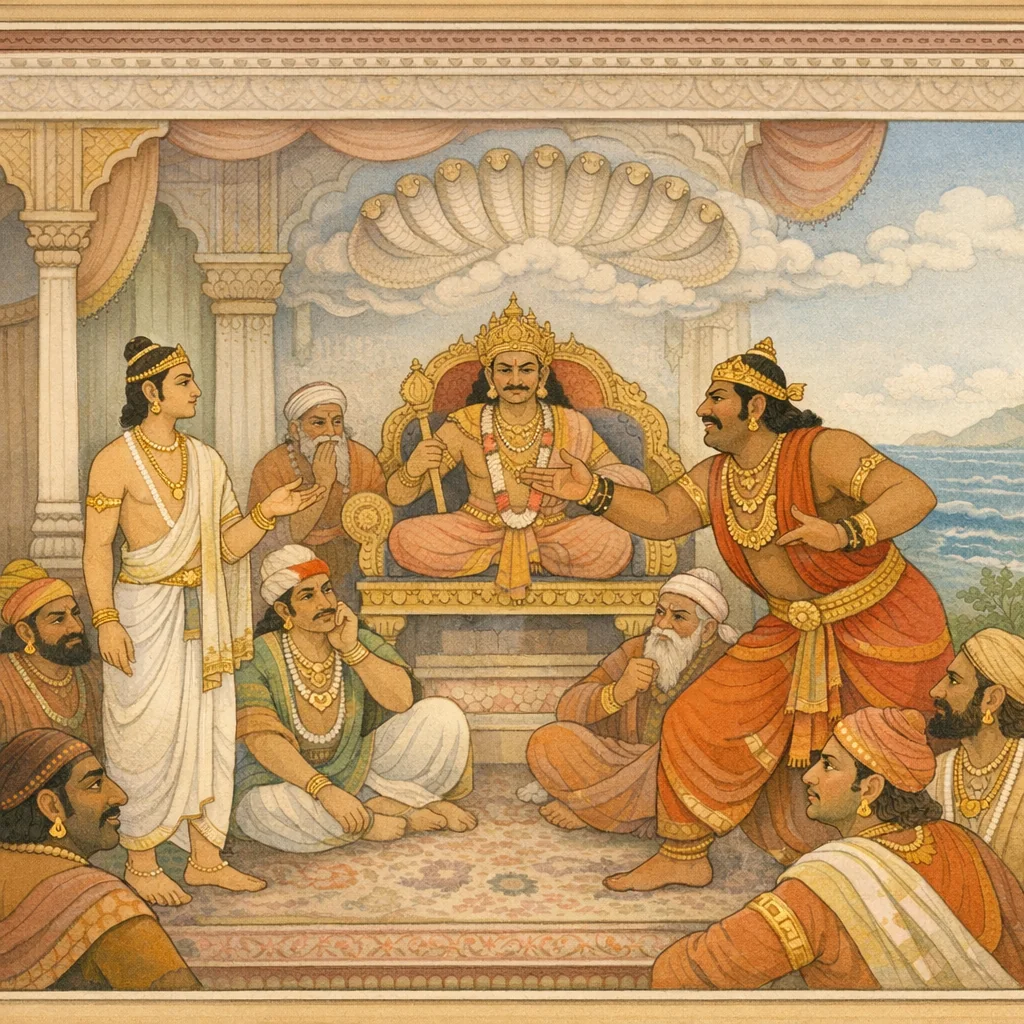
Sarga 14 is structured as a courtly debate on feasibility, ethics, and statecraft at the threshold of Laṅkā’s military catastrophe. After hearing Rāvaṇa’s stance and Kumbhakarṇa’s roars, Vibhīṣaṇa delivers nīti-driven counsel: the anti-Rāma objective is impossible, and unrighteous intent cannot yield ‘svarga-like’ success. He argues by analogy (the non-swimmer cannot cross the ocean) and by comparative force assessment, emphasizing Rāma’s dharma-centered prowess and battlefield supremacy. Vibhīṣaṇa repeatedly urges the immediate restitution of Sītā to Rāma before Laṅkā’s leaders are decapitated by thunderbolt-like arrows. Prahasta counters with bravado, denying fear of gods or other beings; Vibhīṣaṇa responds with sharper warnings, listing rākṣasa champions who cannot withstand Rāghava. The discourse then shifts to political pathology: Rāvaṇa is portrayed as vice-driven, impulsive, and effectively ‘entwined by a thousand-hooded serpent’—a metaphor for self-made bondage. The chapter closes with a ministerial maxim: prudent advice must weigh enemy strength, one’s own capacity, and the state’s prospects for growth or decline, aiming solely at the king’s welfare.
Shlokas
Verse 1
निशाचरेन्द्रस्यनिशम्यवाक्यंसकुम्भकर्णस्यचगर्जितानि ।विभीषणोराक्षसराजमुख्यमुवाचवाक्यंहितमर्थयुक्तम् ।।।।
Hearing the words of the lord of the night-rangers and the roars of Kumbhakarṇa, Vibhīṣaṇa addressed the foremost of Rākṣasa kings with speech that was beneficial and sound in meaning.
Verse 2
न्तरभोगराशिश्चिन्ताविषस्सुस्मिततीक्ष्णदंष्ट्रः ।पञ्चाङ्गुलीपञ्चशिरोऽतिकायस्सीतामहाहिस्तवकेनराजन् ।।।।
O King, why did you choose Sītā—like a great serpent: with coils at the bosom, grief as poison, sharp fangs hidden behind a gentle smile, and five ‘heads’ in the form of her five fingers?
Verse 3
यावन्नलङ्कांसमभिद्रवन्तिवलीमुखाःपर्वतकूटमात्राः ।दष्ट्रायुधाश्चैवनखायुधाश्चप्रदीयतांदाशरथायमैथिली ।।।।
Before the monkey-hosts—huge as mountain-peaks, armed with fangs and claws—rush upon Laṅkā, let Maithilī be handed back to Rāma, the son of Daśaratha.
Verse 4
यावन्नगृह्णन्तिशिरांसिबाणारामेरिताराक्षसपुङ्गवानाम् ।वज्रोपमावायुसमानवेगाःप्रदीयतांदाशरथायमैथिली ।।।।
Before Rāma’s arrows—thunderbolt-like and swift as the wind—begin to seize the heads of the foremost rākṣasas, let Maithilī be given back to Rāma.
Verse 5
नकुम्भकर्णेन्द्रजितौचराजंस्तथामहापार्श्वमहोदरौवा ।निकुम्भकुम्भौचतथाऽतिकायःस्थातुंनशक्तायुधिराघवस्य ।।।।
O King, neither Kumbhakarṇa nor Indrajit—nor Mahāpārśva or Mahodara—nor Nikumbha, Kumbha, or Atikāya will be able to stand against Rāghava in battle.
Verse 6
जीवंस्तुरामस्यनमोक्ष्यसेत्वंगुप्तस्सवित्राप्यथवामरुद्भि: ।नवासवस्याङ्कगतोनमृत्योर्नभोनपाताळमनुप्रविष्टः ।।।।
You will not escape Rāma alive—even if guarded by the Sun or the Maruts; not even if seated in Indra’s lap or Death’s, nor by entering the sky or plunging into the underworld.
Verse 7
निशम्यवाक्यंतुविभीषणस्यततःप्रहस्तोवचनंबभाषे ।ननोभयंविद्मनदैवतेभ्योनदानवेभ्योऽप्यथवाकुतश्चित् ।।।।
Having heard Vibhīṣaṇa’s words, Prahasta then spoke: “We know no fear—neither of the gods nor even of the dānavas, nor from anyone at all.”
Verse 8
नयक्षगन्धर्वमहोरगेभ्योभयंनसंख्येपतगोरगेभ्यः ।कथंनुरामाद्भविताभयंनोनरेन्द्रपुत्रात्समरेकदाचित् ।।।।
We fear neither yakṣas, gandharvas, nor great serpents in battle; nor birds or reptiles. How then could we ever have fear of Rāma, the king’s son, in war?
Verse 9
प्रहस्तवाक्यंत्वहितंनिशम्यविभीषणोराजहितानुकाङ्क्षी ।ततोमहार्थंवचनंबभाषेधर्मार्थकामेषुनिविष्टबुद्धि:।। ।।
Hearing Prahasta’s harmful words, Vibhīṣaṇa—seeking the king’s true welfare, and with his mind grounded in dharma, artha, and kāma—then spoke a weighty reply.
Verse 10
प्रहस्त: राजाचमहोदरश्चत्वंकुम्भकर्णश्चयथाऽर्थजातम् ।ब्रवीतरामंप्रतितन्नशक्यंयथागतिस्स्वर्गमधर्मबुद्धेः ।।।।
“Prahastha, the king, Mahodara, you, and Kumbhakarṇa—whatever you propose against Rāma, it cannot be accomplished; just as one of unrighteous mind does not attain heaven.”
Verse 11
वधस्तुरामस्यमयात्वयाचप्रहस्तसर्वैरपिराक्षसैर्वा ।कथंभवेदर्थविशारदस्यमहार्णवंतर्तुमिवाप्लवस्य ।।।।
“Prahastha, how could the killing of Rāma be possible—by me, by you, or even by all the Rākṣasas—when he is discerning in all matters? It would be like a non-swimmer trying to cross the vast ocean.”
Verse 12
धर्मप्रधानस्यमहारथस्यइक्ष्वाकुवंशप्रभवस्यराज्ञः ।पुरोस्यदेवाश्चतथाविधस्यकृत्येषुशक्तस्यभवन्तिमूढा ।।।।
Before that king—born in the Ikṣvāku line, a great chariot-warrior, for whom righteousness is foremost, and who is powerful in decisive action—even the gods once became bewildered. What, then, can you accomplish against him?
Verse 13
तीक्ष्णानतायत्तवकङ्कपत्रादुरासदाराघवविप्रमुक्ताः ।भित्वाशरीरंप्रविशन्तिबाणाःप्रहस्ततेनैवविकत्थसेत्वम् ।।।।
Prahasta, sharp and deadly arrows—fletched with kaṅka-feathers and released by Rāghava—will pierce and enter your body. With that reality before you, why do you boast?
Verse 14
भित्त्वानतावत्प्रविशन्तिकायंप्राणान्तिकास्तेऽशनितुल्यवेगाः ।शिताश्शराराघवविप्रमुक्ताःप्रहस्ततेनैवविकत्थसेत्वम् ।।।।
Prahasta, those sharp arrows released by Rāghava—life-ending, swift as a thunderbolt—have not yet torn into your body. Precisely for that reason you still boast.
Verse 15
नरावणोनातिबलस्त्रिशीर्षोनकुम्भकर्णोऽस्यसुतोनिकुम्भः ।नचेन्द्रजिद्दाशरधिंप्रसोढुंत्वंवारणेशक्रसमंसमर्थ:।। ।।
Neither Rāvaṇa, nor the exceedingly strong Triśīrṣa, nor Nikumbha the son of Kumbhakarṇa, nor even Indrajit can withstand Dāśarathi in battle—he who is equal to Śakra. How, then, could you?
Verse 16
देवान्तकोवापिनरान्तकोवातथातिकायोऽतिरथोमहात्मा ।आकम्पनश्चाद्रिसमानसारःस्थातुंनशक्तायुधिराघवस्य ।।।।
Whether it be Devāntaka or Narāntaka, or Atikāya, or the great warrior Atiratha, or even Ākampana—solid as a mountain—none of them is able to stand before Rāghava in battle.
Verse 17
अयंचराजाव्यसनाभिभूतोमित्रैरमित्रप्रतिमैर्भवद्भि: ।अन्वास्यतेराक्षसनाशनार्थेतीक्ष्णःप्रकृत्याह्यसीक्षयकारी ।।।।
And this king—overpowered by vices, harsh by nature and acting without reflection—is being attended by you as ‘friends’ who resemble enemies, and thus he proceeds toward the destruction of the rākṣasas.
Verse 18
अनन्तभोगेनसहस्रमूर्थ्नानागेनभीमेनमहाबलेव ।बलात्परिक्षिप्तमिमंभवन्तोराजानमुत्क्षिप्यविमोचयन्तु ।।।।
This king is now tightly coiled by a fearsome serpent—mighty, thousand-headed, of endless coils. You should lift him up and free him from that constriction by force.
Verse 19
यावद्धिकेशग्रहणातसुहृद्भि: समेत्यसर्वैःपरिपूर्णकामैः ।निगृह्यराजापरिरक्षितव्योभूतैर्यथाभीमबलैर्गृहीतः ।।।।
So long as it takes—even seizing him by the hair—let all his well-wishing friends assemble and restrain the king to protect him, as one would rescue a man seized by terrifying, powerful spirits.
Verse 20
सुवारिणाराघवसागरेणप्रच्छाद्यमानस्तरसाभवद्भि: ।युक्तस्त्वयंतारयितुंसमेत्यकाकुत्स्थपातालमुखेपतन्सः ।।।।
As he is being swiftly engulfed by the ‘ocean of Rāghava’—as though falling into the underworld whose mouth is Kakutstha—it is right for you to assemble and bring him safely across, freeing him from that doom.
Verse 21
इदंपुरस्यास्यसराक्षसस्यराज्ञश्चपथ्यंससुहृज्जनस्य ।सम्यग्घिवाक्यंस्वमतंब्रवीमिनरेन्द्रपुत्रायददामपत्नीम् ।।।।
This, I declare, is wholesome counsel for this city, for the rākṣasas, for the king, and for all his well-wishers: my considered advice is sound—let the wife be given back to the king’s son.
Verse 22
परस्यवीर्यंस्वबलंचबुध्वास्थानंक्षयंचैवतथैववृद्धिम् ।तथास्वपक्षेप्यनुमृश्यबुध्वावदेत् क्षमंस्वामिहितंसमन्त्री ।।।।
A minister, having ascertained the foe’s prowess and one’s own strength—along with one’s position, decline, and growth—and having likewise reflected upon one’s own side, should advise what is fitting and truly beneficial to his lord.
Frequently Asked Questions
The pivotal action is Vibhīṣaṇa’s insistence that Sītā must be returned to Rāma immediately for the welfare of Laṅkā and its people—framing restitution as the only ethically and strategically viable course against impending destruction.
The upadeśa is that power without deliberation is self-destructive: a minister must counsel by measuring enemy valour, one’s own strength, and the state’s rise or decline, and must prioritize the king’s true welfare over pride-driven escalation.
Laṅkā is the primary political setting, while ‘the great ocean’ and ‘pātāla (underworld)’ appear as instructive metaphors to convey impossibility and ruin; the approaching vānaras function as a cultural-military landmark of the siege context.