Sarga 13
महापार्श्वस्य परामर्शः — Mahāpārśva’s Counsel and Rāvaṇa’s Confession of Brahmā’s Curse
युद्धकाण्ड
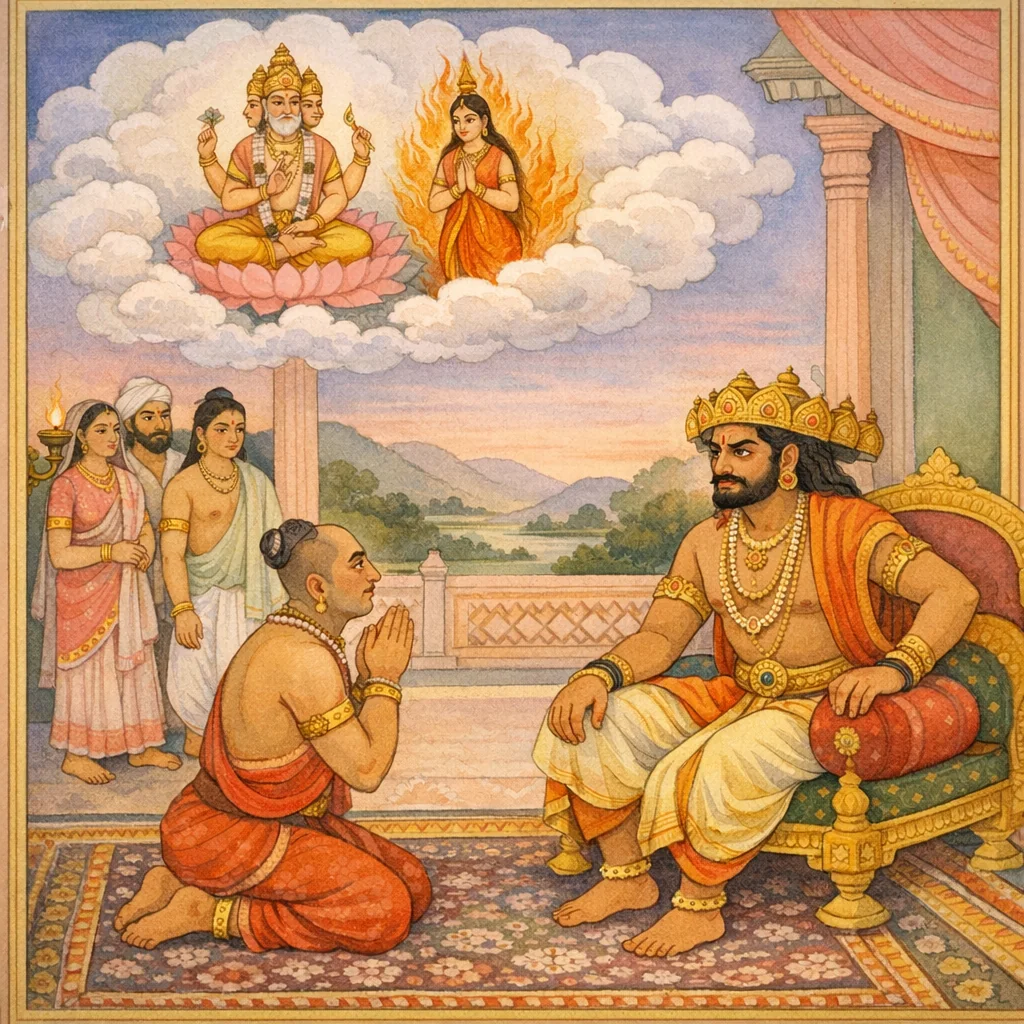
This sarga presents a courtly counsel sequence followed by a disclosure that reframes Rāvaṇa’s coercive intent through the constraint of a divine curse. Mahāpārśva, recognizing Rāvaṇa’s anger, approaches with folded palms and offers hardline advice: dismiss conciliatory and diplomatic expedients and rely on daṇḍa (force), asserting that Kumbhakarṇa and Indrajit can repel even Indra, and urging Rāvaṇa to dominate enemies and forcibly enjoy Sītā. Rāvaṇa, pleased by the counsel, replies by revealing a private history: while traveling toward Brahmā’s abode he saw the celestial woman Puñjikāsthā (glowing like a flame), violated her, and incurred Brahmā’s wrath. Brahmā’s śāpa declares that if Rāvaṇa ever forces another woman, his head will shatter into a hundred pieces; hence he cannot compel Sītā to his bed despite desire. The chapter then pivots to martial boasting: Rāvaṇa claims ocean-like speed and wind-like movement, likens awakening him to rousing a cave-lion or death itself, and threatens to blaze Rāma with thunderbolt-like arrows and to disperse Rāma’s army like the rising sun outshines stars—culminating in the assertion that even Indra or Varuṇa cannot withstand him and that he once seized Laṅkā from Kubera by strength.
Shlokas
Verse 1
रावणंक्रुद्धमाज्ञायमहापार्श्वोमहाबलः ।मुहूर्तमनुसञ्चिन्त्यप्राञ्जलिर्वाक्यमब्रवीत् ।।।।
Realizing that Rāvaṇa was enraged, Mahāpārśva—mighty in strength—reflected for a moment, and then, with palms joined in reverence, spoke these words.
Verse 2
यःखल्वपिवनंप्राप्यमृगव्यालनिषेवितम् ।नपिबेन्मधुसम्प्राप्यसनरोबालिशोभवेत् ।।।।
Whoever, having reached a forest frequented by beasts and predators, obtains honey yet does not drink it—such a man would surely be deemed foolish.
Verse 3
ईश्वरस्येश्वरःकोऽस्तितवशत्रुनिबर्हण: ।रमस्वसहवैदेह्याशत्रूनाक्रम्यमूर्धसु ।।।।
“O destroyer of foes! Who could be the ‘lord over’ a lord like you? Trample your enemies beneath your feet and sport with Vaidehī (Sītā).”
Verse 4
बलात्कुक्कुटवृत्तेनप्रवर्तस्वमहाबल: ।आक्रम्याक्रम्यसीतांवैतांभुङ् क्ष्वचरमस्वच ।।।।
“O mighty one, proceed by sheer force—again and again, like a cock—seize Sītā and enjoy her; revel as you please.”
Verse 5
लब्धकामस्यतेपश्चादागमिष्यतियद्भयम् ।प्राप्तमप्राप्तकालंवासर्वंप्रतिसहिष्यति ।।।।
“Once your desire is satisfied, whatever fear may come afterward—whether immediate or in the time yet to come—you will endure it all.”
Verse 6
कुम्भकर्णस्सहास्माभिरिन्द्रजिच्चमहाबलः ।प्रतिषेधयितुंशक्तौसवज्रमपिवज्रिणम् ।।।।
“Kumbhakarṇa—together with us—and mighty Indrajit are capable of repelling even Vajrin (Indra), even if he comes bearing his thunderbolt.”
Verse 7
उपप्रदानंसान्त्वंवाभेदंवाकुशलैःकृतम् ।समतिक्रम्यदण्डेनसिद्धिमर्थेषुरोचये ।।।।
“Leaving aside the methods employed by the wise—gifts, conciliation, or sowing dissension—I recommend success in your aims through daṇḍa (force).”
Verse 8
इहप्राप्तान्वयंसर्वान् शत्रूंस्तवमहाबल: ।वशेशस्त्रप्रतापेनकरिष्यामोनसंशयः ।।।।
“O mighty one, once your enemies arrive here, we will bring them all under control by the might of our weapons—of this there is no doubt.”
Verse 9
एवमुक्तस्तदाराजामहापार्श्वेनरावणः ।तस्यसम्पूजयन्वाक्यमिदंवचनमब्रवीत् ।।।।
Thus addressed by Mahāpārśva, King Rāvaṇa—pleased by his words—spoke the following reply.
Verse 10
महापार्श्वनिबोधत्वंरहस्यंकिञ्चिदात्मन: ।चिरवृत्तंतदाख्यास्येयदवाप्तंपुरामया ।।।।
“Mahāpārśva, listen: I will tell you a certain secret of mine—an event that happened long ago, something that once befell me.”
Verse 11
पितामहस्यभवनंगच्छन्तींपुञ्जिकस्थलाम् ।चञ्चूर्यमाणामद्राक्षमाकाशेऽग्निशिखामिव ।।।।
“As I was moving through the sky toward the abode of Grandfather Brahmā, I saw Puñjikasthalā going there—darting about in the heavens, radiant like a tongue of flame.”
Verse 12
साप्रसह्यमयाभुक्ताकृताविवसनाततः ।स्वयम्भूभवनंप्राप्तालोलितानलिनीयथा ।।।।
“I violated her by force; I stripped her of her garments. Thereafter she reached the abode of the Self-born (Brahmā), shaken like a lotus-stalk tossed about.”
Verse 13
तच्चतस्यतदामन्येज्ञातमासीन्महात्मनः ।अथसङ्कुपितोदेवोमामिदंवाक्यमब्रवीत् ।।।।
I believe that, at that time, the great-souled deity came to know of that deed; then the god, deeply angered, spoke these words to me.
Verse 14
अद्यप्रभृतियामन्याबलान्नारींगमिष्यसि ।तदातेशतधामूर्धाफलिष्यतिनसंशयः ।।।।
“From today onward, if you go to any woman by force, then your head will shatter into a hundred pieces—of this there is no doubt.”
Verse 15
इत्यहंतस्यशापस्यभीतःप्रसभमेवताम् ।नारोहयेबलात्सीतांवैदेहींशयनेशुभे ।।।।
“Thus, terrified of that curse, I did not force Vaidehī Sītā onto my splendid bed by violence.”
Verse 16
सागरस्येनमेवेगोमारुतस्येवमेगतिः ।नैतद्दाशरथिर्वेदह्यासादयतितेनमाम् ।।।।
My force is like the ocean’s surge, and my movement like the wind’s. Dāśarathi does not know this; therefore he comes to assail me.
Verse 17
कोहिसिंहमिवासीनंसुप्तंगिरिगुहाशये ।क्रुद्धंमृत्युमिवाऽसीनंसम्भोधयितुमिच्छति ।।।।
Who would wish to rouse one like a lion sleeping in a mountain cave—or like Death itself, seated and wrathful?
Verse 18
नमत्तोनिशितान्बाणान्द्विजिह्वान्पन्नगानिव ।रामःपश्यतिसङ्ग्रामेतेनमामभिगच्छति ।।।।
Rāma has not yet seen, in battle, my sharpened arrows—like fork-tongued serpents; therefore he advances toward me.
Verse 19
क्षिप्रंवज्रसमैर्बाणैश्शतथाकार्मुकच्युतैः ।राममादीपयिष्यामिउल्काभिरिवकुञ्जरम् ।।।।
Swiftly, with hundreds of arrows shot from my bow—hard as thunderbolts—I shall set Rāma ablaze, as though scorching an elephant with falling firebrands.
Verse 20
तच्चास्यबलमादास्येबलेनमहतावृतः ।उदितस्सविताकालेनक्षत्राणामिवप्रभाम् ।।।।
Surrounded by a mighty host, I shall break and seize his force—just as the rising sun, at dawn, overwhelms the radiance of the stars.
Verse 21
नवासनेनापिसहस्रचक्षुषायुधाऽस्मिशक्योवरुणेनवापुनः ।मयात्वियंबाहुबलेननिर्जितापुरापुरीवैश्रवणेनपालिता ।।।।
Even Vāsava (Indra), the thousand-eyed, nor Varuṇa again could withstand me in battle. By my own arm-strength I once conquered this city, formerly ruled by Vaiśravaṇa (Kubera).
Frequently Asked Questions
The chapter centers on coercion versus restraint: Mahāpārśva advocates force, including coercive treatment of Sītā, but Rāvaṇa admits he is restrained by Brahmā’s curse—highlighting a conflict between desire, violent intent, and imposed consequence.
It illustrates that power is not absolute: adharma generates limiting outcomes (śāpa), while pride amplifies misjudgment; counsel that elevates daṇḍa alone can intensify downfall when ethical and cosmic constraints are ignored.
The discourse references Brahmā’s abode (Svayambhū/Pitāmaha-bhavana) as a cosmological locus of authority, and recalls Laṅkā as a contested polity once ruled by Kubera—framing the war as both territorial and moral legitimacy struggle.