Sarga 124
पुष्पकविमान-प्रस्थानम् (The Pushpaka Vimāna Offered and the Return Prepared)
युद्धकाण्ड
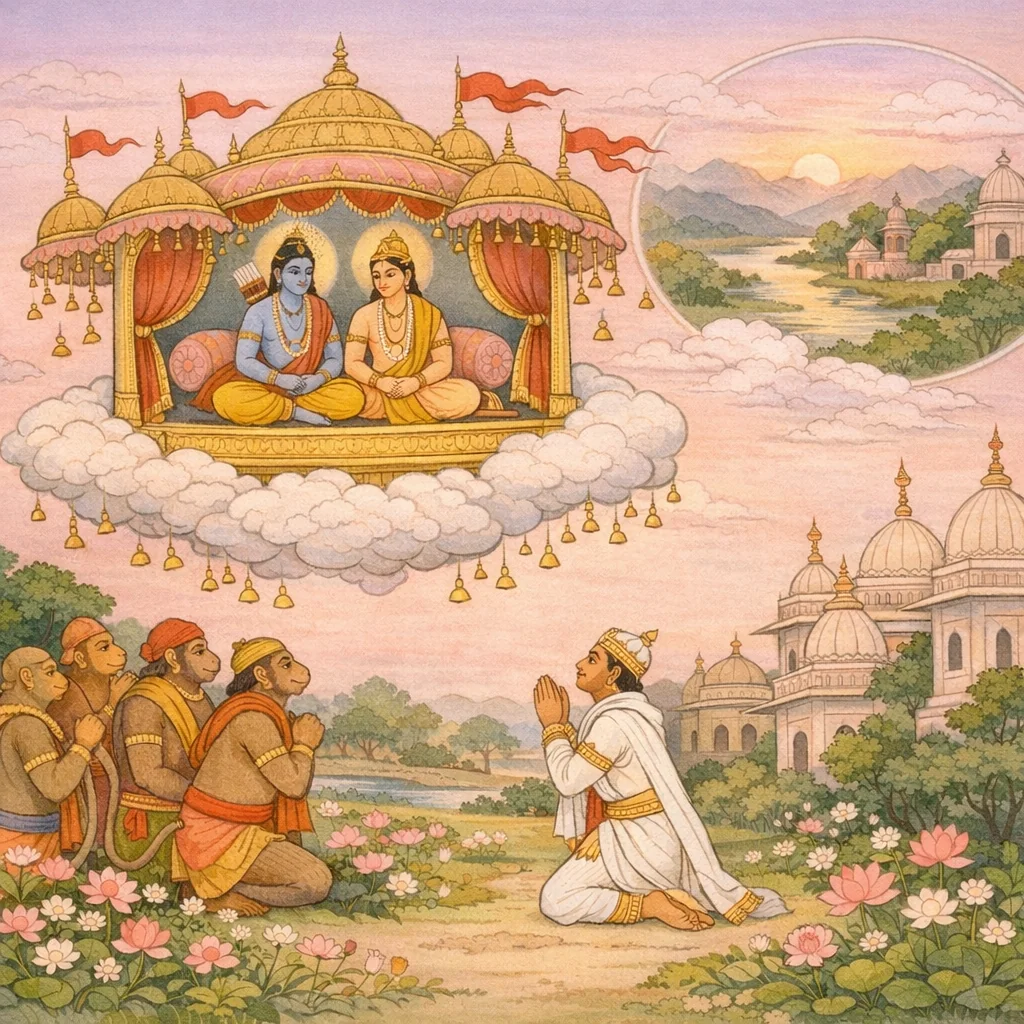
After a night of rest, Vibhīṣaṇa approaches Rama with salutations and inquires about the state of victory. He offers ceremonial hospitality—bathing, unguents, garments, ornaments, sandal, and garlands—arranged through attendants skilled in adornment, and invites Rama and the Vānara leaders to accept rites of refreshment. Rama replies with a restrained ethic of urgency: his heart hastens to see Bharata, whose earlier pleas at Citrakūṭa Rama had not accepted, along with the requests of the queens and citizens. Vibhīṣaṇa then presents the Pushpaka Vimāna, described as sun-like, cloud-like, will-directed (kāmaga), inviolable, and swift as thought; he notes its provenance as Kubera’s vehicle taken by Ravana in battle and preserved now for Rama’s purpose. Rama respectfully declines prolonged stay, asks permission to depart, and requests the vimāna be readied. Vibhīṣaṇa orders it brought; the text provides an ornate material description—golden imagery, gem altars, flags, bells, pearl-set apertures, and a Meru-like scale attributed to Viśvakarmā—culminating in Rama and Lakshmana seating themselves, astonished at its magnitude, thereby marking the narrative pivot from war’s end to the homeward journey.
Shlokas
Verse 1
तांरात्रिमुषितंरामंसुखोत्थिमरिन्दमम् ।अब्रवीत्प्राञ्जलिर्वाक्यंजयंपृष्टवाविभीषणः ।।।।
When Rāma, the subduer of enemies, had spent that night and risen comfortably, Vibhīṣaṇa, with joined palms, asked about the victory and spoke these words.
Verse 2
स्नानानिचाङ्गरागाणिवस्त्राण्याभरणानि च ।चन्दनानि च दिव्यानिमाल्यानिविविधानि च ।।।।अलङ्कारविदश्चेमानार्यःपद्मनिभेक्षणाः ।उपस्थितास्त्वांविधवत्स्नापयिष्यन्तिराघव ।।।।
Bathing requisites, fragrant unguents, garments and ornaments, divine sandal-pastes and many kinds of garlands are here. These lotus-eyed women, skilled in adornment, stand ready to bathe you in due manner, O Rāghava.
Verse 3
स्नानानिचाङ्गरागाणिवस्त्राण्याभरणानि च ।चन्दनानि च दिव्यानिमाल्यानिविविधानि च ।।6.124.2।।अलङ्कारविदश्चेमानार्यःपद्मनिभेक्षणाः ।उपस्थितास्त्वांविधवत्स्नापयिष्यन्तिराघव ।।6.124.3।।
These women, skilled in adornment and lotus-eyed, are in attendance; O Rāghava, they will bathe you properly according to rite.
Verse 4
एवमुक्तस्तुकाकुत्स्थ: प्रत्युवाचविभीषणम् ।हरीन्सुग्रीवमुख्यांस्त्वंस्नानेनोपनिमन्त्रय ।।।।
Thus addressed, Kakutstha (Rāma) replied to Vibhīṣaṇa: “Invite the Vānara hosts—led by Sugrīva—to the bathing rites.”
Verse 5
स तुताम्यतिधर्मात्माममहेतोस्सुखोचितः ।सुकुमारोमहाबाहोकुमार: सत्यसंश्रयः ।।।।
“For my sake he languishes—Bharata—exceedingly righteous, accustomed to comfort yet delicate; that young prince, mighty-armed, who has taken refuge in truth.”
Verse 6
तंविनाकैकयीपुत्रंभरतंधर्मचारिणम् ।न मेस्नानंबहुमतंवस्त्राण्याभरणानि च ।।।।
“Without Bharata—the son of Kaikeyī, who walks in dharma—bathing is not dear to me, nor are garments and ornaments.”
Verse 7
एतत्पश्ययथाक्षिप्रंप्रतिगच्छामतांपुरीम् ।अयोध्यांगच्छतोह्येषपन्थाःपरमदुर्गमः ।।।।
Look to this quickly: for those who would return to the city (Ayodhyā), the route for departure is exceedingly difficult.
Verse 8
एवमुक्तस्तुकाकुत्स्थंप्रत्युवाचविभीषणः ।अह्नात्वांप्रापयिष्यामितांपुरींपार्थिवात्मज ।।।।
Thus addressed, Vibhīṣaṇa replied to Kakutstha: “O prince, I will have you reach that city within a single day.”
Verse 9
पुष्पकंनामभद्रंतेविमानंसूर्यसन्निभम् ।ममभ्रातुःकुबेरस्यरावणेनबलीयसा ।।।।हृतंनिर्जित्यसङ्ग्रामेकामगंदिव्यमुत्तमम् ।त्वदर्थंपालितंचेदंतिष्ठत्यतुलविक्रम ।।।।
“Auspicious to you: there is an aerial car named Puṣpaka, radiant like the sun. My mighty brother Rāvaṇa seized it in battle after overcoming my brother Kubera. It is divine, excellent, and moves at will; and I have kept it ready for your purpose, O you of incomparable valor.”
Verse 10
पुष्पकंनामभद्रंतेविमानंसूर्यसन्निभम् ।ममभ्रातुःकुबेरस्यरावणेनबलीयसा ।।6.124.9।।हृतंनिर्जित्यसङ्ग्रामेकामगंदिव्यमुत्तमम् ।त्वदर्थंपालितंचेदंतिष्ठत्यतुलविक्रम ।।6.124.10।।
May it be well with you: this aerial car named Puṣpaka, radiant like the sun—my brother Kubera’s—was seized by the mighty Rāvaṇa after conquering in battle. This excellent, divine craft that moves at will has been kept here for your purpose, O Rāma of unequaled valor.
Verse 11
तदिदंमेघसङ्काशंविमानमिहतिष्ठति ।तेनयास्यसियानेनत्वमयोध्यांगतज्वरः ।।।।
This cloud-like aerial car is standing here; by this conveyance you will go to Ayodhyā, freed from feverish anxiety.
Verse 12
अहंतेयुद्यनुग्राह्योयदिस्मरसिमेगुणान् ।वसतावदिहप्राज्ञ यद्यस्तिमयिसौहृदम् ।।।।
If I am one to be favored by you, if you remember my good qualities—O wise one—then stay here for a while, if you have affection for me.
Verse 13
लक्ष्मणेनसहभ्रात्रावैदेह्याभार्ययासह ।अर्चितस्सर्वकामैस्त्वंततोराम गमिष्यसि ।।।।
With your brother Lakṣmaṇa and with Vaidehī, your wife—once you have been duly honored and provided with all that is needed—then, O Rāma, you shall depart.
Verse 14
प्रीतियुक्तस्यविहितांससैन्यःससुहृद्गणः ।सक्रतियांराममेतावद्गृहेणत्वंमयोद्यताम् ।।।।
For you—together with the army and the circle of friends—this hospitality has been arranged with affection. O Rāma, accept it just this once, prepared by me.
Verse 15
प्रणयाद्भहुमानाच्चसौहार्देन च राघव ।प्रसादायामिप्रेष्योऽहं न खल्वाज्ञापयामिते ।।।।
Out of affection, esteem, and friendship, O Rāghava, I entreat you. I am your attendant; I do not command you.
Verse 16
एवमुक्तस्ततोरामःप्रत्युवाचविभीषणम् ।रक्षसांवानराणां च सर्वेषामेवशृण्वताम् ।।।।
When Vibhīṣaṇa had spoken thus, Rāma replied to him while all the Rākṣasas and Vānaras stood listening.
Verse 17
पूजितोऽस्मित्वयावीर साचिव्येनपरन्तप ।सर्वात्मना च चेष्टाभिःसौहार्देनपरेण च ।।।।
O hero, scorcher of foes—by your loyal counsel, by your whole-hearted efforts, and by your profound goodwill, I have been truly honored.
Verse 18
न खल्वेतन्नकुर्यांतेवचनंराक्षसेश्वर ।तंतुमेभ्रातरंद्रष्टुंभरतंत्वरतेमनः ।।।।
O lord of the Rākṣasas, it is not possible for me to refuse your words; yet my mind hastens to see my brother Bharata.
Verse 19
मांनिवर्तयितुंयोऽसौचित्रकूटमुपागतः ।शिरसायाचतोयस्यवचनं न कृतंमया ।।।।कौसल्यां च सुमित्रां च कैकेयीं च यशस्विनीम् ।गुहं च सुहृदंचैवपौरान्जनपदैस्सह ।।।।
He who came to Citrakūṭa to turn me back—though he begged with head bowed, I did not comply with his words. Likewise, I did not yield even to Kausalyā, Sumitrā, illustrious Kaikeyī, my friend Guha, and the citizens together with the people of the countryside.
Verse 20
मांनिवर्तयितुंयोऽसौचित्रकूटमुपागतः ।शिरसायाचतोयस्यवचनं न कृतंमया ।।6.124.19।।कौसल्यां च सुमित्रां च कैकेयीं च यशस्विनीम् ।गुहं च सुहृदंचैवपौरान्जनपदैस्सह ।।6.124.20।।
O lord of the Rākṣasas, have my aerial car readied quickly. My purpose here is fulfilled—how could continued residence here be proper for me?
Verse 21
अनुजानीहमांसौम्य पूजितोऽस्मिविभीषण ।मन्युर्नखलुकर्तव्यःसखेत्वांचानुमानये ।।।।
O gentle Vibhīṣaṇa, grant me leave to depart. I have been honored by you, my friend; do not give place to anger—understand my resolve and do not feel wronged.
Verse 22
उपस्थापयमेशीघ्रंविमानंराक्षसेश्वर ।कृतकार्यस्यमेवासःकथंस्यादिहसम्मतः ।।।।
O lord of the Rākṣasas, have my aerial car readied quickly. My purpose here is fulfilled—how could continued residence here be proper for me?
Verse 23
एवमुक्तस्तुरामेणराक्षसेन्द्रोविभीषणः ।विमानसूर्यसङ्काशमाजुहावत्वरान्वितः ।।।।ततःकाञ्चनचित्राङ्गंवैदूर्यमणिवेदिकम् ।कूटागारैःपरिक्षिप्तंसर्वतोरजतप्रभम् ।।।।पाण्डुराभिःपताकाभिर्ध्वजैश्चसमलङ्कृतम् ।शोभितंकाञ्चनैर्हर्म्यैर्हेमपद्मविभूषितैः ।।।।प्रकीर्णंकिङ्किणीजालैर्मुक्तामणिगवाक्षकम् ।घण्टाजालैःपरिक्षिप्तंसर्वतोमधुरस्वनम् ।।।।यन्मेरुशिखराकारंनिर्मितंविश्वकर्मणा ।बृहभिर्भूषितंहर्म्यैर्मुक्तारजतशोभितैः ।।।।तलैस्स्फटिकचित्राङ्गैदूर्यैश्चवरासनैः ।महार्हास्तरणोपेतैरुपपन्नंमहाधनैः ।।।।
Thus addressed by Rāma, Vibhīṣaṇa—the lord of the Rākṣasas—promptly ordered the sun-bright aerial car to be brought. Then appeared that vimāna, adorned with golden panels and platforms inlaid with vaiḍūrya gems, enclosed with turreted structures and gleaming like silver on all sides; decorated with pale pennants and banners, splendid with golden mansions embellished with lotus-ornaments of gold; strewn with nets of little bells, its windows set with pearls, encircled with rows of bells that sounded sweetly all around. Shaped like the summit of Mount Meru and fashioned by Viśvakarman, it shone with large mansions beautified by pearls and silver; its floors were patterned with crystal, furnished with fine seats inlaid with vaiḍūrya, and provided with costly coverings and abundant riches.
Verse 24
एवमुक्तस्तुरामेणराक्षसेन्द्रोविभीषणः ।विमानसूर्यसङ्काशमाजुहावत्वरान्वितः ।।6.124.23।।ततःकाञ्चनचित्राङ्गंवैदूर्यमणिवेदिकम् ।कूटागारैःपरिक्षिप्तंसर्वतोरजतप्रभम् ।।6.124.24।।पाण्डुराभिःपताकाभिर्ध्वजैश्चसमलङ्कृतम् ।शोभितंकाञ्चनैर्हर्म्यैर्हेमपद्मविभूषितैः ।।6.124.25।।प्रकीर्णंकिङ्किणीजालैर्मुक्तामणिगवाक्षकम् ।घण्टाजालैःपरिक्षिप्तंसर्वतोमधुरस्वनम् ।।6.124.26।।यन्मेरुशिखराकारंनिर्मितंविश्वकर्मणा ।बृहभिर्भूषितंहर्म्यैर्मुक्तारजतशोभितैः ।।6.124.27।।तलैस्स्फटिकचित्राङ्गैदूर्यैश्चवरासनैः ।महार्हास्तरणोपेतैरुपपन्नंमहाधनैः ।।6.124.28।।
When Rāma had spoken thus, Vibhīṣaṇa—the lord of the Rākṣasas—promptly summoned the aerial chariot, radiant like the sun. Then that vimāna appeared: its limbs adorned with golden designs; its platforms set with vaidūrya gems; encircled with turreted pavilions, gleaming on every side with a silvery luster. It was richly decorated with pale banners and flags, and beautified by golden mansions embellished with lotus-ornaments of gold. It was strewn with nets of tiny bells; its windows were set with pearls and gems; and it was ringed all around with rows of bells, sounding sweetly. Built by Viśvakarmā, it rose like the peak of Mount Meru, and was ornamented with spacious mansions resplendent with pearls and silver. Its floors were patterned with crystal, its excellent seats inlaid with vaidūrya, furnished with precious coverings, and fully equipped with great wealth.
Verse 25
एवमुक्तस्तुरामेणराक्षसेन्द्रोविभीषणः ।विमानसूर्यसङ्काशमाजुहावत्वरान्वितः ।।6.124.23।।ततःकाञ्चनचित्राङ्गंवैदूर्यमणिवेदिकम् ।कूटागारैःपरिक्षिप्तंसर्वतोरजतप्रभम् ।।6.124.24।।पाण्डुराभिःपताकाभिर्ध्वजैश्चसमलङ्कृतम् ।शोभितंकाञ्चनैर्हर्म्यैर्हेमपद्मविभूषितैः ।।6.124.25।।प्रकीर्णंकिङ्किणीजालैर्मुक्तामणिगवाक्षकम् ।घण्टाजालैःपरिक्षिप्तंसर्वतोमधुरस्वनम् ।।6.124.26।।यन्मेरुशिखराकारंनिर्मितंविश्वकर्मणा ।बृहभिर्भूषितंहर्म्यैर्मुक्तारजतशोभितैः ।।6.124.27।।तलैस्स्फटिकचित्राङ्गैदूर्यैश्चवरासनैः ।महार्हास्तरणोपेतैरुपपन्नंमहाधनैः ।।6.124.28।।
When Rāma had spoken thus, Vibhīṣaṇa—the lord of the Rākṣasas—promptly summoned the aerial chariot, radiant like the sun. Then that vimāna appeared: its limbs adorned with golden designs; its platforms set with vaidūrya gems; encircled with turreted pavilions, gleaming on every side with a silvery luster. It was richly decorated with pale banners and flags, and beautified by golden mansions embellished with lotus-ornaments of gold. It was strewn with nets of tiny bells; its windows were set with pearls and gems; and it was ringed all around with rows of bells, sounding sweetly. Built by Viśvakarmā, it rose like the peak of Mount Meru, and was ornamented with spacious mansions resplendent with pearls and silver. Its floors were patterned with crystal, its excellent seats inlaid with vaidūrya, furnished with precious coverings, and fully equipped with great wealth.
Verse 26
एवमुक्तस्तुरामेणराक्षसेन्द्रोविभीषणः ।विमानसूर्यसङ्काशमाजुहावत्वरान्वितः ।।6.124.23।।ततःकाञ्चनचित्राङ्गंवैदूर्यमणिवेदिकम् ।कूटागारैःपरिक्षिप्तंसर्वतोरजतप्रभम् ।।6.124.24।।पाण्डुराभिःपताकाभिर्ध्वजैश्चसमलङ्कृतम् ।शोभितंकाञ्चनैर्हर्म्यैर्हेमपद्मविभूषितैः ।।6.124.25।।प्रकीर्णंकिङ्किणीजालैर्मुक्तामणिगवाक्षकम् ।घण्टाजालैःपरिक्षिप्तंसर्वतोमधुरस्वनम् ।।6.124.26।।यन्मेरुशिखराकारंनिर्मितंविश्वकर्मणा ।बृहभिर्भूषितंहर्म्यैर्मुक्तारजतशोभितैः ।।6.124.27।।तलैस्स्फटिकचित्राङ्गैदूर्यैश्चवरासनैः ।महार्हास्तरणोपेतैरुपपन्नंमहाधनैः ।।6.124.28।।
When Rāma had spoken thus, Vibhīṣaṇa—the lord of the Rākṣasas—promptly summoned the aerial chariot, radiant like the sun. Then that vimāna appeared: its limbs adorned with golden designs; its platforms set with vaidūrya gems; encircled with turreted pavilions, gleaming on every side with a silvery luster. It was richly decorated with pale banners and flags, and beautified by golden mansions embellished with lotus-ornaments of gold. It was strewn with nets of tiny bells; its windows were set with pearls and gems; and it was ringed all around with rows of bells, sounding sweetly. Built by Viśvakarmā, it rose like the peak of Mount Meru, and was ornamented with spacious mansions resplendent with pearls and silver. Its floors were patterned with crystal, its excellent seats inlaid with vaidūrya, furnished with precious coverings, and fully equipped with great wealth.
Verse 27
एवमुक्तस्तुरामेणराक्षसेन्द्रोविभीषणः ।विमानसूर्यसङ्काशमाजुहावत्वरान्वितः ।।6.124.23।।ततःकाञ्चनचित्राङ्गंवैदूर्यमणिवेदिकम् ।कूटागारैःपरिक्षिप्तंसर्वतोरजतप्रभम् ।।6.124.24।।पाण्डुराभिःपताकाभिर्ध्वजैश्चसमलङ्कृतम् ।शोभितंकाञ्चनैर्हर्म्यैर्हेमपद्मविभूषितैः ।।6.124.25।।प्रकीर्णंकिङ्किणीजालैर्मुक्तामणिगवाक्षकम् ।घण्टाजालैःपरिक्षिप्तंसर्वतोमधुरस्वनम् ।।6.124.26।।यन्मेरुशिखराकारंनिर्मितंविश्वकर्मणा ।बृहभिर्भूषितंहर्म्यैर्मुक्तारजतशोभितैः ।।6.124.27।।तलैस्स्फटिकचित्राङ्गैदूर्यैश्चवरासनैः ।महार्हास्तरणोपेतैरुपपन्नंमहाधनैः ।।6.124.28।।
When Rāma had spoken thus, Vibhīṣaṇa—the lord of the Rākṣasas—promptly summoned the aerial chariot, radiant like the sun. Then that vimāna appeared: its limbs adorned with golden designs; its platforms set with vaidūrya gems; encircled with turreted pavilions, gleaming on every side with a silvery luster. It was richly decorated with pale banners and flags, and beautified by golden mansions embellished with lotus-ornaments of gold. It was strewn with nets of tiny bells; its windows were set with pearls and gems; and it was ringed all around with rows of bells, sounding sweetly. Built by Viśvakarmā, it rose like the peak of Mount Meru, and was ornamented with spacious mansions resplendent with pearls and silver. Its floors were patterned with crystal, its excellent seats inlaid with vaidūrya, furnished with precious coverings, and fully equipped with great wealth.
Verse 28
एवमुक्तस्तुरामेणराक्षसेन्द्रोविभीषणः ।विमानसूर्यसङ्काशमाजुहावत्वरान्वितः ।।6.124.23।।ततःकाञ्चनचित्राङ्गंवैदूर्यमणिवेदिकम् ।कूटागारैःपरिक्षिप्तंसर्वतोरजतप्रभम् ।।6.124.24।।पाण्डुराभिःपताकाभिर्ध्वजैश्चसमलङ्कृतम् ।शोभितंकाञ्चनैर्हर्म्यैर्हेमपद्मविभूषितैः ।।6.124.25।।प्रकीर्णंकिङ्किणीजालैर्मुक्तामणिगवाक्षकम् ।घण्टाजालैःपरिक्षिप्तंसर्वतोमधुरस्वनम् ।।6.124.26।।यन्मेरुशिखराकारंनिर्मितंविश्वकर्मणा ।बृहभिर्भूषितंहर्म्यैर्मुक्तारजतशोभितैः ।।6.124.27।।तलैस्स्फटिकचित्राङ्गैदूर्यैश्चवरासनैः ।महार्हास्तरणोपेतैरुपपन्नंमहाधनैः ।।6.124.28।।
When Rāma had spoken thus, Vibhīṣaṇa—the lord of the Rākṣasas—promptly summoned the aerial chariot, radiant like the sun. Then that vimāna appeared: its limbs adorned with golden designs; its platforms set with vaidūrya gems; encircled with turreted pavilions, gleaming on every side with a silvery luster. It was richly decorated with pale banners and flags, and beautified by golden mansions embellished with lotus-ornaments of gold. It was strewn with nets of tiny bells; its windows were set with pearls and gems; and it was ringed all around with rows of bells, sounding sweetly. Built by Viśvakarmā, it rose like the peak of Mount Meru, and was ornamented with spacious mansions resplendent with pearls and silver. Its floors were patterned with crystal, its excellent seats inlaid with vaidūrya, furnished with precious coverings, and fully equipped with great wealth.
Verse 29
उपस्थितमनाधृष्यंतद्विमानंमनोजवम् ।निवेदयित्वारामायतस्थौतत्रविभीषणः ।।।।
That aerial car—unassailable and swift as thought—was brought forth; and having presented it to Rāma, Vibhīṣaṇa stood there.
Verse 30
तत्पुष्पकंकामगमंविमानमुपस्थितंभूधरसन्निकाशम् ।दृष्टवातदाविस्मयमाजगामरामस्ससौमित्रिरुदारसत्त्व: ।।।।
Then, seeing the Puṣpaka aerial car—moving at will and standing there, mountain-like in appearance—Rāma, together with Saumitri (Lakṣmaṇa), the noble-souled, was filled with wonder.
Frequently Asked Questions
The key action is Rama’s refusal to prolong celebratory comfort despite legitimate hospitality; he prioritizes duty toward Bharata and Ayodhya, framing post-war conduct as disciplined responsibility rather than indulgent triumph.
Victory does not suspend dharma: gratitude is acknowledged, but the ruler’s obligations—repairing social order, honoring those who suffered, and completing the promised return—take precedence over personal ease and ceremonial pleasure.
Ayodhya functions as the civic endpoint of restoration; Citrakūṭa recalls the earlier moral test of returning from exile; culturally, the chapter foregrounds rites of hospitality and royal protocol (snāna, anointment, adornment) as part of orderly transition after conflict.