Sarga 115
विभीषणाभिषेकः (Vibhīṣaṇa’s Consecration) and Hanumān’s Commission to Sītā
युद्धकाण्ड
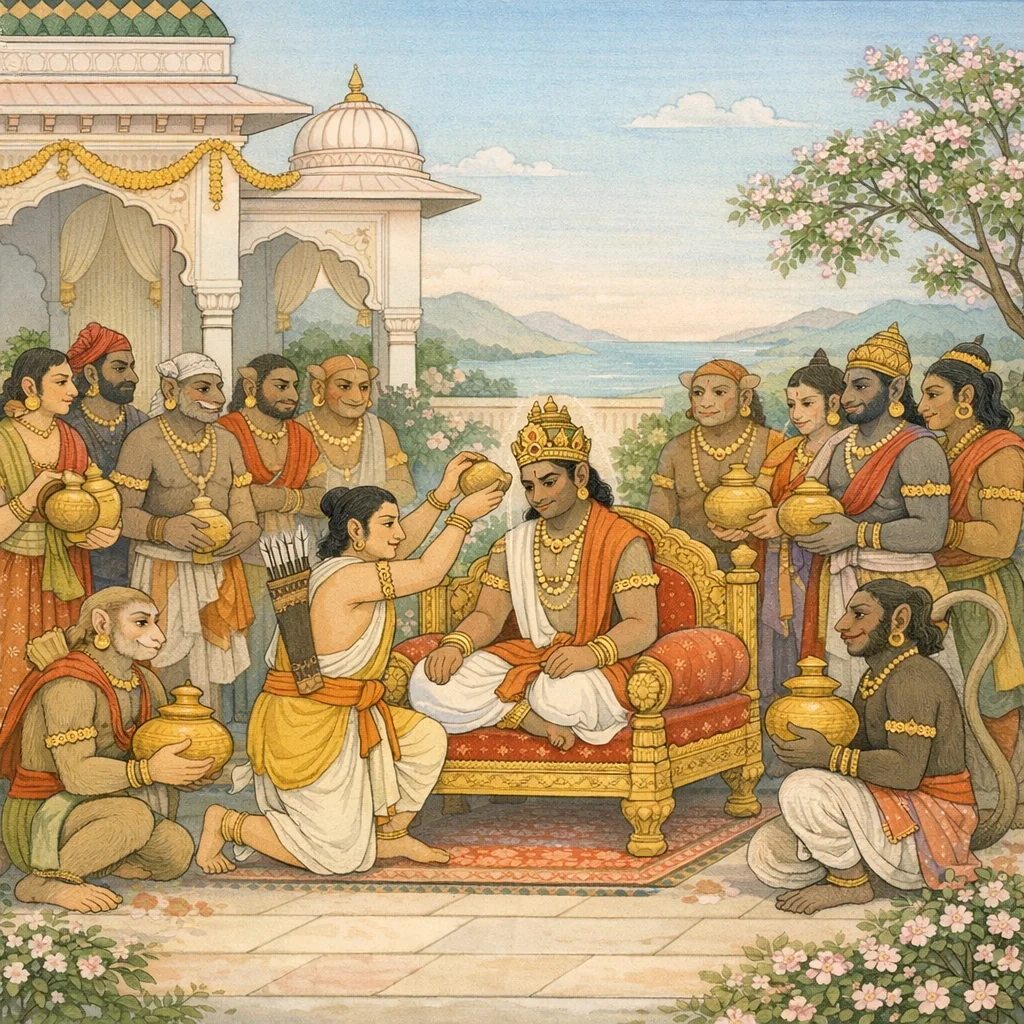
After Rāvaṇa’s fall, celestial beings (Devas, Gandharvas, Dānavas) depart in their vimānas, recounting auspicious narratives of the victory and the virtues displayed—Rāma’s prowess, the Vānara campaign, Sugrīva’s counsel, Lakṣmaṇa’s devotion and valor, Sītā’s fidelity, and Hanumān’s heroism. Rāma formally releases Indra’s charioteer Mātali, who returns to heaven with the divine chariot. Rāma embraces Sugrīva and returns to the camp, then directs Lakṣmaṇa to consecrate Vibhīṣaṇa in Laṅkā, citing his devotion, loyalty, and prior service. Lakṣmaṇa procures a golden vessel; swift Vānara leaders fetch ocean-water, and Vibhīṣaṇa is seated on an excellent throne and anointed amid Rakṣasas with mantra-guided ritual according to śāstric procedure, explicitly “by Rāma’s command,” establishing legitimate sovereignty. Rakṣasas and Vānaras rejoice and offer homage to Rāma. Vibhīṣaṇa consoles the populace, receives auspicious offerings (curds, akṣata, sweets, parched grain, flowers), and presents them to Rāma and Lakṣmaṇa; Rāma accepts to honor Vibhīṣaṇa’s affection. Finally, Rāma instructs Hanumān—after obtaining Vibhīṣaṇa’s permission—to enter Laṅkā, convey the good news to Vaidehī (Sītā), and return with her message.
Shlokas
Verse 1
तेरावणवधंदृष्टवादेवगन्धर्वदानवाः ।जग्मुस्स्वैस्वैर्विमानैस्तेकथयन्तश्शुभाःकथाः ।।।।
Having witnessed Rāvaṇa’s slaying, the Devas, Gandharvas, and Dānavas departed in their respective aerial cars, speaking among themselves auspicious accounts of that event.
Verse 2
रावणस्यवधंघोरंराघवस्यपराक्रमम् ।सुयुद्धंवानराणां च सुग्रीवस्य च मन्त्रितम् ।।।।अनुरागं च वीर्यं च सौमित्रेर्लक्ष्मणस्य च ।पतिव्रतात्वंसीतायाहनूमतिपराक्रमम् ।।।।कथयन्तोमहाभागाजग्मुर्हष्टायथागतम् ।
Recounting the dreadful slaying of Rāvaṇa, Rāghava’s prowess, the Vanaras’ noble combat, and Sugrīva’s counsel—along with Lakṣmaṇa’s loyal affection and valor, Sītā’s steadfast fidelity, and Hanumān’s heroism—the honored ones, rejoicing, departed as they had come.
Verse 3
रावणस्यवधंघोरंराघवस्यपराक्रमम् ।सुयुद्धंवानराणां च सुग्रीवस्य च मन्त्रितम् ।।6.115.2।।अनुरागं च वीर्यं च सौमित्रेर्लक्ष्मणस्य च ।पतिव्रतात्वंसीतायाहनूमतिपराक्रमम् ।।6.115.3।।कथयन्तोमहाभागाजग्मुर्हष्टायथागतम् ।
Recounting Lakṣmaṇa’s affection and valor, Sītā’s fidelity as a devoted wife, and Hanūmān’s prowess, those noble ones rejoiced and departed, returning as they had come.
Verse 4
राघवस्तुरथंदिव्यमिन्द्रदत्तंशिखिप्रभम् ।।।।अनुज्ञायमहाभागोर्मातलिंप्रत्यपूजयत् ।
Rāghava, the noble one, bade farewell to Mātali and duly returned the wondrous chariot—Indra’s gift, gleaming like fire.
Verse 5
राघवेणाभ्यनुज्ञातोमातलिश्शक्रसारथिः ।।।।दिव्यंतंरथमास्थायदिवमेवारूरोहसह ।
Permitted by Rāghava, Mātali—Indra’s charioteer—mounted that divine chariot and ascended back to heaven.
Verse 6
तस्मिंस्तुदिवमारूढेसुसारथिसन्तमे ।।।।राघवःपरमप्रीतस्सुग्रीवंपरिषस्वजे ।
When Mātali—the finest of charioteers—had ascended to heaven, Rāghava, filled with deep affection, embraced Sugrīva in gratitude.
Verse 7
परिष्वज्य च सुग्रीवंलक्ष्मणेनाभिवादितः ।।।।पूज्यमानोहरिगणैराजगामबलालयम् ।
After embracing Sugrīva, and being greeted by Lakṣmaṇa, Rāma—honored by the hosts of Vānaras—returned to the army’s camp.
Verse 8
अथोवाच स काकुत्स्थस्समीपपरिवर्तिनम् ।।।।सौमित्रिंसत्त्वसम्पन्नंलक्ष्मणंशुभलक्षणम् ।
Then the scion of Kakutstha spoke to Lakṣmaṇa—Saumitrī—who stood close by, endowed with steadfast courage and marked by auspicious qualities.
Verse 9
भीषणमिमंसौम्य लङ्कायामभिषेचय ।।।।अनुरक्तं च भक्तं च तथापूर्वोपकारिणम् ।
“Gentle Lakṣmaṇa, consecrate this Vibhīṣaṇa in Laṅkā—he is devoted, deeply loyal, and one who has rendered help before.”
Verse 10
एषमेपरमःकामोयदिमंरावणानुजम् ।।।।लङ्कायांसौम्य पश्येमभिषिक्तंविभीषणम् ।
"O gentle one, this is my highest wish: that we may see Vibhīṣaṇa—Rāvaṇa’s younger brother—consecrated in Laṅkā."
Verse 11
एवमुक्तस्तुसौमित्रीराघवेणमहात्मना ।।।।तथेत्युक्त्वासुसम्हृष्टःसौवर्णंघटमाददे ।
Thus addressed by the great-souled Rāghava, Saumitri (Lakṣmaṇa), delighted, replied “So be it” and took up a golden vessel.
Verse 12
तम्घटंवानरेन्द्राणांहस्तेदत्त्वामनोजवान् ।।।।व्यादिदेशमहासत्त्व: समुद्रसलिलंतदा ।
Then the mighty Lakṣmaṇa placed that vessel into the hand of the swift Vanara leader and instructed him to bring water from the ocean.
Verse 13
अतिशीघ्रंततोगत्वावानरास्तेमनोजवाः ।।।।आगतास्तुजलंगृह्यसमुद्राद्वानरोत्तमाः ।
Those foremost Vanaras, swift as thought, went with great speed and returned bringing water from the ocean.
Verse 14
ततःस्त्वेकंघटंगृह्यसम्स्थाप्यपरमासने ।।।।घटेनतेनसौमित्रिरभ्यषिञ्चद्विभीषणम् ।लङ्कायांरक्षसांमध्येराजानंरामशासनात् ।।।।विधिनामन्त्रदृष्टेनसुहृद्गणसमावृतः ।
Then, taking one vessel and seating Vibhīṣaṇa upon an excellent throne, Saumitri consecrated him with that vessel’s water—by Rāma’s command—amid the Rakṣasas in Laṅkā, with rites prescribed by scripture and mantras, while he was surrounded by his well-wishers.
Verse 15
ततःस्त्वेकंघटंगृह्यसम्स्थाप्यपरमासने ।।6.115.14।।घटेनतेनसौमित्रिरभ्यषिञ्चद्विभीषणम् ।लङ्कायांरक्षसांमध्येराजानंरामशासनात् ।।6.115.15।।विधिनामन्त्रदृष्टेनसुहृद्गणसमावृतः ।
Then all—Rakṣasas and Vanaras alike—filled with incomparable joy, praised Rāma alone.
Verse 16
अभ्यषिञ्चंस्तदासर्वेराक्षसावानरास्तथा ।।।।प्रहर्षमतुलंगत्वातुष्टुवूराममवे ह ।
Then all—Rakṣasas and Vanaras alike—filled with incomparable joy, praised Rāma alone.
Verse 17
तस्यामात्याजहृषिरेभक्तायेचास्यराक्षसाः ।।।।दृष्टवाभिषिक्तंलङ्कायांराक्षसेन्द्रंविभीषणम् ।
Seeing Vibhīṣaṇa anointed in Laṅkā as lord of the Rakṣasas, his ministers—and those Rakṣasas devoted to him—rejoiced.
Verse 18
राघवःपरमांप्रीतिंजगामसहलक्ष्मणः ।।।।स तद्राज्यंमहत्प्राप्यरामदत्तंविभीषणः ।
Rāghava, with Lakṣmaṇa, felt the highest satisfaction; and Vibhīṣaṇa, receiving that great kingdom bestowed by Rāma, attained his rightful station.
Verse 19
प्रकृतयस्सान्त्वयित्वा च ततोराममुपागमत् ।।।।दध्यक्षतान्मोदकांश्चलाजास्सुमनसस्तथा ।आजह्रुरथसन्तुष्टाःपौरास्तस्मैनिशाचराः ।।।।
After consoling the subjects, he then approached Rāma. Pleased, the citizens—those night-ranging folk—brought offerings for him: curds, turmeric-tinted rice, sweets, parched grain, and flowers.
Verse 20
प्रकृतयस्सान्त्वयित्वा च ततोराममुपागमत् ।।6.115.19।।दध्यक्षतान्मोदकांश्चलाजास्सुमनसस्तथा ।आजह्रुरथसन्तुष्टाःपौरास्तस्मैनिशाचराः ।।6.115.20।।
Then the citizens—exceedingly pleased—brought curds, yellow auspicious rice, sweets, parched grain, and flowers, and offered them to him.
Verse 21
सःतान् गृहीत्वादुर्धर्षोराघवायन्यवेदयत् ।।।।माङ्गल्यंमङ्गलंसर्वंलक्ष्मणाय च वीर्यवान् ।
Having received them, the valiant and unassailable (Vibhīṣaṇa) presented all those auspicious and benedictory offerings to Rāma—and also to Lakṣmaṇa.
Verse 22
कृतकार्यंसमृद्धार्थंदृष्टवारामोविभीषणम् ।।।।प्रतिजग्राहतत्सर्वंतस्यैवप्रियकाम्यया ।
Seeing Vibhīṣaṇa—his purpose fulfilled and his position well-established—Rāma accepted all those offerings, solely to please him.
Verse 23
ततःशैलोपमंवीरंप्राञ्जलिंप्रणतंस्थितम् ।।।।उवाचेदंवचोरामोहनूमन्तंप्लवङ्गमम् ।
Then Rāma addressed Hanūmān—the heroic monkey-warrior, mountain-like in stature—who stood before him with folded hands in reverence.
Verse 24
अनुज्ञाप्यमहाराजमिमंसौम्य विभीषणम् ।।।।प्रविश्यनगरींलङ्कांकौशलंब्रूहिमैथिलीम् ।
“O gentle one, having obtained permission from this great king Vibhīṣaṇa, enter the city of Laṅkā and enquire after Maithilī’s welfare.”
Verse 25
वैदेह्यैमांकुशलिनंसुग्रीवं च सलक्ष्मणम् ।।।।आचक्ष्ववदतांश्रेष्ठरावणं च हतंरणे ।
“Tell Vaidehī that I am well—along with Lakṣmaṇa—and that Sugrīva too is well; and, O best of speakers, tell her also that Rāvaṇa has been slain in battle.”
Verse 26
प्रियमेतदुदाहृत्यवैदेह्यास्त्वंहरीश्वर ।।।।प्रतिगृह्य च सन्देशमुपावर्तितुमर्हसि ।
“O lord of the monkeys, convey these pleasing tidings to Vaidehī; then, having received her reply, you should return.”
Frequently Asked Questions
The pivotal action is the immediate establishment of lawful governance in Laṅkā: Rāma orders Vibhīṣaṇa’s consecration not as a spoil of war but as a dharma-based political settlement, emphasizing loyalty, prior service, and ritual legitimacy to prevent post-war disorder.
Victory is incomplete without restoration of order and humane reconciliation. The sarga teaches that righteous leadership transitions from battlefield success to civic stability through śāstric procedure, gratitude to allies, and truthful, compassionate communication—exemplified by commissioning Hanumān to reassure Sītā.
Laṅkā is foregrounded as the seat of post-war kingship; the ocean functions as a ritual source for abhiṣeka water; and the cultural landmark is the consecration rite itself—mantra-guided, scripture-aligned enthronement with auspicious offerings (dadhi, akṣata, modaka, lājā, flowers) reflecting civic participation in legitimizing rule.