Sarga 64
अङ्गद-प्रत्यागमनम् — Angada’s Return and the Confirmation of Sītā’s Discovery
सुन्दरकाण्ड
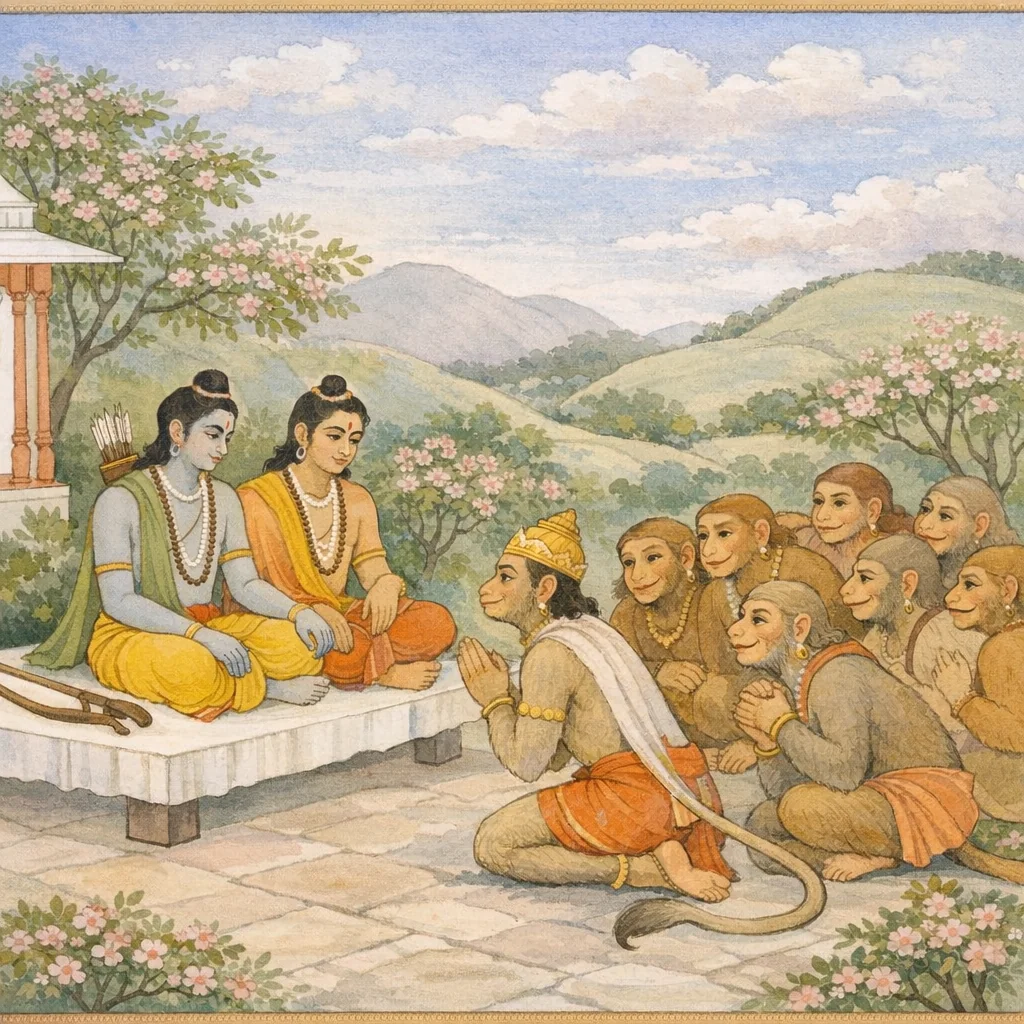
Sarga 64 stages the transition from mission-completion to formal reporting and political reintegration. Dadhimukha, pleased by Sugrīva’s directive, offers salutations and moves between the Madhuvana episode and the courtly sphere, urging restraint and requesting pardon for earlier obstruction. Aṅgada, exercising leadership without arrogance, argues it is improper to linger after success and invites the troops’ consensus, explicitly refusing to command them despite his status as yuvarāja. The vanaras respond by praising his humility and insisting that movement is impossible without his order, after which the host rises into the sky with thunderous cries. Before their arrival, Sugrīva consoles the grief-stricken Rāma by inferential reasoning: the destruction of ancestral Madhuvana and Aṅgada’s confident demeanor indicate success; he further attributes the accomplishment uniquely to Hanumān. The sarga culminates in the direct report: Hanumān bows and states that Sītā has been seen and is physically well and steadfast in devotion to Rāma, bringing immediate joy to Rāma and Lakṣmaṇa and public recognition of Hanumān’s decisive competence.
Shlokas
Verse 1
सुग्रीवेणैवमुक्तस्तु हृष्टो दधिमुखः कपिः।राघवं लक्ष्मणं चैव सुग्रीवं चाभ्यवादयत्।।।।
Thus addressed by Sugrīva, the monkey Dadhimukha—delighted—paid respectful salutations to Rāghava (Rāma), to Lakṣmaṇa, and to Sugrīva.
Verse 2
स प्रणम्य च सुग्रीवं राघवौ च महाबलौ।वानरैः सहितः शूरैर्दिवमेवोत्पपात ह।।।।
After paying homage to Sugrīva and to the two mighty Rāghavas, he—accompanied by heroic vānaras—leapt up into the sky.
Verse 3
स यथैवाऽगतः पूर्वं तथैव त्वरितं गतः।निपत्य गगनाद्भूमौतद्वनं प्रविवेश ह।।।।स प्रविष्टो मधुवनं ददर्श हरियूथपान्।विमदानुत्थितान्सर्वान् मेहमानान्मधूदकम्।।।।
Just as he had come earlier, so he went swiftly again. Dropping down from the sky onto the ground, he entered that grove. Having entered Madhuvana, he saw the monkey troop-leaders—all sobered and risen—voiding honeyed water.
Verse 4
स यथैवाऽगतः पूर्वं तथैव त्वरितं गतः।निपत्य गगनाद्भूमौतद्वनं प्रविवेश ह।।5.64.3।।स प्रविष्टो मधुवनं ददर्श हरियूथपान्।विमदानुत्थितान्सर्वान् मेहमानान्मधूदकम्।।5.64.4।।
Entering Madhuvana, he saw all the leaders of the monkey troops—no longer intoxicated—standing up, while honey-water was being voided (as they recovered from drink).
Verse 5
स तानुपागमद्वीरो बद्ध्वा करपुटाञ्जलिम्।उवाच वचनं श्लक्ष्णमिदं हृष्टवदङ्गदम्।।।।
That heroic one approached them with palms joined in reverence and spoke these gentle, conciliatory words to Aṅgada, with evident joy.
Verse 6
सौम्य रोषो न कर्तव्यो यदेतत्परिवारितम्।अज्ञानाद्रक्षिभिः क्रोधाद्भवन्तः प्रतिषेधिताः।।।।
“O gentle one, anger should not be indulged over this obstruction: the guards, through ignorance and in a fit of wrath, have tried to stop you.”
Verse 7
युवराजस्त्वमीशश्च वनस्यास्य महाबल।मौर्ख्यात्पूर्वं कृतो दोषस्तं भवान् क्षन्तुमर्हति।।।।
O mighty Angada, you are the heir-apparent and the rightful lord here as well. Out of foolishness I earlier committed an offence; it is fitting that you forgive me for that fault.
Verse 8
आख्यातं हि मया गत्वा पितृव्यस्य तवानघ।इहोपयातं सर्वेषामेतेषां वनचारिणाम्।।।।
O blameless prince, having gone, I have indeed informed your paternal uncle, and all these forest-dwellers as well, that you have arrived here.
Verse 9
स त्वदागमनं श्रुत्वा सहैभिर्हरियूथपैः।प्रहृष्टो न तु रुष्टोऽसौ वनं श्रुत्वा प्रधर्षितम्।।।।
Hearing of your arrival, he—together with these leaders of the Vānara troops—was delighted, not angry, even after hearing that the grove had been damaged.
Verse 10
प्रहृष्टो मां पितृव्यस्ते सुग्रीवो वानरेश्वरः।शीघ्रं प्रेषय सर्वांस्तानिति होवाच पार्थिवः।।।।
“Your paternal uncle Sugrīva, lord of the Vānaras, was delighted; the king told me, ‘Send all of them quickly.’”
Verse 11
श्रुत्वा दधिमुखस्येदं वचनं श्लक्ष्णमङ्गदः।अब्रवीत्तान् हरिश्रेष्ठो वाक्यं वाक्यविशारदः।।।।
Hearing these gracious words of Dadhimukha, Angada—the foremost of monkeys, skilled in speech—addressed them with his reply.
Verse 12
शङ्के श्रुतोऽयं वृत्तान्तो रामेण हरियूथपाः।तत्क्षमं नेह नः स्थातुं कृते कार्ये परन्तपाः।।।।
“Leaders of monkey-troops, I suspect Rāma has already heard this news. Since our mission is accomplished, O scorcher of foes, it is not proper for us to remain lingering here.”
Verse 13
पीत्वा मधु यथाकामं विश्रान्ता वनचारिणः।किं शेषं गमनं तत्र सुग्रीवो यत्र मे गुरुः।।।।
“The forest-ranging Vānaras have drunk honey as they wished and have rested. What remains to be done here? We must go to where Sugrīva, my lord, is.”
Verse 14
सर्वे यथा मां वक्ष्यन्ति समेत्य हरियूथपाः।तथास्मि कर्ता कर्तव्ये भवद्भिः परवानहम्।।।।
“As all the leaders of the monkey-troops, assembled together, instruct me, so shall I act in what must be done; in this duty I am guided by your counsel.”
Verse 15
नाज्ञापयितुमीशोऽहं युवराजोऽस्मि यद्यपि।अयुक्तं कृतकर्माणो यूयं धर्षयितुं मया।।।।
“Though I am the heir-apparent, I am not entitled to command you. Since you have already accomplished the work, it would be improper for me to press or order you.”
Verse 16
ब्रुवतश्चाङ्गदस्यैवं श्रुत्वा वचनमव्ययम्।प्रहृष्टमनसो वाक्यमिदमूचुर्वनौकसः।।।।
Having heard Angada speak in this manner—words of enduring worth—the forest-dwelling vānaras, delighted at heart, replied as follows.
Verse 17
एवं वक्ष्यति को राजन् प्रभुस्सन्वानरर्षभ।ऐश्वर्यमदमत्तो हि सर्वोऽहमिति मन्यते।।।।
“O king—bull among vānaras—who, though a lord, would speak like this? For one intoxicated by power and prosperity commonly thinks, ‘I am everything.’”
Verse 18
तव चेदं सुसदृशं वाक्यं नान्यस्य कस्यचित्।सन्नतिर्हि तवाख्याति भविष्यच्छुभयोग्यताम्।।।।
“Such words are fitting for you alone, for no other. Indeed, your humility proclaims your worthiness for an auspicious future.”
Verse 19
सर्वे वयमपि प्राप्तास्तत्र गन्तुं कृतक्षणाः।स यत्र हरिवीराणां सुग्रीवः पतिरव्ययः।।5.64.19।।
“All of us, too, are ready at a moment’s notice to go there—where Sugrīva, the steadfast lord of the vānara heroes, is.”
Verse 20
त्वया ह्यनुक्तैर्हरिभिर्नैव शक्यं पदात्पदम्।क्वचिद्गन्तुं हरिश्रेष्ठ ब्रूमः सत्यमिदं तु ते।।।।
“O best of vānaras! Without being directed by you, the vānaras cannot proceed even a step anywhere. This we tell you as the truth.”
Verse 21
एवं तु वदतां तेषामङ्गदः प्रत्युवाच ह।बाढं गच्छाम इत्युक्त्वा खमुत्पेतुर्महाबलाः।।।।
As they spoke in this way, Angada replied: “So be it; let us go.” Having said this, the mighty vānaras sprang up into the sky.
Verse 22
उत्पतन्तमनूत्पेतु स्सर्वे ते हरियूथपाः।कृत्वाकाशं निराकाशं यन्त्रोत्क्षिप्ता इवाचलाः।।।।
All those leaders of vānara troops sprang up after him, making the sky seem as though it were no sky at all—like rocks hurled from mountains by an engine.
Verse 23
तेऽम्बरं सहसोत्पत्य वेगवन्तः प्लवङ्गमाः।विनदन्तो महानादं घना वातेरिता यथा।।।।
Those swift-moving monkeys rose at once into the sky, roaring loudly—like dense clouds driven by the wind.
Verse 24
अङ्गदे ह्यननुप्राप्ते सुग्रीवो वानराधिपः।उवाच शोकोपहतं रामं कमललोचनम्।।।।
Before Angada had arrived, Sugrīva, lord of the vānaras, spoke to Rāma—lotus-eyed and stricken with grief.
Verse 25
समाश्वसिहि भद्रं ते दृष्टा देवी न संशयः।नागन्तुमिह शक्यं तैरतीते समये हि नः।।।।
Be assured, Rāma—may good be yours. The queen has indeed been seen; there is no doubt. After the allotted time has been exceeded, it is not possible for them to come back here to us.
Verse 26
न मत्सकाशमागच्छेत्कृत्ये हि विनिपातिते।युवराजो महाबाहुः प्लवतां प्रवरोऽङ्गदः।।।।
If the mission had truly failed, the heir-apparent—strong-armed Aṅgada, foremost among the leapers—would not have come near me at all.
Verse 27
यद्यप्यकृतकृत्यानामीदृश स्स्यादुपक्रमः।भवेत्स दीनवदनो भ्रान्तविप्लुतमानसः।।।।
Even if those who have not accomplished their work were to return in this manner, he would then appear downcast—his face dejected, his mind confused and unsettled.
Verse 28
पितृपैतामहं चैतत्पूर्वकैरभिरक्षितम्।न मे मधुवनं हन्यादहृष्टः प्लवगेश्वरः।।।।कौसल्यासुप्रजा राम समाश्वसिहि सुव्रत।
This Madhuvana is a heritage guarded since my father’s and grandfather’s time, protected by the elders. If the lord of the monkeys (Aṅgada) were not delighted, he would not have damaged my Madhuvana. O Rāma, noble in vow—best of Kausalyā’s sons—be assured.
Verse 29
दृष्टा देवी न सन्देहो न चान्येन हनूमता।।।।न ह्यन्यः कर्मणो हेतुस्साधनेऽस्य हनूमतः।
The queen has been seen—there is no doubt—and it is by none other than Hanūmān. Indeed, there is no other cause capable of accomplishing this task besides Hanūmān.
Verse 30
हनूमति हि सिद्धिश्च मतिश्च मतिसत्तमः।।।।व्यवसायश्च वीर्यं च सूर्ये तेज इव ध्रुवम्।
In Hanūmān, O best of the wise, success and intelligence—along with resolve and valor—abide steadily, as radiance abides in the sun.
Verse 31
जाम्बवान्यत्र नेता स्यादङ्गदश्च बलेश्वरः।हनुमांश्चाप्यधिष्ठाता न तस्य गतिरन्यथा।।।।
Where Jāmbavān stands as leader, Aṅgada as lord of strength, and Hanūmān as the guiding force, the outcome cannot turn out otherwise (than success).
Verse 32
मा भूश्चिन्तासमायुक्तस्सम्प्रत्यमितविक्रमः।।।।ततः किलकिलाशब्दं शुश्रावासन्नमम्बरे।हनुमत्कर्मदृप्तानां नार्धतां काननौकसाम्।।।।किष्किन्धामुपयातानां सिद्धिं कथयतामिव।
Do not be seized by anxiety now, you of boundless valor. Then he heard, nearby in the sky, the chattering cries of the forest-dwellers—their roaring proud with Hanūmān’s achievement—as though they were proclaiming success while arriving at Kiṣkindhā.
Verse 33
मा भूश्चिन्तासमायुक्तस्सम्प्रत्यमितविक्रमः।।5.64.32।।ततः किलकिलाशब्दं शुश्रावासन्नमम्बरे।हनुमत्कर्मदृप्तानां नार्धतां काननौकसाम्।।5.64.33।।किष्किन्धामुपयातानां सिद्धिं कथयतामिव।
Do not be seized by anxiety now, you of boundless valor. Then, close by in the sky, the chattering and roaring of the forest-dwelling monkeys—exulting in Hanūmān’s deed—was heard, as if they were announcing success while approaching Kiṣkindhā.
Verse 34
ततश्श्रुत्वा निनादं तं कपीनां कपिसत्तमः।।।।आयताञ्चितलाङ्गूलस्सोऽभवद्धृष्टमानसः।
Hearing that roar of the monkeys, Sugrīva—the best among vānaras—became exultant, lifting and shaking his long tail in joy.
Verse 35
आजग्मुस्तेऽपि हरयो रामदर्शनकांक्षिणः।।।।अङ्गदं पुरतः कृत्वा हनूमन्तं च वानरम्।
Those vānaras too arrived, eager to behold Rāma, placing Aṅgada in the lead—and also Hanumān, foremost among monkeys.
Verse 36
तेऽङ्गदप्रमुखा वीराः प्रहृष्ठाश्च मुदान्विताः।।।।निपेतुर्हरिराजस्य समीपे राघवस्य च।
Those heroes, led by Aṅgada—rejoicing and filled with gladness—alighted near Sugrīva, king of the monkeys, and near Rāghava (Rāma) as well.
Verse 37
हनुमांश्च महाबाहुः प्रणम्य शिरसा ततः।।।।नियतामक्षतां देवीं राघवाय न्यवेदयत्।
Then mighty-armed Hanumān bowed his head in reverence and reported to Rāghava: “The divine lady—steadfast in her fidelity—is unharmed.”
Verse 38
दृष्टा देवीति हनुमद्वदनादमृतोपमम्।।।।आकर्ण्य वचनं रामो हर्षमाप सलक्ष्मणः।
Hearing from Hanumān’s mouth the nectar-like words—“The Devī has been seen”—Rāma, along with Lakṣmaṇa, was filled with joy.
Verse 39
निश्चितार्थं ततस्तस्मिन् सुग्रीवं पवनात्मजे।।।।लक्ष्मणः प्रीतिमान् प्रीतं बहुमानादवैक्षत।
Then Lakṣmaṇa—affectionate and pleased—looked respectfully toward Sugrīva in the matter of the Wind-god’s son (Hanumān), convinced that the purpose had surely been achieved.
Verse 40
प्रीत्या च रममाणोऽथ राघवः परवीरहा।।।।बहुमानेन महता हनुमन्तमवैक्षत।
Then Rāghava, slayer of hostile champions, rejoicing with love, looked upon Hanumān with great esteem.
Frequently Asked Questions
The sarga frames authority after success: Aṅgada must lead without abusing rank, while Dadhimukha must repair a prior obstruction through apology and restraint. The ethical action is leadership that avoids coercion yet enables coordinated movement.
True excellence is measurable in speech and conduct: humility stabilizes power, collective action requires legitimate consent, and reassurance should be grounded in observable signs and reliable testimony—culminating in Hanumān’s truthful report.
Madhuvana functions as a protected ancestral grove whose disturbance signals mission success; Kiṣkindhā is the political center to which the vanaras return; the aerial passage (ākāśa/ambara) underscores vanara mobility and rapid strategic redeployment.