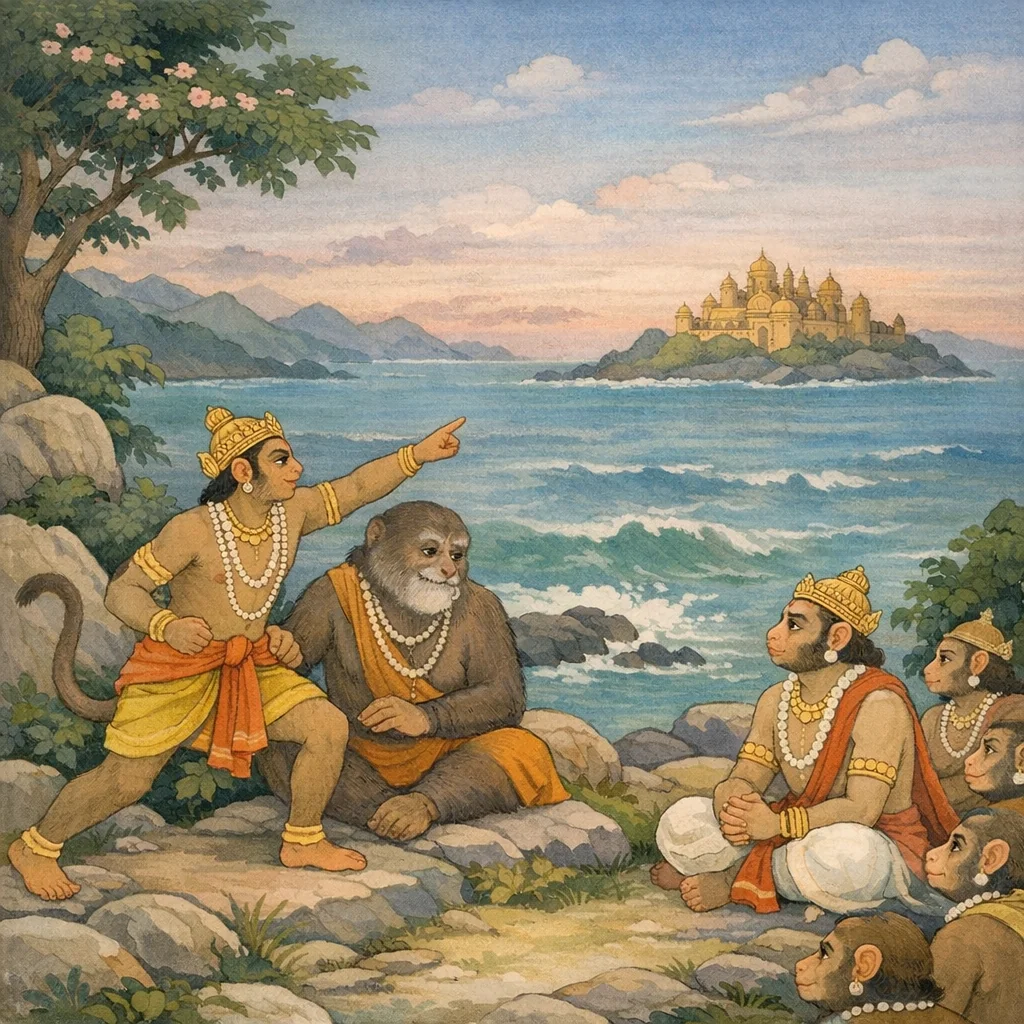
Sarga 60
अङ्गदवाक्यम्—सीताहरण-प्रतिवेदन-धर्मविचारः (Angada’s Counsel on Reporting Without Sita)
सुन्दरकाण्ड
Sarga 60 records a critical post-discovery deliberation among the vānaras after Hanuman’s report of seeing Sītā. Aṅgada (Vāli’s son) argues that returning to Rāma without physically bringing Sītā is procedurally and ethically “ayukta” (improper): merely reporting “seen but not brought” would be unworthy of warriors famed for valor. He asserts the vānaras’ unmatched capacity in leaping and prowess—even among gods and demons—thereby framing retrieval as feasible, not aspirational. He then proposes immediate action: since Hanuman has already neutralized key rākṣasa fighters, the remaining task is to seize Jānakī and depart. Jāmbavān responds with strategic restraint: while Aṅgada’s intent is acceptable in spirit, the team must align execution with Rāma’s established intent and command, because success (kāryasiddhi) in dharma depends not only on capability but on authorized method. The chapter thus contrasts impulse-driven rescue with command-aligned mission ethics, defining a governance model for collective action.
Shlokas
Verse 1
तस्य तद्वचनं श्रुत्वा वालिसूनुरभाषत।अयुक्तं तु विना देवीं दृष्टवद्भिश्च वानराः।।।।समीपं गन्तुमस्माभी राघवस्य महात्मनः।
Hearing his words, Vāli’s son spoke: “O Vānara heroes—though we have seen the Lady, it is not right for us to go back into the presence of the great-souled Rāghava without her.”
Verse 2
दृष्टा देवी न चानीता इति तत्र निवेदनम्।।।।अयुक्तमिव पश्यामि भवद्भिः ख्यातविक्रमैः।
“To report there, ‘The Lady was seen, but not brought back’—I regard that as improper for you, famed as you are for valor.”
Verse 3
न हि नः प्लवने कश्चिन्नापि कश्चित्पराक्रमे।।।।तुल्य स्सामरदैत्येषु लोकेषु हरिसत्तमाः।
“O best of Vānaras, indeed among the worlds of gods and demons there is none equal to us—neither in leaping nor in valor.”
Verse 4
तेष्वेवं हतवीरेषु राक्षसेषु हनूमता।।।।किमन्यदत्र कर्तव्यं गृहीत्वा याम जानकीम्।
“With the rākṣasa champions thus slain by Hanumān, what else remains to be done here? Let us seize Jānakī and depart.”
Verse 5
तमेवं कृतसङ्कल्पं जाम्बवान् हरिसत्तमः।।।।उवाच परमप्रीतो वाक्यमर्थवदर्थवित्।
Seeing him thus resolute, Jāmbavān—the foremost of the Vānaras, skilled in practical judgment—spoke with great delight, offering words that were purposeful and well-considered.
Verse 6
न तावदेषा मतिरक्षमा नो यथा भवान् पश्यति राजपुत्र।यथा तु रामस्य मतिर्निविष्टा तथा भवान् पश्यतु कार्यसिद्धिम्।।।।
O prince, your view is not unacceptable to us; indeed, we have the power to accomplish it. Yet, understanding where Rāma’s own intention is set, you should pursue the success of the task in that very manner—according to his will.
Frequently Asked Questions
Whether it is dharmically acceptable to report success (Sita located) yet return without completing retrieval; Angada urges immediate extraction of Sita, while Jambavan prioritizes acting strictly within Rama’s intended command structure.
Capability alone does not justify action: righteous success requires alignment with rightful authority and prescribed method, so that courage remains integrated with maryādā (discipline, legitimacy, and purpose).
No specific landmark is foregrounded in this sarga; the focus is organizational and ethical deliberation among the vanaras, referencing Lanka’s rākṣasas only as a contextual threat already diminished by Hanuman’s actions.