Sarga 52
दूतधर्म-परामर्शः (Envoy-Immunity and Royal Counsel in Ravana’s Court)
सुन्दरकाण्ड
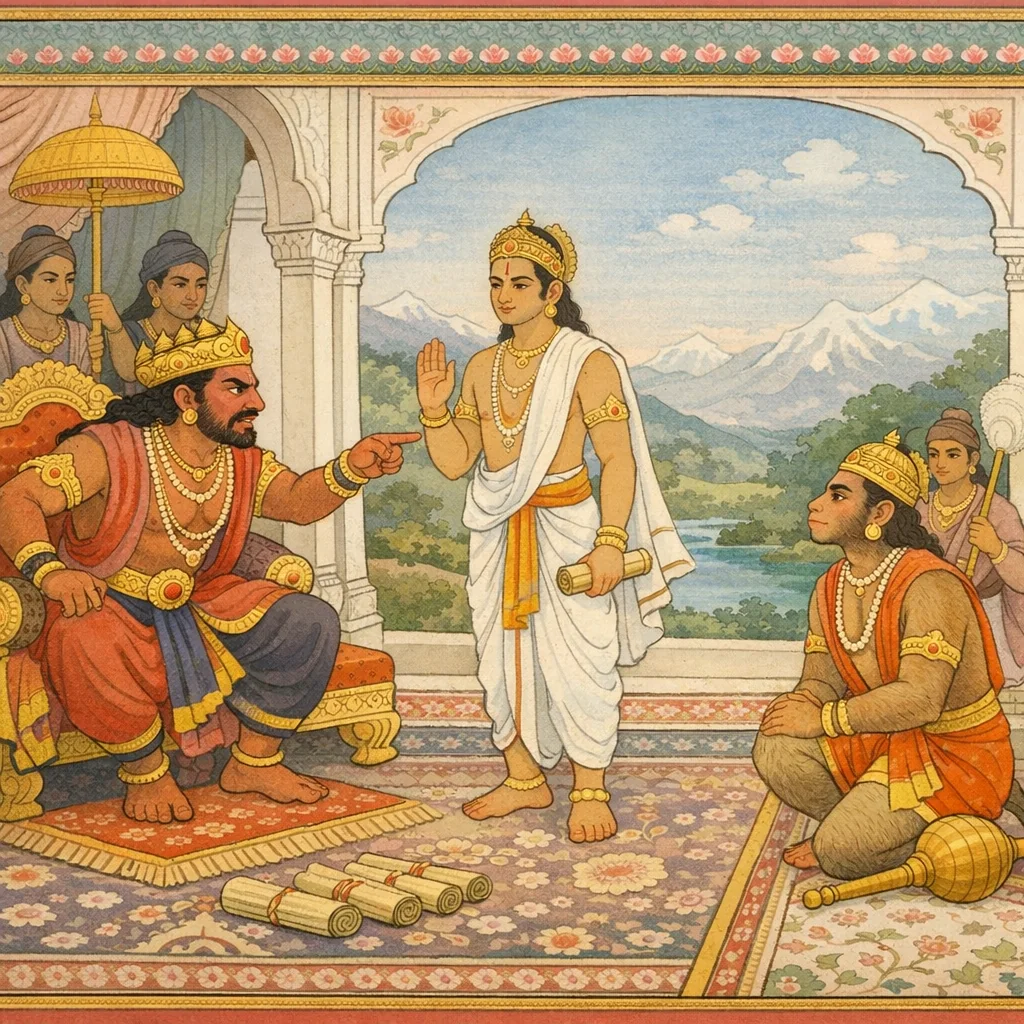
Sarga 52 stages a courtroom dharma-debate triggered by Rāvaṇa’s anger after hearing Hanumān’s speech. Rāvaṇa orders Hanumān’s execution (5.52.1), asserting that killing a “sinner” is not sinful (5.52.11). Vibhīṣaṇa, positioned as a policy-minded guardian of rājadharma, refuses to endorse the order (5.52.2–4) and argues that slaying an envoy violates royal ethics and accepted diplomatic custom (5.52.5–6, 5.52.13–15). He proposes alternative punishments historically prescribed for envoys—mutilation, flogging, shaving, disfigurement—while maintaining that execution is forbidden (5.52.15). He further reframes strategy: killing Hanumān yields no advantage, risks eliminating the only messenger capable of returning across the ocean, and may even squander the opportunity for a decisive war on favorable terms (5.52.19–24). Vibhīṣaṇa culminates with a counsel to redirect force toward Rāma and Lakṣmaṇa rather than the emissary (5.52.22–26). The sarga closes with Rāvaṇa accepting Vibhīṣaṇa’s advice (5.52.27), highlighting the epic’s recurring lesson that statecraft must discipline wrath through deliberation on the proper and improper (युक्तायुक्त).
Shlokas
Verse 1
तस्य तद्वचनं श्रुत्वा वानरस्य महात्मनः।आज्ञापयद्वधं तस्य रावणः क्रोधमूर्छितः।।।।
Hearing the words of that great-souled Vānara (Hanumān), Rāvaṇa—overpowered by anger—commanded that he be put to death.
Verse 2
वधे तस्य समाज्ञप्ते रावणेन दुरात्मना।निवेदितवतो दौत्यं नानुमेने विभीषणः।।।।
When the wicked-souled Rāvaṇa ordered his killing, Vibhīṣaṇa did not approve—since he had already declared himself to be an envoy.
Verse 3
तं रक्षोधिपतिं क्रुद्धं तच्च कार्यमुपस्थितम्।विदित्वा चिन्तयामास कार्यं कार्यविधौ स्थितः।।।।
Seeing the lord of the rākṣasas enraged and the urgent situation at hand, Vibhīṣaṇa—steadfast in discerning the proper course—reflected on what action should be taken.
Verse 4
निश्चितार्थस्ततस्साम्ना पूज्यं शत्रुजिदग्रजम्।उवाच हितमत्यर्थं वाक्यं वाक्यविशारदः।।।।
Having resolved what ought to be done, Vibhīṣaṇa—skilled in speech—addressed his revered elder brother, the conqueror of foes, with gentle words that were deeply beneficial.
Verse 5
क्षमस्व रोषं त्यज राक्षसेन्द्र प्रसीद मद्वाक्यमिदं शृणुष्व।वधं न कुर्वन्ति परावरज्ञा दूतस्य सन्तो वसुधाधिपेन्द्राः।।।।
“Forgive this anger and abandon it, O lord of the rākṣasas; be calm and listen to my words. Noble kings, who know what is right and wrong, do not put an envoy to death.”
Verse 6
राजधर्मविरुद्धं च लोकवृत्तेश्च गर्हितम्।तव चासदृशं वीर कपेरस्य प्रमापणम्।।।।
“To kill this monkey would violate the dharma of kings, be condemned by accepted worldly conduct, and be unworthy of you, O hero.”
Verse 7
धर्मज्ञश्च कृतज्ञश्च राजधर्मविशारदः।परावरज्ञो भूतानां त्वमेव परमार्थवित्।।।।
“You are a knower of dharma, grateful and discerning, skilled in the duties of kings; you understand what is higher and lower among beings—indeed, you know the highest truth.”
Verse 8
गृह्यन्ते यदि रोषेण त्वादृशोऽपि विचक्षणः।तत श्शास्त्रविपश्चित्त्वं श्रम एव हि केवलम्।।।।
“If even a discerning man like you is seized by anger, then learning and scriptural expertise become nothing but wasted effort.”
Verse 9
तस्मात्प्रसीद शत्रुघ्न राक्षसेन्द्र दुरासद।युक्तायुक्तं विनिश्चित्य दूतदण्डो विधीयताम्।।।।
“Therefore be calm, O slayer of foes, O rākṣasa-king hard to assail. After judging what is proper and improper, let an appropriate penalty for the envoy be decided.”
Verse 10
विभीषणवचः श्रुत्वा रावणो राक्षसेश्वरः।रोषेण महताविष्टो वाक्यमुत्तरमब्रवीत्।।।।
Having heard Vibhīṣaṇa’s counsel, Rāvaṇa, lord of the Rākṣasas, seized by great wrath, spoke his reply.
Verse 11
न पापानां वधे पापं विद्यते शत्रुसूदन।तस्मादेनं वधिष्यामि वानरं पापचारिणम्।।।।
“O slayer of foes! In killing sinners, no sin is incurred. Therefore I shall kill this Vānara, a doer of evil.”
Verse 12
अधर्ममूलं बहुदोषयुक्तमनार्यजुष्टं वचनं निशम्य।उवाच वाक्यं परमार्थतत्त्वं विभीषणो बुद्धिमतां वरिष्ठः।।।।
Having heard those words—rooted in unrighteousness, laden with many faults, and unfit for the noble—Vibhīṣaṇa, foremost among the wise, spoke in accord with the highest truth of the matter.
Verse 13
प्रसीद लङ्केश्वर राक्षसेन्द्र धर्मार्थयुक्तं वचनं शृणुष्व।दूतानवध्यान् समयेषु राजन् सर्वेषु सर्वत्र वदन्ति सन्तः।।।।
“Be calm, O lord of Laṅkā, O king of the Rākṣasas; listen to words grounded in dharma and practical polity. The wise declare—always and everywhere—that emissaries are not to be slain.”
Verse 14
असंशयं शत्रुरयं प्रवृद्धः कृतं ह्यनेनाप्रियमप्रमेयम्।न दूतवध्यां प्रवदन्ति सन्तो दूतस्य दृष्टा बहवो हि दण्डाः।।।।
“No doubt this enemy is formidable, and he has indeed committed immense and grievous harm. Yet the wise do not approve the killing of an envoy—many other punishments are prescribed for a messenger.”
Verse 15
वैरूप्यमङ्गेषु कशाभिघातो मौण्ड्यं तथा लक्षणसन्निपातः।एतान् हि दूते प्रवदन्ति दण्डान् वधस्तु दूतस्य न नः श्रुतोऽस्ति।।।।
“Deforming the limbs, flogging, shaving the head, and disfiguring marks—such penalties are indeed prescribed for an envoy; but the killing of a messenger is something we have never heard sanctioned.”
Verse 16
कथं च धर्मार्थविनीतबुद्धिः परावरप्रत्ययनिश्चितार्थः।भवद्विधः कोपवशे हि तिष्ठेत् कोपं नियच्छन्ति हि सत्त्ववन्तः।।।।
“How can one like you—trained in dharma and statecraft, and able to judge what is beneficial or harmful—stand ruled by anger? The strong-hearted indeed restrain their wrath.”
Verse 17
न धर्मवादे न च लोकवृत्ते न शास्त्रबुद्धिग्रहणेषु चापि।विद्येत कश्चित्तव वीर तुल्य स्त्वंह्युत्तमस्सर्वसुरासुराणाम्।।।।
O hero! In discourse on dharma, in worldly statecraft, and even in grasping the subtle purport of the śāstras, no one is found equal to you. Indeed, you are foremost among all devas and asuras.
Verse 18
शूरेण वीरेण निशाचरेन्द्र सुरासुराणामपि दुर्जयेन।त्वया प्रगल्भाः सुरदैत्यसङ्घा जिताश्च युद्धेष्वसकृन्नरेन्द्राः।।।।
O lord of the rākṣasas! By you—brave, heroic, and hard to conquer even for devas and asuras—hosts of devas and daityas, bold in battle, and many kings have been defeated again and again in war.
Verse 19
न चाप्यस्य कपेर्घाते कञ्चित्पश्याम्यहं गुणम्।तेष्वयं पात्यतां दण्डो यैरयं प्रेषितः कपिः।।।।
And I see no benefit at all in killing this monkey. Let punishment fall instead upon those by whom this monkey was sent.
Verse 20
साधुर्वा यदि वाऽसाधुः परैरेष समर्पितः।ब्रुवन् परार्थं परवान्न दूतो वधमर्हति।।।।
Whether gentle or harsh, he has been sent by others; he speaks another’s purpose and is under another’s authority. Therefore an envoy does not deserve to be slain.
Verse 21
अपि चास्मिन् हते राजन्नान्यं पश्यामि खेचरम्।इह यः पुनरागच्छेत्परं पारं महोदधेः।।।।
Moreover, O king, if he is killed, I see no other who could come here again—crossing the far shore of this great ocean through the sky.
Verse 22
तस्मान्नास्य वधे यत्नः कार्य: परपुरञ्जय।भवान् सेन्द्रेषु देवेषु यत्नमास्थातुमर्हति।।।।
Therefore, O conqueror of enemy citadels, no effort should be spent on killing him. You are fit to direct your efforts against the devas, even those led by Indra.
Verse 23
अस्मिन्विनष्टे न हि वीरमन्यं पश्यामि यस्तौ वरराजपुत्रौ।युद्धाय युद्धप्रियदुर्विनीतावुद्योजयेद्धीर्घपथावरुद्धौ।।।।
If he is destroyed, I truly see no other capable warrior who could spur those two princes—war-loving and ill-disciplined—to war, when they are checked by the long distance of the route.
Verse 24
पराक्रमोत्साहमनस्विनां च सुरासुराणामपि दुर्जयेन।त्वया मनोनन्दन नैतानां युद्धायतिर्नाशयतुं न युक्ता।।।।
O delight of your people! Since you are unconquerable even by devas and asuras endowed with prowess, energy, and high spirit, it is not proper for you to squander the very opportunity of war for these rākṣasas.
Verse 25
हिताश्च शूराश्च समाहिताश्च कुलेषु जाताश्च महागुणेषु।मनस्विनश्शस्त्रभृतां वरिष्ठाः कोट्यग्रतस्ते सुभृताश्च योधाः।।।।
Before you stand warriors in crores—well-wishers and heroes, disciplined and steady, born in noble lineages rich in virtues; high-spirited, foremost among weapon-bearers, and well-compensated fighters.
Verse 26
तदेकदेशेन बलस्य तावत्केचित्तवाऽऽदेशकृतोऽभियान्तुतौ राजपुत्रौ विनिगृह्य मूढौ परेषु ते भावयितुं प्रभावम्।।।।
“Then let some troops—acting on your command—advance with a detachment of the army and seize those two foolish princes, so that your power may be displayed before the enemy.”
Verse 27
निशाचराणामधिपोऽनुजस्य विभीषणस्योत्तमवाक्यमिष्टम्।जग्राह बुद्ध्या सुरलोकशत्रु र्महाबलो राक्षसराजमुख्यः।।।।
The mighty chief among rākṣasa kings—lord of the night-roamers and foe of the gods—accepted with understanding the excellent counsel dear to his younger brother Vibhīṣaṇa.
Frequently Asked Questions
Rāvaṇa orders the killing of Hanumān despite his declared status as an envoy; Vibhīṣaṇa challenges this as a breach of rājadharma and dūta-dharma, insisting that an emissary is not to be executed even when the message is offensive.
Authority must be governed by restraint: anger-driven justice corrupts policy, while dharma requires distinguishing proper from improper (युक्तायुक्त) and selecting proportionate, lawful penalties—especially where diplomatic norms protect emissaries.
The great ocean (महोदधि) functions as a strategic landmark underscoring Hanumān’s unique mobility; culturally, the sarga foregrounds courtly statecraft traditions—envoy-protocol (दूतधर्म) and the catalog of sanctioned non-lethal punishments (दूतदण्ड).