Sarga 22
रावणस्य तर्जनं सीताया धर्मोक्तिः (Ravana’s Threats and Sita’s Dharma-Centered Reply)
सुन्दरकाण्ड
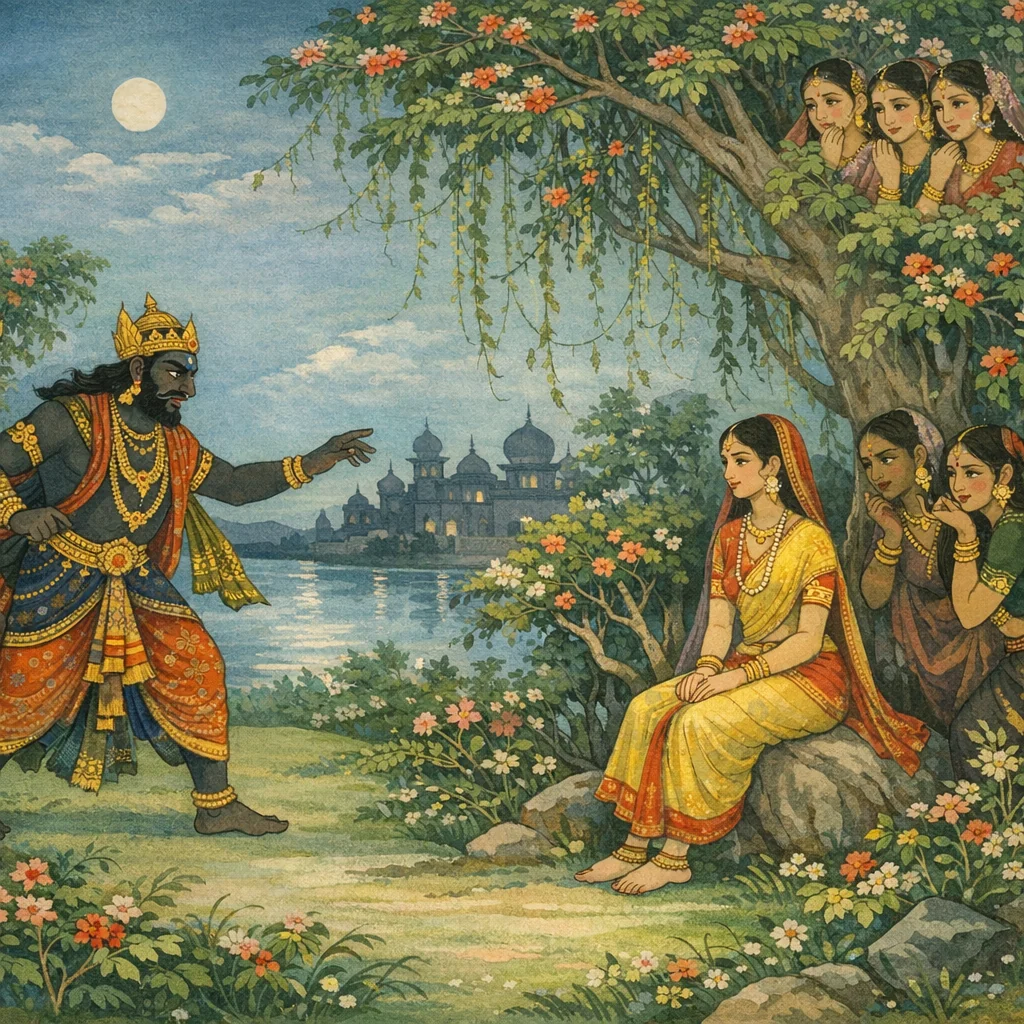
Sarga 22 stages a high-intensity verbal confrontation in Aśoka-vana: Rāvaṇa, provoked by Sītā’s sharp rebuke, replies with coercive threats, sets a two-month ultimatum, and orders the rākṣasīs to employ alternating tactics—conciliation, inducement, deception, and punishment—to bend her will. Observing Sītā’s peril, divine and gandharva maidens display grief and attempt to console her through silent gestures, underscoring the moral isolation of the captive. Reassured, Sītā answers in self-defence with uncompromising dharma-argumentation: she condemns Rāvaṇa’s counsellors for failing to restrain him, asserts her exclusive marital bond to Rāma, and predicts inevitable retribution for the adharma of abduction. The chapter then pivots to a monumental physical description of Rāvaṇa’s terrifying splendour—cloud-dark, lion-gaited, jewel-adorned—highlighting the epic’s technique of juxtaposing external majesty with internal moral corruption. After renewed intimidation, Rāvaṇa delegates enforcement to grotesquely described demonesses; Dhānyamālinī attempts to redirect him toward pleasure and away from Sītā. Rāvaṇa withdraws to his palace, leaving Sītā trembling yet steadfast, thereby intensifying the ethical stakes and foreshadowing the collapse of coercive power before principled resolve.
Shlokas
Verse 1
सीताया वचनं श्रुत्वा परुषं राक्षसाधिपः।प्रत्युवाच ततः सीतां विप्रियं प्रियदर्शनाम्।।।।
Hearing Sītā’s harsh words, the lord of rākṣasas then replied to pleasing-to-behold Sītā with words that were unwelcome.
Verse 2
यथा यथा सान्त्वयिता वश्यः स्त्रीणां तथा तथा।यथा यथा प्रियं वक्ता परिभूतस्तथा तथा।।।।
The more a man becomes ingratiating and pliant toward women—speaking sweetly and trying to please—the more he is treated with contempt by them.
Verse 3
सन्नियच्छति मे क्रोधं त्वयि कामः समुत्थितः।द्रवतोऽमार्गमासाद्य हयानिव सुसारथिः।।।।
My passion for you restrains my anger—just as a skilled charioteer checks horses that, while running fast, have strayed onto a wrong road.
Verse 4
वामः कामो मनुष्याणां यस्मिन् किल निबध्यते।जने तस्मिंस्त्वनुक्रोशः स्नेहश्च किल जायते।।।।
Love in human beings is indeed partial: it fastens itself upon that person in whom compassion and affection are found to arise.
Verse 5
एतस्मात्कारणान्न त्वां घातयामि वरानने।वधार्हामवमानार्हां मिथ्याप्रव्रजिते रताम्।।।।
For this reason, O fair-faced lady, I do not kill you—though you merit death and humiliation—since you persist in a counterfeit ascetic posture.
Verse 6
परुषाणीह वाक्यानि यानि यानि ब्रवीषि माम्।तेषु तेषु वधो युक्तस्तव मैथिलि दारुणः।।।।
Whatever harsh words you speak to me here, O Maithilī, for each such utterance a dreadful killing would be deemed ‘fitting’—so he claims.
Verse 7
एवमुक्त्वा तु वैदेहीं रावणो राक्षसाधिपः।क्रोधसंरम्भसंयुक्तः सीतामुत्तरमब्रवीत्।।।।
Having spoken thus to Vaidehī, Rāvaṇa, lord of the rākṣasas, inflamed with wrath and agitation, addressed Sītā again in reply.
Verse 8
द्वौ मासौ रक्षितव्यौ मे योऽवधिस्ते मया कृतः।ततः शयनमारोह मम त्वं वरवर्णिनि।।।।
Two months is the limit I have set for you and will wait; after that, O lovely-hued woman, you must come to my bed.
Verse 9
ऊर्ध्वं द्वाभ्यां तु मासाभ्यां भर्तारं मामनिच्छतीम्।मम त्वां प्रातराशार्थमालभन्ते महानसे।।।।
If, after those two months, you still refuse me as your husband, they will seize you for my morning meal and slaughter you in the kitchen.
Verse 10
तां तर्ज्यमानां सम्प्रेक्ष्य राक्षसेन्द्रेण जानकीम्।देवगन्धर्वकन्यास्ता विषेदुर्विकृतेक्षणाः।।।।
Seeing Jānakī being threatened by the lord of the rākṣasas, the daughters of the gods and Gandharvas grieved, their eyes troubled with distress.
Verse 11
ओष्ठप्रकारैरपरा वक्त्रनेत्रैस्तथापराः।सीतामाश्वासयामासुस्तर्जितां तेन रक्षसा।।।।
Some sought to console Sītā by motions of their lips, and others likewise by gestures of face and eyes, when she had been threatened by that rākṣasa.
Verse 12
ताभिराश्वासिता सीता रावणं राक्षसाधिपम्।उवाचात्महितं वाक्यं वृत्तशौण्डीर्यगर्वितम्।।।।
Comforted by them, Sītā spoke to Rāvaṇa, lord of the rākṣasas, words meant for her own safeguarding—words proud with the fearless dignity born of her upright conduct.
Verse 13
नूनं न ते जनः कश्चिदस्ति निःश्रेयसे स्थित:।निवारयति यो न त्वां कर्मणोऽस्माद्विगर्हितात्।।।।
Surely no one among your people is devoted to your true welfare, since no one restrains you from this blameworthy deed.
Verse 14
मां हि धर्मात्मनः पत्नीं शचीमिव शचीपतेः।त्वदन्यस्त्रिषु लोकेषु प्रार्थयेन्मनसापि कः।।।।
For who, in the three worlds, other than you, would even in thought desire me—the wife of the righteous Rāma—just as Śacī belongs to Śacī’s lord (Indra)?
Verse 15
राक्षसाधम रामस्य भार्याममिततेजसः।उक्तवानसि यत्पापं क्व गतस्तस्य मोक्ष्यसे।।।।
O basest of rākṣasas! The sinful words you have spoken against the wife of Rāma of immeasurable splendor—where could you go and still escape their consequence?
Verse 16
यथा दृप्तश्च मातङ्गः शशश्च सद्दृशो युधि।तथा मातङ्गवद्रामस्त्वं नीच: शशवत् स्मृतः।।।।
As in battle a proud elephant and a mere hare are no true match, so is Rāma like the elephant—while you, base one, are remembered as the hare.
Verse 17
स त्वमिक्ष्वाकुनाथं वै क्षिपन्निह न लज्जसे।चक्षुषोर्विषयं तस्य न तावदुपगच्छसि।।।।
And yet you are not ashamed to disparage the lord of the Ikṣvākus here—because you have not yet come within the range of his eyes (his direct presence).
Verse 18
इमे ते नयने क्रूरे विरूपे कृष्णपिङ्गले।क्षितौ न पतिते कस्मान्मामनार्य निरीक्षितः।।।।
O ignoble one—why do these cruel, misshapen, dark-brown eyes of yours not fall to the ground when you look upon me so?
Verse 19
तस्य धर्मात्मनः पत्नीं स्नुषां दशरथस्य च।कथं व्याहरतो मां ते न जिह्वा व्यवशीर्यते।।।।
How is it that your tongue does not split and fall away as you speak to me—wife of that righteous man, and daughter-in-law of Daśaratha?
Verse 20
असन्देशात्तु रामस्य तपसश्चानुपालनात्।न त्वां कुर्मि दशग्रीव भस्म भर्मार्ह तेजसा।।।।
But since I have not received Rāma’s command—and because I preserve the discipline of my austerity—I do not reduce you to ashes with my fiery power, though you deserve to be burnt, O Ten-necked one.
Verse 21
नापहर्तुमहं शक्या त्वया रामस्य धीमतः।विधिस्तव वधार्थाय विहितो नात्र संशयः।।।।
While I was under the protection of wise Rāma, you could not have carried me off. Surely fate has arranged this only for your destruction—there is no doubt of it.
Verse 22
शूरेण धनदभ्रात्रा बलैः समुदितेन च।अपोह्य रामं कस्माद्धि दारचौर्यं त्वया कृतम्।।।।
You are a warrior, the brother of Kubera, and you are backed by an army—so why did you commit the theft of another man’s wife, bypassing Rāma?
Verse 23
सीताया वचनं श्रुत्वा रावणो राक्षसाधिपः।विवृत्य नयने क्रूरे जानकीमन्ववैक्षत।।।।
Hearing Sītā’s words, Rāvaṇa, lord of the rākṣasas, opened wide his cruel eyes and stared at Jānakī.
Verse 24
नीलजीमूतसङ्काशो महाभुजशिरोधरः।सिंहसत्त्वगतिः श्रीमान् दीप्त जिह्वाग्रलोचनः।।।।
Rāvaṇa appeared like a mass of dark clouds—broad-armed and thick-necked—moving with the forceful gait of a lion, splendid, with blazing eyes and tongue.
Verse 25
चलाग्रमकुटप्रांशुश्चित्रमाल्यानुलेपनः।रक्तमाल्याम्बरधर तत्सङ्गदविभूषणः।।।।
He looked tall beneath a wavering crown, adorned with splendid garlands and unguents; he wore red garlands and garments, and shone with bright armlets.
Verse 26
श्रोणिसूत्रेण महता मेचकेन सुसंवृतः।अमृतोत्पादनद्धेन भुजगेनेव मन्दरः।।।।
Well wrapped with a great dark waistband around his hips, he looked like Mount Mandara encircled by the serpent used for churning the ocean to obtain nectar.
Verse 27
ताभ्यां स परिपूर्णाभ्यां भुजाभ्यां राक्षसेश्वरः।शुशुभेऽचलसङ्काशः शृङ्गाभ्यामिव मन्दरः।।।।
With those two full, powerful arms, the lord of rākṣasas shone like a mountain—like Mandara with its two peaks.
Verse 28
तरुणादित्यवर्णाभ्यां कुण्डलाभ्यां विभूषितः।रक्तपल्लवपुष्पाभ्यामशोकाभ्यामिवाचलः।।।।
Adorned with earrings the color of the rising sun, he stood like a mountain bearing two aśoka trees with red leaves and blossoms.
Verse 29
स कल्पवृक्षप्रतिमो वसन्त इव मूर्तिमान्।श्मशानचैत्यप्रतिमो भूषितोऽपि भयङ्करः।।।।
He seemed like the heavenly wish-fulfilling tree, like spring itself made bodily—yet also like a funerary shrine in a cremation-ground; even adorned, he appeared terrifying.
Verse 30
अवेक्षमाणो वैदेहीं कोपसंरक्तलोचनः।उवाच रावणः सीतां भुजङ्ग इव निःश्वसन्।।।।
Staring at Vaidehī with eyes reddened by rage, Rāvaṇa spoke to Sītā, breathing hard like a serpent.
Verse 31
अनयेनाभिसम्पन्नमर्थहीनमनुव्रते।नाशयाम्यहमद्य त्वां सूर्यः सन्ध्यामिवौजसा।।।।
O faithful woman, you persist in a futile course, armed with a wrongful resolve; today I will crush you, as the sun with its radiance dispels the twilight.
Verse 32
इत्युक्त्वा मैथिलीं राजा रावणः शत्रुरावणः।सन्दिदेश ततः सर्वा राक्षसीर्घोरदर्शनाः।।।।
Having spoken thus to Maithilī, King Rāvaṇa—terrifying to his foes—then commanded all the demonesses of dreadful appearance.
Verse 33
एकाक्षीमेककर्णां च कर्णप्रावरणां तथा।गोकर्णीं हस्तिकर्णीं च लम्बकर्णीमकर्णिकाम्।।।।हस्तिपाद्यश्वपाद्यौ च गोपादीं पादचूलिकाम्।एकाक्षीमेकपादीं च पृथुपादीमपादिकाम्।।।।अतिमात्रशिरोग्रीवामतिमात्रकुचोदरीम्।अतिमात्रास्यनेत्रां च दीर्घजिह्वामजिह्विकाम्।।।।अनासिकां सिंहमुखीं गोमुखीं सूकरीमुखीम्।
There were demonesses of grotesque forms: one-eyed, one-eared, with ears covered; some with cow-ears, some with elephant-ears, some with long hanging ears, and some earless; some with elephant-feet, horse-hooves, or cow-hooves, some with hair on their feet; some one-footed, broad-footed, or even footless; some with enormous head and neck, huge breasts and belly, oversized face and eyes; some long-tongued, some tongueless; some noseless—some lion-faced, cow-faced, or boar-faced.
Verse 34
एकाक्षीमेककर्णां च कर्णप्रावरणां तथा।गोकर्णीं हस्तिकर्णीं च लम्बकर्णीमकर्णिकाम्।।5.22.33।।हस्तिपाद्यश्वपाद्यौ च गोपादीं पादचूलिकाम्।एकाक्षीमेकपादीं च पृथुपादीमपादिकाम्।।5.22.34।।अतिमात्रशिरोग्रीवामतिमात्रकुचोदरीम्।अतिमात्रास्यनेत्रां च दीर्घजिह्वामजिह्विकाम्।।5.22.35।।अनासिकां सिंहमुखीं गोमुखीं सूकरीमुखीम्।
There were demonesses of grotesque forms: one-eyed, one-eared, with ears covered; some with cow-ears, some with elephant-ears, some with long hanging ears, and some earless; some with elephant-feet, horse-hooves, or cow-hooves, some with hair on their feet; some one-footed, broad-footed, or even footless; some with enormous head and neck, huge breasts and belly, oversized face and eyes; some long-tongued, some tongueless; some noseless—some lion-faced, cow-faced, or boar-faced.
Verse 35
एकाक्षीमेककर्णां च कर्णप्रावरणां तथा।गोकर्णीं हस्तिकर्णीं च लम्बकर्णीमकर्णिकाम्।।5.22.33।।हस्तिपाद्यश्वपाद्यौ च गोपादीं पादचूलिकाम्।एकाक्षीमेकपादीं च पृथुपादीमपादिकाम्।।5.22.34।।अतिमात्रशिरोग्रीवामतिमात्रकुचोदरीम्।अतिमात्रास्यनेत्रां च दीर्घजिह्वामजिह्विकाम्।।5.22.35।।अनासिकां सिंहमुखीं गोमुखीं सूकरीमुखीम्।
There were demonesses of grotesque forms: one-eyed, one-eared, with ears covered; some with cow-ears, some with elephant-ears, some with long hanging ears, and some earless; some with elephant-feet, horse-hooves, or cow-hooves, some with hair on their feet; some one-footed, broad-footed, or even footless; some with enormous head and neck, huge breasts and belly, oversized face and eyes; some long-tongued, some tongueless; some noseless—some lion-faced, cow-faced, or boar-faced.
Verse 36
यथा मद्वशगा सीता क्षिप्रं भवति जानकी।।।।तथा कुरुत राक्षस्यः सर्वाः क्षिप्रं समेत्य च।
All of you demonesses, gather quickly and act so that Janakī—Sītā—submits to my will at once.
Verse 37
प्रतिलोमानुलोमैश्च सामदानादिभेदनैः।।।।आवर्जयत वैदेहीं दण्डस्योद्यमनेन च।
Win Vaidehī over—by methods pleasing or displeasing to her, by conciliation and gifts and other stratagems, and even by the threat or use of punishment.
Verse 38
इति प्रतिसमादिश्य राक्षसेन्द्रः पुनः पुनः।।।।काममन्युपरीतात्मा जानकीं पर्यतर्जयत्।
Thus the lord of the rākṣasas, again and again repeating his orders, threatened Jānakī—his mind engulfed by lust and anger.
Verse 39
उपगम्य ततः शीघ्रं राक्षसी धान्यमालिनी।।।।परिष्वज्य दशग्रीवमिदं वचनमब्रवीत्।
Then the rākṣasī Dhānyamālinī quickly approached and, embracing Daśagrīva, spoke these words.
Verse 40
मया क्रीड महाराज सीतया किं तवानया।।।।विवर्णया कृपणया मानुष्या राक्षसेश्वर।
Sport with me, O great king; what use is this Sītā to you—pale, miserable, and merely human, O lord of the rākṣasas?
Verse 41
नूनमस्या महाराज न दिव्यान् भोगसत्तमान्।।।।विदधात्यमरश्रेष्ठस्तव बाहुबलार्जितान्।
Surely, O great king, the foremost among the immortals has not destined her for those finest divine pleasures—won by the strength of your own arms.
Verse 42
अकामां कामयानस्य शरीरमुपतप्यते।।5.22.42।।इच्छन्तीं कामयानस्य प्रीतिर्भवति शोभना।
When a desirous man pursues a woman without desire, his very body is only tormented; but when he pursues a willing woman, the pleasure that arises is truly fitting.
Verse 43
एवमुक्तस्तु राक्षस्या समुत्क्षिप्तस्ततो बली।।।।प्रहसन्मेघसङ्काशो राक्षसः स न्यवर्तत।
So addressed by the rākṣasī, that powerful rākṣasa—cloud-dark in appearance—turned away, laughing.
Verse 44
प्रस्थितः स दशग्रीवः कम्पयन्निव मेदिनीम्।।।।ज्वलद्भास्करवर्णाभं प्रविवेश निवेशनम्।
Daśagrīva then departed, as though shaking the earth, and entered his residence—radiant like the blazing sun.
Verse 45
देवगन्धर्वकन्याश्च नागकन्याश्च सर्वतः।।।।परिवार्य दशग्रीवं विविशुस्तं गृहोत्तमम्।
Daughters of the gods and gandharvas, and daughters of the nāgas as well, gathered from every side around Daśagrīva and entered that splendid palace with him.
Verse 46
स मैथिलीं धर्मपरामवस्थितां प्रपेपमानां परिभर्त्स्य रावणः।विहाय सीतां मदनेन मोहितः स्वमेव वेश्म प्रविवेश भास्वरम्।।।।
Rāvaṇa, having reviled Maithilī—trembling, yet steadfast in righteousness—left Sītā behind; deluded by passion, he entered his own radiant mansion.
Frequently Asked Questions
The central dilemma is coercion versus chastity: Rāvaṇa attempts to compel consent through threats, deadlines, and delegated intimidation, while Sītā refuses on dharmic grounds, asserting lawful marriage and the illegitimacy of forced union.
The dialogue teaches that external power and splendour do not confer moral authority; dharma is upheld through steadfast intention, disciplined speech, and fidelity, and adharma—especially the violation of another’s spouse—inevitably generates destructive consequences.
Laṅkā’s courtly environment is implied through the demon-king’s palace and attendants, while cultural motifs include the Aśoka-grove captivity setting, the Mandara-churning simile (mythic landmark), and the nīti toolkit of sāma-dāna-bheda-daṇḍa used as a coercive policy model.