Sarga 55
अङ्गदस्य प्रायोपवेशननिश्चयः (Angada’s Resolve to Fast unto Death)
किष्किन्धाकाण्ड
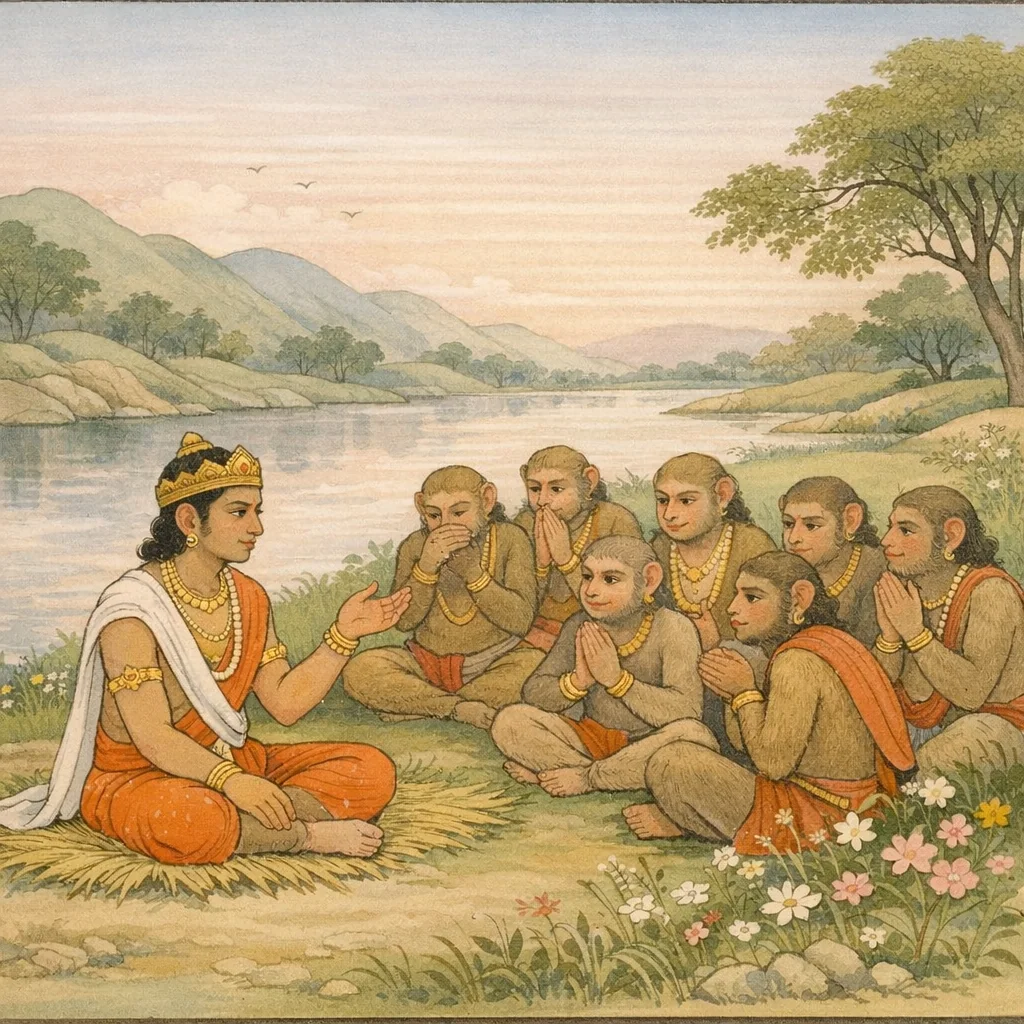
In this chapter, Hanumān offers measured counsel—humble, dharma-aligned, and explicitly loyal to the king—prompting Aṅgada to respond with a sustained ethical indictment of Sugrīva’s character and statecraft. Aṅgada argues that virtues expected of a ruler (steadfastness, inner purity, compassion, rectitude, valor, patience) are absent in Sugrīva, citing morally suspect acts: appropriating the elder brother’s queen while the brother lived and sealing the cave-mouth during the brother’s combat. He further frames Sugrīva as forgetful of benefaction, acting from fear of Lakṣmaṇa rather than fear of adharma, and therefore unreliable toward allies and heirs. Concluding that returning to Kiṣkindhā risks covert punishment and imprisonment for reasons of succession politics, Aṅgada chooses prāyopaveśana (fasting unto death) as the preferable exit. He issues final messages of respectful greeting to Rāma and Lakṣmaṇa, well-wishes to Sugrīva, and care-instructions regarding his mother Tārā and Rūmā. Aṅgada then lies down on darbha grass; the vānaras, lamenting Sugrīva and praising Vālin, surround him and collectively prepare for the same rite, performing ritual sips of water and seating themselves facing east on the northern shore, while fear of Rāma’s anger and recollection of prior calamities intensify the atmosphere.
Shlokas
Verse 1
श्रुत्वा हनुमतो वाक्यं प्रश्रितं धर्मसंहितम्।स्वामिसत्कारसंयुक्तमङ्गदो वाक्यमब्रवीत्।।।।
Hearing Hanuman’s words—humble, grounded in dharma, and filled with reverence for his lord—Angada spoke in reply.
Verse 2
स्थैर्यमात्ममनश्शौचमानृशंस्यमथाऽर्जवम्।विक्रमश्चैव धैर्यं च सुग्रीवे नोपपद्यते।।।।
In Sugrīva, they say, there is found neither steadfastness nor purity of body and mind, neither compassion nor rectitude—nor even valour and patient endurance.
Verse 3
भ्रातुर्ज्येष्ठस्य यो भार्यां जीवतो महिषीं प्रियाम्।धर्मेण मातरं यस्तु स्वीकरोति जुगुप्सितः।।।।कथं स धर्मं जानीते येन भ्रात्रा महात्मना।युद्धायाभिनियुक्तेन बिलस्य पिहितं मुखम्।।।।
He is despicable—who takes to himself the beloved queen of his elder brother while that brother still lives, though by Dharma she must be regarded as a mother. How can such a man know righteousness—he who even sealed the cave’s mouth while his noble brother was engaged in battle within?
Verse 4
भ्रातुर्ज्येष्ठस्य यो भार्यां जीवतो महिषीं प्रियाम्।धर्मेण मातरं यस्तु स्वीकरोति जुगुप्सितः।।4.55.3।।कथं स धर्मं जानीते येन भ्रात्रा महात्मना।युद्धायाभिनियुक्तेन बिलस्य पिहितं मुखम्।।4.55.4।।
As many monkeys—huge as mountain-peaks—lay down there roaring, the mountain’s caves and clefts resounded within, like the thunder of fierce storm-clouds.
Verse 5
सत्यात्पाणिगृहीतश्च कृतकर्मा महायशाः।विस्मृतो राघवो येन स कस्य तु कृतं स्मरेत्।।।।
Rāghava—illustrious and true—who once clasped his hand in good faith and fulfilled his promise, has been forgotten by him; if he forgets such a benefactor, whose help will he ever remember?
Verse 6
लक्ष्मणस्य भयाद्येन नाधर्मभयभीरुणा।आदिष्टा मार्गितुं सीतां धर्ममस्मिन्कथं भवेत्।।।।
He ordered the search for Sītā out of fear of Lakṣmaṇa, not out of fear of unrighteousness. How, then, can there be any dharma in such a man?
Verse 7
तस्मिन्पापे कृतघ्ने तु स्मृतिहीने चलात्मनि।आर्यः को विश्वसेज्जातु तत्कुलीनो जिजीविषुः।।।।
In that sinful man—ungrateful, forgetful, and fickle-hearted—who among the noble could ever place trust? And who, born in his line, would even wish to go on living?
Verse 8
राज्ये पुत्रः प्रतिष्ठाप्यस्सगुणो विगुणोऽपि वा।कथं शत्रुकुलीनं मां सुग्रीवो जीवयिष्यति।।।।
A king’s son—whether endowed with virtues or lacking them—ought to be installed in the kingdom. How will Sugrīva ever let me live, when I am born of his enemy’s line?
Verse 9
भिन्नमन्त्रोऽपराद्धश्च हीनशक्तिः कथं ह्यहम्।किष्किन्धां प्राप्य जीवेयमनाथ इव दुर्बलः।।।।
With my counsel fractured, and having already erred, and being powerless—how indeed could I survive after reaching Kiṣkindhā, weak as I am, like one without a protector?
Verse 10
पांशुदण्डेन हि मां बन्धने नोपपादयेत्।शठः क्रूरो नृशंसश्च सुग्रीवो राज्यकारणात्।।।।
Sugriva—deceitful, cruel, and ruthless for the sake of kingship—would not hesitate to punish me secretly by imprisonment.
Verse 11
बन्धनाद्वाऽवसादान्मे श्रेयः प्रायोपवेशनम्।अनुजानीत मां सर्वे गृहं गच्छन्तु वानराः।।।।
For me, rather than imprisonment or humiliation, fasting unto death is the better course. Permit me this; let all the vānaras return home.
Verse 12
अहं वः प्रतिजानामि नागमिष्याम्यहं पुरीम्।इहैव प्रायमासिष्ये श्रेयो मरणमेव मे।।।।
I pledge to you: I will not return to the city. Here itself I will undertake the fast unto death; for me, death alone is the preferable path.
Verse 13
अभिवादनपूर्वं हि राघवौ बलशालिनौ।अभिवादनपूर्वं तु राजा कुशलमेव च।।।।वाच्यस्तातो यवीयान्मे सुग्रीवो वानरेश्वरः।
With due salutations, convey my respects to the mighty Rāghavas (Rama and Lakshmana). And with salutations, convey to the king—Sugriva, lord of vānaras, my father’s younger brother—my greetings and inquiry after his welfare.
Verse 14
आरोग्यपूर्वं कुशलं वाच्या माता रुमा च मे।।।।मातरं चैव मे तारामाश्वासयितुमर्हथ।
Convey, with inquiry first into their health, my good wishes to my mother and to Ruma as well. And you should also console my mother Tara.
Verse 15
प्रकृत्या प्रियपुत्रा सा सानुक्रोशा तपस्विनी।।।।विनष्टमिह मां श्रुत्वा व्यक्तं हास्यति जीवितम्।
By nature she is tender and deeply devoted to her son—compassionate, and afflicted in her circumstances. Hearing that I have perished here, she will surely abandon her life.
Verse 16
एतावदुक्त्वा वचनं वृद्धांस्तानभिवाद्य च।।।।विवेश चाङ्गदो भूमौ रुदन्दर्भेषु दुर्मनाः।
Having spoken only so much, and saluting those elders, Angada—downcast—began to weep, spread darbha grass, and lay down upon the ground.
Verse 17
तस्य संविशतस्तत्र रुदन्तो वानरर्षभाः।।।।नयनेभ्यः प्रमुमुचुरुष्णं वै वारि दुःखिताः।
As he lay there, the foremost of the vānaras, grieving, wept and let fall hot tears from their eyes.
Verse 18
सुग्रीवं चैव निन्दन्तः प्रशंसन्तश्च वालिनम्।।।।परिवार्याङ्गदं सर्वे व्यवसन्प्रायमासितुम्।
Blaming Sugrīva and praising Vāli, they all gathered around Aṅgada and resolved to sit in prāya (fasting unto death).
Verse 19
मतं तद्वालिपुत्रस्य विज्ञाय प्लवगर्षभाः।।।।उपस्पृश्योदकं तत्र प्राङ्मुखास्समुपाविशन्।दक्षिणाग्रेषु दर्भेषु उदक्तीरं समाश्रिताः।।।।मुमूर्षवो हरिश्रेष्ठा एतत् क्षममिति स्म ह।
Knowing the decision of Vāli’s son, those foremost of monkeys—ready to die—sipped water and sat together there on darbha grass with its tips laid to the south, facing east, having gathered on the northern shore; saying, “This is fitting.”
Verse 20
मतं तद्वालिपुत्रस्य विज्ञाय प्लवगर्षभाः।।4.55.19।।उपस्पृश्योदकं तत्र प्राङ्मुखास्समुपाविशन्।दक्षिणाग्रेषु दर्भेषु उदक्तीरं समाश्रिताः।।4.55.20।।मुमूर्षवो हरिश्रेष्ठा एतत् क्षममिति स्म ह।
Knowing the resolve of Vāli’s son, the foremost monkeys—intent on dying—performed the water-sipping rite and sat facing east on darbha grass laid with its points to the south, assembled on the northern shore, affirming: “This is proper.”
Verse 21
रामस्य वनवासं च क्षयं दशरथस्य च।।।।जनस्थानवधं चैव वधं चैव जटायुषः।हरणं चैव वैदेह्या वालिनश्च वधं रणे।।।।रामकोपं च वदतां हरीणां भयमागतम्।
As the monkeys spoke of Rāma’s forest-exile, Daśaratha’s death, the slaughter at Jana-sthāna, the death of Jaṭāyu, Sītā’s abduction, Vāli’s death in battle, and Rāma’s wrath—fear came upon them.
Verse 22
रामस्य वनवासं च क्षयं दशरथस्य च।।4.55.21।।जनस्थानवधं चैव वधं चैव जटायुषः।हरणं चैव वैदेह्या वालिनश्च वधं रणे।।4.55.22।।रामकोपं च वदतां हरीणां भयमागतम्।
While they spoke again of Rāma’s exile, Daśaratha’s death, the destruction at Jana-sthāna, Jaṭāyu’s death, Sītā’s abduction, Vāli’s death in battle, and Rāma’s wrath, fear overtook the monkeys.
Verse 23
स संविशद्भिबहुभिर्महीधरोमहाद्रिकूटप्रतिमैः प्लवङ्गमैः।बभूव सन्नादितनिर्दरान्तरोभृशं नदद्भिर्जलदैरिवोल्बणैः।।।।
As many monkeys—huge as mountain-peaks—lay down there roaring, the mountain’s caves and clefts resounded within, like the thunder of fierce storm-clouds.
Frequently Asked Questions
Aṅgada faces a governance-and-survival dilemma: return to Kiṣkindhā under a ruler he deems deceitful and politically threatened by succession, or refuse complicity and accept prāyopaveśana. The action is his formal decision to fast unto death, framed as preferable to unjust imprisonment and dishonor.
The dialogue argues that legitimacy depends on rājadharma—steadfastness, compassion, rectitude, and gratitude toward benefactors. When power is perceived as severed from these virtues, protest may take the form of self-binding vows (vrata) that function as moral testimony rather than coercive violence.
The narrative highlights Kiṣkindhā as the contested political center, a cave entrance (bila-mukha) as a remembered site of betrayal, and the northern shore (udaktīra) where the vānaras perform ācamana and sit on darbha grass facing east—details that mark a culturally coded rite of prāyopaveśana.