Sarga 52
स्वयंप्रभा-संवादः (Svayamprabha’s Dialogue with the Vanaras)
किष्किन्धाकाण्ड
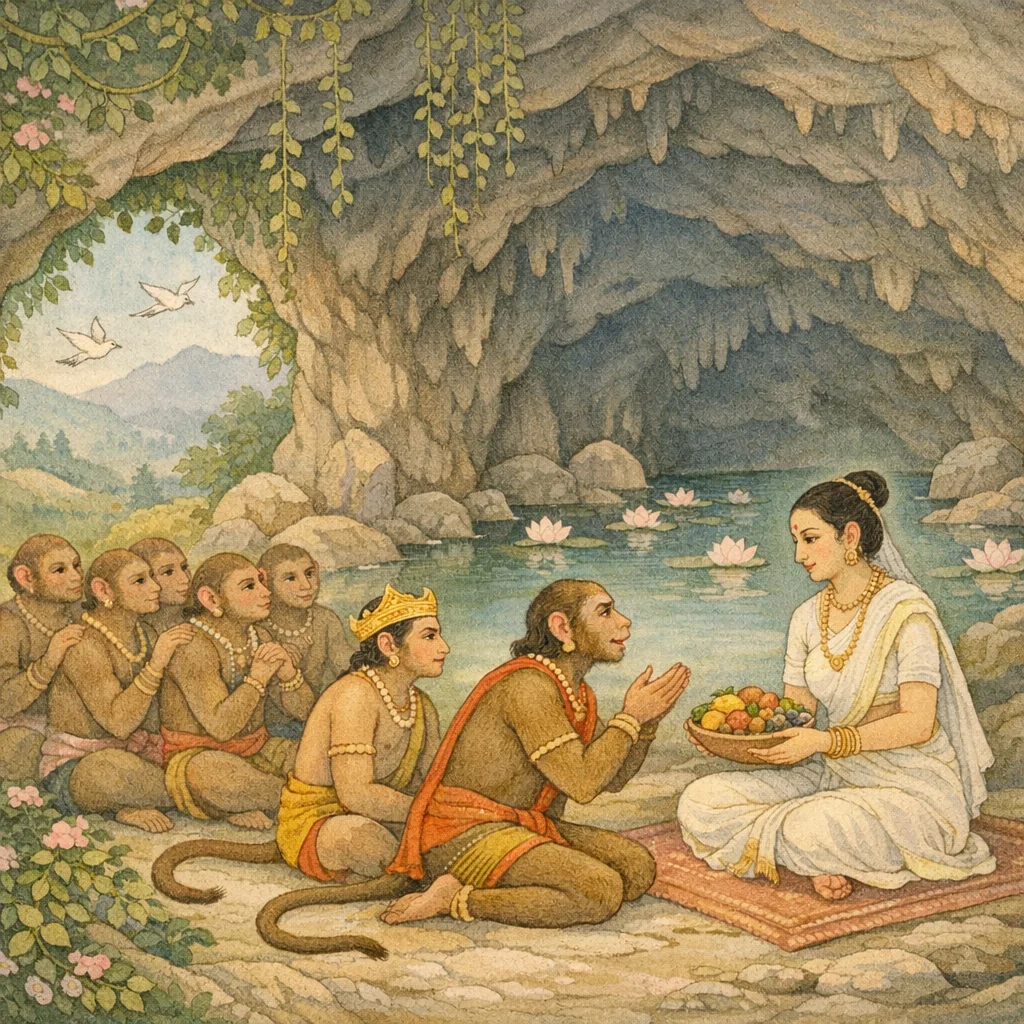
अस्मिन् सर्गे गुफान्तर्गत-उपाख्यानस्य संवादात्मकं विकासः दृश्यते। विश्रान्तान् हरियूथपान् प्रति धर्मचारिणी तापसी स्वयंप्रभा एकाग्रया वृत्त्या प्रश्नं करोति—फलभक्षणात् खेदः प्रशमितः चेत् स्ववृत्तान्तं कथयन्तु। ततः हनूमान् मारुतात्मजः आर्जवेन यथातत्त्वं निवेदयति: रामः दाशरथिः लक्ष्मणेन वैदेह्या च सह दण्डकारण्यं प्रविष्टः; जनस्थानात् रावणेन सीता बलादपहृता; सुग्रीवः वानरमुख्यानां राजा रामस्य सखा; अङ्गदप्रमुखैः वानरैः दक्षिणदिशि (अगस्त्यचरिता, यमरक्षिता) सीतां रावणं च अन्वेष्टुं प्रेषिताः। अन्वेषणानन्तरं परित्राण-भूख-श्रमाभिभूताः ते चिन्तामहार्णवे मग्ना इव भवन्ति, ततः लतापादपसञ्च्छन्नं तिमिरावृतं बिलं पश्यन्ति; जलक्लिन्नाः हंस-कुरर-सारसादयः पतत्रिणः तस्मात् निष्पतन्ति इति जलसन्निधेः अनुमानं कृत्वा गुफां प्रविशन्ति, परस्परं हस्तग्रहणेन गाढं निपतन्ति। आतिथ्यधर्मेण दत्तानि मूलफलानि स्वयंप्रभया ते उपभुञ्जते; प्रत्युपकारं याचन्तः ‘किं कुर्वन्तु वानराः’ इति पृच्छन्ति। स्वयंप्रभा धर्मवृत्त्या संतुष्टा सती प्रत्याह—धर्मेण चरन्त्याः मम किञ्चित् कार्यं नास्ति; सेवाप्रत्युपकारस्य अपेक्षा न, इति आतिथ्य-धर्मस्वरूपं निष्काम-उपकारभावं च प्रतिपादयति।
Shlokas
Verse 1
अथ तानब्रवीत्सर्वान्विश्रान्तान्हरियूथपान्।इदं वचनमेकाग्रा तापसी धर्मचारिणी।।।।
Then, when all the monkey-leaders had rested, the righteous ascetic woman, with focused attention, spoke these words to them.
Verse 2
वानरा यदि वः खेदः प्रनष्टः फलभक्षणात्।यदि चैतन्मया श्राव्यं श्रोतुमिच्छामि कथ्यताम्।।।।
O monkeys, if your weariness has been dispelled by eating fruits, then tell me (your matter)—if it is something fit to be heard by me; I wish to listen.
Verse 3
तस्यास्तद्वचनं श्रुत्वा हनूमान्मारुतात्मजः।आर्जवेन यथातत्त्वमाख्यातुमुपचक्रमे।।।।
Hearing her words, Hanumān—the son of the Wind-god—began to narrate the matter honestly and exactly as it was.
Verse 4
राजा सर्वस्य लोकस्य महेन्द्रवरुणोपमः।रामो दाशरथिश्शीमान्प्रविष्टो दण्डकावनम्।।।।लक्ष्मणेन सह भ्रात्रा वैदेह्या चापि भार्यया।तस्य भार्या जनस्थानाद्रावणेन हृता बलात्।।।।
Rāma—Daśaratha’s illustrious son, a king revered by all the world, comparable to Indra and Varuṇa—entered the Daṇḍaka forest along with his brother Lakṣmaṇa and his wife Vaidehī. From Jana-sthāna, his wife was forcibly abducted by Rāvaṇa.
Verse 5
राजा सर्वस्य लोकस्य महेन्द्रवरुणोपमः।रामो दाशरथिश्शीमान्प्रविष्टो दण्डकावनम्।।4.52.4।।लक्ष्मणेन सह भ्रात्रा वैदेह्या चापि भार्यया।तस्य भार्या जनस्थानाद्रावणेन हृता बलात्।।4.52.5।।
Rāma—Daśaratha’s illustrious son, a king revered by all the world, comparable to Indra and Varuṇa—entered the Daṇḍaka forest along with his brother Lakṣmaṇa and his wife Vaidehī. From Jana-sthāna, his wife was forcibly abducted by Rāvaṇa.
Verse 6
वीरस्तस्य सखा राज्ञस्सुग्रीवो नाम वानरः।राजा वानरमुख्यानां येन प्रस्थापिता वयम्।।4.52.6।।
A hero named Sugrīva, a monkey-king—the lord of the foremost vānaras—is that king’s friend; and it is by him that we have been dispatched (on this mission).
Verse 7
अगस्त्यचरितामाशां दक्षिणां यमरक्षिताम्।सहैभिर्वानरैर्घोरैरङ्गदप्रमुखैर्वयम्।।।।रावणं सहितास्सर्वे राक्षसं कामरूपिणम्।सीतया सह वैदेह्या मार्गध्वमिति चोदिताः।।।।
We, together with these formidable monkeys, with Aṅgada as our leader, have been sent toward the southern quarter—trodden by Agastya and guarded by Yama—commanded thus: ‘Search for Vaidehī Sītā, and (seek out) Rāvaṇa, the shape-shifting rākṣasa.’
Verse 8
अगस्त्यचरितामाशां दक्षिणां यमरक्षिताम्।सहैभिर्वानरैर्घोरैरङ्गदप्रमुखैर्वयम्।।4.52.7।।रावणं सहितास्सर्वे राक्षसं कामरूपिणम्।सीतया सह वैदेह्या मार्गध्वमिति चोदिताः।।4.52.8।।
We, together with these formidable monkeys, with Aṅgada as our leader, have been sent toward the southern quarter—trodden by Agastya and guarded by Yama—commanded thus: ‘Search for Vaidehī Sītā, and (seek out) Rāvaṇa, the shape-shifting rākṣasa.’
Verse 9
विचित्य तु वयं सर्वे समग्रां दक्षिणां दिशम्।परित्रान्ता बुभुक्षिता वृक्षमूलमुपाश्रिताः।।4.52.9।।
After searching the entire southern region, we all became utterly exhausted and hungry, and took shelter at the foot of a tree.
Verse 10
विवर्णवदनास्सर्वे सर्वे ध्यानपरायणाः।नाधिगच्छामहे पारं मग्नाश्चिन्तामहार्णवे।।।।
All of us were pale-faced, wholly absorbed in anxious thought; submerged in the great ocean of worry, we could find no shore—no way forward.
Verse 11
चारयन्तस्ततश्चक्षुर्दृष्टवन्तो वयं बिलम्।लतापादपसञ्च्छन्नं तिमिरेण समावृतम्।।।।
Then, as we cast our eyes about, we saw a cave—hidden by vines and trees, and covered over with darkness.
Verse 12
अस्माद्धंसा जलक्लिन्नाः पक्षैस्सलिलविस्रवैः।कुररास्सारसाश्चैव निष्पतन्ति पतत्रिणः।।।।
From this place, swans—drenched, their wings dripping with water—along with kuraras and sārasas, were seen flying out.
Verse 13
साध्वत्र प्रविशामेति मया तूक्ताः प्लवङ्गमाः।तेषामपि हि सर्वेषामनुमानमुपागतम्।।।।
“It is right—let us enter here,” I said to the monkeys; and indeed the same inference came to all of them.
Verse 14
गच्छाम प्रविशामेति भर्तृकार्यत्वरान्विताः।ततो गाढं निपतिता गृह्य हस्तौ परस्परम्।।।।
“Let us go, let us enter,” we said—driven by haste to accomplish our lord’s task. Then we plunged in, tightly holding one another’s hands.
Verse 15
इदं प्रविष्टास्सहसा बिलं तिमिरसंवृतम्।एतन्नः कार्यमेतेन कृत्येन वयमागताः।।।।त्वां चैवोपगतास्सर्वे परिद्यूना बुभुक्षिताः।
We entered at once into this cave, shrouded in darkness. Pursuing this very task, we came here—and all of us reached you, worn down and hungry.
Verse 16
आतिथ्यधर्मदत्तानि मूलानि च फलानि च।।।।अस्माभिरुपभुक्तानि बुभुक्षापरिपीडितैः।
The roots and fruits you gave in keeping with the dharma of hospitality were eaten by us, oppressed by hunger.
Verse 17
यत्त्वया रक्षितास्सर्वे म्रियमाणा बुभुक्षया।।।।ब्रूहि प्रत्युपकारार्थं किं ते कुर्वन्तु वानराः।
Since you saved all of us when we were dying of hunger, tell us what the monkeys should do to repay you in return.
Verse 18
एवमुक्ता तु धर्मज्ञैर्वानरैस्तैस्स्वयंप्रभा।।।।प्रत्युवाच ततस्सर्वानिदं वानरपुङ्गवान्।
Thus addressed by those monkeys who knew dharma, Svayaṃprabhā then replied with these words to all the foremost monkey-leaders.
Verse 19
सर्वेषां परितुष्टाऽस्मि वानराणां तरस्विनाम्।।।।चरन्त्या मम धर्मेण न कार्यमिह केनचित्।
I am fully pleased with all of you swift and vigorous monkeys. Since I am living in accordance with my dharma, I have no need here of service from anyone.
Frequently Asked Questions
The vanaras, starving and exhausted, accept hospitality (roots and fruits) within a dark cave and then seek to repay the benefactor—testing the boundary between necessary acceptance of aid and the obligation of reciprocal service within dharma.
Hospitality is framed as a dharmic act not requiring transactional return: Svayamprabha, devoted to righteousness, declines service, illustrating non-possessive giving and the ideal of help offered without expectation.
The narrative references the southern direction associated with Agastya (agastyacaritā āśā) and ‘yamarakṣitā’ protection, alongside the vine-covered, darkness-shrouded cave from which water-drenched birds emerge—serving as a natural signpost for water and refuge.