Sarga 36
किष्किन्धाकाण्डे षट्त्रिंशः सर्गः — सुग्रीवस्य भय-त्यागः, कृतज्ञता, तथा लक्ष्मणेन सान्त्वन-प्रेरणा (Sugriva’s Reassurance and Lakshmana’s Counsel)
किष्किन्धाकाण्ड
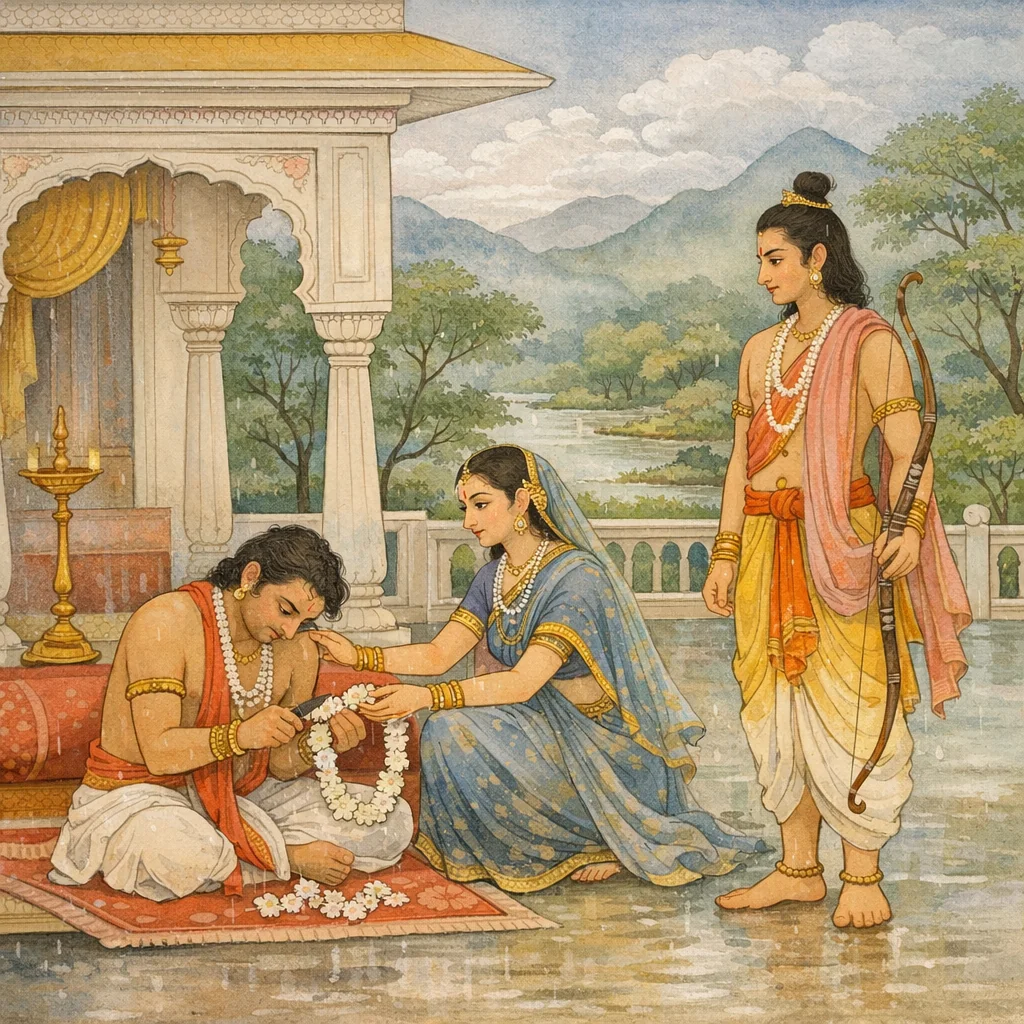
अस्मिन् सर्गे तारायाः धर्मसंहितं, प्रश्रितं वचनं सौमित्रिणा (लक्ष्मणेन) स्वीकृतम् (4.36.1) इति सूच्यते; तदनन्तरं सुग्रीवः लक्ष्मणात् उत्पन्नं महाभयं परित्यजति—क्लिन्नवस्त्र-त्यागवत् (4.36.2)। सः मद-शेषं निवर्तयन् कण्ठगतं महन्माल्यं चिच्छेद (4.36.3) इति ‘आत्म-नियमन’स्य चिह्नम्। ततः सुग्रीवः लक्ष्मणं प्रति विनयेन भाषते—रामप्रसादेन राज्य-श्री-कीर्त्यादीनां पुनर्लाभं निर्दिश्य (4.36.5), रामस्य अद्वितीय-पराक्रमं स्मारयति (सप्तद्रुम-भेदनम्, शैल-भेदनम्, धनुर्विष्फार-शब्देन भूमिकम्पः) (4.36.8–9), तथा स्वस्य सहायत्वं केवलं ‘अनुयात्रा’ इति सीम्ना स्थापयति (4.36.10)। समयातिक्रमादि यदि किञ्चिद् दोषः जातः, तर्हि विश्वास-प्रणयजन्यः इति स्वीकृत्य सेवकवत् क्षमा-याचते (4.36.11) तथा पूर्वोक्त-परुष-वचन-क्षमा-प्रार्थनां सूचयति (4.36.20)। एतस्मिन् वाक्यप्रवाहे लक्ष्मणः प्रीतः सन् प्रत्युत्तरं ददाति (4.36.12) — सुग्रीवस्य शिष्टाचारं ‘रामस्य नाथत्व’रूपेण प्रशंसन् (4.36.13), तस्य प्रभाव-शौच-आर्जव-गुणान् राजलक्ष्म्या योग्यत्वेन प्रतिष्ठापयति (4.36.14), तथा रामस्य शीघ्र-शत्रुवध-निश्चयम् सुग्रीव-सहाय्येन दृढयति (4.36.15–16)। अन्ते लक्ष्मणः शीघ्र-प्रस्थानं कृत्वा भार्याहरण-शोकाकुलं रामं सान्त्वयितुं सुग्रीवम् आह्वयति (4.36.19) — कृतज्ञता, क्षमा, समयपालन, तथा कार्य-प्रवर्तनम् इत्येतानि तत्त्वानि एकत्र समन्वयन्ते।
Shlokas
Verse 1
इत्युक्तस्तारया वाक्यं प्रश्रितं धर्मसंहितम्।मृदुस्वभावस्सौमित्रिः प्रतिजग्राह तद्वचः।।।।
Thus addressed by Tārā with courteous words grounded in dharma, Saumitri—gentle by nature—accepted her counsel.
Verse 2
तस्मिन्प्रतिगृहीते तु वाक्ये हरिगणेश्वरः।लक्ष्मणात्सुमहत्त्रासं वस्त्रं क्लिन्नमिवात्यजत्।।।।
When those words were accepted, Sugrīva—the lord of the monkey hosts—cast off his great fear of Lakṣmaṇa, like a wet garment thrown away.
Verse 3
ततः कण्ठगतं माल्यं चित्रं बहुगुणं महत्।चिच्छेद विमदश्चासीत्सुग्रीवो वानरेश्वरः।।।।
Then Sugriva, lord of the Vānaras, tore off the great, many-valued, colorful garland worn at his neck—and he became free from intoxication.
Verse 4
स लक्ष्मणं भीमबलं सर्ववानरसत्तमः।अब्रवीत्प्रश्रितं वाक्यं सुग्रीव स्सम्प्रहर्षयन्।।।।
Sugriva, the best among all Vānaras, addressed Lakshmana of formidable strength with courteous words, seeking to please and reassure him.
Verse 5
प्रणष्टा श्रीश्च कीर्तिश्च कपिराज्यं च शाश्वतम्।रामप्रसादात्सौमित्रे पुन: प्राप्तमिदं मया।।।।
O Saumitri, my prosperity, my fame, and even the enduring sovereignty of the Vānara-kingdom—once lost—have been regained by me through Rama’s favor.
Verse 6
कश्शक्तस्तस्य देवस्य ख्यातस्य स्वेन कर्मणा।तादृशं विक्रमं वीर प्रतिकर्तुमरिन्दम।।।।
O hero, crusher of enemies—who could possibly repay the mighty valor of that lord, famed by his own deeds?
Verse 7
सीतां प्राप्स्यति धर्मात्मा वधिष्यति च रावणम्।सहायमात्रेण मया राघव स्स्वेन तेजसा।।।।
The righteous Rāghava will recover Sītā, and by his own splendor he will slay Rāvaṇa—while I serve only as a helper.
Verse 8
सहायकृत्यं किं तस्य येन सप्त महाद्रुमाः।शैलश्च वसुधा चैव बाणेनैकेन दारिताः।।।।
What assistance could he need—he who shattered, with a single arrow, seven great trees, a mountain, and even the earth itself?
Verse 9
धनुर्विष्फारयानस्य यस्य शब्देन लक्ष्मण।सशैला कम्पिता भूमिस्सहायै: किन्नु तस्य वै।।।।
O Lakshmana, by the very sound of his bowstring’s twang the earth—mountains included—trembled; what need has he, then, of helpers?
Verse 10
अनुयात्रां नरेन्द्रस्य करिष्येऽहं नरर्षभ।गच्छतो रावणं हन्तुं वैरिणं सपुरस्सरम्।।।।
O bull among men, I will accompany the king when he sets out to slay the enemy Rāvaṇa together with his followers.
Verse 11
यदि किञ्चिदतिक्रान्तं विश्वासात्प्रणयेन वा।प्रेष्यस्य क्षमितव्यं मे न कश्चिन्नापराध्यति।।।।
If, out of trust or affection, I have overstepped even slightly, forgive me as one forgives a servant—for no one in the world is entirely free from fault.
Verse 12
ति तस्य ब्रुवाणस्य सुग्रीवस्य महात्मनः।अभवल्लक्ष्मणः प्रीतः प्रेम्णा चैवमुवाच ह।।।।
As the great-souled Sugrīva spoke thus, Lakṣmaṇa became pleased and, with affection, replied in these words.
Verse 13
सर्वथा हि मम भ्राता सनाथो वानरेश्वर।त्वया नाथेन सुग्रीव प्रश्रितेन विशेषतः।।।।
O lord of monkeys, Sugrīva—since you are his protector, and especially because you are courteous—my brother is secure in every way.
Verse 14
यस्ते प्रभाव स्सुग्रीव यच्च ते शौचमार्जवम्।अर्हस्त्वं कपिराज्यस्य श्रियं भोक्तुमनुत्तमाम्।।।।
Sugrīva, such is your power, and such your purity and straightforwardness—you truly deserve to enjoy the unsurpassed prosperity of the monkey-kingdom.
Verse 15
सहायेन तु सुग्रीव त्वया रामः प्रतापवान्।वधिष्यति रणे शत्रूनचिरान्नात्र संशयः।।।।
Sugrīva, with you as his ally, the mighty Rāma will soon destroy his enemies in battle—there is no doubt of it.
Verse 16
धर्मज्ञस्य कृतज्ञस्य सङ्ग्रामेष्वनिवर्तिनः।उपपन्नं च युक्तं च सुग्रीव तव भाषितम्।।।।
Sugrīva, since you know dharma, are grateful, and never retreat in battle, what you have said is both credible and fitting.
Verse 17
दोषज्ञस्सति सामर्थ्ये कोऽन्यो भाषितुमर्हति।वर्जयित्वा मम ज्येष्ठं त्वां च वानरसत्तम।।।।
O best of monkeys, when one has the power to find faults, who else would be fit to speak in such a way—except my elder brother and you?
Verse 18
सदृशश्चासि रामस्य विक्रमेण बलेन च।सहायो दैवतैर्दत्तश्चिराय हरिपुङ्गव।।।।
O foremost of monkeys, you are equal to Rāma in valor and strength—an ally granted by the gods for a long time to come.
Verse 19
किं तु शीघ्रमितो वीर निष्क्रम त्वं मया सह।सान्त्वयस्व वयस्यं च त्वं भार्याहरणकर्शितम्।।।।
But now, hero—come out from here quickly with me, and comfort your friend, who is afflicted by the abduction of his wife.
Verse 20
यच्च शोकाभिभूतस्य श्रुत्वा रामस्य भाषितम्।मया त्वं परुषाण्युक्तस्तच्चत्वं क्षन्तु मर्हसि।।।।
And whatever harsh words I spoke to you—after hearing the words of grief-stricken Rāma—please forgive that; it is fitting that you pardon me.
Frequently Asked Questions
The dharma-tension is Sugriva’s delay and lapse into indulgence versus his duty to assist Rama: he acknowledges possible transgression, requests pardon as a dependent ally/servant, and recommits to timely participation in the Ravana-directed expedition.
Accountability is compatible with dignity: a ruler restores moral authority by fear-tyāga, self-regulation, gratitude, and explicit apology; alliance-dharma is sustained through courteous speech (praśrita-vākya) and reciprocal affirmation of virtues.
Rather than new places, the Sarga foregrounds cultural-ethical ‘landmarks’ of courtly governance in Kishkindha—royal assembly decorum, symbols like the garland (mālya), and remembered feats (seven trees, mountain, earth pierced) used as authoritative narrative markers of Rama’s prowess.