Sarga 32
किष्किन्धाकाण्डे द्वात्रिंशः सर्गः — Lakshmana’s Anger Reported; Hanuman Advises Propitiation and Timely Mobilization
किष्किन्धाकाण्ड
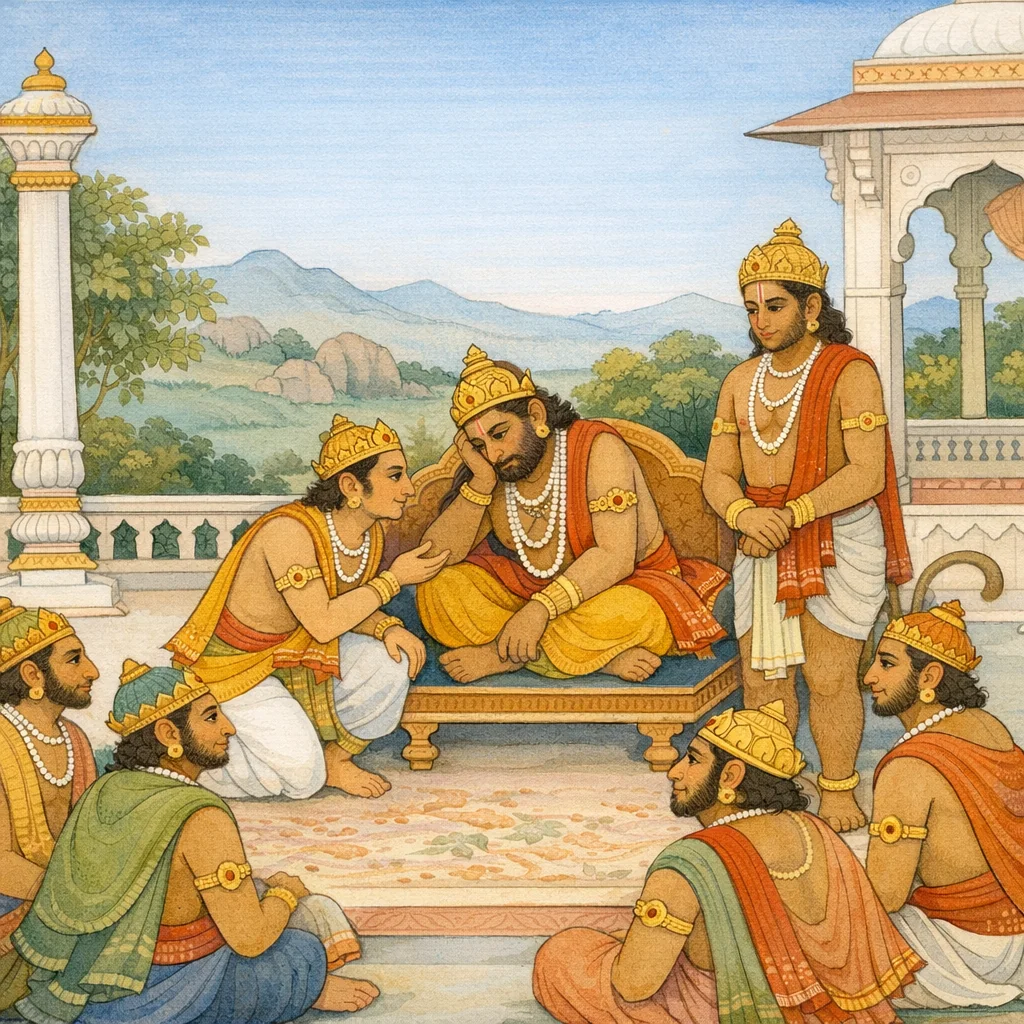
This sarga is structured as a crisis-council in Kishkindhā. Angada reports Lakshmana’s anger, prompting Sugriva—described as prudent and skilled in counsel—to consult his ministers and examine causes without panic. Sugriva first frames the problem as a potential misunderstanding fueled by hostile informants, then reflects on the fragility of friendships and his inability to repay Rama’s prior assistance. Hanuman, speaking with deliberate logic in the assembly, rebukes forgetfulness of benefaction and recalls Rama’s act of killing Vali to remove Sugriva’s fear and secure his happiness. He interprets Lakshmana’s mission as Rama’s love-driven displeasure rather than malice, and emphasizes kāla: the auspicious autumn has arrived, skies are clear, and it is the proper season for military endeavor—hence Lakshmana’s appearance signals overdue action. Hanuman further advises that harsh words from a distressed, wife-deprived Rama should be tolerated, and prescribes a concrete remedy: seek Lakshmana’s pardon with folded hands. The counsel culminates in a warning about Rama’s overwhelming capability if angered and a final injunction: Sugriva must not disregard Rama’s or Lakshmana’s command even mentally, honoring the oath like a spouse aligned to the husband’s will—an intense formulation of political fidelity and gratitude.
Shlokas
Verse 1
अङ्गदस्य वचश्श्रुत्वा सुग्रीवस्सचिवैस्सह।लक्ष्मणं कुपितं श्रुत्वा मुमोचासनमात्मवान्।।
Hearing Angada’s words—and hearing that Lakshmana was enraged—the prudent Sugriva rose from his seat along with his ministers.
Verse 2
सचिवानब्रवीद्वाक्यं निश्चित्य गुरुलाघवम्।मन्त्रज्ञान्मन्त्रकुशलो मन्त्रेषु परिनिष्ठितान्।।
Sugrīva, skilled in counsel, weighed what was weighty and what was light (the pros and cons), and then addressed his ministers—those who knew policy and were firmly trained in deliberation.
Verse 3
न मे दुर्व्याहृतं किञ्चिन्नापि मे दुरनुष्ठितम्।लक्ष्मणो राघवभ्राता क्रुद्धः किमिति चिन्तये।।
“I have not spoken even a single harsh word, nor have I committed any wrongful act. Why, then, is Lakṣmaṇa—Rāghava’s brother—angry with me?”
Verse 4
असुहृद्भिर्ममामित्रैर्नित्यमन्तरदर्शिभिः।मम दोषानसम्भूतान् श्रावितो राघवानुजः।।
“Perhaps my enemies—hard-hearted men who are ever looking for faults—have filled Rāma’s younger brother with reports of imaginary failings in me.”
Verse 5
अत्र तावद्यथाबुद्धि सर्वैरेव यथाविधि।भावस्य निश्चयस्तावद्विज्ञेयो निपुणं शनैः।।
“For the moment, all of you should deliberate properly, each using his own intelligence; then, with careful and gradual inquiry, determine the true intent behind this situation.”
Verse 6
न खल्वस्ति मम त्रासो लक्ष्मणान्नापि राघवात्।मित्रं त्वस्थानकुपितं जनयत्येव सम्भ्रमम्।।
“Truly, I do not fear Lakṣmaṇa, nor even Rāma; yet when a friend becomes angry without proper cause, it inevitably breeds confusion and anxiety.”
Verse 7
सर्वथा सुकरं मित्रं दुष्करं परिपालनम्।अनित्यत्वाच्छ चित्तानां प्रीतिरल्पेपि भिद्यते।।
“Winning a friend is always easy, but preserving friendship is hard; for minds are fickle, and affection can break even over something trivial.”
Verse 8
अतो निमित्तं त्रस्तोहं रामेण तु महात्मना।यन्मयोपकृतं शक्यं प्रतिकर्तुं न तन्मया।।
“For this reason I feel anxious before the great-souled Rāma: the help he has done for me is something I am unable to repay in return.”
Verse 9
सुग्रीवेणैवमुक्तस्तु हनुमान्हरिपुङ्गवः।उवाच स्वेन तर्केण मध्ये वानरमन्त्रिणाम्।।
When Sugriva had spoken thus, Hanumān—the foremost of monkeys—addressed the assembly of vānara ministers, reasoning with his own clear logic.
Verse 10
सर्वथा नैतदाश्चर्यं यस्त्वं हरिगणेश्वर।न विस्मरसि सुस्निग्धमुपकार कृतं शुभम्।।
O lord of the Vanara hosts, it is no wonder at all that you have forgotten the good and auspicious help done with deep affection.
Verse 11
राघवेण तु वीरेण भयमुत्सृज्य दूरतः।त्वत्प्रियार्थं हतो वाली शक्रतुल्यपराक्रमः।।
Rāma, that heroic Rāghava, cast your fear far away and, for your happiness, slew Vāli—whose prowess was equal to Indra’s.
Verse 12
सर्वथा प्रणयात्कृद्धो राघवो नात्र संशयः।भ्रातरं सम्प्रहितवान्लक्ष्मणं लक्ष्मिवर्धनम्।।
Rāghava’s anger is wholly born of affectionate concern—there is no doubt of it. He has sent his brother Lakṣmaṇa, the increaser of prosperity, to you.
Verse 13
त्वं प्रमत्तो न जानीषे कालं कालविदां वर।फुल्लसप्तच्छदश्यामा प्रवृत्ता तु शरच्छिवा।।
O best of those who know the seasons, you have grown heedless and do not mark the time: auspicious autumn has arrived, lush and green, with saptacchada blossoms in bloom.
Verse 14
निर्मलग्रहनक्षत्रा द्यौः प्रनष्टवलाहका।प्रसन्नाश्च दिशस्सर्वास्सरितश्च सरांसि च।।
The sky is clear—its clouds vanished—and the planets and constellations shine distinctly. The directions are serene, and so too the rivers and the lakes.
Verse 15
प्राप्तमुद्योगकालं तु नावैषि हरिपुङ्गव।त्वं प्रमत्त इति व्यक्तं लक्ष्मणोऽयमिहागतः।।
O bull among monkeys, the time for mobilization has arrived, yet you do not recognize it. It is plain you have become careless—therefore this Lakṣmaṇa has come here.
Verse 16
आर्तस्य हृतदारस्य पुरुषं पुरुषान्तरात्।वचनं मर्षणीयं ते राघवस्य महात्मनः।।
You should endure even harsh words from great-souled Rāghava—he is a man in anguish, robbed of his wife, and such speech comes from deep distress.
Verse 17
कृतापराधस्य हि ते नान्यत्पश्याम्यहं क्षमम्।अन्तरेणाञ्जलिं बद्ध्वा लक्ष्मणस्य प्रसादनात्।।
Since you have indeed committed an offence, I see no other remedy—except to appease Lakṣmaṇa by joining your hands in supplication.
Verse 18
नियुक्तैर्मन्त्रिभिर्वाच्यो ह्यवश्यं पार्थिवो हितम्।अत एव भयं त्यक्त्वा ब्रवीम्यवधृतं वचः।।
A king must certainly be told what is beneficial by the ministers appointed for that task. Therefore, casting fear aside, I speak these words with firm conviction.
Verse 19
अभिक्रुद्धस्समर्थो हि चापमुद्यम्य राघवः।सदेवासुरगन्धर्वं वशे स्थापयितुं जगत्4.32.19।।
For if Rāghava becomes truly enraged and lifts his bow, he is capable of bringing the whole world—gods, asuras, and gandharvas included—under his control.
Verse 20
न स क्षमः कोपयितुं यः प्रसाद्यः पुनर्भवेत्।पूर्वोपकारं स्मरता कृतज्ञेन विशेषतः।।
“One who deserves to be appeased should not be provoked to anger—especially by a grateful person who remembers the help received in the past.”
Verse 21
तस्य मूर्ध्ना प्रणम्य त्वं सपुत्रस्ससुहृज्जनः।राजंस्तिष्ठस्व समये भर्तुर्भार्येव तद्वशः।।
“O King, bow your head to him, together with your son and your friends. Abide by your pledged word—submissive to it, like a wife to her husband’s rightful authority.”
Verse 22
न रामरामानुजशासनं त्वयाकपीन्द्र युक्तं मनसाऽप्यपोहितुम्।मनो हि ते ज्ञास्यति मानुषं बलंस राघवस्यास्य सुरेन्द्रवर्चसः।।
“O lord of monkeys, it is not proper for you to disregard—even in your mind—the command of Rāma or of Rāma’s younger brother. Your own mind knows that Rāghava, whose radiance is like Indra’s, possesses strength beyond what is merely human.”
Frequently Asked Questions
Sugriva faces a dharma-pressure between complacency after regaining kingship and the binding obligation to assist Rama; the prescribed action is immediate conciliation—approach Lakshmana with humility (folded hands) and recommit to the promised expedition.
The sarga teaches that gratitude must be operational, not merely emotional: remembering prior benefaction requires timely fulfillment of one’s vow, disciplined speech toward the distressed, and proactive repair of alliance when trust is strained.
Rather than new geography, the chapter foregrounds seasonal and cosmological markers—śarat with blossoming saptacchada, cloudless skies with visible graha-nakṣatra, and pleasant rivers and tanks—used as a cultural-ecological signal that the campaign season has arrived.