Sarga 22
वालिविलापः — Vali’s Final Counsel and the Succession Charge
किष्किन्धाकाण्ड
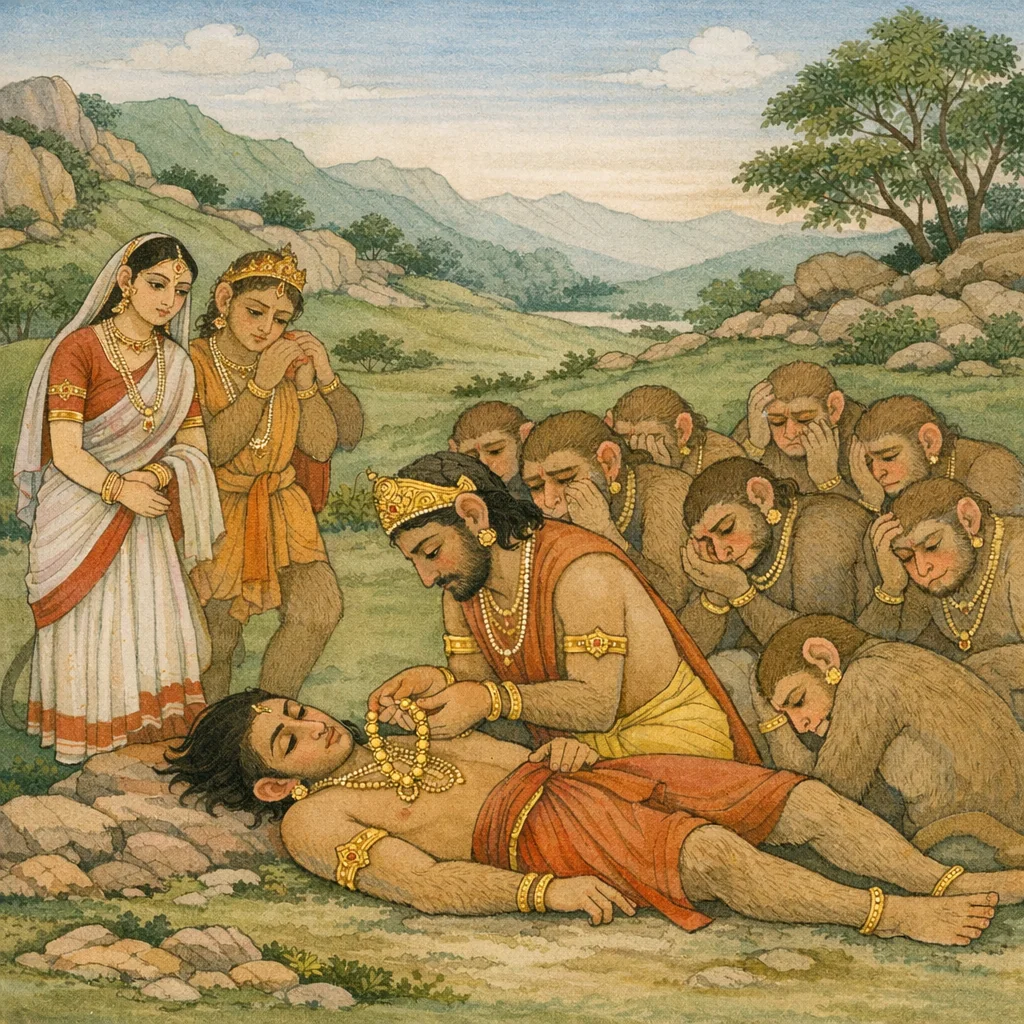
Sarga 22 is a tightly structured deathbed discourse that converts battlefield outcome into constitutional order. Mortally wounded, Vālin first registers Sugrīva’s presence and addresses him with explicit brotherly affect, reframing past wrongdoing as fate-driven delusion and urging reconciliation. He then performs a succession transfer: instructing Sugrīva to accept kingship, to act as father, provider, and protector to Aṅgada, and to rely on Tārā’s crisis-competence and subtle judgment as stable counsel. Vālin binds the new king to external dharma by insisting that Rāghava’s task be executed without hesitation, warning that failure becomes adharma and politically harmful. A symbolic regalia-transfer follows when Vālin gives Sugrīva a divine golden necklace, marking legitimate continuity even amid grief. Vālin next issues a governance manual for Aṅgada: situational awareness of time and place, emotional endurance, loyalty to Sugrīva, avoidance of factional alignment with enemies, and a balanced stance that avoids both excessive intimacy and alienation. Vālin then dies; the vānaras lament, Kishkindhā is described as desolate, Vālin’s feats are recalled (including the prolonged duel with the gandharva Golabha), and Tārā collapses upon Vālin’s body, closing the chapter in elegiac imagery.
Shlokas
Verse 1
वीक्षमाणस्तु मन्दासुस्सर्वतो मन्दमुच्छ्वसन्।आदावेव तु सुग्रीवं ददर्शत्वात्मजाग्रतः।।
But Vāli—his life-breath weakening, softly exhaling as he looked about—first of all saw Sugrīva standing before his own son.
Verse 2
तं प्राप्तविजयं वाली सुग्रीवं प्लवगेश्वरः।आभाष्य व्यक्तया वाचा सस्नेहमिदमब्रवीत्।।
Vāli, lord of the monkeys, addressed Sugrīva—who had attained victory—and, in clear words spoken with affection, said this:
Verse 3
सुग्रीव दोषेण न मां गन्तुमर्हसि किल्बिषात्।कृष्यमाणं भविष्येण बुद्धिमोहेन मां बलात्।।
O Sugrīva, you should not condemn me as though by deliberate sin; I was forcibly dragged by the delusion of mind and by the power of destiny that shapes what is to come.
Verse 4
युगपद्विहितं तात न मन्ये सुखमावयोः।सौहार्द भ्रातृयुक्तं हि तदिदं तात नान्यथा।।
Dear brother, I do not think happiness is ordained for both of us together at the same time; for this bond between brothers has become one of friendship only in this way—there is no other outcome.
Verse 5
प्रतिपद्य त्वमद्यैव राज्यमेषां वनौकसाम्।मामप्यद्यैव गच्छन्तं विद्धि वैवस्वतक्षयम्4.22.5।।
Accept this very day the kingship over these forest-dwellers; and know that I too, today itself, am going to the abode of Vaivasvata (Yama).
Verse 6
जीवितं च हि राज्यं च श्रियं च विपुलामिमाम्।प्रजहाम्येष वै तूर्णं महच्चागर्हितं यशः।।
Indeed I am quickly relinquishing life, and the kingdom, and this vast prosperity—along with great, untarnished fame.
Verse 7
अस्यां त्वहमवस्थायां वीर वक्ष्यामि यद्वचः।यद्यप्यसुकरं राजन्कर्तुमेव तदर्हसि
In this condition, O hero-king, I shall speak what I must say; even if it is difficult, you ought to carry it out.
Verse 8
सुखार्हं सुखसंवृद्धं बालमेनमबालिशम्।बाष्पपूर्णमुखं पश्य भूमौ पतितमङ्गदम्।।
Look at Aṅgada—this young boy, raised in comfort and worthy of happiness—fallen on the ground, his face filled with tears.
Verse 9
मम प्राणैः प्रियतरं पुत्रं पुत्रमिवौरसम्।मया हीनमहीनार्थं पर्वतः परिपालय।।
He is dearer to me than my own life—guard my son as you would your own true-born son; now that he is bereft of me, protect him so that he lacks nothing, O Parvata (Sugrīva).
Verse 10
त्वमेवास्य हि दाता च परित्राता च सर्वशः।भयेष्वभयदश्चैव यथाऽहं प्लवगेश्वर।।।।
O lord of monkeys, you alone must now be to him what I was—his provider in every way, his rescuer, and the giver of fearlessness in times of danger.
Verse 11
एष तारात्मज श्रीमांस्त्वया तुल्यपराक्रमः।रक्षसां च वधे तेषामग्रतस्ते भविष्यति।।
This fortunate son of Tārā, equal to you in valor, will stand at your front when it comes to the slaying of those rākṣasas.
Verse 12
अनुरूपाणि कर्माणि विक्रम्य बलवान्रणे।करिष्यत्येष तारेयस्तरस्वी तरुणोऽङ्गदः।।
This strong, swift, youthful Angada—Tārā’s son—will, in battle, advance with prowess and accomplish deeds fitting to the occasion.
Verse 13
सुषेणदुहिता चेयमर्थसूक्ष्मविमनिश्चये।औत्पातिके च विविधे सर्वतः परिनिष्ठिता।।
This lady, the daughter of Suṣeṇa, is accomplished in discerning subtle matters of policy and meaning, and is fully capable in handling varied sudden crises and omens.
Verse 14
यदेषा साध्विति ब्रूयात्कार्यं तन्मुक्तसंशयम्।न हि तारामतं किञ्चिदन्यथा परिवर्तते।।
Whatever she declares to be right should be carried out without doubt; for Tārā’s judgment does not turn out otherwise, not even in the slightest.
Verse 15
राघवस्य च ते कार्यं कर्तव्यमविशङ्कया।स्यादधर्मो ह्यकरणे त्वां च हिंस्याद्विमानितः।।
You must carry out Rāghava’s task without hesitation. If you fail to do it, it will become adharma—and when dishonoured, he may even turn against you.
Verse 16
इमां च मालामाधत्स्व दिव्यां सुग्रीव काञ्चनीम्।उदारा श्रीस्थिता ह्यास्यां सम्प्रजह्यान्मृते मयि।।
And you, Sugrīva, put on this divine golden garland. Great splendour abides in it; when I am dead, that splendour will pass away (from me).
Verse 17
इत्येवमुक्तस्सुग्रीवो वालिना भ्रातृसौहृदात्।हर्षं त्यक्त्वा पुनर्दीनो ग्रहग्रस्त इवोडुराट्।।
Thus addressed by Vāli in brotherly affection, Sugrīva let go of his joy and again became downcast—like the moon eclipsed by a planet.
Verse 18
तद्वालिवचनाच्छान्तः कुर्वन्युक्तमतन्द्रितः।जग्राह सोऽभ्यनुज्ञातो मालां तां चैव काञ्चनीम्।।
Calmed by Vāli’s words, and without resentment, he did what was proper: with Vāli’s permission, he accepted that very golden garland.
Verse 19
तां मालां काञ्चनीम् दत्त्वा दृष्ट्वाचैवात्मजं स्थितम्।संसिद्धः प्रेत्यभावाय स्नेहादङ्गदमब्रवीत्।।
After giving that golden garland, and seeing his son standing nearby, Vāli—readying himself for death—spoke to Aṅgada with affection.
Verse 20
देशकालौ भजस्वाद्य क्षममाणः प्रियाप्रिये।सुखदुःख सह: काले सुग्रीववशगो भव।।
From today, attend to place and time, forgiving what is pleasant and unpleasant. Endure happiness and sorrow as time brings them, and remain under Sugrīva’s authority.
Verse 21
यथा हि त्वं महाबाहो लालितस्सततं मया।न तथा वर्तमानं त्वां सुग्रीवो बहुमंस्यते।।।।
O mighty-armed one, as I have always cherished you, Sugrīva may not value and raise you in the same way, given how things now stand.
Verse 22
माऽस्यामित्रैर्गतं गच्छेर्मा शत्रुभिररिन्दम।भर्तुरर्थपरो दान्तः सुग्रीववशगो भव।।
O subduer of foes, do not go over to those who are his enemies, nor to his enemies themselves. Be self-restrained, devoted to your lord’s interests, and remain under Sugrīva’s authority.
Verse 23
न चातिप्रणयः कार्यः कर्तव्योऽप्रणयश्च ते।उभयं हि महान्दोष स्तस्मादन्तरदृग्भव।।
You should not be overly intimate, nor should you be without goodwill; both become serious faults. Therefore, be discerning and keep an inward watch.
Verse 24
इत्युक्त्वाऽथ विवृत्ताक्षः शरसम्पीडितो भृशम्।विवृतैर्दशनै र्भीमैर्बभूवोत्क्रान्तजीवितः।।
Having spoken thus, grievously tormented by the arrow, Vāli’s eyes rolled upward and his dreadful teeth stood bared; and he became lifeless.
Verse 25
ततो विचुक्रुशुस्तत्र वानरा हरियूथपाः।परिदेवयमानास्ते सर्वे प्लवगपुङ्गवा:।।
Then, there, all those foremost among the monkeys—leaders of the monkey troops—cried out loudly, wailing in grief.
Verse 26
किष्किन्धा ह्यद्य शून्याऽसीत्स्वर्गते वानराधिपे।उद्यानानि च शून्यानि पर्वताः काननानि च।।हते प्लवगशार्दूले निष्प्रभा वानराः कृताः।
Now Kiṣkindhā has become desolate, for the lord of the monkeys has gone to heaven. The gardens stand empty, and so do the mountains and forests; with the tiger among monkeys slain, the Vānaras themselves have grown dim and spiritless.
Verse 27
यस्य वेगेन महता काननानि वनानि च।पुष्पौघेणानुबध्यन्ते करिष्यति तदद्य कः।।
By whose mighty speed the forests and groves seemed to merge, bound together by torrents of falling flowers—who can accomplish that now?
Verse 28
येन दत्तं महद्युद्धं गन्धर्वस्य महात्मनः।।गोलभस्य महाबाहोर्दशवर्षाणि पञ्च च।नैव रात्रौ न दिवसे तद्युद्धमुपशाम्यति।।
He who waged a great war with the noble Gandharva Golabha, the mighty-armed—fifteen years long—without that battle ever ceasing, by night or by day!
Verse 29
येन दत्तं महद्युद्धं गन्धर्वस्य महात्मनः4.22.28।।गोलभस्य महाबाहोर्दशवर्षाणि पञ्च च।नैव रात्रौ न दिवसे तद्युद्धमुपशाम्यति4.22.29।।
He who fought that great war with the noble Gandharva Golabha for fifteen years, with no pause by night or day—how can such a one be fallen now?
Verse 30
ततस्तु षोडशे वर्षे गोलभो विनिपातितः।हत्वा तं दुर्विनीतं तु वाली दंष्ट्राकरालवान्।।सर्वाऽभयङ्करोऽस्माकं कथमेष निपातितः।
Then, in the sixteenth year, Golabha was struck down. Vāli—terrible with his fangs—killed that unruly foe and became a giver of safety to us all. How, then, has such a one been felled?
Verse 31
हते तु वीरे प्लवगाधिपे तदाप्लवङ्गमास्तत्र न शर्म लेभिरे।वनेचराः सिंहयुते महावनेयथा हि गावो निहते गवां पतौ।।
When the heroic lord of the monkeys was slain, the Vānaras there found no peace—like cattle in a vast forest filled with lions when the leader of the herd has been killed.
Verse 32
ततस्तु तारा व्यसनार्णवाप्लुतामृतस्य भर्तुर्वदनं समीक्ष्य सा।जगाम भूमिं परिरभ्य वालिनंमहाद्रुमं छिन्नमिवाश्रिता लता।।
Then Tārā, submerged in an ocean of calamity, looked upon the face of her dead husband; embracing Vāli, she sank to the ground—like a creeper that clings to a great tree and falls when that tree is cut down.
Frequently Asked Questions
The pivotal action is the conversion of violent regime-change into lawful succession: Vālin authorizes Sugrīva’s rule, transfers responsibility for Aṅgada’s welfare, and reframes fraternal conflict into a duty-bound political order, thereby preventing vendetta, factionalism, and orphaning of dependents.
Dharma is shown as continuity of protection and obligation beyond personal loss: legitimate power must immediately assume guardianship, consult competent counsel (Tārā), keep alliances to righteous ends (Rāma’s kārya), and govern emotions through balance—avoiding extremes that destabilize polity and family.
Kiṣkindhā is the central landscape-marker, depicted as desolate upon the king’s death; culturally, the chapter highlights regalia-transfer (the golden necklace) as a legitimacy symbol, and courtly crisis-management through Tārā’s recognized advisory authority.