Sarga 21
ताराशोकविनोदनम् (Consolation of Tara and Counsel on Succession)
किष्किन्धाकाण्ड
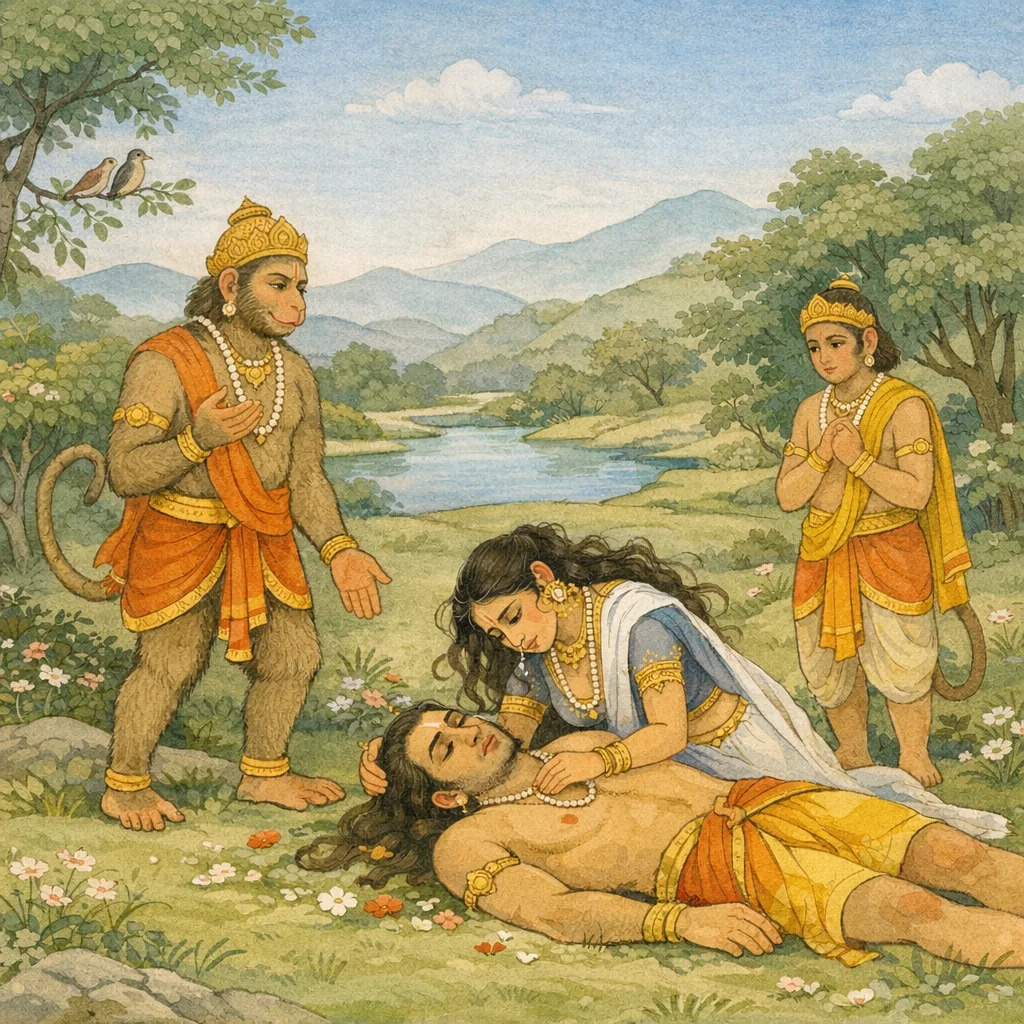
This sarga is structured as a grief-counsel discourse following Vālin’s death. Hanumān, speaking as a senior vānarayūthapa and stabilizing adviser, approaches Tārā—likened to a fallen star—then reframes bereavement through karmaphala reasoning: embodied beings inherit the results of virtue and vice after death, and the body’s fragility makes indiscriminate lamentation philosophically unstable. He then redirects attention to practical dharma: Angada must be protected as the surviving heir, immediate duties must be executed, and auspicious, orderly action is required in a transient world. The counsel turns explicitly political: encourage both Angada and Sugrīva, perform royal funerary/transition rites for the harirāja, and consecrate Angada so Tārā may regain composure by seeing legitimate rule restored. Tārā replies with a counter-ethic of attachment and authority: embracing even the slain king is preferable to future substitutes; she denies her own right to decide kingship, asserting Sugrīva’s primacy in affairs as paternal uncle, and finally expresses a fatalistic resolve to join Vālin, presenting the pyre/resting place of the fallen warrior as her fitting refuge.
Shlokas
Verse 1
ततो निपतितां तारां च्युतां तारामिवाम्बरात्।शनैराश्वासयामास हनुमान्हरियूथपः।।
Then Hanumān, a leader among the monkey hosts, gently consoled Tārā—fallen down like a star that has slipped from the sky.
Verse 2
गुणदोषकृतं जन्तुस्स्वकर्म फलहेतुकम्।अव्यग्रस्तदवाप्नोति सर्वं प्रेत्य शुभाशुभम्।।
After leaving this world, an embodied being gradually experiences—according to one’s own deeds—the auspicious and inauspicious results that arise from actions shaped by virtue and vice.
Verse 3
शोच्या शोचसि कं शोच्यं दीनं दीनाऽनुकम्पसे।कस्य कोवाऽनुशोच्योऽस्ति देहेऽस्मिन् बुद्बुदोपमे।।
You, yourself worthy of compassion, grieve—yet for whom, and what truly is there to grieve? In this body, so bubble-like and fragile, who belongs to whom as an object of lasting lament?
Verse 4
अङ्गदस्तु कुमारोऽयं द्रष्टव्यो जीवपुत्रया।अयत्यां च विधेयानि समर्थान्यस्य चिन्तय।।
This prince Aṅgada must be cared for by you, for your son still lives; and you should consider what responsibilities for his future can be properly fulfilled.
Verse 5
जानास्यनियतामेवं भूतानामागतिं गतिम्।तस्माच्छुभं हि कर्तव्यं पण्डितेनैह लौकिकम्।।।।
You know well how uncertain are the comings and goings of living beings; therefore, in this world, the wise should indeed undertake what is auspicious and proper.
Verse 6
यस्मिन्हरिसहस्राणि प्रयुतान्यर्बुदानि च।वर्तयन्ति कृतांशानि सोऽयं दिष्टान्तमागतः।।
He on whom thousands of monkeys—indeed millions and tens of millions—depended, fixing their hopes upon him, has now reached his destined end, to reap the fruits of his own deeds.
Verse 7
यदयं न्यायदृष्टार्थस्सामदानक्षमापरः।गतो धर्मजितां भूमिं नैनं शोचितुमर्हसि।।
Since this hero, clear-sighted in justice and devoted to conciliation, generosity, and forgiveness, has gone to the realm attained by those who conquer through righteousness, it is not proper for you to mourn him.
Verse 8
सर्वे हि हरिशार्दूलाः पुत्रश्चायं तवाङ्गदः।इदं हर्यृक्षपतिराज्यं च त्वत्सनाथमनिन्दिते।।
O blameless lady, all these tiger-like monkeys—along with your son Angada—and this whole kingdom of monkeys and bears stand supported and safeguarded by you.
Verse 9
ताविमौ शोकसन्तप्तौ शनैः प्रेरय भामिनि।त्वया परिगृहीतोऽयमङ्गदश्शास्तु मेदिनीम्।।
O noble lady, gently encourage these two, scorched by grief; and with you as his guardian, let this Angada govern the earth (the realm).
Verse 10
सन्ततिश्च यथा दृष्टा कृत्यं यच्चापि साम्प्रतम्।राज्ञस्तत्क्रियतां सर्वमेष कालस्य निश्चयः4.21.10।।
“Having considered the heir and what must be done at present, let everything that is required for the king be carried out—this is what the moment demands.”
Verse 11
संस्कार्यो हरिराजश्च अङ्गदश्चाभिषिच्यताम्।सिंहासनगतं पुत्रं पश्यन्ती शान्तिमेष्यसि।।
Let the funerary and royal rites for the king of the Vānaras be duly performed, and let Aṅgada be consecrated; seeing your son seated upon the throne, you will regain peace.
Verse 12
सा तस्य वचनं श्रुत्वा भर्तृव्यसनपीडिता।अब्रवीदुत्तरं तारा हनूमन्तमवस्थितम्।।
Hearing his words, Tārā—tormented by the calamity of her husband—gave her reply to Hanumān, who stood waiting.
Verse 13
अङ्गदप्रतिरूपाणां पुत्राणामेकतश्शतम्।हतस्याप्यस्य वीरस्य गात्रसंश्लेषणं वरम्।।
Even a hundred sons resembling Aṅgada, all on one side, are not equal to this: it is better to embrace the body of this hero—even slain.
Verse 14
न चाहं हरिराजस्य प्रभवाम्यङ्गदस्य वा।पितृव्यस्तस्य सुग्रीवस्सर्वकार्येष्वनन्तरः4.21.14।।
I have no authority over the Vānara-king (now) or over Aṅgada; for him, his paternal uncle Sugrīva stands next in line in every matter of governance.
Verse 15
न ह्येषाबुद्धिरास्थेया हनूमन्नङ्गदं प्रति।पिता हि बन्धुः पुत्रस्य न माता हरिसत्तम।।
O Hanumān, this line of thinking about Aṅgada should not be held: it is the father who is the true protector-kin of a son—rather than the mother, O best of Vānaras.
Verse 16
न हि मम हरिराजसंश्रयात्क्षमतरमस्ति परत्र चेह वा।अभिमुखहतवीरसेवितंशयनमिदं मम सेवितुं क्षमम्।।
For me, there is no safer or more fitting refuge—here or in the world beyond—than union with the Vānara-king. It is right for me to take up this resting-place, used by that hero who has been slain before my eyes.
Frequently Asked Questions
The chapter addresses the governance dilemma immediately after a ruler’s death: how to balance personal grief (Tara’s mourning) with public duty—performing rites, stabilizing the polity, and establishing succession through Angada’s consecration while managing Sugriva’s role.
Hanuman’s upadeśa links mourning to metaphysics: beings reap karmic results after death, the body is bubble-like and impermanent, and therefore the wise redirect emotion into auspicious, duty-aligned action—yet Tara’s response preserves the text’s realism about attachment and limits of agency.
Cultural institutions are central rather than geography: royal saṃskāra (transition rites), abhiṣeka (consecration), the siṃhāsana (throne) as legitimacy-symbol, and the funerary resting place/pyre as the locus of Tara’s final resolve; the setting presumes the Kishkindha vanara kingdom.