Sarga 9
ऋश्यशृङ्गानयनकथा — The Account of Bringing Ṛśyaśṛṅga (and the Remedy for Drought)
बालकाण्ड
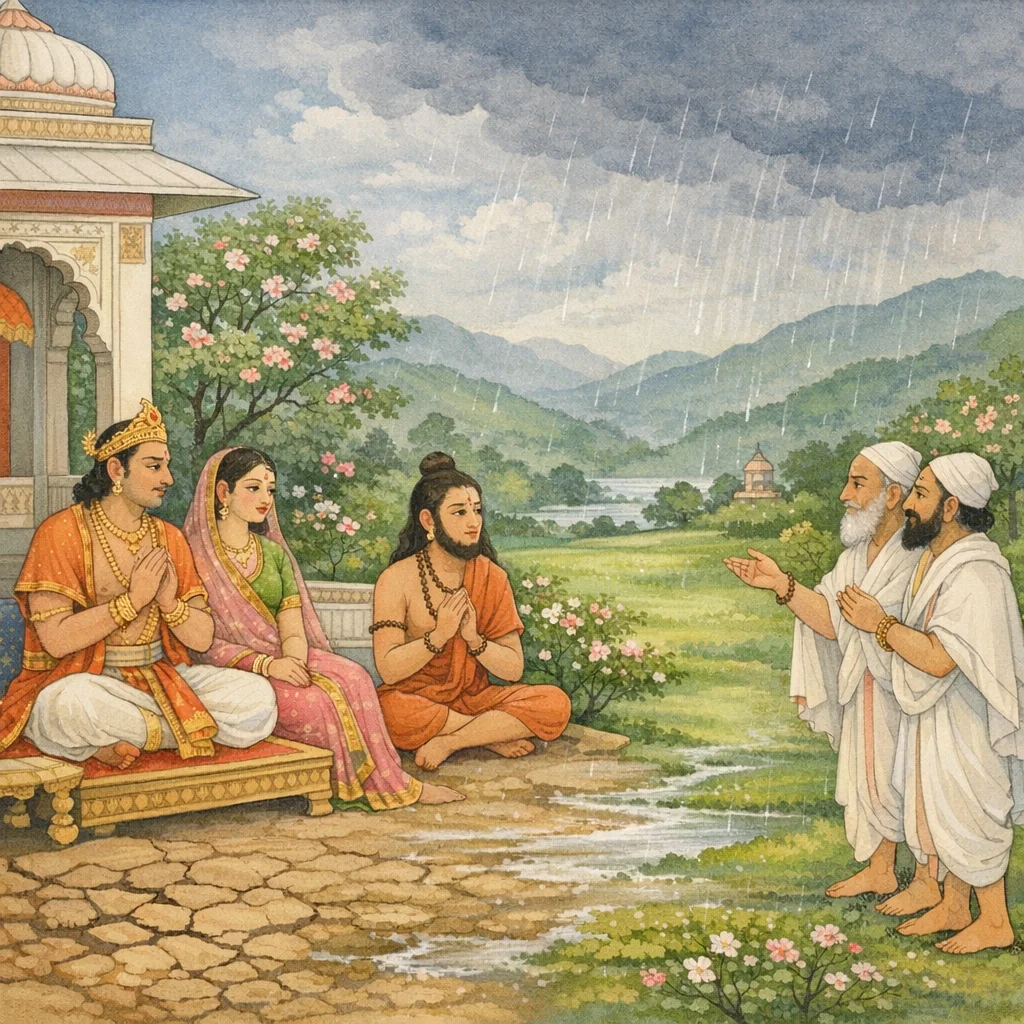
Sarga 9 is structured as courtly counsel framed by an embedded sacred report. Sumantra (the royal sūta/charioteer) privately informs King Daśaratha that he has heard an ancient precedent relayed through priestly instruction. The narrative attributes the precedent to Sanatkumāra’s earlier discourse among sages concerning royal progeny. The account outlines Ṛśyaśṛṅga’s secluded upbringing under Vibhaṇḍaka, emphasizing disciplined brahmacarya and ritual service. A parallel political-ethical crisis arises in Aṅga: King Romapāda’s breach of conduct triggers a severe drought, prompting him to consult learned Brahmins for prāyaścitta via niyama (religious observance). The Brahmins prescribe a specific remedy—bring Ṛśyaśṛṅga and honor him, then ritually offer Śāntā in marriage. Ministers initially fear the rishi’s power and negotiate conditions to avoid blame, then propose workable means. The precedent concludes: Ṛśyaśṛṅga is brought (with courtesans as intermediaries), rains return, Śāntā is given, and the sage becomes a source of progeny. Daśaratha, pleased, requests Sumantra to narrate in further detail the method of Ṛśyaśṛṅga’s bringing—linking this precedent to Daśaratha’s own dynastic aims.
Shlokas
Verse 1
एतच्छ्रुत्वा रहस्सूतो राजानमिदमब्रवीत्।ऋत्विग्भिरुपदिष्टोऽयं पुरावृत्तो मया श्रुत:।।।।
Having heard this, the charioteer spoke privately to the king: “This very remedy has been advised by officiating priests before; I have heard of an ancient precedent.”
Verse 2
सनत्कुमारो भगवान्पूर्वं कथितवान्कथाम्।ऋषीणां सन्निधौ राजन् तव पुत्रागमं प्रति।।।।
O King, the divine Sanatkumāra had earlier narrated—before an assembly of sages—a story concerning the coming of sons to you.
Verse 3
काश्यपस्यतु पुत्रोऽस्ति विभण्डक इति श्रुत:।ऋष्यशृङ्ग इति ख्यातस्तस्य पुत्रो भविष्यति।।।।
Now, Kāśyapa has a son renowned as Vibhaṇḍaka; and it was foretold that to him a son would be born, famed by the name Ṛśyaśṛṅga.
Verse 4
स वने नित्यसंवृद्धो मुनिर्वनचरस्सदा ।नान्यं जानाति विप्रेन्द्रो नित्यं पित्रनुवर्तनात् ।।।।
Raised continually in the forest and always dwelling as a forest-roaming sage, that foremost of brahmins knew no one else—because he constantly followed only his father.
Verse 5
द्वैविध्यं ब्रह्मचर्यस्य भविष्यति महात्मन:।लोकेषु प्रथितं राजन्विप्रैश्च कथितं सदा।।।।
O King, for that great-souled one there would be a twofold observance of brahmacarya—celebrated in the world and ever spoken of by learned brahmins.
Verse 6
तस्यैवं वर्तमानस्य कालस्समभिवर्तत ।अग्निं शुश्रूषमाणस्य पितरं च यशस्विनम्।।।।
As he lived in this manner, time passed for him—serving the sacred fire and attending as well upon his illustrious father.
Verse 7
एतस्मिन्नेव काले तु रोमपाद: प्रतापवान्।अङ्गेषु प्रथितो राजा भविष्यति महाबल:।। ।।
At that very time, Romapāda—a powerful and valiant king, renowned in the land of Aṅga—would be ruling there.
Verse 8
तस्य व्यतिक्रमाद्राज्ञो भविष्यति सुदारुणा ।अनावृष्टिस्सुघोरा वै सर्वभूतभयावहा ।।।।
Because of that king’s transgression, a most dreadful drought would arise—terrifying to all living beings.
Verse 9
अनावृष्ट्यां तु वृत्तायां राजा दु:खसमन्वित:।ब्राह्मणान्श्रुतवृद्धांश्च समानीय प्रवक्ष्यति।। ।।
When a drought sets in, the king—overwhelmed with sorrow—summons the brāhmaṇas and the elders made venerable by learning, and addresses them for counsel.
Verse 10
भवन्तश्श्रुतधर्माणो लोकचारित्रवेदिन: ।समादिशन्तु नियमं प्रायश्चित्तं यथा भवेत् ।।।।
“You are learned in the duties taught by scripture and skilled in the ways of the world. Please instruct me in the proper observance by which expiation may be accomplished.”
Verse 11
वक्ष्यन्ति ते महीपालं ब्राह्मणा वेदपारगा:।विभण्डकसुतं राजन्सर्वोपायैरिहानय।।।।
Then the Veda-versed brahmins said to the king: “O ruler, bring here by every possible means Ṛśyaśṛṅga, the son of Vibhaṇḍaka.”
Verse 12
आनाय्य च महीपाल ऋश्यशृङ्गं सुसत्कृतम्।प्रयच्छ कन्यां शान्तां वै विधिना सुसमाहित: ।।।।
“O king, having brought Ṛśyaśṛṅga and honored him well, offer your daughter Śāntā to him in marriage according to proper rites, with full reverence and composure.”
Verse 13
तेषां तु वचनं श्रुत्वा राजा चिन्तां प्रपत्स्यते ।केनोपायेन वै शक्य इहानेतुं स वीर्यवान् ।।।।
But hearing their words, the king fell into anxious reflection: “By what means can that powerful sage be brought here?”
Verse 14
ततो राजा विनिश्चित्य सह मन्त्रिभिरात्मवान्।पुरोहितममात्यांश्च तत: प्रेष्यति सत्कृतान्।।।।
Then the wise king, having resolved the matter together with his ministers, sent forth—after due honor—the royal priest and the counselors on the mission.
Verse 15
ते तु राज्ञो वचश्श्रुशृत्वा व्यथिता विनतानना:।न गच्छेम ऋषेर्भीता अनुनेष्यन्ति तं नृपम् ।। ।।
But hearing the king’s command, they became distressed, their faces cast down. Afraid of the sage, they pleaded with the king: “We will not go.”
Verse 16
वक्ष्यन्ति चिन्तयित्वा ते तस्योपायांश्च तत्क्षमान्।आनेष्यामो वयं विप्रं न च दोषो भविष्यति।। ।।
After reflecting, they said they would propose suitable means for that purpose: “We shall bring the sage, and no blame shall attach to us.”
Verse 17
एवमङ्गाधिपेनैव गणिकाभि: ऋषेस्सुत:।आनीतोऽवर्षयद्देवश्शान्ता चास्मै प्रदीयते।।।।
Thus, by the king of Aṅga—using courtesans as instruments—the sage’s son was brought; then the god sent rain, and Śāntā was given to him (in marriage).
Verse 18
ऋश्यशृङ्गस्तु जामाता पुत्रांस्तव विधास्यति।सनत्कुमारकथितमेतावद्व्याहृतं मया।।।।
Ṛśyaśṛṅga, as your son-in-law, will bring about sons for you. This much of what Sanatkumāra related has been spoken by me.
Verse 19
अथ हृष्टो दशरथस्सुमन्त्रं प्रत्यभाषत।यथर्श्यशृङ्गस्त्वानीतो विस्तरेण त्वयोच्यताम्।।।।
Then Daśaratha, pleased, addressed Sumantra: “Tell me in detail by what means Ṛśyaśṛṅga was brought (to Romapāda’s court).”
Verse 20
O King, for that great-souled one there would be a twofold observance of brahmacarya—celebrated in the world and ever spoken of by learned brahmins.
Frequently Asked Questions
The dilemma is how a ruler should respond when a breach of conduct produces public calamity (drought): the text frames the remedy as accountable consultation with learned authorities and performance of prāyaścitta/niyama, rather than coercive power alone—culminating in the deliberate act of bringing Ṛśyaśṛṅga as a dharmic corrective.
The sarga teaches that personal and political order are interlinked: ascetic integrity (brahmacarya, ritual service) generates moral authority, while kingship must be guided by śāstra-informed counsel; when disorder arises, restoration is pursued through disciplined observance, reverence to the virtuous, and ethically framed decision-making.
Aṅga is highlighted as the political setting for Romapāda’s crisis; the forest hermitage represents the cultural space of ascetic formation; and the court/ritual sphere is marked by institutions like ṛtviks, Vedic Brahmins, Agni-worship, prāyaścitta, and marriage as a formal dharmic rite (Śāntā’s offering).