Sarga 64
रम्भा-प्रलोभनम् — Rambhā’s Temptation and Viśvāmitra’s Curse
बालकाण्ड
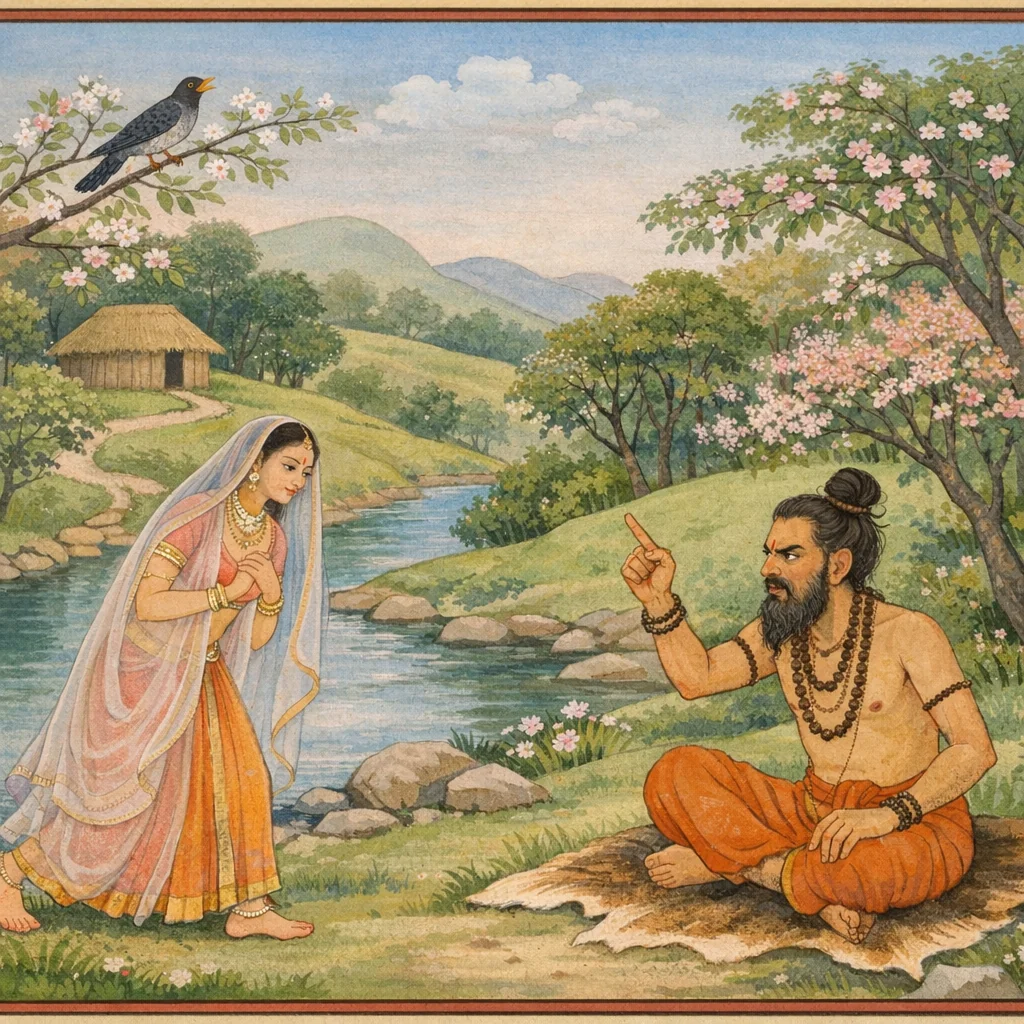
Sarga 64 presents a tightly structured episode on the fragility of tapas under provocation. Indra (Sahasrākṣa), acting for the devas, commissions the apsaras Rambhā to entice Viśvāmitra (Kauśika) with kāma-moha, promising support through the presence of Kandarpa and the heart-captivating cuckoo-song in spring. Rambhā, fearful of the sage’s wrath, nevertheless assumes an exquisite form and approaches. Viśvāmitra hears the cuckoo’s incomparable song, sees Rambhā, and doubt arises—he recognizes Indra’s stratagem. Seized by anger, he curses Rambhā to become a rock for ten thousand years, while also declaring that an effulgent brāhmaṇa endowed with tapas will later liberate her. After pronouncing the curse, Viśvāmitra experiences remorse and interprets the incident as a loss of ascetic merit through uncontrolled senses. He articulates a renewed vow: to avoid anger and speech, to suspend breath and abstain from food for vast durations until brahminhood is attained—an “unparalleled” thousand-year discipline. The chapter thus juxtaposes divine interference, ethical accountability, and the internal economy of ascetic power.
Shlokas
Verse 1
सुरकार्यमिदं रम्भे कर्तव्यं सुमहत्त्वया।लोभनं कौशिकस्येह काममोहसमन्वितम्।।1.64.1।।
“O Rambhā, this is a task for the gods, and it must be carried out by you, weighty as it is: here you are to entice Kauśika, drawing him into delusion through desire.”
Verse 2
तथोक्ता साऽप्सरा राम सहस्राक्षेण धीमता।व्रीडिता प्राञ्जलिर्वाक्यं प्रत्युवाच सुरेश्वरम्।।1.64.2।।
O Rāma, thus addressed by the wise thousand-eyed Indra, that apsaras—bashful and with palms folded in supplication—replied to the Lord of the gods.
Verse 3
अयं सुरपते घोरो विश्वामित्रो महामुनि:।घोरमुत्सृजते क्रोधं मयि देव न संशय:।।1.64.3।।ततो हि मे भयं देव प्रासादं कर्तुमर्हसि।
O Lord of the gods, this great sage Viśvāmitra is formidable. He will surely unleash dreadful wrath upon me—there is no doubt, O Deva. Therefore I am afraid, my Lord; you ought to show me your favour and pardon.
Verse 4
एवमुक्तस्तया राम रम्भया भीतया तदा।।1.64.4।।तामुवाच सहस्राक्षो वेपमानां कृताञ्जलिम्।
O Rāma, thus spoken to by the frightened Rambhā, Indra—the thousand-eyed—then addressed her as she trembled with folded hands.
Verse 5
माभैषी रम्भे भद्रं ते कुरुष्व मम शासनम्।।1.64.5।।कोकिलो हृदयग्राही माधवे रुचिरद्रुमे।अहं कन्दर्पसहित स्स्थास्यामि तव पार्श्वत:।।1.64.6।।
“Do not be afraid, Rambhā; may you be safe. Carry out my command. In the springtime, amid lovely trees, I shall remain at your side—taking the captivating form of a cuckoo—together with Kandarpa (Cupid).”
Verse 6
माभैषी रम्भे भद्रं ते कुरुष्व मम शासनम्।।1.64.5।।कोकिलो हृदयग्राही माधवे रुचिरद्रुमे।अहं कन्दर्पसहित स्स्थास्यामि तव पार्श्वत:।।1.64.6।।
“Do not be afraid, Rambhā; may you be safe. Carry out my command. In the springtime, amid lovely trees, I shall remain at your side—taking the captivating form of a cuckoo—together with Kandarpa (Cupid).”
Verse 7
त्वं हि रूपं बहुगुणं कृत्वा परमभास्वरम्।तमृषिं कौशिकं रम्भे भेदयस्व तपस्विनम्।।1.64.7।।
“You, Rambhā—assuming a most radiant form adorned with many enticing graces—should disrupt that ascetic, the sage Kauśika (Viśvāmitra), and break his concentration.”
Verse 8
सा श्रुत्वा वचनं तस्य कृत्वा रूपमनुत्तमम्।लोभयामास ललिता विश्वामित्रं शुचिस्मिता।।1.64.8।।
Hearing his words, she assumed an incomparable form; graceful and bright-smiling, she set about enticing Viśvāmitra.
Verse 9
कोकिलस्य च शुश्राव वल्गु व्याहरत: स्वनम्।सम्प्रहृष्टेन मनसा तत एनामुदैक्षत।।1.64.9।।
He heard the sweet, charming call of the cuckoo; and then, his mind stirred with delight, he looked upon her.
Verse 10
अथ तस्य च शब्देन गीतेनाप्रतिमेन च।दर्शनेन च रम्भाया मुनिस्सन्देहमागत:।।1.64.10।।
Hearing that bird’s incomparable song, and also seeing Rambhā present there, doubt arose in the sage’s mind.
Verse 11
सहस्राक्षस्य तत्कर्म विज्ञाय मुनिपुङ्गव:।रम्भां क्रोधसमाविष्ट श्शशाप कुशिकात्मज:।।1.64.11।।
Recognizing it as the work of Sahasrākṣa (Indra), the foremost of sages—Kuśika’s son—seized by anger, cursed Rambhā.
Verse 12
यन्मां लोभयसे रम्भे कामक्रोधजयैषिणम्।दशवर्षसहस्राणि शैली स्थास्यसि दुर्भगे ।।1.64.12।।
“Since you, Rambhā—wretched one—have tried to entice me while I strive to conquer desire and anger, you shall become a rock and remain so for ten thousand years.”
Verse 13
ब्राह्मण स्सुमहातेजा स्तपोबलसमन्वित:।उद्धरिष्यति रम्भे त्वां मत्क्रोधकलुषीकृताम्।।1.64.13।।
“O Rambhā, a radiant brāhmaṇa, endowed with the strength born of austerity, will one day redeem you—though you have been stained by my anger.”
Verse 14
एवमुक्त्वा महातेजा विश्वामित्रो महामुनि:।अशक्नुवन् धारयितुं क्रोधं सन्तापमागत:।।1.64.14।।
Having spoken thus, the mighty and great sage Viśvāmitra—unable to hold back his anger—fell into burning distress and remorse.
Verse 15
तस्य शापेन महता रम्भा शैली तदाऽभवत्।वचश्शृत्वा च कन्दर्पो महर्षेस्स च निर्गत:।।1.64.15।।
By that great curse, Rambhā at once became rock-like; and hearing the great seer’s words, Kandarpa (and the instigator) withdrew and fled.
Verse 16
कोपेन स महातेजास्तपोऽपहरणे कृते।इन्द्रियैरजितै राम न लेभे शान्तिमात्मन:।।1.64.16।।
“O Rāma, that mighty one, when his ascetic merit had been diminished through anger, found no peace within himself—his senses still unconquered.”
Verse 17
बभूवास्य मनश्चिन्ता तपोऽपहरणे कृते ।नैव क्रोधं गमिष्यामि न च वक्ष्ये कथञ्चन।।1.64.17।।
When his ascetic merit had been impaired, a resolve arose in his mind: “I will never again give way to anger, nor will I speak in any such manner.”
Verse 18
अथवा नोच्छवसिष्यामि संवत्सरशतान्यपि।अहं विशोषयिष्यामि ह्यात्मानं विजितेन्द्रिय:।।1.64.18।।
“Or else, for hundreds of years I shall not even breathe; having conquered my senses, I will dry up this body through austerity.”
Verse 19
तावद्यावद्धि मे प्राप्तं ब्राह्मण्यं तपसाऽऽर्जितम्।अनुच्छवसन्नभुञ्जान स्तिष्ठेयं शाश्वतीस्समा:।।1.64.19।।न हि मे तप्यमानस्य क्षयं यास्यन्ति मूर्तय:।
“Until I attain brāhmaṇa-hood earned by austerity, I shall stand for countless years without breathing and without eating; for while I am engaged in penance, my limbs will not waste away.”
Verse 20
एवं वर्षसहस्रस्य दीक्षां स मुनिपुङ्गव:।।1.64.20।।चकाराप्रतिमां लोके प्रतिज्ञां रघुनन्दन।
O Raghunandana, in this manner that foremost of sages undertook an unparalleled vow in the world—an observance of austerity for a thousand years.
Frequently Asked Questions
The pivotal action is Viśvāmitra’s response to a divinely engineered temptation: he identifies Indra’s tactic but still releases anger, issuing a severe curse. The dilemma lies in whether discernment without emotional mastery still constitutes a failure of tapas and dharma.
The sarga teaches that ascetic power is inseparable from restraint: anger can nullify spiritual gains (tapopaharaṇa), while renewed vows—silence, breath-discipline, fasting, and sustained resolve—rebuild inner sovereignty and ethical steadiness.
Rather than a fixed geography, the chapter highlights a cultural-ritual landscape: Mādhava (spring) as the aesthetic setting for temptation, the kokila’s song as a recognized poetic instrument of kāma, and the śilā (rock) motif as a durable marker of curse-and-liberation narratives in Sanskrit tradition.