Sarga 63
विश्वामित्रस्य तपोविघ्नः, मेनकाप्रसङ्गः, महर्षिपदप्रदानम् (Visvamitra’s Austerity Obstructed; Menaka Episode; Conferment of Maharshi Status)
बालकाण्ड
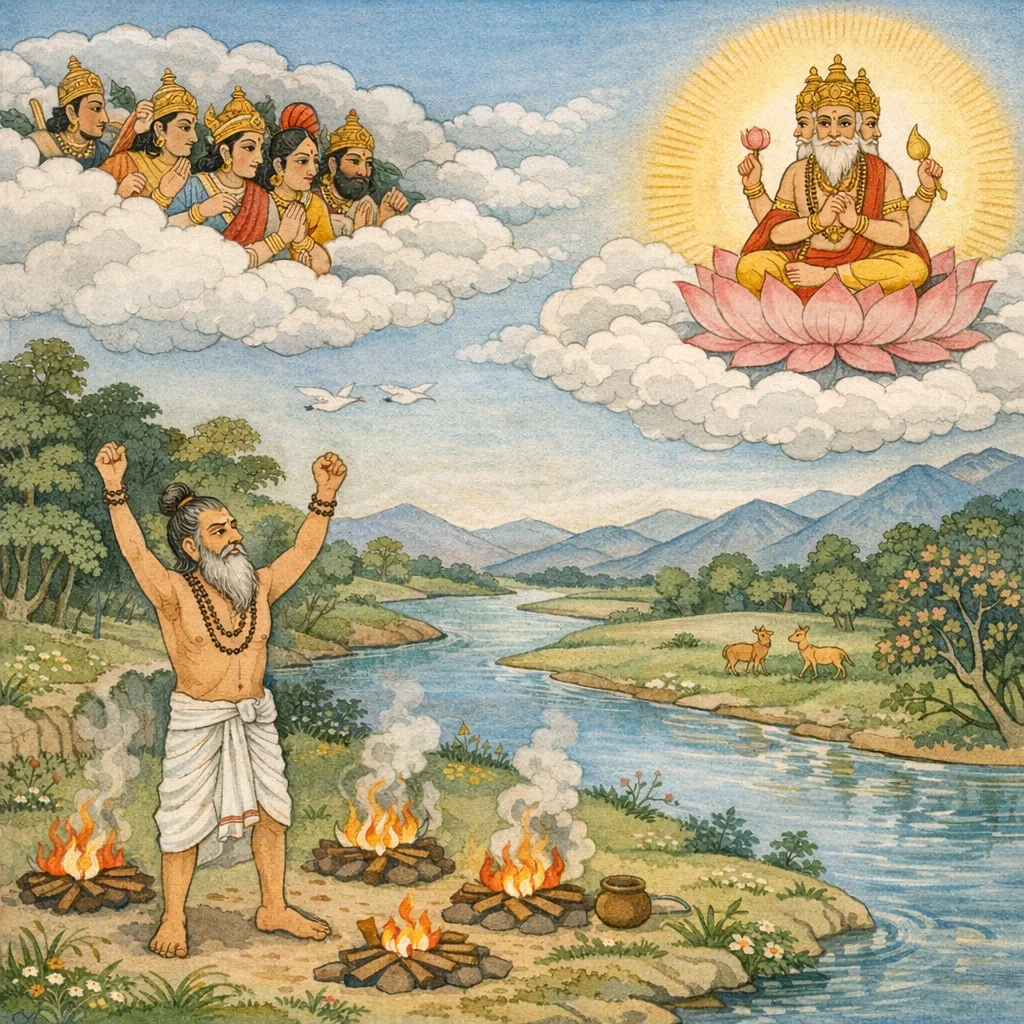
This sarga presents a technical sequence of ascetic trial and divine response. After a thousand-year penance and the concluding ritual bath, the devas approach Viśvāmitra intending to “grant the fruit” of tapas; the narrative frames this as a test of spiritual maturity. The episode pivots to temptation through the apsaras Menakā at Puṣkara: Viśvāmitra, overpowered by kāma, invites her to dwell in his āśrama, and ten years pass “under the pretext of day and night,” producing remorse and the recognition of a vighna (hindrance) to tapas. He releases Menakā with sweet words and recommits to naiṣṭhikī-buddhi (lifelong celibacy), undertaking severe austerities on the Kauśikī riverbank and later the northern mountains, provoking fear among the gods. After consultations, Brahmā confers the title “Mahārṣi,” yet Viśvāmitra remains emotionally neutral and asserts that the title implies conquered senses; Brahmā corrects him—self-mastery is not complete—and departs. The sarga closes with Viśvāmitra intensifying ascetic practices (arms raised, air-subsistence, pañcatapā, exposure to seasons), prompting renewed divine anxiety and Indra’s plan to deploy Rambhā, continuing the theme that tapas must be matched by disciplined indriya-jaya (sense-conquest).
Shlokas
Verse 1
पूर्णे वर्षसहस्रे तु व्रतस्नातं महामुनिम्।अभ्यागच्छन् सुरास्सर्वे तप: फलचिकीर्षव:।।।।
When a thousand years were completed, and the great sage had taken the concluding bath of his vow, all the gods approached him, wishing to confer upon him the fruits of his austerity.
Verse 2
अब्रवीत्सुमहातेजा ब्रह्मा सुरुचिरं वच:।ऋषिस्त्वमसि भद्रं ते स्वार्जितै: कर्मभिश्शुभै:।।।।
The exceedingly radiant Brahmā spoke these pleasing words: “You have become a Ṛṣi by your own well-earned auspicious deeds; blessings be upon you.”
Verse 3
तमेवमुक्त्वा देवेशस्त्रिदिवं पुनरभ्यगात् ।विश्वामित्रो महातेजा भूयस्तेपे महत्तप:।।।।
Having spoken thus, the lord of the gods returned again to heaven. But Viśvāmitra, radiant with great energy, resumed his severe austerities once more.
Verse 4
तत: कालेन महता मेनका परमाऽप्सरा:।पुष्करेषु नरश्रेष्ठ स्नातुं समुपचक्रमे।।।।
Then, after a long time had passed, Menakā—the foremost of the Apsarases—began to bathe at Puṣkara, O best of men.
Verse 5
तां ददर्श महातेजा मेनकां कुशिकात्मज:।रूपेणाप्रतिमां तत्र विद्युतं जलदे यथा।।।।
There the radiant son of Kuśika beheld Menakā, whose beauty was unmatched—like lightning flashing amid the clouds.
Verse 6
दृष्ट्वा कन्दर्पवशगो मुनिस्तामिदमब्रवीत्।अप्सरस्स्वागतं तेऽस्तु वस चेह ममाश्रमे।।।।अनुगृह्णीष्व भद्रं ते मदनेन सुमोहितम्।
On seeing her, the sage—overpowered by Kāma—spoke: “O Apsaras, welcome. Stay here in my hermitage. Be gracious to me; I am deeply deluded by desire. May you be well.”
Verse 7
इत्युक्ता सा वरारोहा तत्र वासमथाकरोत्।।।।तस्यां वसन्त्यां वर्षाणि पञ्च पञ्च च राघव ।विश्वामित्राश्रमे राम सुखेन व्यतिचक्रमु:।।।।
Thus addressed, that noble lady took up residence there. And while she lived in Viśvāmitra’s hermitage, O Rāghava—O Rāma—ten years passed away in ease.
Verse 8
इत्युक्ता सा वरारोहा तत्र वासमथाकरोत्।।1.63.7।।तस्यां वसन्त्यां वर्षाणि पञ्च पञ्च च राघव ।विश्वामित्राश्रमे राम सुखेन व्यतिचक्रमु:।।1.63.8।।
Thus addressed, that noble lady took up residence there; and while she lived in Viśvāmitra’s hermitage, O Rāghava—O Rāma—ten years passed away in ease.
Verse 9
अथ काले गते तस्मिन्विश्वामित्रो महामुनि:।सव्रीड इव सम्वृत्तश्चिन्ताशोकपरायण:।।।।
When that time had passed, the great sage Viśvāmitra became as though ashamed, given over to anxious reflection and sorrow.
Verse 10
बुद्धिर्मुनेस्समुत्पन्ना सामर्षा रघुनन्दन।सर्वं सुराणां कर्मैतत्तपोपहरणं महत्।।।।
O Raghunandana, an indignant thought arose in the sage: ‘All this is the gods’ doing—an attempt to rob me of my great austerity.’
Verse 11
अहोरात्रापदेशेन गतास्संवत्सरा दश।काममोहाभिभूतस्य विघ्नोऽयं समुपस्थित:।।।।
Under the pretext of ‘day and night,’ ten years have passed for me, overpowered by desire and delusion; this obstacle has now come upon my austerity.
Verse 12
विनिश्श्वसन्मुनिवर: पश्चात्तापेन दु:खित:।भीतामप्सरसं दृष्ट्वा वेपन्तीं प्राञ्जलिं स्थिताम्।।।।मेनकां मधुरैर्वाक्यैर्विसृज्य कुशिकात्मज:।उत्तरं पर्वतं राम विश्वामित्रो जगाम ह।।।।
O Rāma, the best of sages, sighing and distressed with remorse, saw the frightened apsaras trembling, standing with folded hands. Speaking gently, Kuśika’s son Viśvāmitra dismissed Menakā and went on to the northern mountain.
Verse 13
विनिश्श्वसन्मुनिवर: पश्चात्तापेन दु:खित:।भीतामप्सरसं दृष्ट्वा वेपन्तीं प्राञ्जलिं स्थिताम्।।1.63.12।।मेनकां मधुरैर्वाक्यैर्विसृज्य कुशिकात्मज:।उत्तरं पर्वतं राम विश्वामित्रो जगाम ह।।1.63.13।।
O Rāma, the best of sages, sighing and distressed with remorse, saw the frightened apsaras trembling, standing with folded hands. Speaking gently, Kuśika’s son Viśvāmitra dismissed Menakā and went on to the northern mountain.
Verse 14
स कृत्वा नैष्ठिकीं बुद्धिं जेतुकामो महायशा:।कौशिकीतीरमासाद्य तपस्तेपे सुदारुणम्।।।।
He—highly renowned—fixed his mind in lifelong continence, desiring to conquer his senses; reaching the bank of the Kauśikī, he performed extremely severe austerities.
Verse 15
तस्य वर्षसहस्रं तु घोरं तप उपासत:।उत्तरे पर्वते राम देवतानामभूद्भयम्।।।।
O Rāma, while he pursued dreadful austerity for a thousand years on the northern mountain, fear arose among the gods.
Verse 16
आमन्त्रयन् समागम्य सर्वे सर्षिगणा स्सुरा:।महर्षिशब्दं लभतां साध्वयं कुशिकात्मज:।।।।
After assembling and deliberating together, all the gods along with the hosts of seers concluded: “Rightly should this son of Kuśika attain the title of Maharṣi.”
Verse 17
देवतानां वच श्शृत्वा सर्वलोकपितामह:।अब्रवीन्मधुरं वाक्यं विश्वामित्रं तपोधनम्।।।।
Hearing the words of the gods, the Grandsire of the worlds (Brahmā) spoke sweetly to Viśvāmitra, whose true wealth was austerity.
Verse 18
महर्षे स्वागतं वत्स तपसोग्रेण तोषित:।महत्त्वमृषिमुख्यत्वं ददामि तव कौशिक ।।।।
“Welcome, O Maharṣi—my child! Pleased by the fierceness of your austerities, O Kauśika, I grant you eminence and pre-eminence among sages.”
Verse 19
ब्रह्मणस्स वचश्श्रुत्वा सर्वलोकेश्वरस्य ह।न विषण्णो न सन्तुष्टो विश्वामित्रस्तपोधन:।।।।
Hearing the words of Brahmā, lord of all worlds, Viśvāmitra—the ascetic whose wealth was tapas—was neither downcast nor satisfied.
Verse 20
प्राञ्जलि: प्रणतो भूत्वा सर्वलोकपितामहम्।प्रत्युवाच ततो वाचं विश्वामित्रो महामुनि:।।।।
Then the great sage Viśvāmitra, with hands folded and having bowed to the Grandsire of the worlds, replied in words.
Verse 21
महर्षिशब्दमतुलं स्वार्जितै: कर्मभिश्शुभै:।यदि मे भगवानाह ततोऽहं विजितेन्द्रिय:।।।।
“If the Blessed One has declared for me the incomparable title ‘Maharṣi’—won by my own auspicious deeds—then I deem myself one who has conquered the senses.”
Verse 22
तमुवाच ततो ब्रह्मा न तावत् त्त्वं जितेन्द्रिय:।यतस्व मुनिशार्दूल इत्युक्त्वा त्रिदिवं गत:।।।।
Then Brahmā said to him: “Not yet have you conquered the senses. Strive on, O tiger among sages.” Having spoken thus, he departed to heaven.
Verse 23
विप्रस्थितेषु देवेषु विश्वामित्रो महामुनि:।ऊर्ध्वबाहुर्निरालम्बो वायुभक्षस्तपश्चरन्।।।।
After the gods had departed, the great sage Viśvāmitra continued his austerities—arms raised aloft, without support, living on air alone.
Verse 24
घर्मे पञ्चतपा भूत्वा वर्षास्वाकाशसंश्रय:।शिशिरे सलिलस्थायी रात्र्यहानि तपोधन:।।।।एवं वर्षसहस्रं हि तपो घोरमुपागमत्।
In summer he practiced the penance of five fires; in the rains he took shelter in the open sky; in winter he remained immersed in water day and night. Thus, for a thousand years, that ascetic of tremendous discipline undertook fierce austerities.
Verse 25
तस्मिन् सन्तप्यमाने तु विश्वामित्रे महामुनौ।।।।सम्भ्रमस्सुमहानासीत्सुराणां वासवस्य च।
While the great sage Viśvāmitra was engaged in burning austerity, a very great alarm arose among the gods—and in Indra as well.
Verse 26
रम्भामप्सरसं शक्र स्सह सर्वैर्मरुद्गणै:।उवाचात्महितं वाक्यमहितं कौशिकस्य च।।।।
Śakra (Indra), together with all the Marut hosts, spoke to the Apsaras Rambhā—words meant for his own advantage, and for the harm of Kauśika (Viśvāmitra).
Frequently Asked Questions
The central dharma-crux is whether prolonged tapas alone constitutes spiritual attainment when desire (kāma) can still dominate conduct; Viśvāmitra’s lapse with Menakā and his later vow of naiṣṭhikī brahmacarya frame the corrective action: recommitment to disciplined self-regulation.
Brahmā’s intervention teaches that honorific status (e.g., “Mahārṣi”) is not merely a reward for endurance but a marker of inner conquest; the dialogue distinguishes ascetic power from ethical mastery, insisting that indriya-jaya is the decisive measure of maturity.
Puṣkara appears as a sacred bathing locale associated with Menakā’s arrival; the Kauśikī riverbank and the northern mountains function as ascetic landscapes, while the āśrama serves as the cultural site where hospitality, temptation, and renunciation are narratively staged.