Sarga 62
शुनश्शेफरक्षा–विश्वामित्रशापः (Sunassepha’s Rescue and Visvamitra’s Curse)
बालकाण्ड
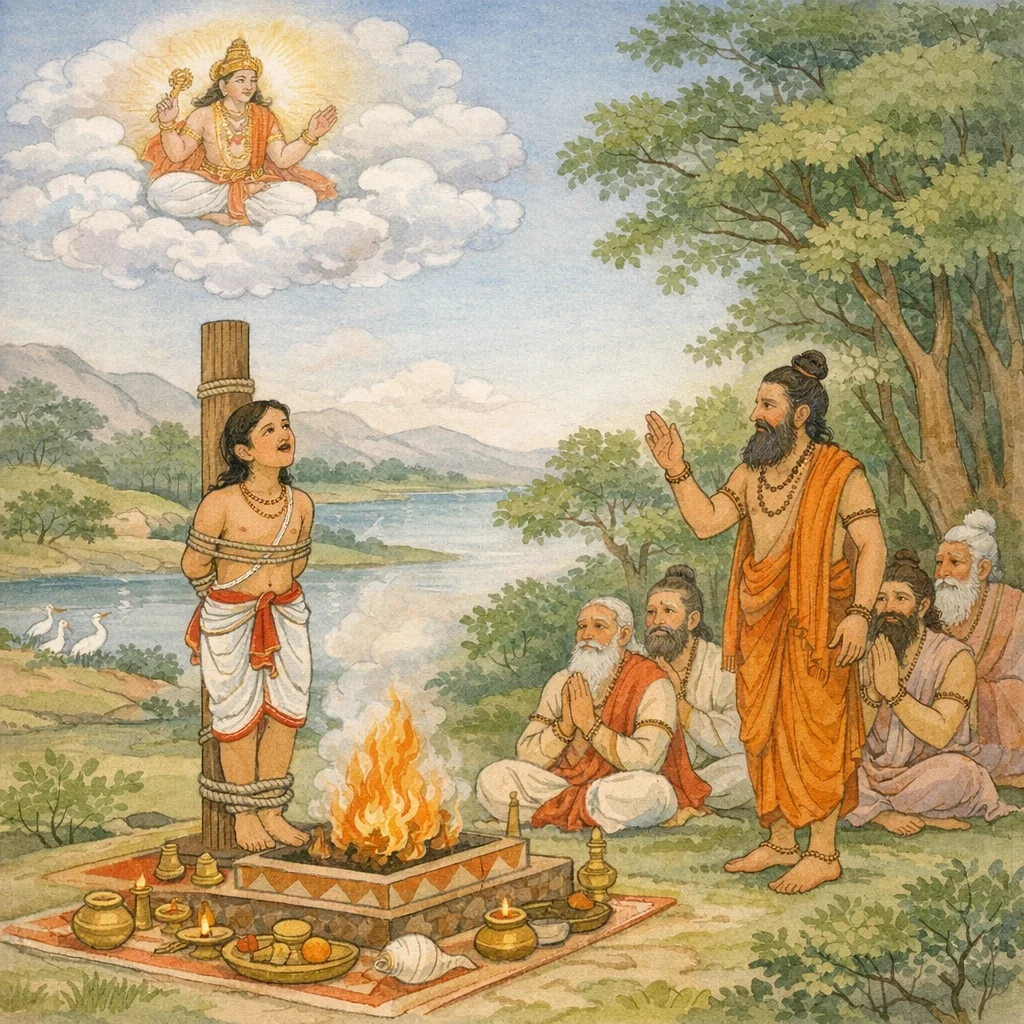
Sarga 62 situates King Ambarīṣa’s sacrificial crisis within a ritual geography at Puṣkara. Having taken Śunaśśepha along, the king halts at noon; the distressed boy encounters his maternal uncle Viśvāmitra performing austerities with other sages. Śunaśśepha pleads for protection, framing his appeal in dharma-language: the sage as universal protector and the king’s rite as needing completion without adharma. Viśvāmitra consoles him and then addresses his own sons, urging them to offer themselves as sacrificial substitutes to satisfy Agni and preserve the yajña’s integrity. The sons refuse with self-regard, condemning the idea as morally repugnant; Viśvāmitra, angered, curses them to live for a thousand years as dog-flesh eaters, likened to degraded lineages. He then instructs Śunaśśepha in two divine gāthās/mantras to invoke Agni (and subsequently Indra and Upendra). Returned to the sacrificial arena, Śunaśśepha is bound to the Vaiṣṇava yūpa with sacred ropes and red adornments; his hymns please Indra, who grants him long life, while Ambarīṣa completes the sacrifice and gains multiplied rewards. Viśvāmitra resumes prolonged tapas at Puṣkara, reinforcing the chapter’s themes of ritual continuity, protective obligation, and the perilous edge of ascetic wrath.
Shlokas
Verse 1
शुनश्शेफं नरश्रेष्ठ गृहीत्वा तु महायशा:।व्यश्राम्यत् पुष्करे राजा मध्याह्ने रघुनन्दन।।।।
O foremost of men, O delight of the Raghus—having taken Śunaḥśepha with him, the illustrious king rested at Puṣkara at midday.
Verse 2
तस्य विश्रममाणस्य शुनश्शेफो महायशा:।पुष्करक्षेत्रमागम्य विश्वामित्रं ददर्श ह।।।।तप्यन्तमृषिभिस्सार्धं मातुलं परमातुर:।
While he was resting, the renowned Śunaḥśepa—deeply afflicted—came to the sacred region of Puṣkara and saw Viśvāmitra, his maternal uncle, performing austerities together with other seers.
Verse 3
विवर्णवदनो दीनस्तृष्णया च श्रमेण च।।।।पपाताङ्के मुनेराशु वाक्यं चेदमुवाच ह।
His face drained of color, wretched with thirst and exhaustion, he quickly fell into the sage’s lap and spoke these words.
Verse 4
न मेऽस्ति माता न पिता ज्ञातयो बान्धवा: कुत:।।।।त्रातुमर्हसि मां सौम्य धर्मेण मुनिपुङ्गव।
I have no mother, no father—where then are kinsmen or friends? O gentle one, O foremost of sages, you ought to protect me according to dharma.
Verse 5
त्राता त्वं हि मुनिश्रेष्ठ सर्वेषां त्वं हि भावन:।।।।राजा च कृतकार्यस्स्यादहं दीर्घायुरव्यय:।स्वर्गलोकमुपाश्नीयां तपस्तप्त्वाह्यनुत्तमम्।।।।
You indeed are the protector, O best of sages—you foster the welfare of all. Let the king’s purpose be fulfilled; and let me gain long, unfailing life, and after performing unsurpassed austerity, partake of the heavenly world.
Verse 6
त्राता त्वं हि मुनिश्रेष्ठ सर्वेषां त्वं हि भावन:।।1.62.5।।राजा च कृतकार्यस्स्यादहं दीर्घायुरव्यय:।स्वर्गलोकमुपाश्नीयां तपस्तप्त्वाह्यनुत्तमम्।।1.62.6।।
You indeed are the protector, O best of sages—you foster the welfare of all. Let the king’s purpose be fulfilled; and let me gain long, unfailing life, and after performing unsurpassed austerity, partake of the heavenly world.
Verse 7
त्वं मे नाथो ह्यनाथस्य भव भव्येन चेतसा।पितेव पुत्रं धर्मात्मं स्त्रातुमर्हसि किल्बिषात्।।।।
You are my protector, for I am without protection. Be my lord with an auspicious, compassionate mind; O righteous one, like a father saving his son, you ought to rescue me from sin and peril.
Verse 8
तस्य तद्वचनं श्रुत्वा विश्वामित्रो महातपा:।सान्त्वयित्वा बहुविधं पुत्रानिदमुवाच ह।।।।
Hearing his words, the great ascetic Viśvāmitra consoled him in many ways, and then spoke these words to his sons.
Verse 9
यत्कृते पितर: पुत्रान् जनयन्ति शुभार्थिन:।परलोकहितार्थाय तस्य कालोऽयमागत:।।1.62.9।।
For the very purpose for which parents—seeking what is auspicious—beget sons, namely the welfare of the next world: that time for it has now arrived.
Verse 10
अयं मुनिसुतो बालो मत्तश्शरणमिच्छति।अस्य जीवितमात्रेण प्रियं कुरुत पुत्रका:।।।।
"This boy, the son of a sage, seeks refuge with me. O sons, grant him what he longs for—by giving up only your lives."
Verse 11
सर्वे सुकृतकर्माणस्सर्वे धर्मपरायणा: ।पशुभूता नरेन्द्रस्य तृप्तिमग्ने: प्रयच्छत ।।।।
"All of you are doers of merit, all devoted to dharma. Become the king’s sacrificial victims and grant satisfaction to Agni."
Verse 12
नाथवांश्च शुनश्शेफो यज्ञश्चाविघ्नितो भवेत्।देवतास्तर्पिताश्चस्युर्मम चापि कृतं वच:।।।।
"Then Śunaḥśepha will have a protector; the sacrifice will proceed without obstruction; the gods will be gratified—and my word too will be fulfilled."
Verse 13
मुनेस्तु वचनं श्रुत्वा मधुच्छन्दादय स्सुता:।साभिमानं नरश्रेष्ठ सलीलमिदमब्रुवन्।।।।
Having heard the sage’s words, his sons—beginning with Madhucchandas—spoke these words, O foremost of men, with pride and a casual ease.
Verse 14
कथमात्मसुतान् हित्वा त्रायसेऽन्यसुतं विभो।अकार्यमिव पश्याम श्श्वमांस इव भोजने।।।।
O Lord, how can you save another’s son while abandoning your own sons? To us, it appears like a forbidden act—like eating dog’s flesh as food.
Verse 15
तेषां तद्वचनं श्रुत्वा पुत्राणां मुनिपुङ्गव:।क्रोधसंरक्तनयनो व्याहर्तुमुपचक्रमे।।।।
Hearing those words of his sons, the eminent sage—his eyes reddened with anger—began to reply.
Verse 16
निस्साध्वसमिदं प्रोक्तं धर्मादपि विगर्हितम्।अतिक्रम्य तु मद्वाक्यं दारुणं रोमहर्षणम्।।।।
This has been spoken shamelessly, and is blameworthy even by the standards of dharma. You have overstepped my command with words that are harsh and hair-raising.
Verse 17
श्वमांसभोजिनस्सर्वे वासिष्ठा इव जातिषु।पूर्णं वर्षसहस्रं तु पृथिव्यामनुवत्स्यथ।।।।
All of you shall dwell upon the earth for a full thousand years, living as dog-meat eaters—like the Vāsiṣṭhas among those tribes.
Verse 18
कृत्वा शापसमायुक्तान् पुत्रान् मुनिवरस्तथा।शुनश्शेफमुवाचार्तं कृत्वा रक्षां निरामयम्।।।।
Having thus bound his sons under a curse, the best of sages then addressed the distressed Śunaḥśepa, granting him protection and relief from suffering.
Verse 19
पवित्रपाशैरासक्तो रक्तमाल्यानुलेपन:।वैष्णवं यूपमासाद्य वाग्भिरग्निमुदाहर ।।।।
Bound with sacred cords, and anointed and garlanded in red, go to the Vaiṣṇava sacrificial post; there invoke Agni with these hymns.
Verse 20
इमे तु गाथे द्वे दिव्ये गायेथा मुनिपुत्रक।अम्बरीषस्य यज्ञेऽस्मिंस्तत स्सिद्धिमवाप्स्यसि।।।।
But chant these two divine verses, O son of a sage, in this sacrifice of Ambarīṣa; then you will attain success.
Verse 21
शुनश्शेफो गृहीत्वा ते द्वे गाथे सुसमाहित:।त्वरया राजसिंहं तमम्बरीषमुवाच ह।।।।
Śunaḥśepa, having firmly taken hold of those two verses with focused mind, hurried to King Ambarīṣa—the lion among kings—and spoke to him.
Verse 22
राजसिंह महासत्त्व शीघ्रं गच्छावहे सद:।निर्वर्तयस्व राजेन्द्र दीक्षां च समुपाविश।।।।
O lion among kings, O mighty one—let us quickly go to the sacrificial hall. O best of kings, undertake the consecration and carry the sacrifice through to completion.
Verse 23
तद्वाक्यमृषिपुत्रस्य श्रुत्वा हर्षसमुत्सुक: ।जगाम नृपति श्शीघ्रं यज्ञवाटमतन्द्रित:।।।।
Hearing those words of the sage’s son, the king—thrilled with joy—promptly hastened to the sacrificial enclosure without delay.
Verse 24
सदस्यानुमते राजा पवित्रकृतलक्षणम्।पशुं रक्ताम्बरं कृत्वा यूपे तं समबन्धयत्।।।।
With the consent of the officiating priests, the king marked him with the sacred kuśa-grass tokens, clothed him in red, and bound him to the sacrificial post as the designated offering.
Verse 25
सबद्धो वाग्भिरग्य्राभिरभितुष्टाव वै सुरौ।इन्द्रमिन्द्रानुजं चैव यथावन्मुनिपुत्रक:।।।।
Though bound, the sage’s son duly praised the two deities—Indra and Indra’s younger brother (Upendra/Vāmana)—with excellent words.
Verse 26
तत: प्रीत स्सहस्राक्षो रहस्यस्तुतितर्पित:।दीर्घमायुस्तदा प्रादाच्छुनश्शेफाय राघव ।।।।
Then Indra of the thousand eyes—satisfied by the secret hymn—was pleased, and at that time granted Śunaḥśepha long life, O Rāghava.
Verse 27
स च राजा नरश्रेष्ठ यज्ञस्य च समाप्तवान्।फलं बहुगुणं राम सहस्राक्षप्रसादजम्।।।।
And that king, O best of men—O Rāma—completed the sacrifice, receiving its reward manifold, born of Indra’s grace.
Verse 28
विश्वामित्रो ऽपि धर्मात्मा भूयस्तेपे महातपा:।पुष्करेषु नरश्रेष्ठ दशवर्षशतानि च।।।।
Viśvāmitra too—righteous and mighty in austerity—again performed tapas at Puṣkara for ten hundreds of years, O best of men.
Frequently Asked Questions
The chapter presents a dharma-sankat around sacrificial substitution: Viśvāmitra urges his sons to become the yajña’s victims to protect Śunaśśepha and preserve Ambarīṣa’s rite, raising tensions between filial duty, self-preservation, and ritual obligation.
The sarga contrasts compassionate guardianship with prideful refusal, showing how dharma is negotiated through speech, protection, and responsibility; it also underscores that mantra and right praise can transform a seemingly fatal ritual situation into life and auspicious completion.
Puṣkara-kṣetra is foregrounded as a sacred ritual landscape where kings pause, sages perform tapas, and yajñas are stabilized; the Vaiṣṇava yūpa, sadas, and yajñavāṭa function as key cultural markers of Vedic sacrificial practice.