Sarga 6
अयोध्यावर्णनम् — Description of Ayodhya under Daśaratha
बालकाण्ड
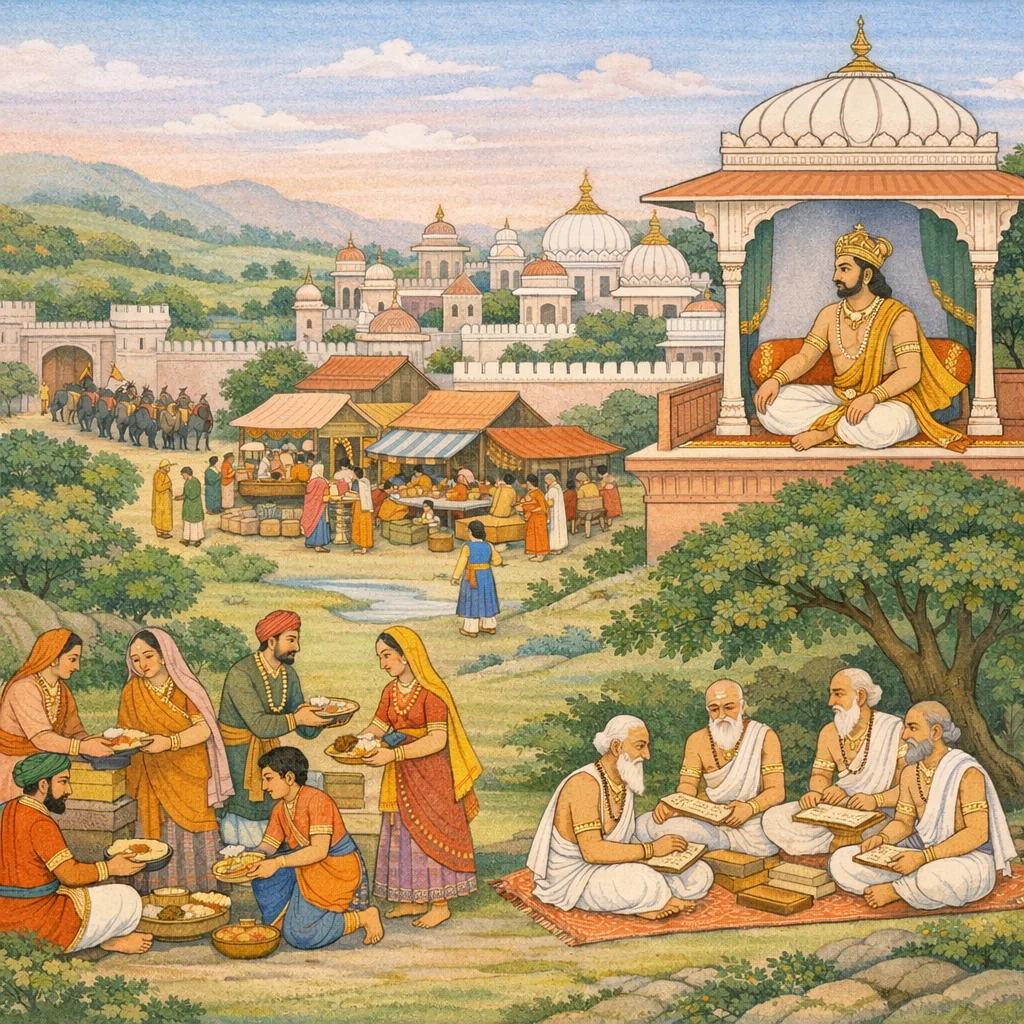
Sarga 6 offers a civic-ethical portrait of Ayodhyā and a royal profile of King Daśaratha. The chapter begins by attributing to Daśaratha Vedic learning, administrative capacity (sarvasaṅgraha), farsightedness, popularity among town and countryside, martial excellence, sacrificial commitment, and self-mastery; his rule is likened to Manu’s protective governance. The narrative then shifts to Ayodhyā’s social prosperity and ritual cleanliness: citizens are described as ornamented, well-provisioned, and free from visible deprivation. A sequence of negations stresses the absence of theft, cruelty, atheism, falsehood, incompetence, and social disorder, while highlighting charitable habits, satisfaction in food, and restraint of passions. Brahmins are depicted as duty-bound, learned in Vedāṅgas, devoted to study and giving, and self-controlled in receiving gifts and in domestic life; varṇa relations are portrayed as orderly (kṣatriyas respectful to brahmins, vaiśyas aligned with kṣatriyas, śūdras serving the three). The sarga further maps Ayodhyā’s military and economic resources—warriors, superior horses from noted regions, and powerful elephants of famed lineages—culminating in the image of an invincible, well-fortified city ruled by a king compared to Indra.
Shlokas
Verse 1
. तस्यां पुर्यामयोध्यायां वेदवित्सर्वसङ्ग्रह: ।दीर्घदर्शी महातेजा: पौरजानपदप्रिय: ।।1.6.1।। इक्ष्वाकूणामतिरथो यज्वा धर्मरतो वशी ।महर्षिकल्पो राजर्षिस्त्रिषु लोकेषु विश्रुत: ।।1.6.2।। बलवान्निहतामित्रो मित्रवान्विजितेन्द्रिय: ।धनैश्च सङ्ग्रहैश्चान्यैश्शक्रवैश्रवणोपम: ।।1.6.3।। यथा मनुर्महातेजा लोकस्य परिरक्षिता ।तथा दशरथो राजा वसञ्जगदपालयत् ।। 1.6.4।।
In that city of Ayodhyā dwelt King Daśaratha—learned in the Vedas, rich in resources, farsighted and radiant, beloved by town and countryside. Among the Ikṣvāku line he was a foremost charioteer; a sacrificer, devoted to dharma, and a disciplined ruler—like a great sage, a royal seer famed in the three worlds. Strong, a crusher of foes, rich in friends, and master of his senses, he rivaled Indra and Kubera in prosperity. As mighty Manu protected the people, so Daśaratha, residing there, safeguarded the world.
Verse 2
. तस्यां पुर्यामयोध्यायां वेदवित्सर्वसङ्ग्रह: ।दीर्घदर्शी महातेजा: पौरजानपदप्रिय: ।।1.6.1।। इक्ष्वाकूणामतिरथो यज्वा धर्मरतो वशी ।महर्षिकल्पो राजर्षिस्त्रिषु लोकेषु विश्रुत: ।।1.6.2।। बलवान्निहतामित्रो मित्रवान्विजितेन्द्रिय: ।धनैश्च सङ्ग्रहैश्चान्यैश्शक्रवैश्रवणोपम: ।।1.6.3।। यथा मनुर्महातेजा लोकस्य परिरक्षिता ।तथा दशरथो राजा वसञ्जगदपालयत् ।। 1.6.4।।
Among the Ikṣvāku kings, Daśaratha was a supreme warrior-charioteer; a performer of sacrifices; devoted to dharma; a ruler of self-mastery and discipline. Like a great sage though seated on the throne, a royal seer, he was renowned across the three worlds.
Verse 3
. तस्यां पुर्यामयोध्यायां वेदवित्सर्वसङ्ग्रह: ।दीर्घदर्शी महातेजा: पौरजानपदप्रिय: ।।1.6.1।। इक्ष्वाकूणामतिरथो यज्वा धर्मरतो वशी ।महर्षिकल्पो राजर्षिस्त्रिषु लोकेषु विश्रुत: ।।1.6.2।। बलवान्निहतामित्रो मित्रवान्विजितेन्द्रिय: ।धनैश्च सङ्ग्रहैश्चान्यैश्शक्रवैश्रवणोपम: ।।1.6.3।। यथा मनुर्महातेजा लोकस्य परिरक्षिता ।तथा दशरथो राजा वसञ्जगदपालयत् ।। 1.6.4।।
He was mighty, a destroyer of foes, rich in allies, and master of his senses; and in wealth and accumulated resources he was comparable to Śakra (Indra) and Vaiśravaṇa (Kubera).
Verse 4
. तस्यां पुर्यामयोध्यायां वेदवित्सर्वसङ्ग्रह: ।दीर्घदर्शी महातेजा: पौरजानपदप्रिय: ।।1.6.1।। इक्ष्वाकूणामतिरथो यज्वा धर्मरतो वशी ।महर्षिकल्पो राजर्षिस्त्रिषु लोकेषु विश्रुत: ।।1.6.2।। बलवान्निहतामित्रो मित्रवान्विजितेन्द्रिय: ।धनैश्च सङ्ग्रहैश्चान्यैश्शक्रवैश्रवणोपम: ।।1.6.3।। यथा मनुर्महातेजा लोकस्य परिरक्षिता ।तथा दशरथो राजा वसञ्जगदपालयत् ।। 1.6.4।।
Just as the mighty Manu protected the people, so too King Daśaratha, dwelling in Ayodhyā, governed and safeguarded the world.
Verse 5
तेन सत्याभिसन्धेन त्रिवर्गमनुतिष्ठता ।पालिता सा पुरी श्रेष्ठा इन्द्रेणेवामरावती ।।1.6.5।।
By that king—steadfast in truth and committed to rightly pursuing the three aims of life—this best of cities was governed, like Amarāvatī by Indra.
Verse 6
तस्मिन्पुरवरे हृष्टा धर्मात्मानो बहुश्रुता: ।नरास्तुष्टा धनैस्स्वैस्स्वैरलुब्धास्सत्यवादिन: ।।1.6.6।।
In that excellent city, the people were joyful—virtuous, widely learned, content with their own wealth, free from greed, and devoted to speaking the truth.
Verse 7
नाल्पसन्निचय: कश्चिदासीत्तस्मिन् पुरोत्तमे ।कुटुम्बी यो ह्यसिद्धार्थोऽगवाश्वधनधान्यवान् ।।1.6.7।।
In that best of cities there was no householder of scant means—none who had failed in life’s aims—rather, households possessed cattle, horses, wealth, and grain.
Verse 8
कामी वा न कदर्यो वा नृशंस: पुरुष: क्वचित् ।द्रष्टुं शक्यमयोध्यायान्नाविद्वान्न च नास्तिक: ।।1.6.8।।
In Ayodhyā one could not find, anywhere, a lust-driven person, a miser, or a cruel man—nor anyone unlearned, nor an atheist.
Verse 9
सर्वे नराश्च नार्यश्च धर्मशीलास्सुसंयता: ।उदिताश्शीलवृत्ताभ्यां महर्षय इवामला: ।।1.6.9।।
All—men and women—were righteous in conduct and well self-controlled; flourishing through good character and behavior, they were pure like great sages.
Verse 10
नाकुण्डली नामकुटी नास्रग्वी नाल्पभोगवान् ।नामृष्टो नानुलिप्ताङ्गो नासुगन्धश्च विद्यते ।।1.6.10।।
In that city, no one was seen without earrings, without a head-ornament, or without garlands; none lived with scant enjoyments, and none appeared unclean, unanointed, or without fragrance upon the body.
Verse 11
नामृष्टभोजी नादाता नाप्यनङ्गदनिष्कधृक् ।नाहस्ताभरणो वाऽपि दृश्यते नाप्यनात्मवान् ।।1.6.11।।
None ate without satisfaction, none was without generosity; none was seen without armlets and neck-ornaments, nor without hand-jewels; and none was found lacking self-restraint.
Verse 12
नानाहिताग्निर्नायज्वा न क्षुद्रो वा न तस्कर: ।कश्चिदासीदयोध्यायान्न च निर्वृत्तसङ्कर: ।।1.6.12।।
In Ayodhyā there was not even one who failed to maintain the sacred fires or to perform sacrifices; no one was base-minded, no thief was found, and no disorder of mixed social descent prevailed.
Verse 13
स्वकर्मनिरता नित्यं ब्राह्मणा विजितेन्द्रिया: ।दानाध्ययनशीलाश्च संयताश्च परिग्रहे ।।1.6.13।।
The brāhmaṇas were ever devoted to their own duties, their senses conquered; inclined to charity and study, and restrained in matters of acceptance and possession.
Verse 14
न नास्तिको नानृतको न कश्चिदबहुश्रुत: ।नासूयको न चाऽशक्तो नाविद्वान्विद्यते तदा ।।1.6.14।।
At that time, no atheist was found, no liar, and none poorly learned; none was envious, none incompetent—nor was any person seen without true knowledge.
Verse 15
नाषडङ्गविदत्रासीन्नाव्रतो नासहस्रद: ।न दीन: क्षिप्तचित्तो वा व्यथितो वाऽपि कश्चन ।।1.6.15।।
There was no one there unversed in the six Vedāṅgas, none without vows, none who failed to give in thousands; nor was anyone seen distressed, distracted in mind, or afflicted.
Verse 16
कश्चिन्नरो वा नारी वा नाश्रीमान्नाप्यरूपवान् ।द्रष्टुं शक्यमयोध्यायां नापि राजन्यभक्तिमान् ।।1.6.16।।
In Ayodhyā, no man or woman could be found without prosperity or without beauty; nor could anyone be seen who lacked devotion to the king.
Verse 17
वर्णेष्वग्र्यचतुर्थेषु देवतातिथिपूजका:।कृतज्ञाश्च वदान्याश्च शूरा विक्रमसंयुता: ।।1.6.17।। दीर्घायुषो नरास्सर्वे धर्मं सत्यं च संश्रिता: ।सहिता: पुत्रपौत्रैश्च नित्यं स्त्रीभि: पुरोत्तमे ।।1.6.18।।
Among the foremost of the four social orders, they worshipped the gods and honored guests; they were grateful, generous, heroic, and endowed with valor.
Verse 18
वर्णेष्वग्र्यचतुर्थेषु देवतातिथिपूजका:।कृतज्ञाश्च वदान्याश्च शूरा विक्रमसंयुता: ।।1.6.17।। दीर्घायुषो नरास्सर्वे धर्मं सत्यं च संश्रिता: ।सहिता: पुत्रपौत्रैश्च नित्यं स्त्रीभि: पुरोत्तमे ।।1.6.18।।
All the men were long-lived, devoted to righteousness and truth; and in that foremost of cities they lived always together with sons, grandsons, and wives.
Verse 19
क्षत्रं ब्रह्ममुखं चासीद्वैश्या: क्षत्रमनुव्रता: ।शूद्रास्स्वधर्मनिरतास्त्रीन्वर्णानुपचारिण: ।।1.6.19।।
The kṣatriya order was guided by the brāhmaṇas; the vaiśyas followed the kṣatriyas; and the śūdras, devoted to their own duties, served the other three orders.
Verse 20
सा तेनेक्ष्वाकुनाथेन पुरी सुपरिरक्षिता ।यथा पुरस्तान्मनुना मानवेन्द्रेण धीमता ।।1.6.20।।
That city was excellently protected and governed by that lord of the Ikṣvākus (Daśaratha), just as in earlier times it had been administered by Manu—the wise foremost among men.
Verse 21
योधानामग्निकल्पानां पेशलानाममर्षिणाम् ।सम्पूर्णा कृतविद्यानां गुहा केसरिणामिव ।।1.6.21।।
It was filled with warriors—fire-like in might, skilled and resolute, trained to completion in their disciplines—like a mountain cave filled with lions.
Verse 22
काम्भोजविषये जातैर्बाह्लीकैश्च हयोत्तमै: ।वनायुजैर्नदीजैश्च पूर्णा हरिहयोत्तमै:।।1.6.22।।
It was well supplied with superb horses—born in the lands of Kāmboja and Bāhlīka, as well as those of Vanāyu and the river-country—excellent steeds likened to the finest ‘hari’ horses.
Verse 23
विन्ध्यपर्वतजैर्मत्तै: पूर्णा हैमवतैरपि ।मदान्वितैरतिबलैर्मातङ्गै: पर्वतोपमै: ।।1.6.23।। ऐरावतकुलीनैश्च महापद्मकुलैस्तथा ।अञ्जनादपि निष्पन्नैर्वामनादपि च द्विपैः ।।1.6.24।।
It was full of rutting, intoxicated elephants—born in the Vindhya mountains and also in the Himālaya—mighty with musth, immensely strong, and mountain-like in stature.
Verse 24
विन्ध्यपर्वतजैर्मत्तै: पूर्णा हैमवतैरपि ।मदान्वितैरतिबलैर्मातङ्गै: पर्वतोपमै: ।।1.6.23।। ऐरावतकुलीनैश्च महापद्मकुलैस्तथा ।अञ्जनादपि निष्पन्नैर्वामनादपि च द्विपैः ।।1.6.24।।
It was also filled with elephants of noble lineages—those of Airāvata’s stock, of the Mahāpadma line, and those bred from Anjana and from Vāmana as well.
Verse 25
भद्रैर्मन्द्रैर्मृगैश्चैव भद्रमन्द्रमृगैस्तथा।भद्रमन्द्रैर्भद्रमृगैर्मृगमन्द्रैश्च सा पुरी।नित्यमत्तैस्सदा पूर्णा नागैरचलसन्निभै:।।1.6.25।।
That city was always filled with mountain-like elephants, ever in rut—of the Bhadra, Mandra, and Mṛga types, and also of their mixed breeds: Bhadra–Mandra, Bhadra–Mṛga, and Mṛga–Mandra.
Verse 26
सा योजने च द्वे भूय: सत्यनामा प्रकाशते ।यस्यां दशरथो राजा वसन् जगदपालयत् ।।1.6.26।।
Spreading outward for two yojanas, that city shone—true to its very name—where King Daśaratha dwelt and ruled, safeguarding the world.
Verse 27
तां पुरीं स महातेजा राजा दशरथो महान् ।शशास शमितामित्रो नक्षत्राणीव चन्द्रमा: ।।1.6.27।।
That great, radiant King Daśaratha—who had subdued his foes—ruled the city as the moon rules over the stars.
Verse 28
तां सत्यनामां दृढतोरणार्गलांगृहैर्विचित्रैरुपशोभितां शिवाम् ।पुरीमयोध्यां नृसहस्रसङ्कुलांशशास वै शक्रसमो महीपति: ।।1.6.28।।
That auspicious Ayodhyā—true to its name, secured with strong gateways and firm bolts, adorned with splendid houses, and thronged with thousands of people—was ruled by the lord of the earth, Daśaratha, who was comparable to Indra in majesty.
Verse 29
At that time, there was no atheist, no liar, no one with scanty knowledge, no one jealous, no one incompetent, and no one unlearned [in Ayodhya].
Frequently Asked Questions
Rather than a single crisis, the sarga presents an ethical benchmark: Daśaratha’s active practice of rājadhrama—truthfulness, protection, sacrificial duty, and self-mastery—paired with a civic culture where theft, deceit, and irreligion are stated to be absent. The ‘action’ is the depiction of governance as moral administration.
The chapter teaches that political stability is inseparable from personal discipline and public virtue: a ruler’s satya, yajña-oriented duty, and control of senses are mirrored by citizens’ contentment, charity, and restraint. Prosperity is portrayed as the fruit of dharmic order rather than mere accumulation.
Ayodhyā is highlighted as ‘satyanāmā’ (true to its name, invincible) with strong gates and locks; culturally, the sarga emphasizes Vedic learning, Vedāṅga mastery, agnihotra/sacrificial fires, and dāna. It also references horse regions (Kambhoja, Bāhlīka, Vanāyu, Sindhu) and elephant origins/lineages (Vindhya, Himavat, Airāvata, Mahāpadma, Añjana, Vāmana).