Sarga 58
त्रिशङ्कुशापः — Trishanku’s Curse and Appeal to Viśvāmitra
बालकाण्ड
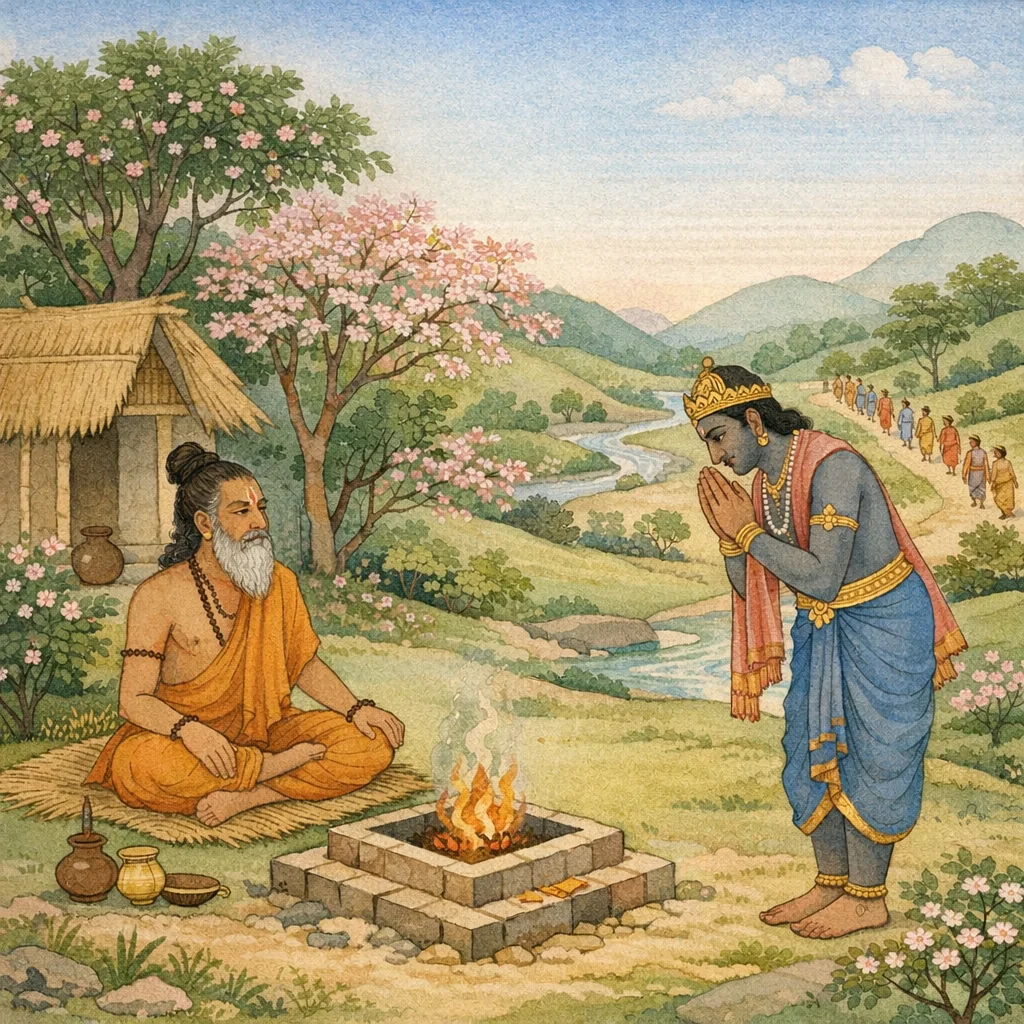
Sarga 58 presents a tightly structured ethical dispute centered on ritual authority and the limits of bypassing one’s appointed preceptor. After King Triśaṅku’s request is refused by Vasiṣṭha, he approaches Vasiṣṭha’s hundred sons, who rebuke him for attempting to circumvent a truth-bound guru and for implicitly dishonouring the Ikṣvāku priestly order. When Triśaṅku declares he will seek another means, the enraged sons curse him to become a caṇḍāla; the curse manifests overnight in visible bodily and social markers, prompting ministers, citizens, and followers to flee. Isolated and distressed, Triśaṅku seeks Viśvāmitra, who responds with compassion and questions the cause of the transformation. Triśaṅku explains his vow-like intent to ascend to heaven with his body, his record of sacrifices and righteous rule, his commitment to truth, and his sense that destiny has struck his merit. He asks Viśvāmitra to counter fate through human effort, positioning the episode as a debate on dharma, authority, curse-efficacy, and the agency–destiny tension.
Shlokas
Verse 1
ततस्त्रिशङ्कोर्वचनं श्रुत्वा क्रोधसमन्वितम् ।ऋषिपुत्रशतं राम राजानमिदमब्रवीत्।।।।
Then, hearing Triśaṅku’s words, the hundred sons of the sage—filled with anger—addressed the king, O Rāma, saying this.
Verse 2
प्रत्याख्यातो हि दुर्बुद्धे गुरुणा सत्यवादिना।तं कथं समतिक्रम्य शाखान्तरमुपेयिवान्।।।।
O foolish-minded one! Since you have been refused by the truth-speaking guru, how could you pass him by and approach another branch—mere offshoots of the same line?
Verse 3
इक्ष्वाकूणां हि सर्वेषां पुरोधा: परमो गुरु:।न चातिक्रमितुं शक्यं वचनं सत्यवादिन:।।।।
For all the kings of the Ikṣvāku line, the royal priest is the highest guru; and the word of one who speaks truth cannot be transgressed.
Verse 4
अशक्यमिति चोवाच वसिष्ठो भगवानृषि:।तं वयं वै समाहर्तुं क्रतुं शक्ता:कथं तव।।।।
When the revered sage Vasiṣṭha has said, ‘It is impossible,’ how could we have the power to carry out such a sacrifice for you?
Verse 5
बालिशस्त्वं नरश्रेष्ठ गम्यतां स्वपुरं पुन:।याजने भगवाञ्छक्तस्त्रैलोक्यस्यापि पार्थिव।।।।अवमानं च तत्कर्तुं तस्य शक्ष्यामहे कथम्।
You are acting childishly, O best of men; return again to your own city. O king, that venerable one is capable of officiating sacrifices even for the three worlds—how could we possibly dishonor him by doing otherwise?
Verse 6
तेषां तद्वचनं श्रुत्वा क्रोधपर्याकुलाक्षरम्।।।।स राजा पुनरेवैतानिदं वचनमब्रवीत्।
Hearing their words—syllables confused in the turmoil of anger—the king again spoke to them as follows.
Verse 7
प्रत्याख्यातोऽस्मि गुरुणा गुरुपुत्रैस्तथैव च।।।।अन्यां गतिं गमिष्यामि स्वस्ति वोऽस्तु तपोधना:।
I have been turned away by my guru—and likewise by the guru’s sons. I will seek another course. May welfare be yours, O ascetics whose wealth is tapas.
Verse 8
ऋषिपुत्रास्तु तच्छ्रुत्वा वाक्यं घोराभिसंहितम्।।।।शेपु: परमसङ्कृद्धाश्चण्डालत्वं गमिष्यसि।
Hearing that statement, charged with fierce intent, the sages’ sons—enraged beyond measure—cursed him: “You shall fall into the state of a caṇḍāla.”
Verse 9
एवमुक्त्वा महात्मनो विविशुस्ते स्वमाश्रमम्।।।।अथ रात्र्यां व्यतीतायां राजा चण्डालतां गत:।
Having spoken thus, those great-souled ones entered their own hermitage; and when the night had passed, the king had indeed become a caṇḍāla.
Verse 10
नीलवस्त्रधरो नील: पुरुषो ध्वस्तमूर्धज:।।।।चित्यमाल्यानुलेपश्च आयसाभरणोऽभवत्।
He became a dark and defiled-looking man, clad in dark garments, with dishevelled hair—smeared and adorned with cremation-ground wreaths and wearing ornaments of iron.
Verse 11
तं दृष्टवा मन्त्रिणस्सर्वे त्यज्य चण्डालरूपिणम्।।।।प्राद्रवन् सहिता राम पौरा येऽस्यानुगामिन:।
Seeing him in the form of a chandāla, all the ministers abandoned him; and the townspeople too—along with those who had followed him—fled away, O Rāma.
Verse 12
एको हि राजा काकुत्स्थ जगाम परमात्मवान्।।।।दह्यमानो दिवारात्रं विश्वामित्रं तपोनिधिम्।
Alone, the king—O Kakutstha—steadfast in spirit, went to Viśvāmitra, the treasury of ascetic power, burning with anguish day and night.
Verse 13
विश्वामित्रस्तु तं दृष्ट्वा राजानं विफलीकृतम्।चण्डालरूपिणं राम मुनि: कारुण्यमागत:।।।।
But Viśvāmitra, seeing the king made wretched and rendered as a chandāla in form, was moved to compassion, O Rāma.
Verse 14
कारुण्यात्स महातेजा वाक्यं परमधार्मिक:।इदं जगाद भद्रं ते राजानं घोररूपिणम्।।।।
Out of compassion, that mighty and supremely righteous sage spoke these words to the king, though he appeared terrible: “May it be well with you.”
Verse 15
किमागमनकार्यं ते राजपुत्र महाबल।अयोध्याधिपते वीर शापाच्चण्डालतां गत:।।।।
“What is the purpose of your coming, O mighty prince—O heroic lord of Ayodhyā—now that, by a curse, you have fallen into the state of a chandāla?”
Verse 16
अथ तद्वाक्यमाज्ञाय राजा चण्डालतां गत:।अब्रवीत्प्राञ्जलिर्वाक्यं वाक्यज्ञो वाक्यकोविदम्।।।।
Understanding those words, the king—though reduced to the condition of a caṇḍāla—spoke with folded hands, addressing the sage who was skilled in speech, while he himself was also a knower of fitting words.
Verse 17
प्रत्याख्यातोऽस्मि गुरुणा गुरुपुत्रैस्तथैव च।अनवाप्यैव तं कामं मया प्राप्तो विपर्यय:।।।।
I have been rejected by my guru, and likewise by the guru’s sons; without attaining that desire, I have instead met with a reversal—calamity in place of fulfilment.
Verse 18
सशरीरो दिवं यायामिति मे सौम्यदर्शनम्।मया चेष्टं क्रतुशतं तच्च नाऽवाप्यते फलम्।।।।
O gentle one, my resolve is this: ‘May I go to heaven with this very body.’ I have performed a hundred sacrifices, yet I have not obtained the fruit of that effort.
Verse 19
अनृतं नोक्तपूर्वं मे न च वक्ष्ये कदाचन।कृच्छ्रेष्वपि गत स्सौम्य क्षत्रधर्मेण ते शपे।।।।
O gentle one, I have never spoken untruth before, nor shall I ever speak it—though pressed by hardships. By the dharma of a kṣatriya, I swear this to you.
Verse 20
यज्ञैर्बहुविधैरिष्टं प्रजा धर्मेण पालिता:।।।।गुरवश्च महात्मान श्शीलवृत्तेन तोषिता:।
I have offered worship through sacrifices of many kinds; I have protected my subjects in accordance with dharma; and the great elders and teachers have been pleased by my character and conduct.
Verse 21
धर्मे प्रयतमानस्य यज्ञं चाहर्तुमिच्छत:।।।।परितोषं न गच्छन्ति गुरवो मुनिपुङ्गव ।
O foremost of sages, though I strive in dharma and wish to undertake a sacrifice, my gurus do not come to satisfaction—they do not approve.
Verse 22
दैवमेव परं मन्ये पौरुषं तु निरर्थकम्।।।।दैवेनाक्रम्यते सर्वं दैवं हि परमा गति:।
I deem destiny alone to be supreme; human effort seems futile. Everything is overpowered by destiny—destiny indeed is the highest recourse.
Verse 23
तस्य मे परमार्तस्य प्रसादमभिकाङ्क्षत:।।।।कर्तुमर्हसि भद्रं ते दैवोपहतकर्मण:।
Therefore, for me—deeply afflicted and longing for your favor—whose endeavors have been struck down by destiny, it is fitting that you grant grace. Blessings to you.
Verse 24
नान्यां गतिं गमिष्यामि नान्यश्शरणमस्ति मे।।।।दैवं पुरुषकारेण निवर्तयितुमर्हसि।।
I shall not seek any other refuge; there is no other protector for me. You are able to turn back this destiny by human effort.
Frequently Asked Questions
The dilemma is whether Triśaṅku may ethically bypass his appointed guru (Vasiṣṭha) after refusal and seek ritual fulfilment elsewhere; the sages’ sons treat this as a breach of legitimate authority and a dishonour to the established priestly order.
The chapter juxtaposes (1) the binding force of a truth-speaking guru’s word and the social power of śāpa, with (2) Triśaṅku’s argument that puruṣakāra (human effort) can and should confront daiva (destiny), inviting reflection on moral agency under adverse fate.
Ayodhyā functions as the cultural-political center whose ministers and citizens abandon the transformed king; the caṇḍāla markers—ashes, cemetery garlands, iron ornaments—serve as culturally coded signs of social exclusion and ritual impurity within the narrative world.