Sarga 52
वसिष्ठ-आतिथ्यं (Vasiṣṭha’s Hospitality to Viśvāmitra and the Summoning of Śabalā/Kāmadhenu)
बालकाण्ड
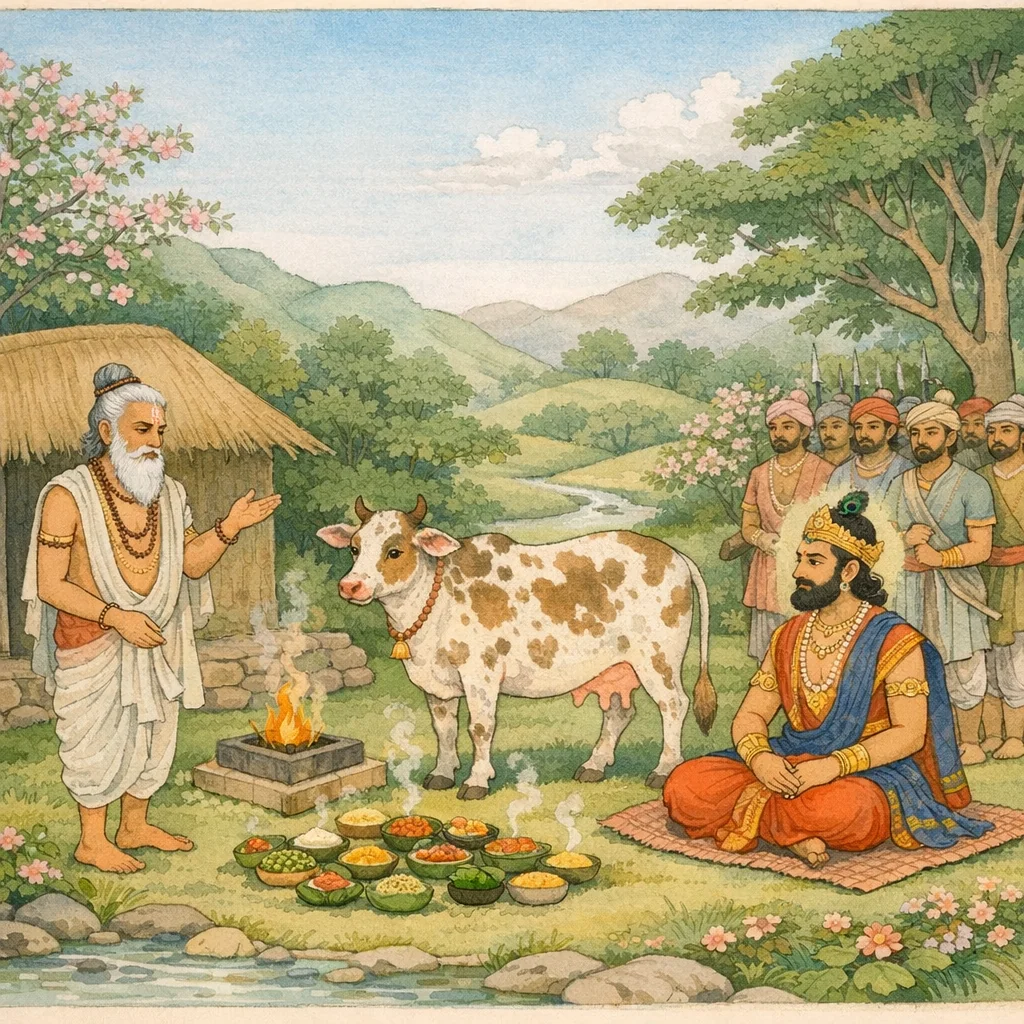
Sarga 52 stages a formal encounter between royal power and ascetic authority through the etiquette of reception (ātithya). Viśvāmitra, described as mighty and heroic, approaches Vasiṣṭha with visible joy and respectful salutations; Vasiṣṭha welcomes him, offers a seat, and provides customary forest hospitality (fruits and roots). A reciprocal exchange of welfare inquiries follows, extending to tapas, agnihotra, disciples, and the hermitage’s trees, then Vasiṣṭha questions the king’s governance: the well-being of subjects, servants, treasury, army, allies, and heirs—an explicit audit of rājadharma. After extended cordial conversation, Vasiṣṭha proposes more elaborate hospitality for the king and his army. Viśvāmitra initially demurs, stating that the simple offerings and the sage’s darśana suffice, but Vasiṣṭha repeatedly आग्रह (insists). Upon acceptance, Vasiṣṭha summons the speckled cow Śabalā (Kāmadhenu) and commands the production of abundant, six-taste foods—liquid, solid, lickable, and sip-able—thereby dramatizing āśrama prosperity, ritual potency, and the moral economy of honoring a guest.
Shlokas
Verse 1
स दृष्ट्वा परमप्रीतो विश्वामित्रो महाबल:।प्रणतो विनयाद्वीरो वसिष्ठं जपतां वरम्।।।।
Seeing Vasiṣṭha—the foremost among those devoted to sacred recitation—the mighty and heroic Viśvāmitra became exceedingly pleased and, out of respect, bowed down in salutation.
Verse 2
स्वागतं तव चेत्युक्तो वसिष्ठेन महात्मना।आसनं चास्य भगवान् वसिष्ठो व्यादिदेश ह।।।।
The venerable Vasiṣṭha, that great-souled sage, welcomed him with words of greeting and directed that a seat be prepared for him.
Verse 3
उपविष्टाय च तदा विश्वामित्राय धीमते।यथान्यायं मुनिवर: फलमूलमुपाहरत्।।।।
When the wise Viśvāmitra had taken his seat, the excellent sage (Vasiṣṭha) duly offered him fruits and roots, as is proper by custom.
Verse 4
प्रतिगृह्य तु तां पूजां वसिष्ठाद्राजसत्तम:।तपोग्निहोत्रशिष्येषु कुशलं पर्यपृच्छत।।।।विश्वामित्रो महातेजा वनस्पतिगणे तथा ।सर्वत्र कुशलं चाह वसिष्ठो राजसत्तमम्।।।।
Having accepted Vasiṣṭha’s hospitality, the foremost of kings—brilliant Viśvāmitra—enquired after the welfare of Vasiṣṭha’s austerities, sacred fires, and disciples, and also of the grove of trees about the hermitage. Vasiṣṭha, in turn, assured the best of kings that all was well in every respect.
Verse 5
प्रतिगृह्य तु तां पूजां वसिष्ठाद्राजसत्तम:।तपोग्निहोत्रशिष्येषु कुशलं पर्यपृच्छत।।1.52.4।।विश्वामित्रो महातेजा वनस्पतिगणे तथा ।सर्वत्र कुशलं चाह वसिष्ठो राजसत्तमम्।।1.52.5।।
Having accepted Vasiṣṭha’s hospitality, the foremost of kings—brilliant Viśvāmitra—enquired after the welfare of Vasiṣṭha’s austerities, sacred fires, and disciples, and also of the grove of trees about the hermitage. Vasiṣṭha, in turn, assured the best of kings that all was well in every respect.
Verse 6
सुखोपविष्टं राजानं विश्वामित्रं महातपा:।पप्रच्छ जपतां श्रेष्ठो वसिष्ठो ब्रह्मणस्सुत:।।।।
Seeing king Viśvāmitra seated in comfort, Vasiṣṭha—Brahmā’s son, foremost among those devoted to sacred recitation, and rich in austerity—questioned him further.
Verse 7
कच्चित्ते कुशलं राजन् कच्चिद्धर्मेण रञ्जयन्।प्रजा: पालयसे वीर राजवृत्तेन धार्मिक।।।।
"O King, is all well with you? O righteous and valiant one—do you protect your subjects according to dharma, delighting them by the proper conduct of a king?"
Verse 8
कच्चित्ते सम्भृता भृत्या: कच्चित्तिष्ठन्ति शासने।कच्चित्ते विजितास्सर्वे रिपवो रिपुसूदन ।।।।
Are your servants properly maintained, and do they remain obedient to your rule? O destroyer of foes, have you subdued all your enemies?
Verse 9
कच्चिद्बलेषु कोशेषु मित्रेषु च परन्तप।कुशलं ते नरव्याघ्र पुत्रपौत्रे तवानघ ।।।।
O tormentor of enemies, O best of men, O blameless one—are your forces, treasury, allies, and your sons and grandsons all thriving in well-being?
Verse 10
सर्वत्र कुशलं राजा वसिष्ठं प्रत्युदाहरत्।विश्वामित्रो महातेजा वसिष्ठं विनयान्वित:।।।।
The mighty and radiant king Viśvāmitra addressed Vasiṣṭha with due humility, reporting that all was well in every respect.
Verse 11
कृत्वोभौ सुचिरं कालं धर्मिष्ठौ ता: कथा: शुभा:।मुदा परमया युक्तौ प्रीयेतां तौ परस्परम्।।।।
Those two righteous men spent a long time in auspicious conversation, delighted and mutually pleased with one another.
Verse 12
ततो वसिष्ठो भगवान् कथाऽन्ते रघुनन्दन ।विश्वामित्रमिदं वाक्यमुवाच प्रहसन्निव।।।।
Then, O Raghunandana, when their conversation had ended, the venerable Vasiṣṭha—smiling as though—spoke these words to Viśvāmitra.
Verse 13
आतिथ्यं कर्तुमिच्छामि बलस्यास्य महाबल ।तव चैवाप्रमेयस्य यथार्हं सम्प्रतीच्छ मे।।।।
“O mighty one, I wish to extend hospitality—befittingly—to you and to this army of yours, so vast as to be beyond measure; please accept it from me.”
Verse 14
सत्क्रियां तु भवानेतां प्रतीच्छतु मयोद्यताम्।राजा त्वमतिथिश्रेष्ठ: पूजनीय: प्रयत्नत:।।।।
“Please accept this honor that I have prepared; as a king you are an eminent guest, and you should be revered with every effort.”
Verse 15
एवमुक्तो वसिष्ठेन विश्वामित्रो महामति:।कृतमित्यब्रवीद्राजा प्रियवाक्येन मे त्वया।।।।
Thus addressed by Vasiṣṭha, the great-minded king Viśvāmitra replied: “It is enough—your pleasing words themselves are hospitality to me.”
Verse 16
फलमूलेन भगवन् विद्यते यत्तवाश्रमे।पाद्येनाचमनीयेन भगवद्दर्शनेन च।।।।सर्वथा च महाप्राज्ञ पूजार्हेण सुपूजित:।गमिष्यामि नमस्तेऽस्तु मैत्रेणेक्षस्व चक्षुषा।।।।
“O venerable one, with whatever fruits and roots are available in your hermitage—together with water for washing the feet, water for sipping, and above all the blessing of seeing you—I have been honored in every way, O great sage. Now I shall depart; salutations to you. Look upon me with friendly eyes.”
Verse 17
फलमूलेन भगवन् विद्यते यत्तवाश्रमे।पाद्येनाचमनीयेन भगवद्दर्शनेन च।।1.52.16।।सर्वथा च महाप्राज्ञ पूजार्हेण सुपूजित:।गमिष्यामि नमस्तेऽस्तु मैत्रेणेक्षस्व चक्षुषा।।1.52.17।।
As the king spoke thus, Vasiṣṭha—righteous in soul and generous in understanding—repeatedly urged him again and again to accept his hospitality.
Verse 18
एवं ब्रुवन्तं राजानं वसिष्ठ:पुनरेव हि।न्यमन्त्रयत धर्मात्मा पुन:पुनरुदारधी:।।।।
As the king spoke thus, Vasiṣṭha—righteous in soul and generous in understanding—repeatedly urged him again and again to accept his hospitality.
Verse 19
बाढमित्येव गाधेयो वसिष्ठं प्रत्युवाच ह।यथा प्रियं भगवतस्तथाऽस्तु मुनिपुङ्गव।।।।
Then Gādhī’s son (Viśvāmitra) replied to Vasiṣṭha: “So be it, O best of sages; let it be done exactly as is pleasing to you, venerable one.”
Verse 20
एवमुक्तो महातेजा वसिष्ठो जपतां वर:।आजुहाव तत: प्रीत: कल्माषीं धूतकल्मष:।।।।
Thus addressed, Vasiṣṭha—radiant, foremost among those devoted to sacred recitation, and purified of all stain—was pleased; and then he called the speckled cow (Śabalā/Kalmāṣī).
Verse 21
एह्येहि शबले क्षिप्रं श्रृणु चापि वचो मम।सबलस्यास्य राजर्षे:कर्तुं व्यवसितोऽस्म्यहम्।।।।भोजनेन महार्हेण सत्कारं संविधत्स्व मे।
"Come, come quickly, O Śabalā, and listen to my words. I have resolved to honor this royal sage—together with his forces—by offering food worthy of him. Make the arrangements for me."
Verse 22
यस्य यस्य यथाकामं षड्रसेष्वभिपूजितम्।तत्सर्वं कामधुक्क्षिप्रमभिवर्ष कृते मम।।।।
"O Kāmadhenu—quickly provide, for my sake, everything that each person desires, honored with the full range of the six tastes."
Verse 23
रसेनान्नेन पानेन लेह्यचोष्येण संयुतम्।अन्नानां निचयं सर्वं सृजस्व शबले त्वर।।।।
"O Śabalā, make haste and bring forth the entire abundance of foods—solid dishes and savory preparations, drinks, and items to be licked or sipped—fully provided in every form."
Frequently Asked Questions
The pivotal action is the negotiation of ātithya: Viśvāmitra’s courteous refusal (claiming simple offerings and darśana are sufficient) versus Vasiṣṭha’s repeated insistence that a distinguished guest and his army must be honored appropriately—testing how humility, obligation, and social rank are balanced within dharma.
The sarga teaches that dharma operates through reciprocal duties: the king is evaluated by welfare governance (subjects, treasury, army, allies), while the sage demonstrates that true hospitality is not mere abundance but disciplined intention, ritual capability, and reverence—where honoring the guest becomes a moral act sustaining social order.
The principal cultural landmark is Vasiṣṭha’s āśrama as an institution: it contains disciples, agnihotra, tapas routines, and a cultivated grove; it also preserves the full protocol of reception (āsana, pādya, ācamanīya, and offerings), culminating in Śabalā/Kāmadhenu as a symbolic resource of āśrama prosperity and ritual efficacy.