Sarga 50
यज्ञवाटप्रवेशः जनक-विश्वामित्रसंवादश्च (Arrival at the Sacrificial Ground and Janaka’s Reception)
बालकाण्ड
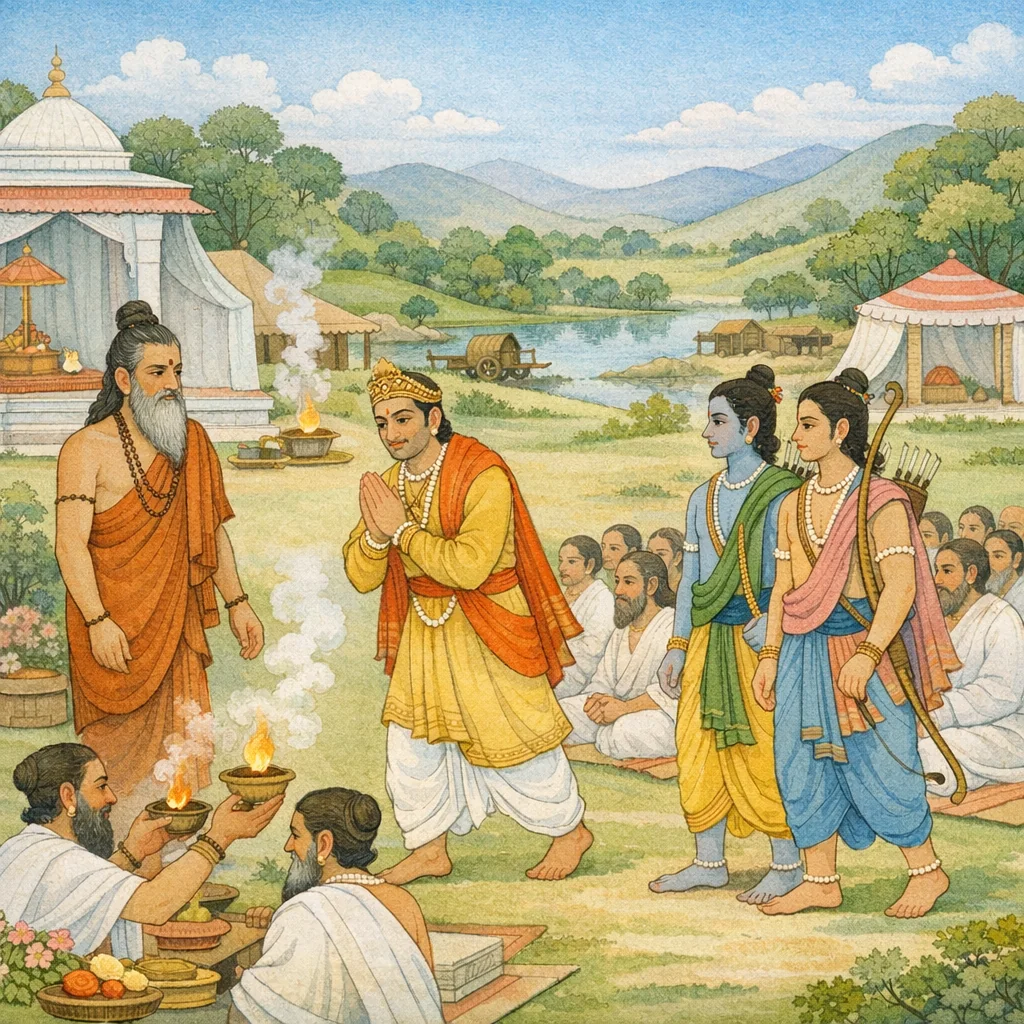
Sarga 50 maps a formal reception sequence at Mithilā’s yajñavāṭa. Rama and Lakṣmaṇa proceed northeast with Viśvāmitra leading and reach the sacrificial precinct. Observing the vast assembly—thousands of Veda-trained brāhmaṇas, ascetic shelters, and cart-filled encampments—Rama requests an appropriate lodging site; Viśvāmitra selects a quiet place near water. King Janaka, informed of the sage’s arrival, advances promptly with his priest Śatānanda to welcome him, while officiating priests offer arghya with mantras. After mutual inquiries into welfare and the sacrifice’s progress, seating is arranged according to rank. Janaka proclaims the sacrifice successful by Viśvāmitra’s presence, notes that twelve days remain, and anticipates the devatās arriving for their shares. He then, with reverent curiosity, asks about the two radiant youths—armed, symmetrical in bearing, and seemingly celestial. Viśvāmitra identifies them as Daśaratha’s sons and summarizes their journey: Siddhāśrama stay, rākṣasa-slaying, viewing Viśālā, Ahalyā’s sighting and meeting Gautama, and their purpose of examining Śiva’s great bow—then he falls silent, closing the chapter’s court-ritual tableau.
Shlokas
Verse 1
तत: प्रागुत्तरां गत्वा रामस्सौमित्रिणा सह।विश्वामित्रं पुरस्कृत्य यज्ञवाटमुपागमत्।।1.50.1।।
Then Rāma, accompanied by Saumitrī (Lakṣmaṇa), went toward the northeast; keeping Viśvāmitra in front, he reached the sacrificial enclosure.
Verse 2
रामस्तु मुनिशार्दूलमुवाच सहलक्ष्मण:।साध्वी यज्ञसमृद्धिर्हि जनकस्य महात्मन:।।1.50.2।।
Rāma, together with Lakṣmaṇa, spoke to the tiger among sages (Viśvāmitra): “Indeed, the sacrificial preparations of the great-souled Janaka are excellent.”
Verse 3
बहूनीह सहस्राणि नानादेशनिवासिनाम्।ब्राह्मणानां महाभाग वेदाध्ययनशालिनाम्।।1.50.3।।ऋषिवाटाश्च दृश्यन्ते शकटीशतसङ्कुला:।देशो विधीयतां ब्रह्मन् यत्र वत्स्यामहे वयम्।।1.50.4।।
O illustrious one, here are many thousands of brāhmaṇas—men who dwell in various regions and are accomplished in Vedic study.
Verse 4
बहूनीह सहस्राणि नानादेशनिवासिनाम्।ब्राह्मणानां महाभाग वेदाध्ययनशालिनाम्।।1.50.3।।ऋषिवाटाश्च दृश्यन्ते शकटीशतसङ्कुला:।देशो विधीयतां ब्रह्मन् यत्र वत्स्यामहे वयम्।।1.50.4।।
And the ascetics’ shelters are seen crowded with hundreds of carts. O brahman, let a place be determined where we may stay.
Verse 5
रामस्य वचनं श्रुत्वा विश्वामित्रो महामुनि:।निवेशमकरोद्देशे विविक्ते सलिलायुते।।1.50.5।।
Hearing Rāma’s words, the great sage Viśvāmitra established their camp in a secluded spot supplied with water.
Verse 6
विश्वामित्रमनुप्राप्तं श्रुत्वा स नृपतिस्तदा।शतानन्दं पुरस्कृत्य पुरोहितमनिन्दितम्।।1.50.6।। प्रत्युज्जगाम सहसा विनयेन समन्वित:।
When the king heard that Viśvāmitra had arrived, he quickly went forth to welcome him, with humility—placing Śatānanda, his blameless family priest, at the front.
Verse 7
ऋत्विजोऽपि महात्मानस्त्वर्घ्यमादाय सत्वरम्।।1.50.7।।विश्वामित्राय धर्मेण ददुर्मंन्त्रपुरस्कृतम्।
The eminent officiating priests too quickly brought the arghya-offering and, in accordance with dharma, presented it to Viśvāmitra with mantras.
Verse 8
प्रतिगृह्य च तां पूजां जनकस्य महात्मन:।।1.50.8।।पप्रच्छ कुशलं राज्ञो यज्ञस्य च निरामयम्।
Having accepted the worship offered by the great-souled Janaka, he inquired after the king’s welfare and the unimpaired progress of the sacrifice.
Verse 9
स तांश्चापि मुनीन् पृष्ट्वा सोपाध्यायपुरोधस:।।1.50.9।।यथान्यायं ततस्सर्वैस्समागच्छत्प्रहृष्टवत्।
Then Viśvāmitra, together with the teachers and priests, duly enquired after those sages according to proper custom; thereafter all of them came together, as if filled with delight.
Verse 10
अथ राजा मुनिश्रेष्ठं कृताञ्जलिरभाषत।।1.50.10।।आसने भगवानास्तां सहैभिर्मुनिपुङ्गवै:।
Then the king, with hands folded, addressed the foremost sage: “Venerable sir, please be seated on the seat, together with these eminent seers.”
Verse 11
जनकस्य वचश्श्रुत्वा निषसाद महामुनि:।।1.50.11।।पुरोधा ऋत्विजश्चैव राजा च सह मन्त्रिभि:।
Hearing Janaka’s words, the great sage (Viśvāmitra) sat down. Then the family priest, the officiating priests, the king, and the counsellors also took their seats in due order.
Verse 12
आसनेषु यथान्यायमुपविष्टान् समन्तत:।।1.50.12।।दृष्ट्वा स नृपतिस्तत्र विश्वामित्रमथाब्रवीत्।
When the king saw everyone seated all around in accordance with proper order, he then addressed Viśvāmitra there.
Verse 13
अद्य यज्ञसमृध्दिर्मे सफला दैवतै: कृता।।1.50.13।।अद्य यज्ञफलं प्राप्तं भगवद्दर्शनान्मया।
Today the prosperity of my sacrifice has been made fruitful by the gods; today, through the sight of your venerable presence, I have obtained the true fruit of the sacrifice.
Verse 14
धन्योऽस्म्यनुगृहीतोऽस्मि यस्य मे मुनिपुङ्गव।।1.50.14।।यज्ञोपसदनं ब्रह्मन् प्राप्तोऽसि मुनिभि: सह।
Blessed am I; favored am I—since you, O best of sages, O brāhmaṇa, have come to my sacrificial hall together with these ascetics.
Verse 15
द्वादशाहं तु ब्रह्मर्षे शेषमाहुर्मनीषिण:।।1.50.15।।ततो भागार्थिनो देवान् द्रष्टुमर्हसि कौशिक।
O brahmarṣi—so say the learned—only twelve days remain. After that, O Kauśika, you ought to witness the gods arriving to claim their allotted shares.
Verse 16
इत्युक्त्वा मुनिशार्दूलं प्रहृष्टवदनस्तदा।।1.50.16।।पुनस्तं परिपप्रच्छ प्राञ्जलि: प्रणतो नृप:।
Having spoken thus to that tiger among sages, the king—his face bright with joy—bowed with folded palms and again questioned him.
Verse 17
इमौ कुमारौ भद्रं ते देवतुल्यपराक्रमौ।।1.50.17।।गजसिंहगती वीरौ शार्दूलवृषभोपमौ।पद्मपत्रविशालाक्षौ खड्गतूणीधनुर्धरौ।।1.50.18।।अश्विनाविव रूपेण समुपस्थितयौवनौ।यदृच्छयैव गां प्राप्तौ देवलोकादिवामरौ।।1.50.19।।कथं पद्भ्यामिह प्राप्तौ किमर्थं कस्य वा मुने।
Prosperity to you, O sage. Who are these two youths, equal to the gods in prowess—heroes with the gait of elephant and lion, like tiger and bull in strength—wide-eyed like lotus petals, bearing sword, quiver, and bow? In beauty they resemble the Aśvins, standing at the threshold of youth, as if immortals who have come down to earth from heaven of their own accord. How have they arrived here on foot, for what purpose, and whose sons are they, O muni?
Verse 18
इमौ कुमारौ भद्रं ते देवतुल्यपराक्रमौ।।1.50.17।।गजसिंहगती वीरौ शार्दूलवृषभोपमौ।पद्मपत्रविशालाक्षौ खड्गतूणीधनुर्धरौ।।1.50.18।।अश्विनाविव रूपेण समुपस्थितयौवनौ।यदृच्छयैव गां प्राप्तौ देवलोकादिवामरौ।।1.50.19।।कथं पद्भ्यामिह प्राप्तौ किमर्थं कस्य वा मुने।
Rāma, together with Lakṣmaṇa, spoke to the tiger among sages (Viśvāmitra): “Indeed, the sacrificial preparations of the great-souled Janaka are excellent.”
Verse 19
इमौ कुमारौ भद्रं ते देवतुल्यपराक्रमौ।।1.50.17।।गजसिंहगती वीरौ शार्दूलवृषभोपमौ।पद्मपत्रविशालाक्षौ खड्गतूणीधनुर्धरौ।।1.50.18।।अश्विनाविव रूपेण समुपस्थितयौवनौ।यदृच्छयैव गां प्राप्तौ देवलोकादिवामरौ।।1.50.19।।कथं पद्भ्यामिह प्राप्तौ किमर्थं कस्य वा मुने।
In beauty they are like the Aśvins, standing at the threshold of youth—like immortals who have come to earth as if from the world of the gods by their own will. How have they arrived here on foot, and for what purpose? Whose sons are they, O sage?
Verse 20
वरायुधधरौ वीरौ कस्य पुत्रौ महामुने।।1.50.20।।भूषयन्ताविमं देशं चन्द्रसूर्याविवाम्बरम्। परस्परस्य सदृशौ प्रमाणेङ्गितचेष्टितै:।।1.50.21।।काकपक्षधरौ वीरौ श्रोतुमिच्छामि तत्त्वत:।
O great sage, these two heroes—bearing excellent weapons—whose sons are they? They adorn this land as the Moon and Sun adorn the sky. Alike to one another in stature, expression, and movement, with hair falling at their temples, I wish to hear the truth about these heroes.
Verse 21
वरायुधधरौ वीरौ कस्य पुत्रौ महामुने।।1.50.20।।भूषयन्ताविमं देशं चन्द्रसूर्याविवाम्बरम्। परस्परस्य सदृशौ प्रमाणेङ्गितचेष्टितै:।।1.50.21।।काकपक्षधरौ वीरौ श्रोतुमिच्छामि तत्त्वत:।
And the ascetics’ shelters are seen crowded with hundreds of carts. O brahman, let a place be determined where we may stay.
Verse 22
तस्य तद्वचनं श्रुत्वा जनकस्य महात्मन:।।1.50.22।।न्यवेदयन्महात्मानौ पुत्रौ दशरथस्य तौ।
Hearing those words of the great-souled Janaka, Viśvāmitra introduced the two illustrious youths, declaring them to be the sons of Daśaratha.
Verse 23
सिद्धाश्रमनिवासं च राक्षसानां वधं तथा।।1.50.23।।तच्चागमनमव्यग्रं विशालायाश्च दर्शनम्।अहल्यादर्शनं चैव गौतमेन समागमम्।।1.50.24।। महाधनुषि जिज्ञासां कर्तुमागमनं तथा।एतत्सर्वं महातेजा जनकाय महात्मने ।।1.50.25।।निवेद्य विररामाथ विश्वामित्रो महामुनि:।
The great sage Viśvāmitra—radiant in power—related to the great-souled Janaka all of it: their stay at Siddhāśrama, the slaying of the rākṣasas, their untroubled journey, the sight of Viśālā, the seeing of Ahalyā and the meeting with Gautama, and also their coming in order to learn about the great bow. Having reported everything, he then fell silent.
Frequently Asked Questions
The pivotal action is not a battlefield dilemma but a dharmic performance of protocol: correct reception of a sage, ritual offerings (arghya), and rank-based seating. The episode models how political authority legitimizes itself through humility before spiritual authority and meticulous adherence to yajña etiquette.
The chapter teaches that sacred presence and right conduct are themselves ‘fruits’ of ritual: Janaka interprets Viśvāmitra’s arrival as yajñaphala. Governance is shown as inquiry-guided and reverence-based—knowledge of persons and purposes precedes action.
Culturally, the yajñavāṭa and yajñopasadana (sacrificial precinct and hall) are highlighted through hospitality rites and priestly participation. Geographically and narratively, references to Siddhāśrama, Viśālā, and Mithilā’s great bow tradition locate the itinerary that brings Rama into Janaka’s ritual-political sphere.