Sarga 41
अंशुमान्—अश्वान्वेषणम्, दिशागजसंवादः, कपिलदाहवृत्तान्तः, गङ्गोपदेशः (Anshuman’s Search for the Horse and the Counsel to Bring Ganga)
बालकाण्ड
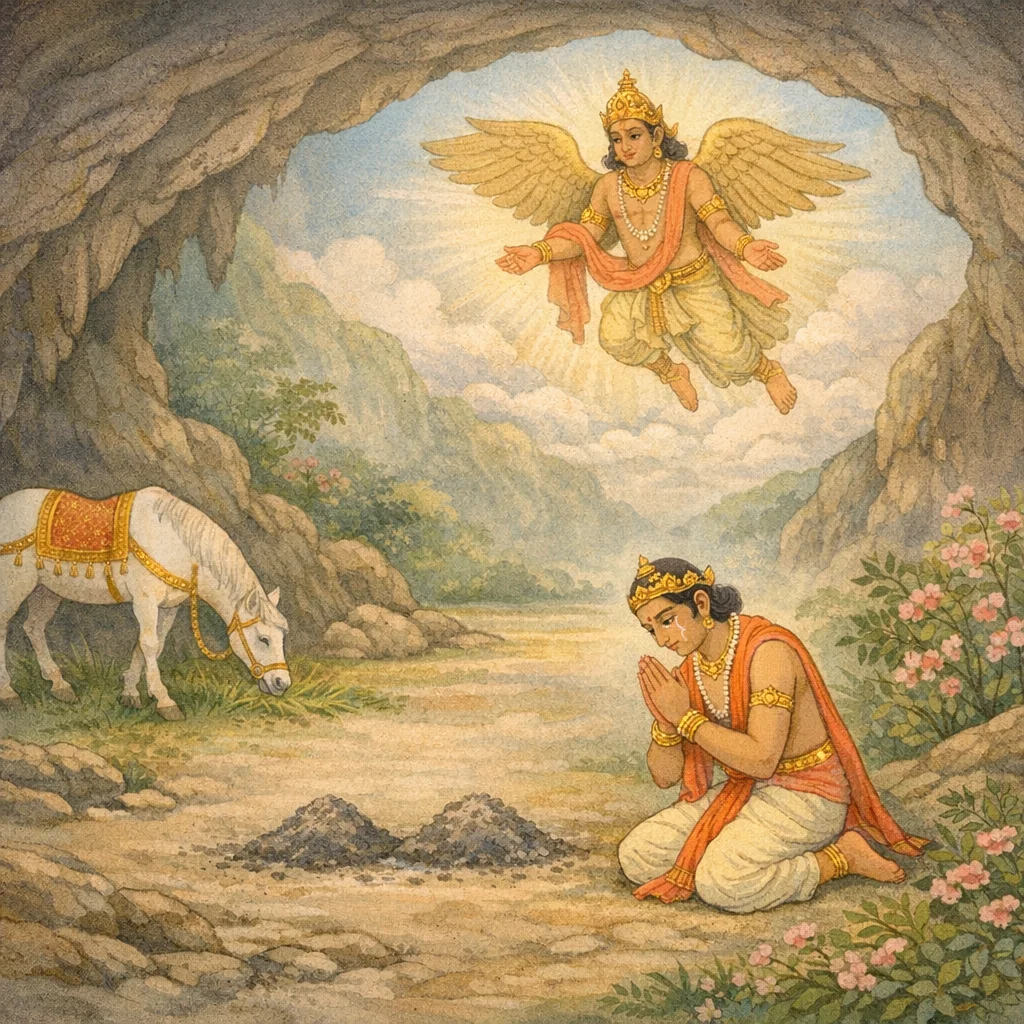
Sarga 41 advances the Sagara cycle through a tightly linked sequence of command, quest, discovery, and doctrinal instruction. King Sagara, realizing his sons have been absent long, commissions his grandson Anśumān—praised for valor, learning, and ancestral splendor—to trace both the missing princes and the thief who carried off the sacrificial horse; he is instructed to bear bow and weapons, honor the honorable, and remove ritual obstacles so the yajña may be completed. Anśumān follows the subterranean path dug by Sagara’s sons and encounters the diśāgajas (guardian elephants of the quarters), revered by various beings; he circumambulates them, inquires respectfully, and is assured he will return with the horse. Proceeding onward, he reaches the site where the sixty thousand sons of Sagara lie reduced to ashes, laments their destruction, and then sees the sacrificial horse grazing nearby. Seeking water to perform funeral libations, he finds none; with keen sight he beholds Garuḍa (Suparṇa/Vainateya), who explains that Kapila burned the princes and that ordinary water rites are improper—only Gaṅgā, Himavat’s eldest daughter, can sanctify the ashes and convey them to heaven. Garuḍa directs Anśumān to take the horse back; Anśumān returns swiftly, reports the events and counsel, and Sagara completes the sacrifice according to kalpa and tradition, though he cannot yet determine how to bring Gaṅgā down; after long rule he ascends to heaven.
Shlokas
Verse 1
पुत्रांश्चिरगतान् ज्ञात्वा सगरो रघुनन्दन।नप्तारमब्रवीद्राजा दीप्यमानं स्वतेजसा।।।।
O Rāma, realizing that his sons had been gone a long time, King Sagara spoke to his grandson Anśumān, who shone with his own radiance.
Verse 2
शूरश्च कृतविद्यश्च पूर्वैस्तुल्योऽसि तेजसा।पितृ़णां गतिमन्विच्छ येन चाश्वोऽपवाहित:।।।।
“You are valiant and well-trained in knowledge; in splendor you equal your forebears. Trace the path taken by your elders—and by the one who carried off the horse.”
Verse 3
अन्तर्भौमानि सत्त्वानि वीर्यवन्ति महान्ति च।तेषां त्वं प्रतिघातार्थं सास्त्रं गृह्णीष्व कार्मुकम्।।।।
“There are mighty, powerful beings in the depths of the earth. To repel and destroy them, take up your weapons—especially your bow.”
Verse 4
अभिवाद्याभिवाद्यांस्त्वं हत्वा विघ्नकरानपि।सिद्धार्थस्सन्निवर्तस्व मम यज्ञस्य पारग:।।।।
“Pay homage to those worthy of honor; destroy even those who obstruct the rite; then return with your purpose fulfilled, ensuring the successful completion of my sacrifice.”
Verse 5
एवमुक्तोंऽशुमान्सम्यक् सगरेण महात्मना।धनुरादाय खड्गं च जगाम लघुविक्रम:।।।।
Thus instructed thoroughly by the great-souled Sagara, Anśumān set out swiftly, taking up his bow and sword.
Verse 6
स खातं पितृभिर्मार्गमन्तर्भौमं महात्मभि:।प्रापद्यत नरश्रेष्ठ तेन राज्ञाऽभिचोदित:।।।।
Directed by the king, he followed the subterranean path that had been dug by his noble uncles—O best of men.
Verse 7
दैत्यदानवरक्षोभि: पिशाचपतगोरगै:।पूज्यमानं महातेजा दिशागजमपश्यत।।।।
The radiant Anśumān saw the guardian elephant of the quarter being worshipped by daityas, dānavas, rākṣasas, piśācas, birds, and serpents.
Verse 8
स तं प्रदक्षिणं कृत्वा पृष्ट्वा चापि निरामयम्।पितृ़न् स परिपप्रच्छ वाजिहर्तारमेव च।।।।
He circumambulated that elephant and inquired after its well-being; then he asked about his uncles and also about the one who had stolen the sacrificial horse.
Verse 9
दिशागजस्तु तच्छ्रुत्वा प्रत्याहांशुमतो वच:।आसमञ्ज कृतार्थस्त्वं सहाश्वश्शीघ्रमेष्यसि।।।।
Hearing Anuśumān’s words, the elephant-guardian of that quarter replied: “O Anuśumān, son of Asamañjasa! Your purpose is fulfilled; you will soon return with the horse.”
Verse 10
तस्य तद्वचनं श्रुत्वा सर्वानेव दिशागजान्।यथाक्रमं यथान्यायं प्रष्टुं समुपचक्रमे।।।।
After hearing the words spoken to him, Anśumān began to inquire—successively and with due propriety—of all the elephants guarding the quarters.
Verse 11
तैश्च सर्वैर्दिशापालैर्वाक्यज्ञैर्वाक्यकोविदै:।पूजितस्सहयश्चैव गन्ताऽसीत्यभिचोदित:।।।।
Honored by all those guardians of the directions—masters of meaning and skilled in speech—Anśumān was encouraged: “You will return, and with the horse as well.”
Verse 12
तेषां तद्वचनं श्रुत्वा जगाम लघुविक्रम:।भस्मराशीकृता यत्र पितरस्तस्य सागरा:।।।।
Hearing their words, swift-moving Anśumān went to the place where his paternal uncles—the sons of Sagara—had been reduced to heaps of ash.
Verse 13
स दु:खवशमापन्नस्त्वसमञ्जसुतस्तदा।चुक्रोश परमार्तस्तु वधात्तेषां सुदु:खित:।।।।
Then Anśumān, son of Asamañjasa, overcome by grief and intensely distressed by their slaughter, cried out in deep sorrow.
Verse 14
यज्ञीयं च हयं तत्र चरन्तमविदूरत:।ददर्श पुरुषव्याघ्रो दु:खशोकसमन्वित:।।।।
Overwhelmed with grief and sorrow, Anśumān—the tiger among men—saw the sacrificial horse grazing nearby.
Verse 15
स तेषां राजपुत्राणां कर्तुकामो जलक्रियाम् ।सलिलार्थी महातेजा न चापश्यज्जलाशयम् ।।।।
Wishing to perform the water-offerings for those princes, the radiant Anśumān searched for water—but he could find no reservoir in that place.
Verse 16
विसार्य निपुणां दृष्टिं ततोऽपश्यत्खगाधिपम् ।पितृ़णां मातुलं राम सुपर्णमनिलोपमम्।।।।
Scanning keenly, he then saw Suparṇa—lord of birds, swift as the wind—who was the maternal uncle of those departed princes; O Rāma.
Verse 17
स चैवमब्रवीद्वाक्यं वैनतेयो महाबल :।मा शुच: पुरुषव्याघ्र वधोऽयं लोकसम्मत:।।।।
Then Vainateya (Garuḍa), mighty in power, spoke: “Do not grieve, O tiger among men; this destruction has been ordained as beneficial for the worlds.”
Verse 18
कपिलेनाप्रमेयेन दग्धा हीमे महाबला:।सलिलं नार्हसि प्राज्ञ दातुमेषां हि लौकिकम्।।।।
“These mighty ones have indeed been burnt by Kapila of immeasurable power; therefore, O wise one, it is not fitting for you to offer them ordinary, worldly water.”
Verse 19
गङ्गा हिमवतो ज्येष्ठा दुहिता पुरुषर्षभ।तस्यां कुरु महाबाहो पितृ़णां तु जलक्रियाम्।।।।
“Gaṅgā is the eldest daughter of Himavat. O best of men, O mighty-armed one—perform the water-rites for your elders with her waters.”
Verse 20
भस्मराशीकृतानेतान् प्लावयेल्लोकपावनी।तया क्लिन्नमिदं भस्म गङ्गया लोककान्तया।।।।षष्टिं पुत्रसहस्राणि स्वर्गलोकं च नेष्यति।
“Gaṅgā, purifier of the worlds, will wash over these who have become heaps of ash. When this ash is moistened by Gaṅgā—beloved of the world—she will lead those sixty thousand sons to heaven.”
Verse 21
गच्छ चाश्वं महाभाग तं गृह्य पुरुषर्षभ।।।।यज्ञं पैतामहं वीर संवर्तयितुमर्हसि।
“Now go, O greatly fortunate one, O best of men—take that horse and return. O hero, it is right for you to bring your grandfather’s sacrifice to completion.”
Verse 22
सुपर्णवचनं श्रुत्वा सोंऽशुमानतिवीर्यवान् ।।।।त्वरितं हयमादाय पुनरायान्महायशा:।
Hearing Suparṇa’s words, the exceedingly mighty and renowned Anśumān swiftly took up the horse and returned.
Verse 23
ततो राजानमासाद्य दीक्षितं रघुनन्दन।।।।न्यवेदयद्यथावृत्तं सुपर्णवचनं तथा।
Then, O Raghunandana, having approached the king while he was consecrated for the rite, Anśumān reported exactly what had occurred, faithfully conveying Suparṇa’s words as well.
Verse 24
तच्छ्रुत्वा घोरसङ्काशं वाक्यमंशुमतो नृप:।।।।यज्ञं निवर्तयामास यथाकल्पं यथाविधि।
Hearing Anśumān’s dreadful report, the king nevertheless brought the sacrifice to completion, in full accordance with the Kalpa rules and the prescribed ritual procedure.
Verse 25
स्वपुरं चागमच्छ्रीमानिष्टयज्ञोमहीपति:।।।।गङ्गायाश्चागमे राजा निश्चयं नाध्यगच्छत।
Having completed the sacrifice, the illustrious lord of the earth returned to his own capital; yet regarding the descent of Gaṅgā, the king could not arrive at any settled plan.
Verse 26
अकृत्वा निश्चयं राजा कालेन महता महान् ।त्रिंशद्वर्षसहस्राणि राज्यं कृत्वा दिवं गत:।।।।
The great king, after a long time still without reaching a decision, ruled his kingdom for thirty thousand years and then ascended to heaven.
Frequently Asked Questions
Anśumān faces a duty conflict between immediate ritual response (offering ordinary water libations to the dead) and adherence to a higher ritual propriety: Garuḍa instructs that common water rites are inadequate for those burned by Kapila, redirecting Anśumān toward the prescribed sanctifying agency—Gaṅgā—while still requiring him to retrieve the horse to complete the yajña.
The chapter teaches graded dharma: actions must match context and spiritual potency. Respectful conduct toward cosmic guardians, fidelity to inherited obligations (completing the sacrifice), and recognition that certain purifications require exceptional means (Gaṅgā’s descent) together present an ethical framework where intention is guided by scriptural fitness (yathāvidhi) and cosmic order.
Key landmarks include the subterranean realm reached via the dug path, the cosmological diśāgajas as guardians of space, and Gaṅgā—identified as Himavat’s eldest daughter—whose waters function as a pan-Indic cultural symbol of purification and ancestral uplift (pitr̥-tarpaṇa efficacy).