Sarga 32
कुशवंशवर्णनम् — The Line of Kuśa and the Disfigurement of Kuśanābha’s Daughters by Vāyu
बालकाण्ड
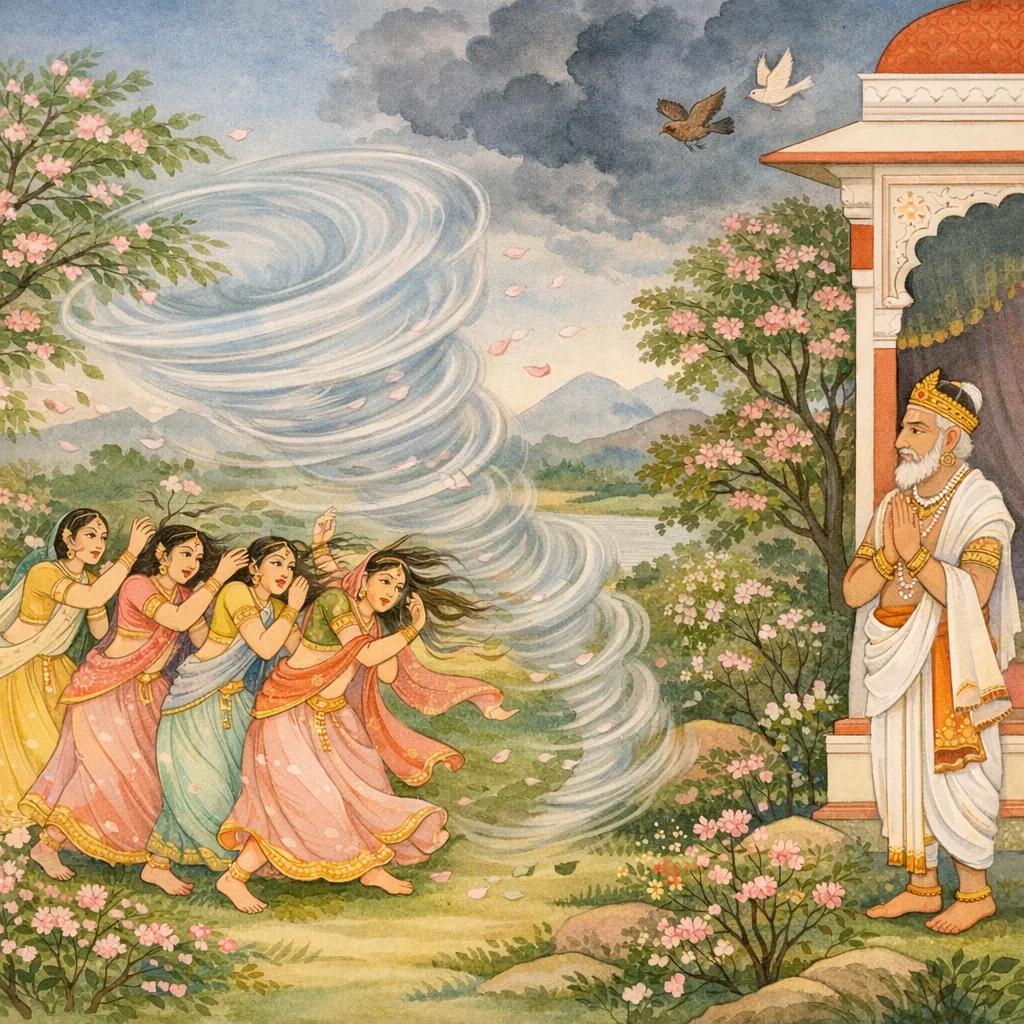
This sarga situates a dynastic micro-history within the broader ethical cartography of Bālakāṇḍa. The narration introduces Kuśa—Brahmā-born, ascetically steadfast, and devoted to honoring the virtuous—and details his four sons: Kuśāmba, Kuśanābha, Adhūrtarajas, and Vasu. Their righteous governance is expressed through city-foundations (Kauśāmbī, Mahodaya, Dharmāraṇya, Girivraja) and a geographic mapping of Vasu’s domain (Vasumatī) with the renowned Sumāgadhī/Māgadhī river amid five mountains. The discourse then pivots to Kuśanābha’s hundred daughters born of the apsaras Ghṛtācī, portrayed in ornate garden imagery. Vāyu, seeing their beauty and youth, proposes marriage and promises immortality and unfading youth; the maidens reject him, affirming their dharmic allegiance to paternal authority in marriage and warning of ascetic power. Enraged, Vāyu enters their limbs and twists them into hunchbacked forms. The daughters return weeping and ashamed; Kuśanābha questions the violation of virtue and enters a concentrated, inward state (samādhi), marking the episode as both moral case-study and narrative hinge.
Shlokas
Verse 1
Description of the four sons of Brahma and the dynasty of Kusanabha-- enraged Windgod turns the daughters of Kusanabha into humpedback ones.ब्रह्मयोनिर्महानासीत्कुशो नाम महातपा:।अक्लिष्टव्रतधर्मज्ञः सज्जनप्रतिपूजक:।।।।
There was a great and mighty ascetic named Kuśa, born of Brahmā—steadfast in unwearied vows, well-versed in dharma, and one who honored the virtuous.
Verse 2
स महात्मा कुलीनायां युक्तायां सुगुणोल्बणान्।वैदर्भ्यां जनयामास चतुरस्सदृशान् सुतान्।।।।कुशाम्बं कुशनाभं च अधूर्तरजसं वसुम्।
That great-souled one, united with a noble-born princess of Vidarbha who was a fitting match, begot four sons rich in virtues and like himself—Kuśāmba, Kuśanābha, Adhūrtarajasa, and Vasu.
Verse 3
दीप्तियुक्तान् महोत्साहान् क्षत्रधर्मचिकीर्षया।।।।तानुवाच कुश: पुत्रान् धर्मिष्ठान् सत्यवादिन:।
Desiring that they uphold the warrior’s code, Kuśa addressed his sons—radiant, high-spirited, steadfast in dharma, and devoted to truth.
Verse 4
क्रियतां पालनं पुत्रा: धर्मं प्राप्स्यथ पुष्कलम्।।।।ऋषेस्तु वचनं श्रुत्वा चत्वारो लोकसम्मता:।निवेशं चक्रिरे सर्वे पुराणां नृवरास्तदा।।।।
“My sons, undertake righteous governance; by such rule you will gain abundant merit.”
Verse 5
क्रियतां पालनं पुत्रा: धर्मं प्राप्स्यथ पुष्कलम्।।1.32.4।।ऋषेस्तु वचनं श्रुत्वा चत्वारो लोकसम्मता:।निवेशं चक्रिरे सर्वे पुराणां नृवरास्तदा।।1.32.5।।
Having heard the sage’s words, the four princes—honoured by the world—then established their dwellings and founded their cities.
Verse 6
कुशाम्बस्तु महातेजा: कौशाम्बीमकरोत्पुरीम् ।कुशनाभस्तु धर्मात्मा पुरं चक्रे महोदयम्।।।।
Kūśāmbha, blazing with great splendour, built the city of Kauśāmbī; and Kuśanābha, righteous at heart, founded the city called Mahodaya.
Verse 7
अधूर्तरजसो राम धर्मारण्यं महीपति:।चक्रे पुरवरं राजा वसुश्चक्रे गिरिव्रजम्।।।।
O Rāma, King Adhūrtarajasa founded the excellent city called Dharmāraṇya, and King Vasu founded Girivraja.
Verse 8
एषा वसुमती राम वसोस्तस्य महात्मन:।एते शैलवरा: पञ्च प्रकाशन्ते समन्तत:।।।
O Rāma, this land called Vasumatī belongs to that great-souled king Vasu. All around it, five splendid mountains stand forth, shining.
Verse 9
सुमागधी नदी रम्या मगधान् विश्रुताययौ।पञ्चानां शैलमुख्यानां मध्ये मालेव शोभते।।।।
The delightful and renowned river Sumāgadhī flows through Magadha; set amid the foremost of those five mountains, it shines like a garland.
Verse 10
सैषा हि मागधी राम वसोस्तस्य महात्मन:।पूर्वाभिचरिता राम सुक्षेत्रा सस्यमालिनी।।।।
Rāma, this indeed is the Māgadhī river belonging to that great-souled Vasu; it flows eastward, with fertile lands, garlanded as it were with crops.
Verse 11
कुशनाभस्तु राजर्षि: कन्याशतमनुत्तमम्।जनयामास धर्मात्मा घृताच्यां रघुनन्दन।।।।
But Kuśanābha, the virtuous royal sage, O joy of the Raghus, begot a hundred incomparable daughters through the apsaras Ghṛtācī.
Verse 12
तास्तु यौवनशालिन्यो रूपवत्य स्स्वलङ्कृता:।उद्यानभूमिमागम्य प्रावृषीव शतह्रदा:।।।।गायन्त्यो नृत्यमानाश्च वादयन्त्यश्च सर्वश:।आमोदं परमं जग्मुर्वराभरणभूषिता:।।।।
Those maidens—radiant with youth, beautiful and well-adorned—went to the garden grounds, gleaming like lightning in the rainy season. Decked with splendid ornaments, they sang, danced, and played instruments, moving about in every direction, absorbed in the highest delight.
Verse 13
तास्तु यौवनशालिन्यो रूपवत्य स्स्वलङ्कृता:।उद्यानभूमिमागम्य प्रावृषीव शतह्रदा:।।1.32.12।।गायन्त्यो नृत्यमानाश्च वादयन्त्यश्च सर्वश:।आमोदं परमं जग्मुर्वराभरणभूषिता:।।1.32.13।।
Those maidens—radiant with youth, beautiful and well-adorned—went to the garden grounds, gleaming like lightning in the rainy season. Decked with splendid ornaments, they sang, danced, and played instruments, moving about in every direction, absorbed in the highest delight.
Verse 14
अथ ताश्चारुसर्वाङ्ग्यो रूपेणाप्रतिमा भुवि।उद्यानभूमिमागम्य तारा इव घनान्तरे।।।।
Then those maidens, lovely in every limb and unmatched in beauty upon the earth, shone in the garden like stars amid the clouds.
Verse 15
तास्सर्वगुणसम्पन्ना रूपयौवनसंयुता:।दृष्ट्वा सर्वात्मको वायुरिदं वचनमब्रवीत्।।।।
Seeing those maidens endowed with every excellence, and graced with beauty and youth, Vāyu—the all-pervading one—spoke these words to them.
Verse 16
अहं व: कामये सर्वा भार्या मम भविष्यथ।मानुषस्त्यज्यतां भावः दीर्घमायुरवाप्स्यथ।।।।
“I desire you all; become my wives. Cast off the sense of human mortality, and you shall attain a long span of life.”
Verse 17
चलं हि यौवनं नित्यं मानुषेषु विशेषत:।अक्षय्यं यौवनं प्राप्ताः अमर्यश्च भविष्यथ।।।।
“For youth is ever unstable—especially among humans. But by attaining imperishable youth, you shall become deathless.”
Verse 18
तस्य तद्वचनं श्रुत्वा वायोरक्लिष्टकर्मण:।अपहास्य ततो वाक्यं कन्याशतमथाब्रवीत् ।।।।
Hearing those words of Vāyu—whose action is unwearied—the hundred maidens, ridiculing his speech, then replied.
Verse 19
अन्तश्चरसि भूतानां सर्वेषां त्वं सुरोत्तम ।प्रभावज्ञा: स्म ते सर्वा: किमस्मानवमन्यसे।।।।
“O best among the gods, you move within all beings. We all know your power—why, then, do you treat us with contempt?”
Verse 20
कुशनाभसुतास्सर्वा: समर्थास्त्वां सुरोत्तम।स्थानाच्च्यावयितुं देवं रक्षामस्तु तपो वयम्।।।।
“O best among the gods, we are all daughters of Kuśanābha, and we are capable—even of dislodging a god from his station. Yet we restrain ourselves, guarding our tapas as unmarried maidens.”
Verse 21
माभूत्स कालो दुर्मेध: पितरं सत्यवादिनम्।नावमन्यस्व धर्मेण स्वयं वरमुपास्महे।।।।
“O best among the gods, we are all daughters of Kuśanābha, and we are capable—even of dislodging a god from his station. Yet we restrain ourselves, guarding our tapas as unmarried maidens.”
Verse 22
पिता हि प्रभुरस्माकं दैवतं परमं हि न:।यस्य नो दास्यति पिता स नो भर्ता भविष्यति।।।।
“Our father is indeed our lord; to us he is our highest divine authority. Whomever our father gives us to—he alone will become our husband.”
Verse 23
तासां तद्वचनं श्रुत्वा वायु: परमकोपन:।प्रविश्य सर्वगात्राणि बभञ्ज भगवान् प्रभु:।।।।
Hearing those maidens’ words, Vāyu—the mighty, venerable lord—became fiercely enraged; entering their bodies, he wrenched and broke their limbs out of wrath.
Verse 24
ता: कन्या वायुना भग्ना विविशुर्नृपतेर्गृहम्।प्रापतन् भुवि सम्भ्रान्तास्सलज्जा स्सास्रलोचना:।।।।
Those maidens, shattered by Vāyu, entered the king’s palace; trembling in distress, ashamed and with tear-filled eyes, they fell upon the ground.
Verse 25
स च ता दयिता दीना: कन्या: परमशोभना:।दृष्ट्वा भग्नास्तदा राजा सम्भ्रान्त इदमब्रवीत्।।।।
Seeing his beloved daughters—so beautiful, now distressed and broken—the king, shaken with alarm, spoke these words.
Verse 26
किमिदं कथ्यतां पुत्र्य: को धर्ममवमन्यते।कुब्जा: केन कृता: सर्वा वेष्टन्त्यो नाभिभाषथ।एवं राजा विनिश्श्वस्य समाधिं सन्दधे तत:।।।।
“What is this? Tell me, my daughters—who has scorned dharma? By whom have you all been made crooked and deformed? Though you stand around me, why do you not speak?” Thus the king, sighing deeply, then composed his mind and entered concentration (samādhi).
Frequently Asked Questions
The pivotal action is Vāyu’s unsolicited marriage proposal to Kuśanābha’s daughters and their refusal grounded in dharma: they assert that marriage must occur through their father’s righteous decision, not through coercion or divine intimidation.
The sarga contrasts desire and entitlement with disciplined moral order: even a powerful deity becomes ethically blameworthy when anger overrides restraint, while the daughters exemplify dharmic agency through fidelity to lawful guardianship and protection of tapas.
The chapter maps early political geography through the founding of Kauśāmbī, Mahodaya, Dharmāraṇya, and Girivraja, and locates Vasu’s territory (Vasumatī) amid five mountains, with the renowned Sumāgadhī/Māgadhī river flowing through Magadha.