Sarga 3
तृतीयः सर्गः (Bālakāṇḍa 3): Vālmīki’s Yogic Verification and the Epic Synopsis
बालकाण्ड
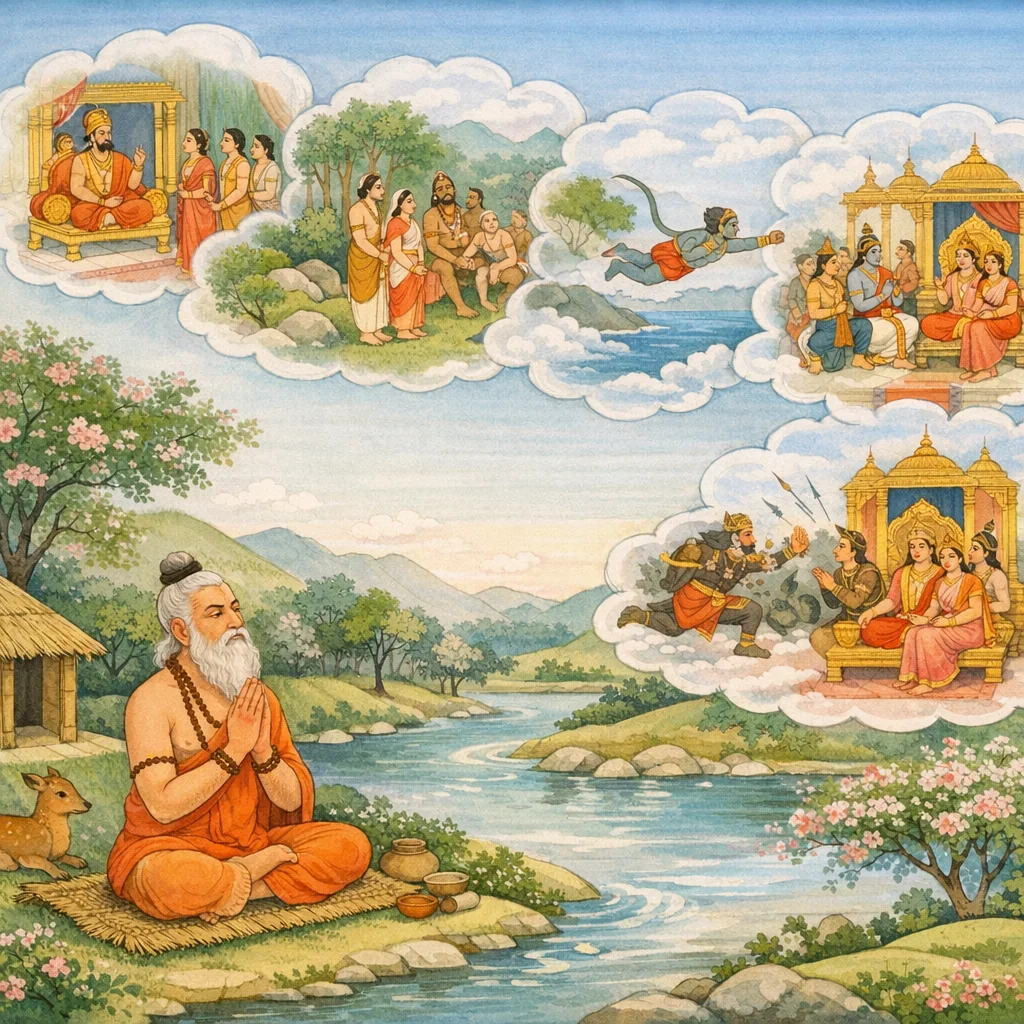
This sarga presents the methodological bridge between heard tradition and authorial composition. After receiving Nārada’s complete account, the dharmātmā Vālmīki seeks greater clarity (1.3.1) and performs ritual purification (ācamanam), seating himself upon kuśa with folded palms to investigate the course of events through tapas and dharma (1.3.2). Through yogic vision, he perceives the lives of Rāma, Sītā, Lakṣmaṇa, Daśaratha, and the kingdom in vivid, empirical detail—“like an āmalaka in the palm” (1.3.6), including speech, laughter, intentions, and consequences (1.3.3–1.3.5). Having ‘seen’ the narrative truth, Vālmīki readies himself to compose a work that integrates kāma and artha within an overarching dharma-centered telos, likened to an ocean rich in gems and pleasing to ear and mind (1.3.7–1.3.8). The sarga then offers a sweeping synopsis of the Ramayana’s major episodes—from Rāma’s birth and virtues to exile, alliances, the Laṅkā mission, war, coronation, and later events assigned to Uttarakāṇḍa (1.3.10–1.3.38)—thereby functioning as an internal table of contents and a statement of poetic scope in the Southern Recension context.
Shlokas
Verse 1
श्रुत्वा वस्तु समग्रं तद्धर्मात्मा धर्मसंहितम् ।व्यक्तमन्वेषते भूयो यद्वृत्तं तस्य धीमत: ।।।।
Having heard from the wise one the entire account—an account knit with Dharma—the righteous Vālmīki sought to know still more clearly the detailed course of Rāma’s life.
Verse 2
उपस्पृश्योदकं सम्यग्मुनिस्स्थित्वा कृताञ्जलि: ।प्राचीनाग्रेषु दर्भेषु धर्मेणान्वेषते गतिम् ।।।।
After duly sipping water for purification, the sage sat upon kuśa grass with its tips facing east; with palms joined, he sought—through dharma born of ascetic power—the true course of Rāma’s ancient story.
Verse 3
रामलक्ष्मणसीताभी राज्ञा दशरथेन च ।सभार्येण सराष्ट्रेण यत्प्राप्तं तत्र तत्त्वत: ।।।।हसितं भाषितं चैव गतिर्या यच्च चेष्टितम् ।तत्सर्वं धर्मवीर्येण यथावत्सम्प्रपश्यति ।।।।
By the potency born of his dharma and austerity, the sage clearly beheld—exactly as it truly occurred—Rāma, Lakṣmaṇa, and Sītā; King Daśaratha with his queens and his whole realm; and everything that happened there: their course of events, their efforts, and even their laughter and speech.
Verse 4
रामलक्ष्मणसीताभी राज्ञा दशरथेन च । सभार्येण सराष्ट्रेण यत्प्राप्तं तत्र तत्त्वत: ।।1.3.3।। हसितं भाषितं चैव गतिर्या यच्च चेष्टितम् । तत्सर्वं धर्मवीर्येण यथावत्सम्प्रपश्यति ।।1.3.4।।
By the potency born of dharma (and tapas), he beheld clearly and exactly—just as it truly was—their laughter, their speech, the course of events, and every undertaking.
Verse 5
स्त्रीतृतीयेन च तदा यत्प्राप्तं चरता वने ।सत्यसन्धेन रामेण तत्सर्वं चान्ववेक्षितम् ।।।।
And he also beheld all that which, at that time, was encountered in the forest by Rama—steadfast in truth—with his wife as the third companion.
Verse 6
तत: पश्यति धर्मात्मा तत्सर्वं योगमास्थित: ।पुरा यत्तत्र निर्वृत्तं पाणावामलकं यथा ।।।।
Thereafter, that righteous sage—established in yoga—saw all that had occurred long ago, as clearly as an āmalaka fruit lying in one’s palm.
Verse 7
तत्सर्वं तत्त्वतो दृष्ट्वा धर्मेण स महाद्युति: ।अभिरामस्य रामस्य चरितं कर्तुमुद्यत: ।।।।कामार्थगुणसंयुक्तं धर्मार्थगुणविस्तरम् ।समुद्रमिव रत्नाढ्यं सर्वश्रुतिमनोहरम् ।।।।
Having seen the entire truth through dharma, that radiant sage prepared to compose the life of delightful Rama—rich with the values of kāma and artha, expansive in the virtues of dharma and life’s aims—like a gem-filled ocean, captivating to all who hear it.
Verse 8
तत्सर्वं तत्त्वतो दृष्ट्वा धर्मेण स महाद्युति: ।अभिरामस्य रामस्य चरितं कर्तुमुद्यत: ।।1.3.7।। कामार्थगुणसंयुक्तं धर्मार्थगुणविस्तरम् ।समुद्रमिव रत्नाढ्यं सर्वश्रुतिमनोहरम् ।।1.3.8।।
Having seen the whole truth through dharma, the radiant sage set about composing the life of delightful Rama—an ocean of jewel-like virtues, integrating artha and kāma while unfolding the excellences of dharma and life’s aims, pleasing to every listener.
Verse 9
स यथा कथितं पूर्वं नारदेन महर्षिणा ।रघुवंशस्य चरितं चकार भगवानृषिः ।।।।
Just as the great sage Narada had earlier related it, the divine rishi composed the history of the Raghu lineage (centering on Rama).
Verse 10
जन्म रामस्य सुमहद्वीर्यं सर्वानुकूलताम् ।लोकस्य प्रियतां क्षान्तिं सौम्यतां सत्यशीलताम् ।।।।
(Nārada described) Rāma’s birth, his very great valor, his benevolence toward all, his belovedness to the world, his forbearance, his gentle grace, and his steadfast character rooted in truth.
Verse 11
नानाचित्रकथाश्चान्या विश्वामित्रसमागमे ।जानक्याश्च विवाहं च धनुषश्च विभेदनम् ।।।।
He recounted Rāma’s association with Viśvāmitra, many other wondrous and varied episodes, the breaking of the great bow, and Rāma’s marriage with Jānakī.
Verse 12
रामरामविवादं च गुणान्दाशरथेस्तथा ।तथाऽभिषेकं रामस्य कैकेय्या दुष्टभावताम् ।।।।
He also described the dispute between Rāma and Paraśurāma, the noble qualities of Daśaratha’s son, the preparations for Rāma’s consecration, and Kaikeyī’s wicked intent.
Verse 13
विघातं चाभिषेकस्य राघवस्य विवासनम् ।राज्ञश्शोकविलापं च परलोकस्य चाश्रयम् ।।।।
He told of the obstruction of Rāma’s coronation, Rāghava’s exile to the forest, the king’s lament in grief, and his passing on to the next world.
Verse 14
प्रकृतीनां विषादं च प्रकृतीनां विसर्जनम् ।निषादाधिपसंवादं सूतोपावर्तनं तथा ।।।।
He described the grief of Ayodhyā’s people, Rāma’s parting from them, his conversation with Guha, the Niṣāda chief, and Sumantra the charioteer returning.
Verse 15
गङ्गायाश्चापि सन्तारं भरद्वाजस्य दर्शनम् ।भरद्वाजाभ्यनुज्ञानाच्चित्रकूटस्य दर्शनम् ।।।।
He narrated their crossing of the Gaṅgā, their audience with sage Bharadvāja, and—by Bharadvāja’s permission—their visit to Citrakūṭa.
Verse 16
वास्तुकर्म निवेशं च भरतागमनं तथा ।प्रसादनं च रामस्य पितुश्च सलिलक्रियाम् ।।।।
He told of building and settling in a forest dwelling, Bharata’s arrival, Bharata’s efforts to win Rāma back, and Rāma’s performance of the water-rites for his father.
Verse 17
पादुकाग्र्याभिषेकं च नन्दिग्रामनिवासनम् ।दण्डकारण्यगमनं विराधस्य वधं तथा ।।।।
He described the consecration of Rāma’s sandals, Bharata’s residence at Nandigrāma, Rāma’s journey to Daṇḍakāraṇya, and the slaying of Virādha.
Verse 18
दर्शनं शरभङ्गस्य सुतीक्ष्णेन समागमम् ।अनसूयासहास्यामप्यङ्गरागस्य चार्पणम् ।।।।
He recounted the meeting with Śarabhaṅga, the encounter with Sutīkṣṇa, and also Sītā’s time with Anasūyā, including the gifting and application of fragrant unguents.
Verse 19
अगस्त्यदर्शनं चैव जटायोरभिसङ्गमम् ।पञ्चवट्याश्च गमनं शूर्पणख्याश्च दर्शनम् ।।।।
He narrated their audience with Agastya, their meeting with Jaṭāyu, their journey to Pañcavaṭī, and the appearance of Śūrpaṇakhā.
Verse 20
शूर्पणख्याश्च संवादं विरूपकरणं तथा ।वधं खरत्रिशिरसोरुत्थानं रावणस्य च ।।।।
He also recounted Rāma’s exchange with Śūrpaṇakhā, her disfigurement, the slaying of Khara and Triśiras, and how Rāvaṇa then rose to begin his hostile campaign (against Rāma).
Verse 21
मारीचस्य वधं चैव वैदेह्या हरणं तथा ।राघवस्य विलापं च गृध्रराजनिबर्हणम् ।।।।
He recounted as well the killing of Mārīca, the abduction of Vaidehī (Sītā), Rāghava’s lament in separation, and the fall of Jatāyu, the king of vultures.
Verse 22
कबन्धदर्शनं चापि पम्पायाश्चापि दर्शनम् ।शबर्या: दर्शनं चैव हनूमद्दर्शनं तथा ।।।।
He told of the encounter with Kabandha, the sight of Pampā, the meeting with Śabarī, and likewise the first meeting with Hanumān.
Verse 23
ऋश्यमूकस्य गमनं सुग्रीवेण समागमम् ।प्रत्ययोत्पादनं सख्यं वालिसुग्रीवविग्रहम् ।।।।
He narrated the journey to Ṛśyamūka, the meeting with Sugrīva, the building of mutual trust and the bond of friendship, and the conflict between Vāli and Sugrīva.
Verse 24
वालिप्रमथनं चैव सुग्रीवप्रतिपादनम् ।ताराविलापं समयं वर्षरात्रनिवासनम् ।।।।
He told of Vāli’s destruction, Sugrīva’s restoration and installation, Tārā’s lament, the agreed period of waiting as per their pact, and the rainy-season sojourn.
Verse 25
कोपं राघवसिंहस्य बलानामुपसङ्ग्रहम् ।दिश: प्रस्थापनं चैव पृथिव्याश्च निवेदनम् ।।।।
He described the anger of Rāma—the lion among the Raghus—(then) the mustering of the monkey forces, their dispatch in all directions, and the reports concerning the regions of the earth.
Verse 26
अङ्गुलीयकदानं च ऋक्षस्य बिलदर्शनम् ।प्रायोपवेशनं चापि सम्पातेश्चापि दर्शनम् ।।।।
He recounted the giving of the ring, the discovery of the Ṛkṣa cave, the resolve to fast unto death, and also the meeting with Sampāti.
Verse 27
पर्वतारोहणं चापि सागरस्यापि लङ्घनम् ।समुद्रवचनाच्चैव मैनाकस्य च दर्शनम् ।।।।
He told of the ascent of the mountain, the crossing of the ocean, and—at the ocean’s prompting—the appearance of Maināka.
Verse 28
सिंहिकायाश्च निधनं लङ्कामलयदर्शनम् ।रात्रौ लङ्काप्रवेशं च एकस्याथ विचिन्तनम् ।।।।
He related the killing of Siṃhikā, the sight of Laṅkā from the Malaya height, the entry into Laṅkā by night, and then the solitary deliberation (of Hanumān).
Verse 29
दर्शनं रावणस्यापि पुष्पकस्य च दर्शनम् ।आपानभूमिगमनमवरोधस्य दर्शनम्।।।।
He described the sight of Rāvaṇa as well, the sight of the Puṣpaka chariot, his going to the drinking-hall, and the viewing of the inner women’s quarters (of the palace).
Verse 30
अशोकवनिकायानं सीतायाश्चपि दर्शनम् ।अभिज्ञानप्रदानं च रावणस्य च दर्शनम् ।।।।
(He narrates) Hanumān’s entry into the Aśoka grove, his meeting with Sītā, the giving of a recognition-token (the ring), and also the sighting of Rāvaṇa.
Verse 31
राक्षसीतर्जनं चैव त्रिजटास्वप्नदर्शनम् ।मणिप्रदानं सीताया वृक्षभङ्गं तथैव च ।।।।
(He narrates) the threatening of Sītā by the rākṣasīs, Trijaṭā’s dream-vision, Sītā’s giving of the jewel, and also the breaking of trees (in the grove).
Verse 32
राक्षसीविद्रवं चैव किङ्कराणां निबर्हणम् ।ग्रहणं वायुसूनोश्च लङ्कादाहाभिगर्जनम् ।।।।
(He narrates) the rout of the demonesses, the slaying of Rāvaṇa’s attendants, the capture of Hanumān (son of the Wind), and the burning of Laṅkā accompanied by his fierce roaring.
Verse 33
प्रतिप्लवनमेवाथ मधूनां हरणं तथा ।राघवाश्वासनं चापि मणिनिर्यातनं तथा ।।।।
Then (he narrates) Hanumān’s leap back (across the sea), his seizing of Madhu’s grove and its honey, his consoling of Rāghava (Rāma), and likewise the delivering of the jewel.
Verse 34
सङ्गमं च समुद्रेण नलसेतोश्च बन्धनम् ।प्रतारं च समुद्रस्य रात्रौ लङ्कावरोधनम् ।।।।
(He narrates) the meeting with the Lord of the Sea, the building of Nala’s bridge, the crossing of the ocean, and the night-time siege of Laṅkā.
Verse 35
विभीषणेन संसर्गं वधोपायनिवेदनम् ।कुम्भकर्णस्य निधनं मेघनादनिबर्हणम् ।।।।
(He narrates) alliance with Vibhīṣaṇa, the disclosure of the means to destroy (Rāvaṇa), the death of Kumbhakarṇa, and the slaying of Meghanāda.
Verse 36
रावणस्य विनाशं च सीतावाप्तिमरे: पुरे ।विभीषणाभिषेकं च पुष्पकस्य च दर्शनम् ।।।।
(He narrates) the destruction of Rāvaṇa, the recovery of Sītā in the enemy city, the consecration of Vibhīṣaṇa, and the sighting of the Puṣpaka (aerial car).
Verse 37
अयोध्यायाश्च गमनं भरतेन समागमम् ।रामाभिषेकाभ्युदयं सर्वसैन्यविसर्जनम्।स्वराष्ट्ररञ्जनं चैव वैदेह्याश्च विसर्जनम्।।।।
(He narrates) the journey to Ayodhyā, the reunion with Bharata, the celebratory coronation of Rāma, the dismissal of the entire allied host, the pleasing of his own kingdom (good governance), and also the sending away of Vaidehī (Sītā).
Verse 38
अनागतं च यत्किञ्चिद्रामस्य वसुधातले ।तच्चकारोत्तरे काव्ये वाल्मीकिर्भगवानृषि: ।।।।
And whatever events of Rāma were yet to come upon the face of the earth—those too the revered sage Vālmīki composed in the later poem, the Uttara (kāṇḍa).
Verse 39
Observing those two intelligent ones (Lava and Kusha) to be well-grounded in the Vedas, that capable master (Valmiki) taught them the epic for the purpose of reinforcing the meaning of the Vedas.
Frequently Asked Questions
The pivotal action is epistemic and ethical: Vālmīki does not merely repeat received narration but seeks verified clarity through ritual purity and yogic insight, modeling responsible transmission where poetic authority is grounded in dharma and disciplined perception.
Knowledge meant to guide society should be both tradition-informed (śruti/received account from Nārada) and inwardly validated through tapas and yoga; the sarga also frames the Rāmāyaṇa as a dharma-centered synthesis in which kāma and artha are meaningful only when ordered by righteousness.
The sarga’s synopsis indexes major cultural-geographic nodes—Ayodhyā, Gaṅgā crossings, Citrakūṭa, Daṇḍakāraṇya, Pañcavaṭī, Pampā, Ṛśyamūka, Mahendra mountain, Sāgara, and Laṅkā—along with ritual-cultural markers such as ācamanam, kuśa seating, abhiṣeka, and emblematic regalia like Rāma’s pādukā.