Sarga 28
अस्त्रग्रहणं संहारोपदेशश्च — Receiving the Astras and Instruction on Withdrawal
बालकाण्ड
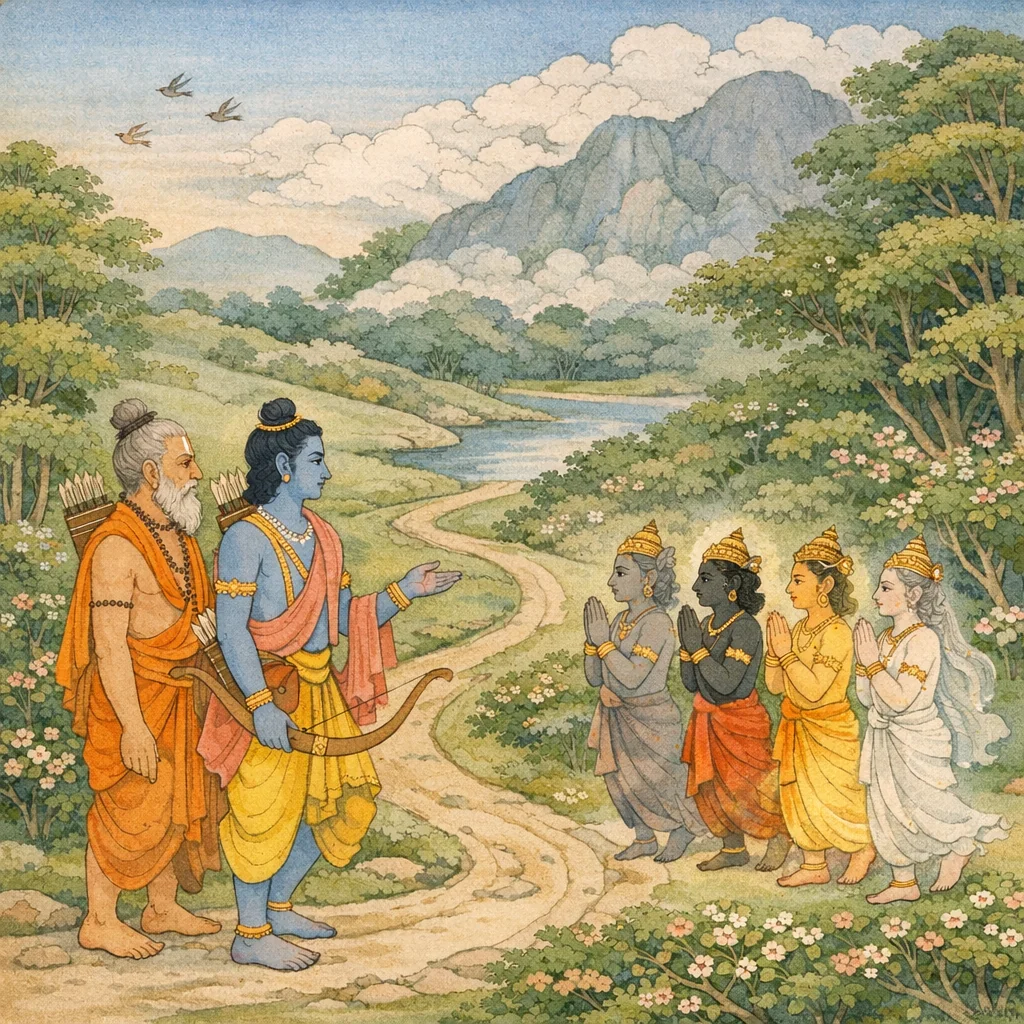
Sarga 28 documents a technical handover of divine weaponry (astras) from Mahāmuni Viśvāmitra to Rāma after purification rites. Rāma, now ‘unassailable even to the devas’ in narrative idiom, requests a crucial operational complement: the saṃhāra (withdrawal) procedure for astras, indicating ethical restraint and controlled power rather than mere acquisition. Viśvāmitra teaches the withdrawal-mantra and then transmits a catalog of effulgent, form-shifting astras described as the sons of Bhṛśāśva, presented through an enumerative register typical of ritual-epic listings. The astra-devatās assume embodied, radiant forms—some coal-dark, some smoke-like, some sun/moon-like—approach with folded palms, and offer service. Rāma commands them to reside ‘in the mind’ and assist when needed, then dismisses them; they circumambulate and depart. While proceeding onward, Rāma notices a cloud-like grove near a mountain, rich with animals and birdsong, and asks whose āśrama it is; he further inquires about the origin and location of the rākṣasa threats that obstruct Viśvāmitra’s sacrifice, framing the next protective action.
Shlokas
Verse 1
प्रतिगृह्य ततोऽस्त्राणि प्रहृष्टवदनश्शुचि:।गच्छन्नेव च काकुत्स्थो विश्वामित्रमथाब्रवीत्।।1.28.1।।
Having received those weapons, purified and with a joyful countenance, Kākutstha (Rāma), even as he proceeded onward, then spoke to Viśvāmitra.
Verse 2
गृहीतास्त्रोऽस्मि भगवन् दुराधर्षस्सुरैरपि।अस्त्राणां त्वहमिच्छामि संहारं मुनिपुङ्गव।।1.28.2।।
O great sage—where do those sinful, Brahmin-slaying, evil-doing wretches come from, who obstruct your sacrifice? Revered one, what is that region where your sacrificial rite must be protected by me, and where the rākṣasas must be slain? O best of sages, lord, I wish to hear all of this.
Verse 3
एवं ब्रुवति काकुत्स्थे विश्वामित्रो महामुनि:।संहारं व्याजहाराथ धृतिमान् सुव्रतश्शुचि:।।1.28.3।।
When Kakutstha (Rāma) had spoken thus, the great sage Viśvāmitra—steadfast, pure, and firm in his vows—then instructed him in the mantra for withdrawing (recalling) the weapons.
Verse 4
सत्यवन्तं सत्यकीर्तिं धृष्टं रभसमेव च।प्रतिहारतरं नाम पराङ्मुखमवाङ्मुखम्।।1.28.4।।लक्षाक्षविषमौ चैव दृढनाभसुनाभकौ।दशाक्षशतवक्त्रौ च दशशीर्षशतोदरौ।।1.28.5।।पद्मनाभमहानाभौ दुन्दुनाभसुनाभकौ।ज्योतिषं कृशनं चैव नैराश्यविमलावुभौ।।1.28.6।।योगन्धरहरिद्रौ च दैत्यप्रशमनौतथा।सार्चिर्माली धृतिर्माली वृत्तिमान् रुचिरस्तथा।।1.28.7।।पितृसौमनसं चैव विधूतमकरावुभौ।करवीरकरं चैव धनधान्यौ च राघव।।1.28.8।।कामरूपं कामरुचिं मोहमावरणं तथा।जृम्भकं सर्वनाभं च सन्तानवरणौ तथा।।1.28.9।।भृशाश्वतनयान् राम भास्वरान्कामरूपिण:।प्रतीच्छ मम भद्रं ते पात्रभूतोऽसि राघव।।1.28.10।।
“(These are) Satyavanta, Satyakīrti, Dhṛṣṭa, and Rabhasa; and also Pratihāratara by name, along with Parāṅmukha and Avāṅmukha,” (said Viśvāmitra while listing the radiant weapon-deities to be received).
Verse 5
सत्यवन्तं सत्यकीर्तिं धृष्टं रभसमेव च।प्रतिहारतरं नाम पराङ्मुखमवाङ्मुखम्।।1.28.4।।लक्षाक्षविषमौ चैव दृढनाभसुनाभकौ।दशाक्षशतवक्त्रौ च दशशीर्षशतोदरौ।।1.28.5।।पद्मनाभमहानाभौ दुन्दुनाभसुनाभकौ।ज्योतिषं कृशनं चैव नैराश्यविमलावुभौ।।1.28.6।।योगन्धरहरिद्रौ च दैत्यप्रशमनौतथा।सार्चिर्माली धृतिर्माली वृत्तिमान् रुचिरस्तथा।।1.28.7।।पितृसौमनसं चैव विधूतमकरावुभौ।करवीरकरं चैव धनधान्यौ च राघव।।1.28.8।।कामरूपं कामरुचिं मोहमावरणं तथा।जृम्भकं सर्वनाभं च सन्तानवरणौ तथा।।1.28.9।।भृशाश्वतनयान् राम भास्वरान्कामरूपिण:।प्रतीच्छ मम भद्रं ते पात्रभूतोऽसि राघव।।1.28.10।।
“And also Lakṣākṣa and Viṣama; Dṛḍhanābha and Sunābha; Daśākṣa and Śatavaktra; and Daśaśīrṣa and Śatodara,” (he continued, listing the weapon-powers).
Verse 6
सत्यवन्तं सत्यकीर्तिं धृष्टं रभसमेव च।प्रतिहारतरं नाम पराङ्मुखमवाङ्मुखम्।।1.28.4।।लक्षाक्षविषमौ चैव दृढनाभसुनाभकौ।दशाक्षशतवक्त्रौ च दशशीर्षशतोदरौ।।1.28.5।।पद्मनाभमहानाभौ दुन्दुनाभसुनाभकौ।ज्योतिषं कृशनं चैव नैराश्यविमलावुभौ।।1.28.6।।योगन्धरहरिद्रौ च दैत्यप्रशमनौतथा।सार्चिर्माली धृतिर्माली वृत्तिमान् रुचिरस्तथा।।1.28.7।।पितृसौमनसं चैव विधूतमकरावुभौ।करवीरकरं चैव धनधान्यौ च राघव।।1.28.8।।कामरूपं कामरुचिं मोहमावरणं तथा।जृम्भकं सर्वनाभं च सन्तानवरणौ तथा।।1.28.9।।भृशाश्वतनयान् राम भास्वरान्कामरूपिण:।प्रतीच्छ मम भद्रं ते पात्रभूतोऽसि राघव।।1.28.10।।
“Padmanābha and Mahānābha; Dundunābha and Sunābhaka; Jyotiṣa and Kṛśana; and the two—Nairāśya and Vimala,” (he said, continuing the list).
Verse 7
सत्यवन्तं सत्यकीर्तिं धृष्टं रभसमेव च।प्रतिहारतरं नाम पराङ्मुखमवाङ्मुखम्।।1.28.4।।लक्षाक्षविषमौ चैव दृढनाभसुनाभकौ।दशाक्षशतवक्त्रौ च दशशीर्षशतोदरौ।।1.28.5।।पद्मनाभमहानाभौ दुन्दुनाभसुनाभकौ।ज्योतिषं कृशनं चैव नैराश्यविमलावुभौ।।1.28.6।।योगन्धरहरिद्रौ च दैत्यप्रशमनौतथा।सार्चिर्माली धृतिर्माली वृत्तिमान् रुचिरस्तथा।।1.28.7।।पितृसौमनसं चैव विधूतमकरावुभौ।करवीरकरं चैव धनधान्यौ च राघव।।1.28.8।।कामरूपं कामरुचिं मोहमावरणं तथा।जृम्भकं सर्वनाभं च सन्तानवरणौ तथा।।1.28.9।।भृशाश्वतनयान् राम भास्वरान्कामरूपिण:।प्रतीच्छ मम भद्रं ते पात्रभूतोऽसि राघव।।1.28.10।।
“Yogandhara and Haridra; Daitya and Praśamana; Sārcirmālī, Dhṛtirmālī, Vṛttimān, and also Rucira,” (he continued).
Verse 8
सत्यवन्तं सत्यकीर्तिं धृष्टं रभसमेव च।प्रतिहारतरं नाम पराङ्मुखमवाङ्मुखम्।।1.28.4।।लक्षाक्षविषमौ चैव दृढनाभसुनाभकौ।दशाक्षशतवक्त्रौ च दशशीर्षशतोदरौ।।1.28.5।।पद्मनाभमहानाभौ दुन्दुनाभसुनाभकौ।ज्योतिषं कृशनं चैव नैराश्यविमलावुभौ।।1.28.6।।योगन्धरहरिद्रौ च दैत्यप्रशमनौतथा।सार्चिर्माली धृतिर्माली वृत्तिमान् रुचिरस्तथा।।1.28.7।।पितृसौमनसं चैव विधूतमकरावुभौ।करवीरकरं चैव धनधान्यौ च राघव।।1.28.8।।कामरूपं कामरुचिं मोहमावरणं तथा।जृम्भकं सर्वनाभं च सन्तानवरणौ तथा।।1.28.9।।भृशाश्वतनयान् राम भास्वरान्कामरूपिण:।प्रतीच्छ मम भद्रं ते पात्रभूतोऽसि राघव।।1.28.10।।
“Pitṛsaumanasa; and the two—Vidhūta and Makara; and also Karavīrakara, and Dhana and Dhānya as well, O Rāghava,” (he said).
Verse 9
सत्यवन्तं सत्यकीर्तिं धृष्टं रभसमेव च।प्रतिहारतरं नाम पराङ्मुखमवाङ्मुखम्।।1.28.4।।लक्षाक्षविषमौ चैव दृढनाभसुनाभकौ।दशाक्षशतवक्त्रौ च दशशीर्षशतोदरौ।।1.28.5।।पद्मनाभमहानाभौ दुन्दुनाभसुनाभकौ।ज्योतिषं कृशनं चैव नैराश्यविमलावुभौ।।1.28.6।।योगन्धरहरिद्रौ च दैत्यप्रशमनौतथा।सार्चिर्माली धृतिर्माली वृत्तिमान् रुचिरस्तथा।।1.28.7।।पितृसौमनसं चैव विधूतमकरावुभौ।करवीरकरं चैव धनधान्यौ च राघव।।1.28.8।।कामरूपं कामरुचिं मोहमावरणं तथा।जृम्भकं सर्वनाभं च सन्तानवरणौ तथा।।1.28.9।।भृशाश्वतनयान् राम भास्वरान्कामरूपिण:।प्रतीच्छ मम भद्रं ते पात्रभूतोऽसि राघव।।1.28.10।।
“Kāmarūpa, Kāmaruci, Moha, and Āvaraṇa; Jṛmbhaka and Sarvanābha; and also Santāna and Varaṇa,” (he continued).
Verse 10
सत्यवन्तं सत्यकीर्तिं धृष्टं रभसमेव च।प्रतिहारतरं नाम पराङ्मुखमवाङ्मुखम्।।1.28.4।।लक्षाक्षविषमौ चैव दृढनाभसुनाभकौ।दशाक्षशतवक्त्रौ च दशशीर्षशतोदरौ।।1.28.5।।पद्मनाभमहानाभौ दुन्दुनाभसुनाभकौ।ज्योतिषं कृशनं चैव नैराश्यविमलावुभौ।।1.28.6।।योगन्धरहरिद्रौ च दैत्यप्रशमनौतथा।सार्चिर्माली धृतिर्माली वृत्तिमान् रुचिरस्तथा।।1.28.7।।पितृसौमनसं चैव विधूतमकरावुभौ।करवीरकरं चैव धनधान्यौ च राघव।।1.28.8।।कामरूपं कामरुचिं मोहमावरणं तथा।जृम्भकं सर्वनाभं च सन्तानवरणौ तथा।।1.28.9।।भृशाश्वतनयान् राम भास्वरान्कामरूपिण:।प्रतीच्छ मम भद्रं ते पात्रभूतोऽसि राघव।।1.28.10।।
Rāma, receive from me these radiant ones—the sons of Bhṛśāśva—who can assume forms at will. Blessings to you, Rāghava; you are worthy to bear them.
Verse 11
बाढमित्येव काकुत्स्थ: प्रहृष्टेनान्तारात्मना। दिव्यभास्वरदेहाश्च मूर्तिमन्तस्सुखप्रदा:।।1.28.11 केचिदङ्गारसदृशा: केचिद्धूमोपमास्तथा। चन्द्रार्कसदृशा: केचित्प्रह्वाञ्जलिपुटास्तथा।।1.28.12।। रामं प्राञ्जलयो भूत्वाऽब्रुवन् मधुरभाषिण:। इमे स्म नरशार्दूल शाधि किं करवाम ते।।1.28.13।।
“So be it,” said Kākutstha, delighted in his heart. And those (weapon-deities), with divine, radiant bodies—assuming visible form—became bestowers of reassurance and well-being.
Verse 12
बाढमित्येव काकुत्स्थ: प्रहृष्टेनान्तारात्मना। दिव्यभास्वरदेहाश्च मूर्तिमन्तस्सुखप्रदा:।।1.28.11 केचिदङ्गारसदृशा: केचिद्धूमोपमास्तथा। चन्द्रार्कसदृशा: केचित्प्रह्वाञ्जलिपुटास्तथा।।1.28.12।। रामं प्राञ्जलयो भूत्वाऽब्रुवन् मधुरभाषिण:। इमे स्म नरशार्दूल शाधि किं करवाम ते।।1.28.13।।
Some of those (astra-)deities appeared coal-dark, others like smoke; some shone like the Moon and the Sun, and some stood bowed with hands joined in reverence.
Verse 13
बाढमित्येव काकुत्स्थ: प्रहृष्टेनान्तारात्मना। दिव्यभास्वरदेहाश्च मूर्तिमन्तस्सुखप्रदा:।।1.28.11 केचिदङ्गारसदृशा: केचिद्धूमोपमास्तथा। चन्द्रार्कसदृशा: केचित्प्रह्वाञ्जलिपुटास्तथा।।1.28.12।। रामं प्राञ्जलयो भूत्वाऽब्रुवन् मधुरभाषिण:। इमे स्म नरशार्दूल शाधि किं करवाम ते।।1.28.13।।
With palms joined, speaking gently, they addressed Rāma: “O tiger among men, here we stand—command us; what shall we do for you?”
Verse 14
मानसा: कार्यकालेषु साहाय्यं मे करिष्यथ।गम्यतामिति तानाह यथेष्टं रघुनन्दन:।।1.28.14।।
Rāma, the joy of the Raghus, said to them: “Abide in my mind; at times of need, render me aid. Now depart as you wish.”
Verse 15
अथ ते राममामन्त्ऱ्य कृत्वा चापि प्रदक्षिणम्।एवमस्त्विति काकुत्स्थमुक्त्वाजग्मुर्यथाऽगतम्।।1.28.15।।
Then they took leave of Rāma and circumambulated him; saying to the Kakutstha, “So be it,” they departed, returning as they had come.
Verse 16
स च तान् राघवो ज्ञात्वा विश्वामित्रं महामुनिम्।गच्छन्नेवाथ मधुरं श्लक्ष्णं वचनमब्रवीत्।।1.28.16।।
And Rāghava, having fully understood those weapons, while still walking on, spoke to the great sage Viśvāmitra in words gentle and refined.
Verse 17
किन्न्वेतन्मेघसङ्काशं पर्वतस्याविदूरत:। वृक्षषण्डमितो भाति परं कौतूहलं हि मे।।1.28.17।।दर्शनीयं मृगाकीर्णं मनोरममतीव च।नानाप्रकारैश्शकुनैर्वल्गुनादैरलङ्कृतम्।।1.28.18।।
What is this cluster of trees, cloud-like in appearance, shining from here not far from the mountain? My curiosity is greatly aroused.
Verse 18
किन्न्वेतन्मेघसङ्काशं पर्वतस्याविदूरत:। वृक्षषण्डमितो भाति परं कौतूहलं हि मे।।1.28.17।।दर्शनीयं मृगाकीर्णं मनोरममतीव च।नानाप्रकारैश्शकुनैर्वल्गुनादैरलङ्कृतम्।।1.28.18।।
It is lovely to behold, filled with animals, exceedingly charming, and adorned by birds of many kinds with their sweet calls.
Verse 19
निस्सृता: स्म मुनिश्रेष्ठ कान्ताराद्रोमहर्षणात्।अनया त्ववगच्छामि देशस्य सुखवत्तया।।1.28.19।।सर्वं मे शंस भगवन् कस्याश्रमपदं त्विदम्।
O best of sages, we seem to have emerged from that hair-raising wilderness; by the very pleasantness of this region I infer it. Tell me everything, revered one—whose hermitage-ground is this?
Verse 20
सम्प्राप्ता यत्र ते पापा ब्रह्मघ्ना दुष्टचारिण:।।1.28.20।।तव यज्ञस्य विघ्नाय दुरात्मानो महामुने।भगवन् तस्य को देशस्सा यत्र तव याज्ञिकी।।1.28.21।।रक्षितव्या क्रिया ब्रह्मन्मया वध्याश्च राक्षसा:।एतत्सर्वं मुनिश्रेष्ठ श्रोतुमिच्छाम्यहं प्रभो।।1.28.22।।
O great sage—where do those sinful, Brahmin-slaying, evil-doing wretches come from, who obstruct your sacrifice? Revered one, what is that region where your sacrificial rite must be protected by me, and where the rākṣasas must be slain? O best of sages, lord, I wish to hear all of this.
Frequently Asked Questions
The pivotal action is Rāma’s request for saṃhāra (withdrawal) knowledge immediately after receiving astras—an explicit narrative signal that legitimate power requires reversibility and restraint, preventing uncontrolled or excessive force.
The chapter frames capability as morally incomplete without governance: weapons become ‘mind-resident’ instruments, activated only at need, under disciplined command, aligning martial competence with ritual and social protection (yajña-rakṣaṇa).
A mountain-adjacent, cloud-like grove (vṛkṣaṣaṇḍa) rich in animals and birdsong is foregrounded, leading to inquiry about an āśrama; culturally, the landmarks are ritual: purification rites, pradakṣiṇa, and the sacrificial arena threatened by rākṣasas.