Sarga 25
ताटकावृत्तान्तः — The Account of Tāṭakā and the Royal Duty to Protect
बालकाण्ड
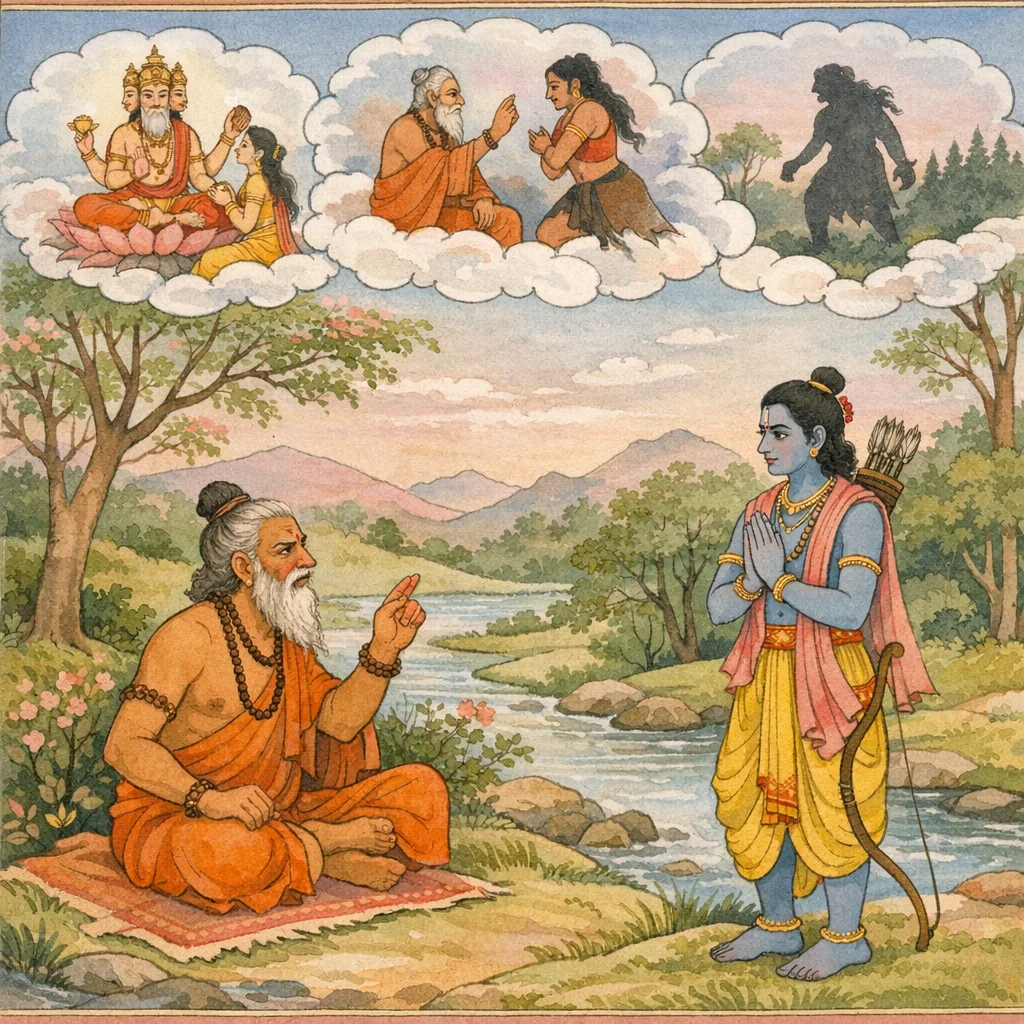
Sarga 25 is structured as a didactic dialogue between Viśvāmitra and Rāma. Rāma first responds respectfully to the sage’s counsel and raises a rational doubt: yakṣas are said to be of limited prowess, so how can a woman possess the strength of a thousand elephants? Viśvāmitra answers with a genealogical and causal narrative: the yakṣa Suketu performs tapas; Brahmā grants him a daughter, Tāṭakā, and endows her with extraordinary elephant-like strength. She is married to Sunda and bears Mārīca, who later becomes rākṣasa due to a curse. After Sunda’s death, Tāṭakā and Mārīca attempt to attack Agastya; Agastya curses Mārīca to assume a demon-form and curses Tāṭakā to abandon her yakṣī form and become a terrifying man-eating rākṣasī. Viśvāmitra then frames the central ethical instruction: a prince must not hesitate to eliminate an adharmic threat even if the offender is female, because the eternal duty (sanātana-dharma) of kingship is protection of subjects and social order (cāturvarṇya, cows, and brāhmaṇas). Exempla are cited—Indra slaying Mantharā and Viṣṇu destroying Kāvya (Bhṛgu’s wife)—to normalize the principle that unrighteous women have been slain for the common good. The chapter thus maps a jurisprudential rationale for force within a protective royal mandate.
Shlokas
Verse 1
अथ तस्याप्रमेयस्य मुनेर्वचनमुत्तमम्।श्रुत्वा पुरुषशार्दूल: प्रत्युवाच शुभां गिरम्।।।।
Then, having heard the excellent words of that immeasurable sage (Viśvāmitra), Rāma—the tiger among men—replied with auspicious and gentle speech.
Verse 2
अल्पवीर्या यदा यक्षा श्श्रूयन्ते मुनिपुङ्गव।कथन्नागसहस्रस्य धारयत्यबला बलम्।।।।
O best of sages, when Yakṣas are heard of as having little prowess, how can a woman—considered physically weaker—possess the strength of a thousand elephants?
Verse 3
विश्वामित्रोऽब्रवीद्वाक्यं शृण येन बलोत्तरा।वरदानकृतं वीर्यं धारयत्यबला बलम्।।।।
Viśvāmitra said: Listen to how she became surpassingly strong—how, by the granting of a boon, that woman came to possess such might and power.
Verse 4
पूर्वमासीन्महायक्षस्सुकेतुर्नाम वीर्यवान्।अनपत्यश्शुभाचारस्स च तेपे महत्तप:।।।।
In former times there lived a mighty Yakṣa named Suketu—powerful, of good conduct, yet without children—and he undertook great austerities.
Verse 5
पितामहस्तु सुप्रीतस्तस्य यक्षपते स्तदा।कन्यारत्नं ददौ राम ताटकां नाम नामत:।।।।
O Rāma, then the Grandsire (Brahmā), greatly pleased, granted to that lord of the Yakṣas a jewel of a daughter—famed by the name Tāṭakā.
Verse 6
ददौ नागसहस्रस्य बलं चास्या: पितामह:।नत्वेव पुत्रं यक्षाय ददौ ब्रह्मा महायशा:।।।।
That illustrious Brahmā, the Grandsire, granted her the strength of a thousand elephants; yet he did not grant a son to that Yakṣa.
Verse 7
तां तु जातां विवर्धन्तीं रूपयौवनशालिनीम्।झर्झपुत्राय सुन्दाय ददौ भार्यां यशस्विनीम्।।।।
And when she was born and grew, radiant with beauty and youth, she—the renowned one—was given as wife to Sunda, son of Jharjha.
Verse 8
कस्यचित्त्वथ कालस्य यक्षी पुत्रमजायत।मारीचं नाम दुर्धर्षं यश्शापाद्राक्षसोऽभवत्।।।।
After some time, that Yakṣī bore a son—unassailable, named Mārīca—who, because of a curse, became a Rākṣasa.
Verse 9
सुन्दे तु निहते राम सागस्त्यमृषिसत्तमम्।ताटका सह पुत्रेण प्रधर्षयितुमिच्छति।।।।
O Rāma, when Sunda was slain, Tāṭakā—together with her son—desired to assail Agastya, the foremost of sages.
Verse 10
भक्षार्थं जातसंरम्भा गर्जन्ती साभ्यधावत।0आपतन्तीं तु तां दृष्ट्वा अगस्त्यो भगवानृषि:।।।।राक्षसत्वं भजस्वेति मारीचं व्याजहार स:। 1
Roaring and roused with the urge to devour, she rushed at him. Seeing her charging, the venerable sage Agastya spoke a curse to Mārīca: “Assume the state and nature of a rākṣasa.”
Verse 11
अगस्त्य: परमक्रुद्धस्ताटकामपि शप्तवान्।।।।पुरुषादी महायक्षी विरूपा विकृतानना।इदं रूपं विहायाथ दारुणं रूपमस्तु ते।।।।
Agastya, exceedingly enraged, also cursed Tāṭakā.
Verse 12
अगस्त्य: परमक्रुद्धस्ताटकामपि शप्तवान्।।1.25.11।।पुरुषादी महायक्षी विरूपा विकृतानना।इदं रूपं विहायाथ दारुणं रूपमस्तु ते।।1.25.12।।
“Become a man-eater—O great yakṣī, misshapen and of hideous face. Abandon this form; henceforth, let a dreadful form be yours.”
Verse 13
सैषा शापकृतामर्षा ताटका क्रोधमूर्छिता।देशमुत्सादयत्येनमगस्त्यचरितं शुभम्।।।।
This very Tāṭakā, maddened with anger and enraged because of the curse, has been laying waste to this sacred region once frequented by Agastya.
Verse 14
एनां राघव दुर्वृत्तां यक्षीं परमदारुणाम्।गोब्राह्मणहितार्थाय जहि दुष्टपराक्रमाम्।।।।
“O Rāghava, slay this yakṣī—wicked and exceedingly cruel, of perverse might—for the welfare of cows and brāhmaṇas.”
Verse 15
न ह्येनां शापसम्स्पृष्टां कश्चिदुत्सहते पुमान्।निहन्तुं त्रिषु लोकेषु त्वामृते रघुनन्दन।।।।
“For no man in the three worlds dares to slay her—she who has been touched by a curse—except you, O delight of the Raghu line.”
Verse 16
न हि ते स्त्रीवधकृते घृणा कार्या नरोत्तम।चातुर्वण्यहितार्थाय कर्तव्यं राजसूनुना।।।।
O best of men, you need not shrink back in compassion merely because the act is the slaying of a woman; a prince must do what is required for the welfare of the four social orders.
Verse 17
नृशंसमनृशंसं वा प्रजारक्षणकारणात्।पातकं वा सदोषं वा कर्तव्यं रक्षता सता।।।।
For the sake of protecting the people, a virtuous protector must do what is necessary—whether it appears harsh or gentle, even if it seems sinful or liable to fault.
Verse 18
राज्यभारनियुक्तानामेष धर्मस्सनातन:।अधर्म्यां जहि काकुत्स्थ धर्मोह्यस्या न विद्यते।।।।
This is the eternal law for those entrusted with the burden of rule: O Kakutstha, slay this unrighteous one—indeed, in her there is no dharma.
Verse 19
श्रूयते हि पुरा शक्रो विरोचनसुतां नृप।पृथिवीं हन्तुमिच्छन्तीं मन्थरामभ्यसूदयत्।।।।
It is indeed heard that long ago Śakra (Indra), O prince, slew Mantharā, the daughter of Virocana, when she sought to destroy the earth.
Verse 20
विष्णुनापि पुरा राम भृगुपत्नी दृढव्रता।अनिन्द्रं लोकमिच्छन्ती काव्यमाता निषूदिता।।।।
And even by Viṣṇu, O Rāma, in ancient times the resolute wife of Bhṛgu—Kāvya’s mother—was slain when she sought a world without Indra.
Verse 21
एतैश्चान्यैश्च बहुभी राजपुत्र महात्मभि:।अधर्मसहिता नार्यो हता: पुरुषसत्तमै:।।।।
Thus, O prince, by these and by many other great-souled best of men, women allied with adharma were slain for the sake of what is right.
Verse 22
Viśvāmitra said: Listen to how she became surpassingly strong—how, by the granting of a boon, that woman came to possess such might and power.
Frequently Asked Questions
The dilemma is Rāma’s hesitation about slaying a female offender. Viśvāmitra resolves it by defining the king’s protective mandate: when a being is adharmic and harms the land and its people, the prince may (and should) neutralize the threat for prajā-rakṣaṇa and the welfare of cows and brāhmaṇas.
Upadeśa: governance is an ethical office where compassion must be integrated with public protection. For those bearing royal burden, dharma is “sanātana” in the sense of enduring civic obligation—decisive action is justified when it prevents systemic harm and restores order.
The sarga highlights the sacred region associated with Agastya’s presence (“agastyacaritaṃ śubham”) as a cultural marker of ascetic sanctity being violated. It also references the cultural-legal ideal of cāturvarṇya welfare and the protection of go-brāhmaṇa as a standard of righteous kingship.