Sarga 12
द्वादशः सर्गः — Aśvamedha-saṅkalpa (Daśaratha resolves on the Horse Sacrifice)
बालकाण्ड
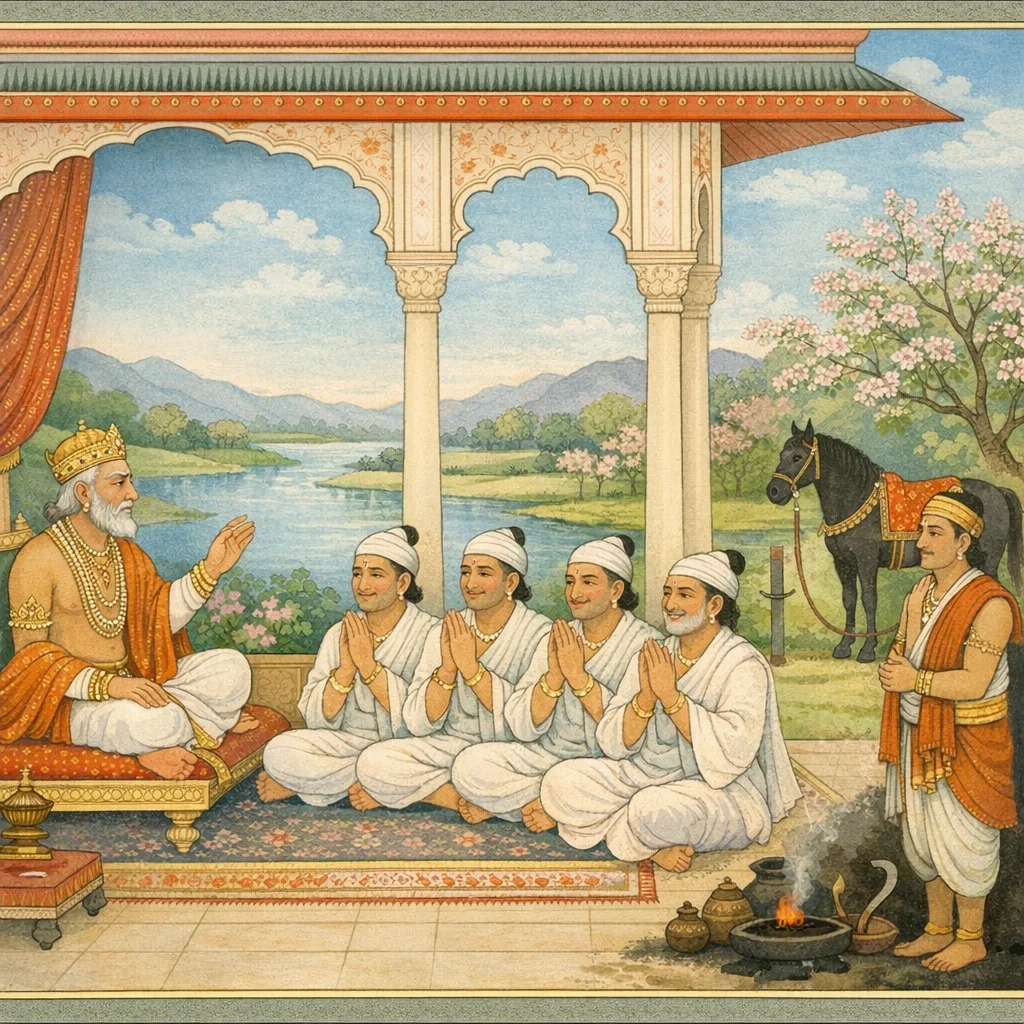
Sarga 12 records Daśaratha’s formal saṅkalpa to perform the Aśvamedha, motivated by dynastic continuity and the sorrow of childlessness. In springtime, the king articulates his intention to conduct the rite strictly by śāstra, emphasizing that fulfillment will arise through the spiritual efficacy associated with Ṛśyaśṛṅga. Court procedure follows: Sumantra is commanded to summon principal ṛtvij-s and learned brahmins (Vasiṣṭha, Suyajña, Vāmadeva, Jābāli, Kāśyapa, and others). The assembled priests endorse the decision (“sādhu”), instruct procurement of sacrificial materials, and the ceremonial release of the sacrificial horse. They promise four sons of immense prowess as the fruit of the king’s dhārmikī buddhi. Administrative directives then specify the yajnabhūmi on the northern bank of the Sarayū, with śānti rites and adherence to kalpa-vidhi. A cautionary note introduces ritual vulnerability: brahmarākṣasas seek flaws (chidra) and a damaged sacrifice imperils the patron. The chapter closes with ministers executing orders, brahmins departing, and the king returning to the palace—marking the transition from intention to institutional implementation.
Shlokas
Verse 1
तत: काले बहुतिथे कस्मिंश्चित्सुमनोहरे।वसन्ते समनुप्राप्ते राज्ञो यष्टुं मनोऽभवत्।।।।
After a long interval, at a certain delightful time when spring had arrived, the king’s mind turned toward performing the sacrifice.
Verse 3
तथेति च स राजानमुवाच च सुसत्कृत:।सम्भारा सम्भ्रियन्तां ते तुरगश्च विमुच्यताम्।।।।
Thus honored, the brahmin replied to the king, “So be it. Let the required preparations be gathered, and let the sacrificial horse be released.”
Verse 4
ततो राजाऽब्रवीद्वाक्यं सुमन्त्रं मन्त्रिसत्तमम्।सुमन्त्रावाहय क्षिप्रं ऋत्विजो ब्रह्मवादिन:।।।।सुयज्ञं वामदेवं च जाबालिमथ काश्यपम्।पुरोहितं वसिष्ठं च ये चान्ये द्विजसत्तमा:।।।।
Then the king said to Sumantra, best among ministers: “Sumantra, summon at once the officiating priests, the Veda-knowers—Suyajña, Vāmadeva, Jābāli, and Kāśyapa, along with the family priest Vasiṣṭha and other foremost brahmins.”
Verse 5
ततो राजाऽब्रवीद्वाक्यं सुमन्त्रं मन्त्रिसत्तमम्।सुमन्त्रावाहय क्षिप्रं ऋत्विजो ब्रह्मवादिन:।।1.12.4।।सुयज्ञं वामदेवं च जाबालिमथ काश्यपम्।पुरोहितं वसिष्ठं च ये चान्ये द्विजसत्तमा:।।1.12.5।।
Then the king said to Sumantra, best among ministers: “Sumantra, summon at once the officiating priests, the Veda-knowers—Suyajña, Vāmadeva, Jābāli, and Kāśyapa, along with the family priest Vasiṣṭha and other foremost brahmins.”
Verse 6
ततस्सुमन्त्रस्त्वरितं गत्वा त्वरितविक्रम:।समानयत्स तान्विप्रान् समस्तान्वेदपारगान्।।।।
Thereupon Sumantra—swift in action—went at once and brought together all those brahmins who had mastered the Vedas.
Verse 7
तान्पूजयित्वा धर्मात्मा राजा दशरथस्तदा।धर्मार्थसहितं युक्तं श्लक्ष्णं वचनमब्रवीत्।।।।
Having honored them, the righteous king Daśaratha then spoke words that were fitting—gentle, well-reasoned, and aligned with dharma and rightful purpose.
Verse 8
मम लालप्यमानस्य पुत्रार्थं नास्ति वै सुखम्।तदर्थं हयमेधेन यक्ष्यामीति मतिर्मम।।।।
“For me, consumed by longing for a son, there is truly no happiness. Therefore I have resolved: I will perform the Horse-sacrifice.”
Verse 9
तदहं यष्टुमिच्छामि शास्त्रदृष्टेन कर्मणा।ऋषिपुत्रप्रभावेन कामान्प्राप्स्यामि चाप्यहम्।।।।
“So I wish to perform the sacrifice by acts prescribed in the śāstras; and through the power and grace of the sage’s son, I too shall attain my desired end.”
Verse 10
ततस्साध्विति तद्वाक्यं ब्राह्मणा: प्रत्यपूजयन्।वसिष्ठप्रमुखास्सर्वे पार्थिवस्य मुखाच्च्युतम्।।।।
Then all the brāhmaṇas, led by Vasiṣṭha, praised the king’s words as ‘well spoken,’ as they issued from the sovereign’s mouth.
Verse 11
ऋष्यशृङ्गपुरोगाश्च प्रत्यूचुर्नृपतिं तदा।सम्भारास्सम्भ्रियन्तां ते तुरगश्च विमुच्यताम्।।।।
Then the priests, led by Ṛśyaśṛṅga, replied to the king: “Let the sacrificial requisites be gathered, and let your ritual horse be set free.”
Verse 12
सर्वथा प्राप्स्यसे पुत्रांश्चत्वारोऽमितविक्रमान्।यस्य ते धार्मिकी बुद्धिरियं पुत्रार्थमागता ।।।।
“Surely you will obtain four sons of immeasurable prowess—because this righteous resolve, aimed at offspring, has arisen in you.”
Verse 13
तत: प्रीतोऽभवद्राजा श्रुत्वा तद्विजभाषितम्।अमात्यांश्चाब्रवीद्राजा हर्षेणेदं शुभाक्षरम्।।।।
Thereupon the king became glad on hearing the brāhmaṇas’ words, and with delight he addressed his ministers in auspicious speech.
Verse 14
गुरूणां वचनाच्छीघ्रं सम्भारास्सम्भ्रियन्तु मे।समर्थाधिष्ठितश्चाश्वस्सोपाध्यायो विमुच्यताम्।।।।
In obedience to my teachers’ instructions, let the required sacrificial materials be gathered at once; and let the horse be released—guarded by capable warriors and accompanied by the chief priest.
Verse 15
सरय्वाश्चोत्तरे तीरे यज्ञभूमिर्विधीयताम्।शान्तयश्चाभिवर्धन्तां यथाकल्पं यथाविधि।।।।
Let the sacrificial ground be prepared on the northern bank of the Sarayū; and let the rites of pacification and safeguarding be duly increased—exactly as the ritual manuals and scriptural rules prescribe.
Verse 20
ततो द्विजास्ते धर्मज्ञमस्तुवन्पार्थिवर्षभम्।अनुज्ञातास्ततस्सर्वे पुनर्जग्मुर्यथागतम्।।।।
Thereupon those brahmins praised the bull among kings, the knower of dharma; and, having received his permission, they all returned the way they had come.
Verse 21
गतेष्वथ द्विजाग्य्रेषु मन्त्रिणस्तान्नराधिप:।विसर्जयित्वा स्वं वेश्म प्रविवेश महाद्युति:।।।।
When the foremost brahmins had departed, the radiant king dismissed his ministers as well and entered his own palace.
Verse 22
Let courtesans endowed with beauty and youth go there. Having allured that son of the sage, they will bring him here, treating him with honor.
Frequently Asked Questions
The pivotal action is Daśaratha’s decision to pursue progeny through a public, śāstra-governed sacrifice rather than private expedients—framing personal longing (putrārtha) as an obligation to dynastic and civic stability (kula-santāna).
Desire becomes dharmic when routed through legitimate means: counsel of qualified authorities, procedural correctness (kalpa-vidhi), and accountability. The text also teaches that sacred acts demand meticulous integrity, since even minor omissions can invert intended outcomes.
The northern bank of the Sarayū is specified as the site for constructing the yajnabhūmi, highlighting Ayodhyā’s ritual geography and the cultural centrality of Vedic sacrifice, including śānti rites and the ceremonial release of the Aśvamedha horse.