Sarga 11
ऋष्यशृङ्गानयनम् — Bringing Ṛśyaśṛṅga to Ayodhyā (Bālakāṇḍa, Sarga 11)
बालकाण्ड
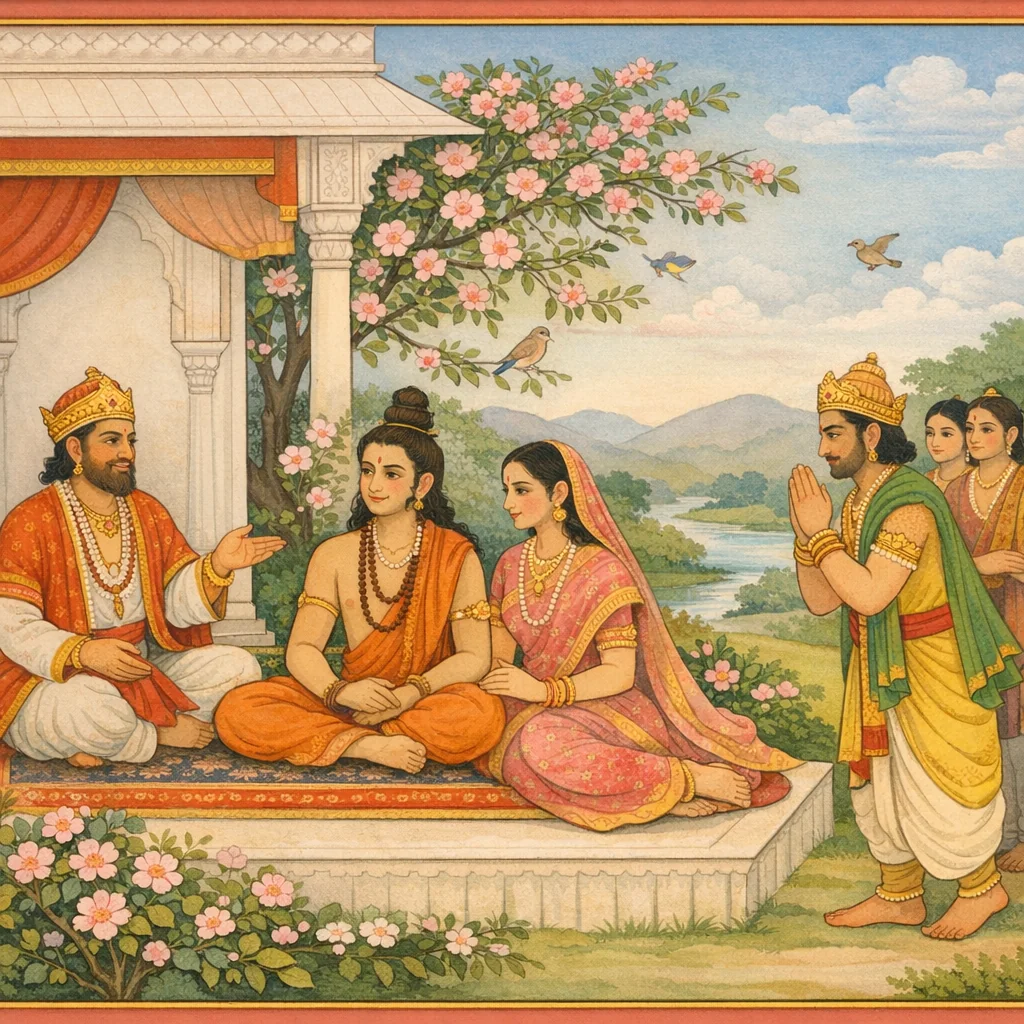
This sarga continues Sumantra’s courtly narration, invoking the authority of Sanatkumāra as an earlier transmitter of the tradition. The discourse forecasts Daśaratha’s dhārmic profile and the strategic alliance with the Aṅga lineage through Romapāda and Śāntā. The central action turns from prophecy to execution: Daśaratha, after consulting and securing Vasiṣṭha’s consent, travels with queens and ministers to Romapāda’s domain, crosses forests and rivers, and beholds Ṛśyaśṛṅga—depicted with ascetic radiance. Romapāda honors Daśaratha with special hospitality grounded in friendship; Ṛśyaśṛṅga reciprocates after hearing the relationship. After a week’s stay, Daśaratha requests that Śāntā and her husband come to Ayodhyā for a major sacrificial rite aimed at progeny and religious merit. Romapāda assents; Ṛśyaśṛṅga departs with Śāntā. Daśaratha returns, sends swift messengers to prepare Ayodhyā, and ceremonially enters the decorated city with conches and drums, placing the brahmin foremost. The inner apartments receive them with scriptural hospitality, and the arrival of Śāntā brings joy to the royal women—closing the chapter on a successful ritual-political procurement that initiates the path toward the putreṣṭi-yajña and the birth of four sons.
Shlokas
Verse 1
भूय एव हि राजेन्द्र शृणु मे वचनं हितम्।यथा स देवप्रवर: कथायामेवमब्रवीत्।।1.11.1।।
“Again, O best of kings, listen to my beneficial words—how that foremost among the celestials spoke in the course of the tale.”
Verse 2
इक्ष्वाकूणां कुले जातो भविष्यति सुधार्मिक:।राजा दशरथो नाम्ना श्रीमान्सत्यप्रतिश्रव:।।1.11.2।।
In the lineage of the Ikṣvākus there will be born a highly righteous king, named Daśaratha—illustrious, and true to his pledged word.
Verse 3
अङ्गराजेन सख्यं च तस्य राज्ञो भविष्यति।कन्या चास्य महाभागा शान्ता नाम भविष्यति।।1.11.3।।
He (Daśaratha) will form a friendship with the king of Aṅga; and to that king there will be born a highly fortunate daughter named Śāntā.
Verse 4
पुत्रस्तु सोऽङ्गराजस्य रोमपाद इति श्रुत:।तं स राजा दशरथो गमिष्यति महायशा:।।1.11.4।।
The son of the king of Aṅga will be famed as Romapāda; and that highly renowned king Daśaratha will go to him.
Verse 5
अनपत्योऽस्मि धर्मात्मन् शान्ताभर्ता मम क्रतुम्।आहरेत त्वयाज्ञप्तस्सन्तानार्थं कुलस्य च।।1.11.5।।
O righteous one, I am without children. Let Ṛśyaśṛṅga—Śāntā’s husband—be instructed by you to conduct my sacrificial rite, for the sake of progeny and the continuation of my lineage.
Verse 6
श्रुत्वा राज्ञोऽथ तद्वाक्यं मनसा स विचिन्त्य च।प्रदास्यते पुत्रवन्तं शान्ताभर्तारमात्मवान्।।1.11.6।।
Hearing the king’s words, and reflecting upon them in his mind, the wise Romapāda resolved to send Śāntā’s husband—Ṛśyaśṛṅga, the one capable of granting sons.
Verse 7
प्रतिगृह्य च तं विप्रं स राजा विगतज्वर:।आहरिष्यति तं यज्ञं प्रहृष्टेनान्तरात्मना।।1.11.7।।
Having received that brāhmaṇa (Ṛśyaśṛṅga), the king—freed from his inner anguish—would proceed to undertake the sacrifice, his heart filled with joy.
Verse 8
तं च राजा दशरथो यष्टुकाम: कृताञ्जलि:।ऋश्यशृङ्गं द्विजश्रेष्ठं वरयिष्यति धर्मवित्।। 1.11.8।। यज्ञार्थं प्रसवार्थं च स्वर्गार्थं च नरेश्वर:।लभते च स तं कामं द्विजमुख्याद्विशांपति:।।1.11.9।।
King Daśaratha—desirous of performing the sacrifice, with palms joined in reverence, and well-versed in dharma—would formally request Ṛśyaśṛṅga, the foremost among brāhmaṇas.
Verse 9
तं च राजा दशरथो यष्टुकाम: कृताञ्जलि:।ऋश्यशृङ्गं द्विजश्रेष्ठं वरयिष्यति धर्मवित्।। 1.11.8।। यज्ञार्थं प्रसवार्थं च स्वर्गार्थं च नरेश्वर:।लभते च स तं कामं द्विजमुख्याद्विशांपति:।।1.11.9।।
For the sake of the sacrifice, for the gaining of offspring, and for the attainment of heaven, the lord of men would realize his desired ends—through that foremost of brāhmaṇas.
Verse 10
पुत्राश्चास्य भविष्यन्ति चत्वारोऽमितविक्रमा:।वंशप्रतिष्ठानकरास्सर्वलोकेषु विश्रुता:।।1.11.10।।
“Four sons of immeasurable valor will be born to him—upholding the dynasty’s foundation and renowned in all worlds.”
Verse 11
एवं स देवप्रवर: पूर्वं कथितवान्कथाम्।सनत्कुमारो भगवान्पुरा देवयुगे प्रभु:।।1.11.11।।
Thus, in ancient times—in the divine age—Bhagavān Sanatkumāra, foremost among the celestials and fully capable, narrated this account.
Verse 12
स त्वं पुरुषशार्दूल तमानय सुसत्कृतम्।स्वयमेव महाराज गत्वा सबलवाहन:।।1.11.12।।
“Therefore, O tiger among men, O great king—go yourself with your forces and conveyances, and bring him with due honor.”
Verse 13
अनुमान्य वसिष्ठं च सूतवाक्यं निशम्य च।सान्त:पुरस्सहामात्य: प्रययौ यत्र स द्विज:।।1.11.13।।
Having heard the charioteer’s words and having secured Vasiṣṭha’s assent, the king set out—accompanied by his queens and ministers—to the place where that brahmin dwelt.
Verse 14
वनानि सरितश्चैव व्यतिक्रम्य शनैश्शनै:।अभिचक्राम तं देशं यत्र वै मुनिपुङ्गव:।।1.11.14।।
Crossing forests and rivers, step by step, he reached the land where that foremost of sages lived.
Verse 15
आसाद्य तं द्विजश्रेष्ठं रोमपादसमीपगम्।ऋषिपुत्रं ददर्शादौ दीप्यमानमिवानलम्।।1.11.15।।
On reaching that place, he first beheld the sage’s son—foremost among brahmins—seated near Romapāda, blazing like fire.
Verse 16
ततो राजा यथान्यायं पूजां चक्रे विशेषत:।सखित्वात्तस्य वै राज्ञ: प्रहृष्टेनान्तरात्मना।।1.11.16।।
Then King Romapāda, inwardly delighted—because of his friendship with that king—honored him with special hospitality, in full accordance with custom.
Verse 17
रोमपादेन चाख्यातमृषिपुत्राय धीमते।सख्यं सम्बन्धकं चैव तदा तं प्रत्यपूजयत्।।1.11.17।।
Romapāda then explained to the wise sage’s son the bond of friendship and kinship; and he, in return, duly honored Daśaratha.
Verse 18
एवं सुसत्कृतस्तेन सहोषित्वा नरर्षभ:।सप्ताष्टदिवसान्राजा राजानमिदमब्रवीत्।।1.11.18।।
Thus, having been well honored and having stayed with him for seven or eight days, the king—best among men—said these words to King Romapāda.
Verse 19
शान्ता तव सुता राजन् सह भर्त्रा विशांपते।मदीयनगरं यातु कार्यं हि महदुद्यतम्।।1.11.19।।
O king, lord of the people—let your daughter Śāntā come to my city together with her husband, for a great rite has been undertaken.
Verse 20
तथेति राजा संश्रुत्य गमनं तस्य धीमत:।उवाच वचनं विप्रं गच्छ त्वं सह भार्यया।।1.11.20।।
“So be it,” said the king; consenting to the departure of that wise one, he addressed the brahmin: “Go, you, together with your wife.”
Verse 21
ऋषिपुत्र: प्रतिश्रुत्य तथेत्याह नृपं तदा।स नृपेणाभ्यनुज्ञात: प्रययौ सह भार्यया।।1.11.21।।
Then the sage’s son assented, saying to the king, “So be it”; and, having received the king’s permission, he departed together with his wife.
Verse 22
तावन्योन्याञ्जलिं कृत्वा स्नेहात्संश्लिष्य चोरसा।ननन्दतुर्दशरथो रोमपादश्च वीर्यवान्।।1.11.22।।
Then those two—Daśaratha and the valiant Romapāda—saluted one another with folded hands, embraced heart to heart out of affection, and rejoiced.
Verse 23
ततस्सुहृदमापृच्छ्य प्रस्थितो रघुनन्दन:।पौरेभ्य: प्रेषयामास दूतान्वै शीघ्रगामिन:।।1.11.23।।
Thereafter, having taken leave of his friend, the delight of the Raghu line set out, and he dispatched swift messengers to the citizens.
Verse 24
क्रियतां नगरं सर्वं क्षिप्रमेव स्वलङ्कृतम्।धूपितं सिक्तसम्मृष्टं पताकाभिरलङ्कृतम्।।1.11.24।।
Let the entire city at once be beautifully adorned—perfumed with incense, sprinkled with water and thoroughly cleaned, and decorated with banners and flags.
Verse 25
तत: प्रहृष्टा: पौरास्ते श्रुत्वा राजानमागतम्।तथा प्रचक्रुस्तत्सर्वं राज्ञा यत्प्रेषितं तदा ।।1.11.25।।
Then the citizens, delighted on hearing that the king had arrived, carried out at that very time everything that the king had ordered.
Verse 26
ततस्स्वलङ्कृतं राजा नगरं प्रविवेश ह।शङ्खदुन्दुभिनिर्घोषै: पुरस्कृत्य द्विजर्षभम्।।1.11.26।।
Then the king entered the splendidly adorned city, amid the resounding blasts of conches and drums, placing the foremost of brāhmaṇas in the lead.
Verse 27
तत: प्रमुदितास्सर्वे दृष्ट्वा तं नागरा द्विजम्।प्रवेश्यमानं सत्कृत्य नरेन्द्रेणेन्द्रकर्मणा।।1.11.27।।
Then all the townspeople rejoiced on seeing that brāhmaṇa being brought into the city with honour by the king, whose deeds were like Indra’s.
Verse 28
अन्त:पुरं प्रवेश्यैनं पूजां कृत्वा च शास्त्रत:।कृतकृत्यं तदात्मानं मेने तस्योपवाहनात्।।1.11.28।।
Having brought him into the inner palace and honoured him according to scriptural rule, the king considered himself fulfilled, for he had succeeded in bringing him there.
Verse 29
अन्त:पुरस्त्रियस्सर्वाश्शान्तां दृष्ट्वा तथागताम्।सह भर्त्रा विशालाक्षीं प्रीत्यानन्दमुपागमन्।।1.11.29।।
All the women of the inner palace, seeing wide-eyed Śāntā arrive in that manner together with her husband, were filled with affectionate joy.
Verse 30
पूज्यमाना च ताभिस्सा राज्ञा चैव विशेषत:।उवास तत्र सुखिता कञ्चित्कालं सहर्त्विजा।।1.11.30।।
Honoured by those women—and especially by the king—she stayed there happily for some time together with the officiating priest.
Verse 31
The son of the king of Aṅga will be famed as Romapāda; and that highly renowned king Daśaratha will go to him.
Frequently Asked Questions
The pivotal action is Daśaratha’s dhārmic procurement of Ṛśyaśṛṅga for a progeny-oriented sacrifice: he seeks Vasiṣṭha’s consent, approaches Romapāda with propriety, and requests Śāntā and her husband respectfully—balancing royal necessity with ritual ethics and inter-kingly friendship.
The chapter presents kingship as successful when aligned with śāstra and relational ethics: legitimate aims (such as dynastic continuity) must be pursued through consent, hospitality, and reverence toward brahminical authority, rather than coercion—linking political action to moral order.
Cultural landmarks include Ayodhyā’s civic ritual of reception (city decoration, perfuming, flags, conches and drums), the antaḥpura as a space of formal welcome, and the journey motif across forests and rivers—marking a transition from alliance diplomacy to public ceremonial integration of the sage into the capital.