Sarga 86
लक्ष्मणगुणवर्णनम् — Lakshmana’s Vigil and Guha’s Testimony
अयोध्याकाण्ड
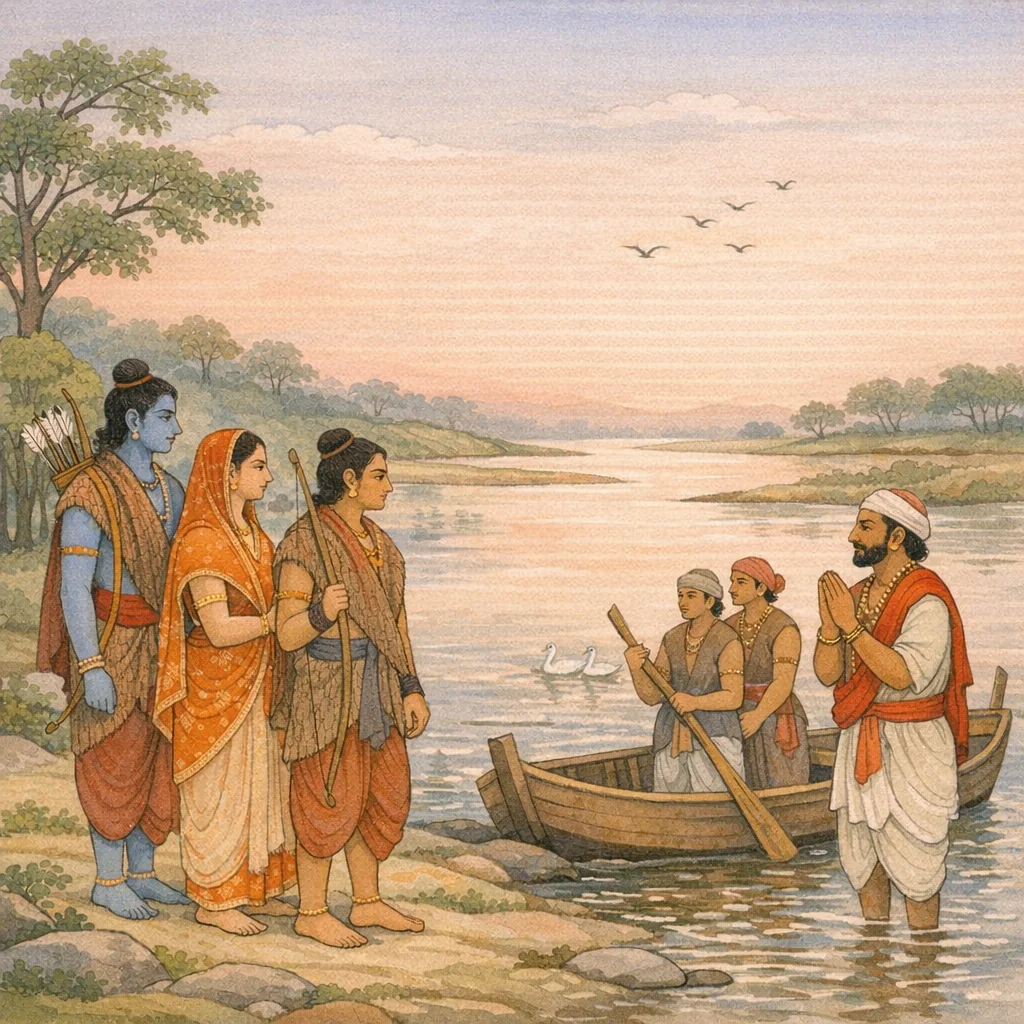
Sarga 86 is structured around night-long vigilance and lamentation at the riverbank, where the forest leader Guha articulates Lakṣmaṇa’s character to Bharata. Guha first reports Lakṣmaṇa’s steadfast wakefulness—armed and alert solely for Rāma’s protection—and offers a prepared bed, emphasizing protective hospitality and allied duty. Guha’s speech frames loyalty as a disciplined, embodied practice (weapons held, sleep refused) and as an ethical economy (seeking renown and dharma through service to Rāma). The discourse then shifts into pathos: Bharata’s inability to sleep while Rāma lies on grass with Sītā, and the contrast between Rāma’s invincibility in battle and his voluntary austerity in exile. Bharata anticipates Daśaratha’s imminent death and the palace’s exhausted mourning, projecting a civic-theological image of the ‘widowed earth’ without the king. The sarga closes with dawn actions: Rāma and Lakṣmaṇa adopt jaṭā (matted hair) on the Bhāgīrathī’s bank, are ferried across by Guha, and depart with Sītā in bark garments, armed and vigilant—an icon of kṣātra power redirected into ascetic exile.
Shlokas
Verse 1
आचचक्षेऽथ सद्भावं लक्ष्मणस्य महात्मनः।भरतायाप्रमेयाय गुहो गहनगोचरः।।।।
Then Guha—accustomed to the forest ways—recounted to Bharata, a man of immeasurable worth, the noble disposition and virtues of the magnanimous Lakṣmaṇa.
Verse 2
तं जाग्रतं गुणैर्युक्तं शरचापासिधारिणम्।भ्रातृगुप्त्यर्थमत्यन्तमहं लक्ष्मणमबृवम्।।।।
Seeing Lakṣmaṇa fully awake—virtuous, and bearing arrows, bow, and sword—for the sole purpose of guarding his brother, I addressed him.
Verse 3
इयं तात सुखा शय्या त्वदर्थमुपकल्पिता।प्रत्याश्वसिहि शेष्वास्यां सुखं राघवनन्दन।।।।
“Dear friend—this comfortable couch has been prepared for your sake. Be at ease, O delight of the Raghus; lie down here and rest peacefully.”
Verse 4
उचितोऽयं जनस्सर्वो दुःखानां त्वं सुखोचितः।धर्मात्मंस्तस्य गुप्त्यर्थं जागरिष्यामहे वयम्।।।।
“All these people are accustomed to hardship, but you are one accustomed to comfort, O righteous one. Therefore, for his protection, we will keep watch.”
Verse 5
नहि रामात्प्रियतरो ममास्ति भुवि कश्चन।मोत्सुकोऽभूर्ब्रवीम्येतदप्यसत्यं तवाग्रतः।।।।
For me, there is no one on earth dearer than Rāma. Do not be anxious; I speak this truth in your very presence.
Verse 6
अस्य प्रसादादाशंसे लोकेऽस्मिन् सुमहद्यशः।धर्मावाप्तिं च विपुलामर्थकामौ च केवलम्।।।।
By his gracious favor, I hope to gain in this world great renown—rich attainment of dharma, and also artha and kāma in full measure.
Verse 7
सोऽहं प्रियसखं रामं शयानं सह सीतया।रक्षिष्यामि धनुष्पाणि स्सर्वै स्स्वैर्ज्ञातिभिस्सह।।।।
So I—bow in hand, together with all my own kinsmen—will protect my dear friend Rāma, as he rests with Sītā.
Verse 8
न हि मेऽविदितं किञ्चिद्वनेऽस्मिंश्चरत स्सदा।चतुरङ्गं ह्यपि बलं प्रसहेम वयं युधि।।।।
Nothing in this forest is unknown to me, for I roam here constantly; in battle we could withstand even a fourfold army.
Verse 9
एवमस्माभिरुक्तेन लक्ष्मणेन महात्मना।अनुनीता वयं सर्वे धर्ममेवानुपश्यता।। ।।
Thus, by the words of great-souled Lakṣmaṇa—who kept his gaze fixed on dharma—we all were pacified and persuaded.
Verse 10
कथं दाशरथौ भूमौ शयाने सह सीतया।शक्या निद्रा मया लब्धुं जीवितं वा सुखानि वा।।।।
When Rāma, son of Daśaratha, lies upon the bare earth together with Sītā, how could sleep be possible for me—or even life, or any comfort at all?
Verse 11
यो न देवासुरैस्सर्वैश्शक्यः प्रसहितुं युधि।तं पश्य गुह संविष्टं तृणेषु सह सीतया।।।।
O Guha, look—Rāma, whom all gods and demons together cannot withstand in battle, now lies resting upon mere grass, with Sītā beside him.
Verse 12
महता तपसा लब्धो विविधैश्च परिश्रमैः।एको दशरथस्यैष पुत्रस्सदृशलक्षणः।।।।
Won through great austerities and many efforts, this son of Daśaratha stands alone—bearing virtues that truly resemble his father’s.
Verse 13
अस्मिन्प्रव्राजिते राजा न चिरं वर्तयिष्यति।विधवा मेदिनी नूनं क्षिप्रमेव भविष्यति।।।।
With him exiled, the king will not live long; surely the earth will soon become widowed.
Verse 14
विनद्य सुमहानादं श्रमेणोपरताः स्त्रियः।निर्घोषो विरतो नूनमध्य राजनिवेशने।।।।
Having wailed with a mighty cry, the palace women must now have fallen silent from exhaustion; surely today the clamour in the royal residence has subsided.
Verse 15
कौसल्या चैव राजा च तथैव जननी मम।नाशंसे यदि जीवेयुस्सर्वे ते शर्वरीमिमाम्।।।।
I do not think the king, Kausalyā, and likewise my own mother—and the rest—will survive this night.
Verse 16
जीवेदपि च मे माता शत्रुघ्नस्यान्ववेक्षया।दुःखिता या तु कौसल्या वीरसूर्विनशिष्यति।।।।
My mother may yet live, sustained by watching over Śatrughna; but Kausalyā—mother of a hero—will perish, crushed by grief.
Verse 17
अतिक्रान्तमतिक्रान्तमनवाप्य मनोरथम्।राज्ये राममनिक्षिप्य पिता मे विनशिष्यति।।।।
My father will die—his cherished hopes passing away one after another—since he cannot place Rāma upon the throne of the kingdom.
Verse 18
सिद्धार्थाः पितरं वृत्तं तस्मिन्काले ह्युपस्थिते।प्रेतकार्येषु सर्वेषु संस्करिष्यन्ति भूमिपम्।।।।
When that time arrives and my father has come to that condition, those who perform every rite due to the departed for the lord of the earth will have achieved their purpose.
Verse 19
रम्यचत्वरसंस्थानां सुविभक्तमहापथाम्।हर्म्यप्रासादम्पन्नां सर्वरत्नविभूषिताम्।।।।गजाश्वरथसंबाधां तूर्यनादविनादिताम्।सर्वकल्याणसंपूर्णां हृष्टपुष्टजनाकुलाम्।।।।आरामोद्यानसंपूर्णां समाजोत्सवशालिनीम्।सुखिता विचरिष्यन्ति राजधानीं पितुर्मम।।।।
“In my father’s capital—beautiful with charming squares and crossroads, with well-laid great roads, rich in mansions and palaces adorned with every jewel; thronged with elephants, horses, and chariots; ringing with festive music; filled with every kind of welfare; crowded with glad and thriving people; abundant in groves, gardens, and parks; radiant with public gatherings and celebrations—people will move about in comfort.”
Verse 20
रम्यचत्वरसंस्थानां सुविभक्तमहापथाम्।हर्म्यप्रासादम्पन्नां सर्वरत्नविभूषिताम्।।2.86.19।।गजाश्वरथसंबाधां तूर्यनादविनादिताम्।सर्वकल्याणसंपूर्णां हृष्टपुष्टजनाकुलाम्।।2.86.20।।आरामोद्यानसंपूर्णां समाजोत्सवशालिनीम्।सुखिता विचरिष्यन्ति राजधानीं पितुर्मम।।2.86.21।।
“In my father’s capital—beautiful with charming squares and crossroads, with well-laid great roads, rich in mansions and palaces adorned with every jewel; thronged with elephants, horses, and chariots; ringing with festive music; filled with every kind of welfare; crowded with glad and thriving people; abundant in groves, gardens, and parks; radiant with public gatherings and celebrations—people will move about in comfort.”
Verse 21
रम्यचत्वरसंस्थानां सुविभक्तमहापथाम्।हर्म्यप्रासादम्पन्नां सर्वरत्नविभूषिताम्।।2.86.19।।गजाश्वरथसंबाधां तूर्यनादविनादिताम्।सर्वकल्याणसंपूर्णां हृष्टपुष्टजनाकुलाम्।।2.86.20।।आरामोद्यानसंपूर्णां समाजोत्सवशालिनीम्।सुखिता विचरिष्यन्ति राजधानीं पितुर्मम।।2.86.21।।
“In my father’s capital—beautiful with charming squares and crossroads, with well-laid great roads, rich in mansions and palaces adorned with every jewel; thronged with elephants, horses, and chariots; ringing with festive music; filled with every kind of welfare; crowded with glad and thriving people; abundant in groves, gardens, and parks; radiant with public gatherings and celebrations—people will move about in comfort.”
Verse 22
अपिसत्यप्रतिज्ञेन सार्धं कुशलिना वयं।निवृत्ते समये ह्यस्मिन् सुखिताः प्रविशेमहि।।।।
“Will we ever enter (Ayodhyā) again in happiness—together with him, safe and sound—once this appointed time has ended, he having kept his vow true?”
Verse 23
परिदेवयमानस्य तस्यैवं सुमहात्मनः।तिष्ठतो राजपुत्रस्य शर्वरी साऽत्यवर्तत।।।।
As that great-souled prince stood there lamenting in this way, the night passed by.
Verse 24
प्रभाते विमले सूर्ये कारयित्वा जटा उभौ।अस्मिन् भागीरथीतीरे सुखं सन्तारितौ मया।।।।
At dawn, when the sun shone clear, I had both of them make their matted locks on this bank of the Bhāgīrathī, and I ferried them across with ease.
Verse 25
जटाधरौ तौ द्रुमचीरवाससौ महाबलौ कुञ्जरयूथपोपमौ।वरेषुचापासिधरौ परन्तपौ व्यपेक्षमाणौ सह सीतया गतौ।।।।
Those two—wearing matted hair, clothed in bark-garments, mighty in strength like leaders of elephant-herds, bearing fine bows, arrows, and swords—set out with Sītā, watchfully looking about as they went, destroyers of foes.
Frequently Asked Questions
The pivotal action is the refusal of comfort in service of protection: Lakṣmaṇa remains awake, armed, to guard Rāma, while Guha mobilizes his people to keep watch. The ethical dilemma is whether one may accept rest and normal civic life when the rightful prince embraces hardship—answered here by choosing vigilant service and shared austerity.
The sarga teaches that dharma is verified through conduct under deprivation: true loyalty is not sentiment alone but disciplined protection, truthful speech, and willing hardship. It also underscores the paradox of power: Rāma, unbeatable in battle, accepts a grass-bed, showing that moral authority can exceed political sovereignty.
The Bhāgīrathī (Gaṅgā) riverbank and crossing function as a liminal landmark—transitioning from royal Ayodhyā to forest exile. Cultural markers include adopting jaṭā (ascetic hair), wearing bark garments, and the forest-chief’s ferrying hospitality, all signaling the formal entry into vānaprastha-like exile discipline.