Sarga 83
अयोध्याकाण्डे त्र्यशीति तमः सर्गः — Bharata’s Departure and Encampment on the Gaṅgā (Śṛṅgīberapura)
अयोध्याकाण्ड
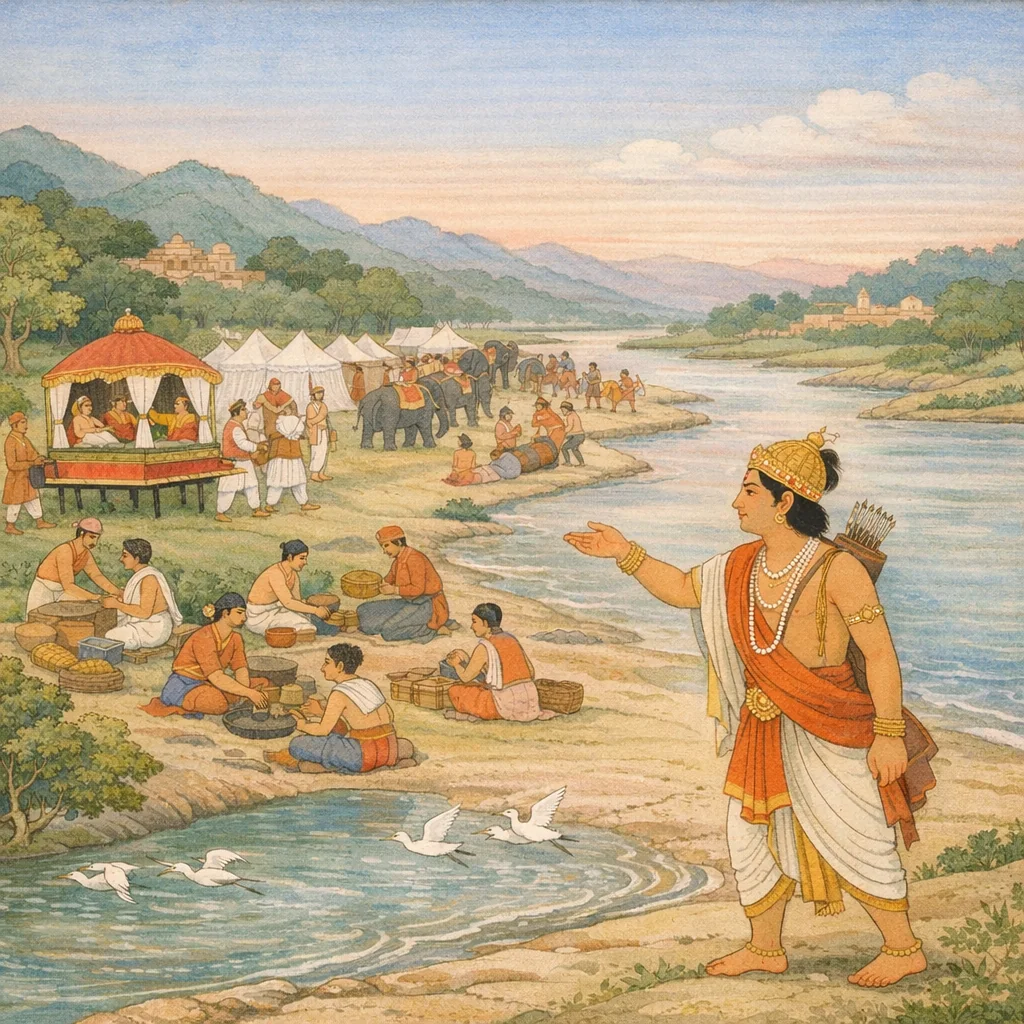
Sarga 83 narrates Bharata’s dawn departure in an excellent chariot, driven by a focused longing to see Rama. Ministers and priests proceed in front on sun-like chariots, while the mobilized royal force is quantified with formal precision—elephants, chariots, and mounted horses—signaling state capacity redirected toward reconciliation rather than conquest. The queens (Kaikeyī, Sumitrā, Kausalyā) travel in a resplendent vehicle, and the civic body follows in celebratory solidarity, speaking of Rama’s virtues as a collective antidote to grief. The chapter notably catalogs occupational groups—artisans, merchants, service professions, performers, and fishermen—marking the breadth of urban participation and the social ecology of Ayodhyā. After a long journey by chariots, carriages, horses, and elephants, the procession reaches the Gaṅgā near Śṛṅgīberapura, the domain of Guha, Rama’s ally, portrayed as vigilant and well-governed. The army halts on the bird-graced riverbank; Bharata instructs ministers to camp as convenient, plans to cross the next day, and performs intended water-libations for the departed king. The sarga closes with Bharata reflecting on methods to bring Rama back, framing political action as ethical restoration.
Shlokas
Verse 1
तत स्समुत्थितः काल्यमास्थाय स्यन्दनोत्तमम्।प्रययौ भरतश्शीघ्रं रामदर्शनकाङ्क्षया।।2.83.1।।
Then, rising at dawn and mounting an excellent chariot, Bharata set out swiftly, driven by his longing to see Rama.
Verse 2
अग्रतः प्रययुस्तस्य सर्वे मन्त्रिपुरोधसः।अधिरुह्य हयैर्युक्तान्रथान्सूर्यरथोपमान्।।2.83.2।।
All his ministers and priests went ahead of him, having mounted horse-harnessed chariots that shone like the chariot of the Sun.
Verse 3
नवनागसहस्राणि कल्पितानि यथाविधि।अन्वयुर्भरतं यान्तमिक्ष्वाकुकुलनन्दनम्।।2.83.3।।
In due ceremonial order, nine thousand elephants were duly arrayed and followed Bharata as he set out—the delight of the Ikṣvāku line.
Verse 4
षष्टी रथसहस्राणि धन्विनो विविधायुधाः।अन्वयुर्भरतं यान्तं राजपुत्रं यशस्विनम्।।2.83.4।।
Sixty thousand chariots, with archers bearing diverse weapons, followed Bharata as he went—the illustrious prince.
Verse 5
शतं सहस्राण्यश्वानां समारूढानि राघवम्।अन्वयुर्भरतं यान्तं सत्यसन्धं जितेन्द्रियम्।।2.83.5।।
A hundred thousand horses, each mounted, followed Bharata as he went—true to his pledged word and master of his senses.
Verse 6
कैकेयी च सुमित्रा च कौसल्या च यशस्विनी।रामानयनसंहृष्टा ययुर्यानेन भास्वता।।2.83.6।।
Kaikeyī, Sumitrā, and the illustrious Kausalyā traveled in a shining conveyance, uplifted at the hope of bringing Rāma back.
Verse 7
प्रयाताश्चार्यसङ्घाता रामं द्रष्टुं सलक्ष्मणम्।तस्यैव च कथाश्चित्राः कुर्वाणा हृष्टमानसाः।।2.83.7।।
Groups of venerable citizens also set out to see Rāma together with Lakṣmaṇa, joyfully recounting his many admirable deeds.
Verse 8
मेघश्यामं महाबाहुं स्थिरसत्त्वं दृढव्रतम्।कदा द्रक्ष्यामहे रामं जगत श्शोकनाशनम्।।2.83.8।।
When shall we behold Rāma—dark as a rain-cloud, mighty-armed, steadfast in spirit, firm in his vows—he who banishes the sorrow of the world?
Verse 9
दृष्ट एव हि न श्शोकमपनेष्यति राघवः।तम स्सर्वस्य लोकस्य समुद्यन्निव भास्करः।।2.83.9।।
Indeed, merely by being seen, Rāghava will take away our grief—just as the rising sun dispels the darkness of the whole world.
Verse 10
इत्येवं कथयन्तस्ते सम्प्रहृष्टाः कथा श्शुभाः।परिष्वजानाश्चान्योन्यं ययुर्नागरिका जनाः।।2.83.10।।
Speaking thus, the townspeople went on joyfully—recounting auspicious tales (of Rama) and embracing one another as they proceeded.
Verse 11
ये च तत्रापरे सर्वे सम्मता ये च नैगमाः।रामं प्रति ययुर्हृष्टा स्सर्वाः प्रकृतयस्तथा।।2.83.11।।
All the others there as well—the respected citizens and the merchants—indeed all the subjects, delighted, went onward toward Rama.
Verse 12
मणिकाराश्च ये केचित्कुम्भकाराश्च शोभनाः।सूत्रकर्मकृतश्चैव ये च शस्त्रोपजीविनः।2.83.12।।मयूरकाः क्राकचिका रोचका वेधकास्तथा।दन्तकारा स्सुधाकारा स्तथा गन्धोपजीविनः।।2.83.13।।सुवर्णकाराः प्रख्यातास्तथा कम्बलधावकाः।स्नापकोष्णोदका वैद्याधूपकाश्शौण्डिकास्तथा।।2.83.14।।रजकास्तुन्नवायाश्च ग्रामघोषमहत्तराः।शैलूषाश्च सह स्त्रीभिर्ययुः कैवर्तकास्तथा।।2.83.15।।
Gem-workers and fine potters; weavers and those who lived by the craft of weapons; makers of peacock-feather ornaments, sawyers, makers of trinkets, and perforators; ivory-workers, whitewashers, and sellers of perfumes; renowned goldsmiths, blanket-cleaners, hot-bath attendants, physicians, incense-sellers, and vintners; washermen and tailors, village and hamlet headmen, actors with their womenfolk, and fishermen—all went along, following Bharata.
Verse 13
मणिकाराश्च ये केचित्कुम्भकाराश्च शोभनाः।सूत्रकर्मकृतश्चैव ये च शस्त्रोपजीविनः।2.83.12।।मयूरकाः क्राकचिका रोचका वेधकास्तथा।दन्तकारा स्सुधाकारा स्तथा गन्धोपजीविनः।।2.83.13।।सुवर्णकाराः प्रख्यातास्तथा कम्बलधावकाः।स्नापकोष्णोदका वैद्याधूपकाश्शौण्डिकास्तथा।।2.83.14।।रजकास्तुन्नवायाश्च ग्रामघोषमहत्तराः।शैलूषाश्च सह स्त्रीभिर्ययुः कैवर्तकास्तथा।।2.83.15।।
Gem-workers and fine potters; weavers and those who lived by the craft of weapons; makers of peacock-feather ornaments, sawyers, makers of trinkets, and perforators; ivory-workers, whitewashers, and sellers of perfumes; renowned goldsmiths, blanket-cleaners, hot-bath attendants, physicians, incense-sellers, and vintners; washermen and tailors, village and hamlet headmen, actors with their womenfolk, and fishermen—all went along, following Bharata.
Verse 14
मणिकाराश्च ये केचित्कुम्भकाराश्च शोभनाः।सूत्रकर्मकृतश्चैव ये च शस्त्रोपजीविनः।2.83.12।।मयूरकाः क्राकचिका रोचका वेधकास्तथा।दन्तकारा स्सुधाकारा स्तथा गन्धोपजीविनः।।2.83.13।।सुवर्णकाराः प्रख्यातास्तथा कम्बलधावकाः।स्नापकोष्णोदका वैद्याधूपकाश्शौण्डिकास्तथा।।2.83.14।।रजकास्तुन्नवायाश्च ग्रामघोषमहत्तराः।शैलूषाश्च सह स्त्रीभिर्ययुः कैवर्तकास्तथा।।2.83.15।।
Gem-workers and fine potters; weavers and those who lived by the craft of weapons; makers of peacock-feather ornaments, sawyers, makers of trinkets, and perforators; ivory-workers, whitewashers, and sellers of perfumes; renowned goldsmiths, blanket-cleaners, hot-bath attendants, physicians, incense-sellers, and vintners; washermen and tailors, village and hamlet headmen, actors with their womenfolk, and fishermen—all went along, following Bharata.
Verse 15
मणिकाराश्च ये केचित्कुम्भकाराश्च शोभनाः।सूत्रकर्मकृतश्चैव ये च शस्त्रोपजीविनः।2.83.12।।मयूरकाः क्राकचिका रोचका वेधकास्तथा।दन्तकारा स्सुधाकारा स्तथा गन्धोपजीविनः।।2.83.13।।सुवर्णकाराः प्रख्यातास्तथा कम्बलधावकाः।स्नापकोष्णोदका वैद्याधूपकाश्शौण्डिकास्तथा।।2.83.14।।रजकास्तुन्नवायाश्च ग्रामघोषमहत्तराः।शैलूषाश्च सह स्त्रीभिर्ययुः कैवर्तकास्तथा।।2.83.15।।
Gem-workers and fine potters; weavers and those who lived by the craft of weapons; makers of peacock-feather ornaments, sawyers, makers of trinkets, and perforators; ivory-workers, whitewashers, and sellers of perfumes; renowned goldsmiths, blanket-cleaners, hot-bath attendants, physicians, incense-sellers, and vintners; washermen and tailors, village and hamlet headmen, actors with their womenfolk, and fishermen—all went along, following Bharata.
Verse 16
समाहिता वेदविदो ब्राह्मणा वृत्तसम्मताः।गोरथैर्भरतं यान्तमनुजग्मु स्सहस्रशः।।2.83.16।।
Brahmins—composed in mind, learned in the Vedas, and esteemed for upright conduct—followed Bharata as he departed, in their thousands, riding on bullock-carts.
Verse 17
सुवेषा श्शुद्धवसनास्ताम्रमृष्टानुलेपनाः।सर्वे ते विविधैर्यानै श्शनैर्भरतमन्वयुः।।2.83.17।।
Well-adorned, clad in clean garments, and anointed with bright red sandal paste, they all followed Bharata slowly, traveling in many kinds of vehicles.
Verse 18
प्रहृष्टमुदिता सेना साऽन्वयात्कैकयीसुतम्।भ्रातुरानयने यान्तं भरतं भ्रातृवत्सलम्।।2.83.18।।
That army, filled with joy and high spirits, followed Kaikeyī’s son Bharata—devoted to his brother—as he set out to bring his brother back.
Verse 19
ते गत्वा दूरमध्वानं रथयानाश्वकुञ्जरैः।समासेदुस्ततो गङ्गां शृङ्गीबेरपुरं प्रति।।2.83.19।।यत्र रामसखो वीरो गुहो ज्ञातिगणैर्वृतः।निवसत्यप्रमादेन देशं तं परिपालयन्।।2.83.20।।
After travelling a long stretch by chariots, carriages, horses, and elephants, they then reached the Gaṅgā near Śṛṅgīberapura—where the valiant Guha, Rāma’s friend, lived surrounded by his kinsmen, vigilantly protecting that land.
Verse 20
ते गत्वा दूरमध्वानं रथयानाश्वकुञ्जरैः।समासेदुस्ततो गङ्गां शृङ्गीबेरपुरं प्रति।।2.83.19।।यत्र रामसखो वीरो गुहो ज्ञातिगणैर्वृतः।निवसत्यप्रमादेन देशं तं परिपालयन्।।2.83.20।।
After travelling a long stretch by chariots, carriages, horses, and elephants, they then reached the Gaṅgā near Śṛṅgīberapura—where the valiant Guha, Rāma’s friend, lived surrounded by his kinsmen, vigilantly protecting that land.
Verse 21
उपेत्य तीरं गङ्गायाश्चक्रवाकैरलङ्कृतम्।व्यवातिष्ठत सा सेना भरतस्यानुयायिनी।।2.83.21।।
Reaching the bank of the Gaṅgā, beautified by cakravāka birds, the army that followed Bharata halted there.
Verse 22
निरीक्ष्यानुगतां सेनां तां च गङ्गां शिवोदकाम्।भरतस्सचिवान्सर्वानब्रवीद्वाक्यकोविदः।।2.83.22।।
Seeing the army that had followed him, and the Gaṅgā with her auspicious waters, Bharata—skilled in speech—addressed all his ministers.
Verse 23
निवेशयत मे सैन्यमभिप्रायेण सर्वतः।विश्रान्ताः प्रतरिष्यामश्श्व इदानीमिमां नदीम्।।2.83.23।।
Camp my army on all sides as is convenient; once they have rested, we shall cross this river tomorrow.
Verse 24
दातुं च तावदिच्छामि स्वर्गतस्य महीपतेः।और्ध्वदेहनिमित्तार्थमवतीर्योदकं नदीम्।।2.83.24।।
For the moment, I wish to descend into the river and offer water-libations for the departed king, so that his onward journey in the next world may be благessed.
Verse 25
तस्यैवं ब्रुवतोऽमात्यास्तथेत्युक्त्वा समाहिताः।न्यवेशयंस्तां छन्देन स्वेन स्वेन पृथक्पृथक्।।2.83.25।।
As he spoke in this manner, the ministers—composed and attentive—assented, saying “So be it,” and arranged the encampment, each division settling separately according to its own convenience.
Verse 26
निवेश्य गङ्गामनु तां महानदीं चमूं विधानैः परिबर्हशोभिनीम्।उवास रामस्य तदा महात्मनो विचिन्तयानो भरतो निवर्तनम्।।2.83.26।।
Having encamped that splendid host—adorned with royal insignia—along the great river Gaṅgā with proper arrangements, Bharata remained there, reflecting on how to bring back the great-souled Rāma.
Frequently Asked Questions
The pivotal action is Bharata’s state-backed journey framed not as coercion but as ethical retrieval—mobilizing royal power to restore rightful order by seeking Rama, while also honoring the deceased king through prescribed water-libations.
Legitimate authority is shown as grounded in restraint, speech-competence, and ritual responsibility: Bharata pauses to rest the army, schedules a lawful crossing, and prioritizes ancestral rites—modeling governance as disciplined dharma rather than impulsive force.
The Gaṅgā riverbank near Śṛṅgīberapura is central, along with Guha’s vigilantly governed territory; culturally, the sarga highlights civic guild participation and the rite of offering water (udaka) for the departed king’s aurdhva-deha welfare.