Sarga 70
भरतस्य दूतसमागमः तथा केकयराजनः अनुज्ञा (Bharata Meets the Messengers; Kekaya King Grants Leave)
अयोध्याकाण्ड
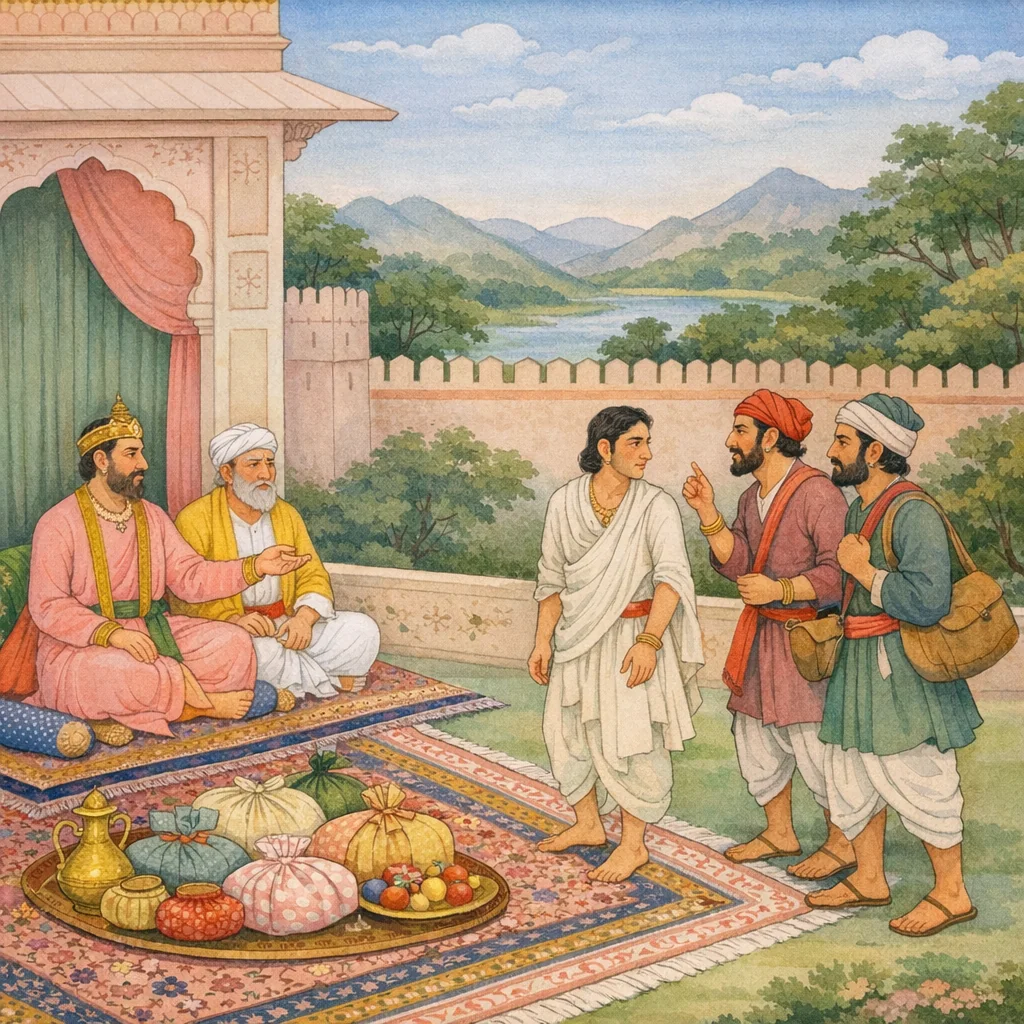
Sarga 70 stages a procedural yet emotionally charged transition from Kekaya to Ayodhyā. As Bharata narrates an ominous dream, Ayodhyā’s mounted messengers arrive at the moat-guarded city of Rājagṛha, are honored by the Kekaya king and prince Yuddhājit, and then respectfully address Bharata. Bharata performs kin-centered inquiry—asking after Daśaratha, Rāma, Lakṣmaṇa, and the queens Kausalyā, Sumitrā, and Kaikeyī—revealing his attentiveness to health, dharma, and household stability. The messengers urge immediate return due to an urgent state matter; they also deliver valuables intended for the Kekaya king and Yuddhājit, which Bharata accepts and reciprocally honors the envoys. Pressed by urgency, Bharata seeks leave from his maternal grandfather, who permits departure, praises Bharata as Kaikeyī’s worthy son, and sends greetings to Vasiṣṭha and the princes. Extensive gift-exchange follows (elephants, horses, gold, textiles, skins, even palace-bred dogs), but Bharata derives no joy; anxiety rises from both the dream and the envoys’ haste. The chapter closes with Bharata departing with Śatrughna under military protection, accompanied by ministers and a large convoy—an outwardly auspicious mobilization shadowed by foreboding.
Shlokas
Verse 1
भरते ब्रुवति स्वप्नं दूतास्ते क्लान्तवाहनाः।प्रविश्यासह्यपरिखं रम्यं राजगृहं पुरम्।।2.70.1।।समागम्य तु राज्ञा च राजपुत्रेण चार्चिताः राज्ञः पादौ गृहीत्वा तु तमूचुर्भरतं वचः।।2.70.2।।
As Bharata was describing a dream, those messengers—mounted on weary steeds—entered the lovely city of Rājagṛha, guarded by an impassable moat. Meeting the Kekaya king and the prince (Yudhājit) and being duly honored, they reverently took the king’s feet and then addressed Bharata with their message.
Verse 2
भरते ब्रुवति स्वप्नं दूतास्ते क्लान्तवाहनाः।प्रविश्यासह्यपरिखं रम्यं राजगृहं पुरम्।।2.70.1।।समागम्य तु राज्ञा च राजपुत्रेण चार्चिताः राज्ञः पादौ गृहीत्वा तु तमूचुर्भरतं वचः।।2.70.2।।
As Bharata was speaking of his dream, those messengers—mounted on weary steeds—entered the lovely city of Rājagṛha, ringed by an impassable moat. Meeting the Kekaya king and the prince, they were honored; and after reverently taking the king’s feet, they addressed Bharata with their message.
Verse 3
पुरोहितस्त्वां कुशलं प्राह सर्वे च मन्त्रिणः।त्वरमाणश्च निर्याहि कृत्यमात्ययिकं त्वया।।2.70.3।।
The family priest and all the ministers have asked after your well-being. Return at once—there is an urgent duty that must be attended to by you.
Verse 4
इमानि च महार्हाणि वस्त्राण्याभरणानि च।प्रतिगृह्य विशालक्ष मातुलस्य च दापय।।2.70.4।।
O large-eyed prince, accept these precious garments and ornaments, and have them presented as well to your maternal uncle.
Verse 5
अत्र विशंतिकोट्यस्तु नृपतेर्मातुलस्य ते।दशकोट्यस्तु सम्पूर्णास्तथैव च नृपात्मज।।2.70.5।।
O prince, here are gifts amounting to twenty crores for the king, and likewise a complete ten crores for your maternal uncle.
Verse 6
प्रतिगृह्य तु तत्सर्वं स्वनुरक्त स्सुहृज्जने।दूतानुवाच भरतः कामैस्सम्प्रतिपूज्य तान्।।2.70.6।।
Bharata—deeply affectionate toward his kinsmen and friends—accepted all that had been brought, and then, honoring the messengers in return with gifts of their choosing, addressed them.
Verse 7
कच्चित्सुकुशली राजा पिता दशरथो मम।कच्चिच्चारोगता रामे लक्ष्मणे च महात्मनि।।2.70.7।।
“I hope my father, King Daśaratha, is well. And I hope that Rāma—and the great-souled Lakṣmaṇa—are in good health.”
Verse 8
आर्या च धर्मनिरता धर्मज्ञा धर्मदर्शिनी।अरोगा चापि कौसल्या माता रामस्य धीमतः।।2.70.8।।
“And is Kauśalyā—Rāma’s mother—healthy as well: that venerable lady devoted to dharma, skilled in dharma, and one who lives by what dharma enjoins?”
Verse 9
कच्चित्सुमित्रा धर्मज्ञा जननी लक्ष्मणस्य या।शत्रुघ्नस्य च वीरस्य साऽरोगा चापि मध्यमा।।2.70.9।।
“And I hope Sumitrā—versed in dharma, the mother of Lakṣmaṇa and of the valiant Śatrughna—she, the middle queen, is also free from illness?”
Verse 10
आत्मकामा सदा चण्डी क्रोधना प्राज्ञमानिनी।अरोगा चापि मे माता कैकेयी किमुवाच ह।।2.70.10।।
And what did my mother Kaikeyī say—she who is ever self-willed, harsh-tempered, quick to anger, and proud of her own cleverness? Is she, at least, free from illness?
Verse 11
एवमुक्तास्तु ते दूताः भरतेन महात्मना।ऊचुस्सप्रश्रयं वाक्यमिदं तं भरतं तदा।।2.70.11।।
Thus addressed by the magnanimous Bharata, the messengers then spoke to him these words with due humility and respect.
Verse 12
कुशलास्ते नरव्याघ्र येषां कुशलमिच्छसि।श्रीश्च त्वां वृणुते पद्मा युज्यतां चापि ते रथः।।2.70.12।।
O tiger among men, those whose well-being you ask after are safe. May Śrī—Padmā (Lakṣmī)—favor you, and may your chariot also be yoked and made ready.
Verse 13
भरतश्चापि तान् दूतानेवमुक्तोऽभ्यभाषत।आपृच्चेऽहं महाराजं दूतास्सन्त्वरयन्ति माम्।।2.70.13।।
Thus addressed, Bharata replied to the messengers: “I will take leave of the great king; the envoys are urging me to hurry.”
Verse 14
एवमुक्त्वा तु तान् दूतान्भरतः पार्थिवात्मजः।दूतै स्सञ्चोदितो वाक्यं मातामहमुवाच ह।।2.70.14।।
Having spoken thus to the messengers, Bharata—the prince—pressed by their urgency, spoke these words to his maternal grandfather.
Verse 15
राजन् पितुर्गमिष्यामि सकाशं दूतचोदितः।पुनरप्यहमेष्यामि यदा मे त्वं स्मरिष्यसि।।2.70.15।।
O King, urged by the messengers, I shall go to my father’s presence. And whenever you think of me, I will come again.
Verse 16
भरतेनैवमुक्तस्तु नृपो मातामहस्तदा।तमुवाच शुभं वाक्यं शिरस्याघ्राय राघवम्।।2.70.16।।
Thus addressed by Bharata, the king—his maternal grandfather—then kissed the Rāghava upon the head and spoke to him auspicious words.
Verse 17
गच्छ तातानुजाने त्वां कैकेयीसुप्रजास्त्वया।मातरं कुशलं ब्रूयाः पितरं च परन्तप।।2.70.17।।
Go, my child; I grant you leave. Kaikeyī is blessed with a worthy son in you. O subduer of foes, convey my welfare-wishes to your mother and to your father as well.
Verse 18
पुरोहितं च कुशलं ये चान्ये द्विजसत्तमाः।तौ च तात महेष्वासौ भ्रातरौ रामलक्ष्मणौ।।2.70.18।।
And convey my welfare-wishes to your family priest, and to those other best of twice-born. Also, my child, to those two great bowmen—your brothers Rāma and Lakṣmaṇa.
Verse 19
तस्मै हस्त्युत्तमांश्चित्रान्कम्बलानजिनानि च।अभिसत्कृत्य कैकेयो भरताय धनं ददौ।।2.70.19।।
Having duly honored him, the king of Kekaya bestowed wealth upon Bharata—excellent elephants, many-colored blankets, and antelope-skins as well.
Verse 20
रुक्मनिष्कसहस्रे द्वे षोडशाश्वशतानि च।सत्कृत्य कैकयीपुत्रं केकयो धनमादिशत्।।2.70.20।।
Honoring Kaikeyī’s son, the king of Kekaya granted him wealth: two thousand gold niṣkas and sixteen hundred horses as well.
Verse 21
तथाऽमात्यानभिप्रेतान्विश्वास्यांश्च गुणान्वितान्।ददावश्वपतिः क्षिप्रं भरतायानुयायिनः।।2.70.21।।
Likewise Aśvapati promptly gave Bharata counselors as attendants for the journey—men agreeable, trustworthy, and endowed with good qualities.
Verse 22
ऐरावतानैन्द्रशिरान्नागान्वै प्रियदर्शनान्।खरान् श्रीघ्रान्सुसंयुक्तान्मातुलोऽस्मै धनं ददौ।।2.70.22।।
His maternal uncle gave him wealth as well—handsome elephants from Airāvata and Aindraśira, and swift, well-trained asses fit for easy yoking.
Verse 23
अन्तःपुरेऽति संवृद्धान् व्याघ्रवीर्यबलान्वितान्। दंष्ट्राऽऽयुधान्महाकायान् शुनश्चोपायनं ददौ।।2.70.23।।
He also presented as a gift dogs reared in the inner quarters—huge-bodied, endowed with tiger-like valor and strength, their fangs serving as weapons.
Verse 24
स दत्तं केकयेन्द्रेण धनं तन्नाभ्यनन्दत।भरतः कैकयीपुत्रो गमनत्वरया तदा।।2.70.24।।
Then Bharata, Kaikeyi’s son, in his haste to depart, found no joy in the wealth given by the king of Kekaya.
Verse 25
बभूव ह्यस्य हृदये चिन्ता सुमहती तदा।त्वरया चापि दूतानां स्वप्नस्यापि च दर्शनात्।।2.70.25।।
Then a great anxiety arose in his heart—both from the messengers’ haste and from having seen a dream.
Verse 26
स स्ववेश्माभ्यतिक्रम्य नरनागाश्वसंवृतम्।प्रपेदे सुमहच्छ्रीमान्राजमार्गमनुत्तमम्।।2.70.26।।
Leaving his own residence, the splendid Bharata reached the incomparable royal highway, crowded with men, elephants, and horses.
Verse 27
अभ्यतीत्य ततोऽपश्यदन्तःपुरमुदारधीः।ततस्तद्भरतश्श्रीमानाविवेशानिवारितः।।2.70.27।।
Having gone on, the noble-minded Bharata saw the inner palace quarters; then the splendid Bharata entered them without hindrance.
Verse 28
स मातामहमापृच्छ्य मातुलं च युधाजितम्।रथमारुह्य भरतश्शत्रुघ्नसहितो ययौ।।2.70.28।।
Having taken leave of his maternal grandfather and of his maternal uncle Yudhājit, Bharata, accompanied by Śatrughna, mounted the chariot and departed.
Verse 29
रथान्मण्डल चक्रांश्च योजयित्वा परश्शतम्।उष्ट्र गोऽश्वबलैर्भृत्या भरतं यान्तमन्वयुः।।2.70.29।।
The servants, having harnessed more than a hundred chariots with well-rounded wheels, followed Bharata as he set out—along with forces of camels, oxen, and horses.
Verse 30
बलेन गुप्तो भरतो महात्मा सहार्यकस्याऽत्मसमैरमात्यैः।आदाय शत्रुघ्नमपेतशत्रुर्गृहाद्ययौ सिद्ध इवेन्द्रलोकात्।।2.70.30।।
Guarded by an army, the great-souled Bharata—free of foes—departed from his venerable grandfather Āryaka’s house, taking Śatrughna with him and accompanied by ministers equal to himself, like a siddha leaving Indra’s realm.
Frequently Asked Questions
The pivotal action is Bharata’s immediate prioritization of ātyayika-kṛtya (urgent public duty) over hospitality and wealth: despite lavish gifts and familial affection in Kekaya, he chooses prompt departure to answer Ayodhyā’s summons.
The sarga contrasts external auspiciousness (honors, gifts, praise) with inner discernment: Bharata’s lack of delight in riches and his rising anxiety model a dharmic sensitivity to omens and responsibility beyond personal comfort.
Rājagṛha is presented as a fortified, aesthetically praised city with an impassable moat; culturally, the chapter emphasizes courtly etiquette—honoring envoys, touching elders’ feet, formal leave-taking, and gift-exchange as political-social infrastructure.