Sarga 7
मन्थराप्रवेशः — Manthara Observes Ayodhya and Incites Kaikeyi
अयोध्याकाण्ड
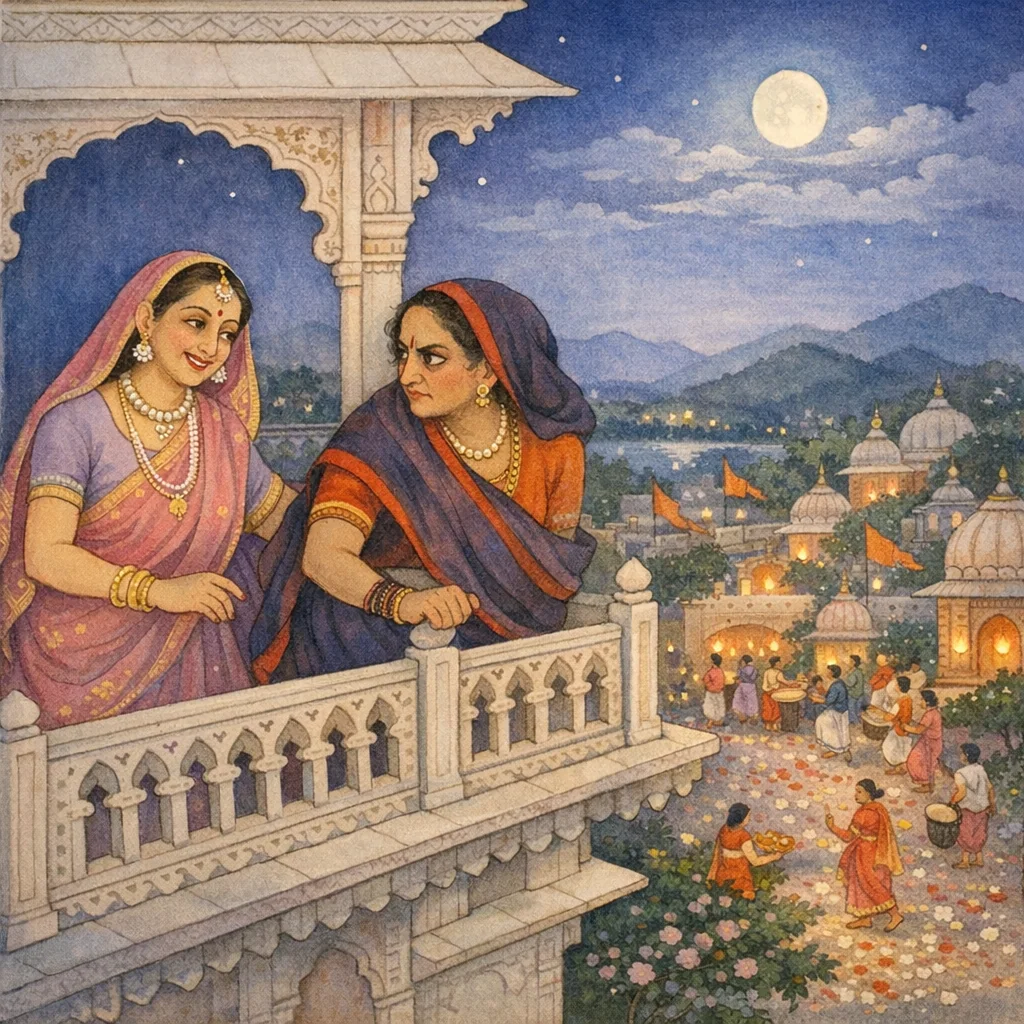
Sarga 7 stages the catalytic transition from public celebration to private manipulation. Mantharā, Kaikeyī’s long-attendant family servant, casually ascends a moon-bright palace and surveys Ayodhyā prepared for a major royal rite: roads sprinkled, flowers strewn, flags raised, temples resonant with Vedic chant and instruments, and crowds rejoicing. She interrogates a nearby royal maid (dhātrī) about the city’s exuberance; the maid, bursting with joy, announces that King Daśaratha will consecrate the blameless Rāma as yuvarāja on the next day under the Puṣya nakṣatra. The news triggers Mantharā’s fury; she descends from the Kailāsa-like palace and confronts Kaikeyī, who lies at ease. Mantharā deploys coercive rhetoric—warnings of imminent danger, claims of unstable fortune, and accusations of deceitful statecraft—to induce despondency and reframe the coronation as Kaikeyī’s ruin (and Bharata’s). Kaikeyī initially responds with concern and then with delight at the prospect of Rāma’s consecration, even gifting Mantharā an ornament for the “good tidings,” revealing her initial lack of rivalry between Rāma and Bharata. The chapter’s thematic lesson is the power of speech (vāk) as political instrument: public dharma-rituals can be overturned by private persuasion and fear-based narrative control.
Shlokas
Verse 1
ज्ञातिदासी यतो जाता कैकेय्यास्तु सहोषिता।प्रासादं चन्द्रसङ्काशमारुरोह यदृच्छया।।।।
Mantharā, Kaikeyī’s family servant who had lived with her from her very birth, happened by chance to climb up to a palace that shone like the moon.
Verse 2
सिक्तराजपथां कृत्स्नां प्रकीर्णकुसुमोत्कराम्।अयोध्यां मन्थरा तस्मात्प्रासादादन्ववैक्षत।।।।
From that palace, Mantharā looked out and saw all of Ayodhyā—its royal roads freshly sprinkled with water and heaped with flowers—prepared in festive splendor.
Verse 3
पताकाभिर्वरार्हाभिर्ध्वजैश्च समलङ्कृताम्।वृतां छन्दपथैश्चापि शिरस्स्नातजनैर्वृताम्।।।।माल्यमोदकहस्तैश्च द्विजेन्द्रैरभिनादिताम्।शुक्लदेवगृहद्वारां सर्ववादित्रनिस्वनाम्।।।।सम्प्रहृष्टजनाकीर्णां ब्रह्मघोषाभिनादिताम्।प्रहृष्टवरहस्त्यश्वां सम्प्रणर्दितगोवृषाम्।।।।प्रहृष्टमुदितैः पौरैरुच्छ्रितध्वजमालिनीम्।अयोध्यां मन्थरा दृष्ट्वा परं विस्मयमागता।।।।
Mantharā beheld Ayodhyā—adorned with costly banners and flags; filled with winding thoroughfares and thronged by people freshly bathed. It rang with Vedic chanting by eminent brāhmaṇas bearing garlands and sweets, and with the sounds of every kind of instrument. Joyous crowds packed the streets; excellent elephants and horses were spirited; cows and bulls resounded with lowing and bellowing. The citizens, exultant, raised high garlands of pennants around the city—seeing all this, Mantharā was struck with intense astonishment.
Verse 4
पताकाभिर्वरार्हाभिर्ध्वजैश्च समलङ्कृताम्।वृतां छन्दपथैश्चापि शिरस्स्नातजनैर्वृताम्।।2.7.3।।माल्यमोदकहस्तैश्च द्विजेन्द्रैरभिनादिताम्।शुक्लदेवगृहद्वारां सर्ववादित्रनिस्वनाम्।।2.7.4।।सम्प्रहृष्टजनाकीर्णां ब्रह्मघोषाभिनादिताम्।प्रहृष्टवरहस्त्यश्वां सम्प्रणर्दितगोवृषाम्।।2.7.5।।प्रहृष्टमुदितैः पौरैरुच्छ्रितध्वजमालिनीम्।अयोध्यां मन्थरा दृष्ट्वा परं विस्मयमागता।।2.7.6।।
Mantharā beheld Ayodhyā—adorned with costly banners and flags; filled with winding thoroughfares and thronged by people freshly bathed. It rang with Vedic chanting by eminent brāhmaṇas bearing garlands and sweets, and with the sounds of every kind of instrument. Joyous crowds packed the streets; excellent elephants and horses were spirited; cows and bulls resounded with lowing and bellowing. The citizens, exultant, raised high garlands of pennants around the city—seeing all this, Mantharā was struck with intense astonishment.
Verse 5
पताकाभिर्वरार्हाभिर्ध्वजैश्च समलङ्कृताम्।वृतां छन्दपथैश्चापि शिरस्स्नातजनैर्वृताम्।।2.7.3।।माल्यमोदकहस्तैश्च द्विजेन्द्रैरभिनादिताम्।शुक्लदेवगृहद्वारां सर्ववादित्रनिस्वनाम्।।2.7.4।।सम्प्रहृष्टजनाकीर्णां ब्रह्मघोषाभिनादिताम्।प्रहृष्टवरहस्त्यश्वां सम्प्रणर्दितगोवृषाम्।।2.7.5।।प्रहृष्टमुदितैः पौरैरुच्छ्रितध्वजमालिनीम्।अयोध्यां मन्थरा दृष्ट्वा परं विस्मयमागता।।2.7.6।।
Mantharā beheld Ayodhyā—adorned with costly banners and flags; filled with winding thoroughfares and thronged by people freshly bathed. It rang with Vedic chanting by eminent brāhmaṇas bearing garlands and sweets, and with the sounds of every kind of instrument. Joyous crowds packed the streets; excellent elephants and horses were spirited; cows and bulls resounded with lowing and bellowing. The citizens, exultant, raised high garlands of pennants around the city—seeing all this, Mantharā was struck with intense astonishment.
Verse 6
पताकाभिर्वरार्हाभिर्ध्वजैश्च समलङ्कृताम्।वृतां छन्दपथैश्चापि शिरस्स्नातजनैर्वृताम्।।2.7.3।।माल्यमोदकहस्तैश्च द्विजेन्द्रैरभिनादिताम्।शुक्लदेवगृहद्वारां सर्ववादित्रनिस्वनाम्।।2.7.4।।सम्प्रहृष्टजनाकीर्णां ब्रह्मघोषाभिनादिताम्।प्रहृष्टवरहस्त्यश्वां सम्प्रणर्दितगोवृषाम्।।2.7.5।।प्रहृष्टमुदितैः पौरैरुच्छ्रितध्वजमालिनीम्।अयोध्यां मन्थरा दृष्ट्वा परं विस्मयमागता।।2.7.6।।
Mantharā beheld Ayodhyā—adorned with costly banners and flags; filled with winding thoroughfares and thronged by people freshly bathed. It rang with Vedic chanting by eminent brāhmaṇas bearing garlands and sweets, and with the sounds of every kind of instrument. Joyous crowds packed the streets; excellent elephants and horses were spirited; cows and bulls resounded with lowing and bellowing. The citizens, exultant, raised high garlands of pennants around the city—seeing all this, Mantharā was struck with intense astonishment.
Verse 7
प्रहर्षोत्फुल्लनयनां पाण्डुरक्षौमवासिनीम्।अविदूरे स्थितां दृष्ट्वा धात्रीं पप्रच्छ मन्थरा।।।।
Noticing nearby a royal maid, clad in pale-white silk and with eyes widened in delight, Mantharā questioned her.
Verse 8
उत्तमेनाभिसंयुक्ता हर्षेणार्थपरा सती।राममाता धनं किन्नु जनेभ्यस्सम्प्रयच्छति।।।।
Why is Rāma’s mother—though known to be intent on wealth—now, filled with exceptional joy, distributing riches to the people?
Verse 9
अतिमात्रप्रहर्षोऽयं किं जनस्य च शंस मे।कारयिष्यति किं वापि सम्प्रहृष्टो महीपतिः।।।।
Why is this excessive rejoicing among the people? Tell me—what is the delighted king intending to have done?
Verse 10
विदीर्यमाणा हर्षेण धात्री तु परया मुदा।आचचक्षेऽथ कुब्जायै भूयसीं राघव श्रियम्।।।।
Bursting with joy, the nurse-maid, filled with great delight, then told the hunchback woman about the abundant good fortune that awaited Rāma, the scion of Raghu.
Verse 11
श्वः पुष्येण जितक्रोधं यौवराज्येन राघवम्।राजा दशरथो राममभिषेचयिताऽनघम्।।।।
“Tomorrow, under the Puṣya constellation, King Daśaratha will consecrate blameless Rāma of Raghu’s line—who has mastered his anger—as heir-apparent.”
Verse 12
धात्र्यास्तु वचनं शृत्वा कुब्जा क्षिप्रममर्षिता।कैलासशिखराकारा त्प्रासादादवरोहत।।।।
Hearing the maid’s words, the hunchback—seized with fury—quickly descended from the palace that rose like the peak of Mount Kailāsa.
Verse 13
सा दह्यमाना कोपेन मन्थरा पापदर्शिनी।शयानामेत्य कैकेयीमिदं वचनमब्रवीत्।।।।
Mantharā—malevolent in outlook and burning with rage—went to Kaikeyī as she lay resting, and spoke these words.
Verse 14
उत्तिष्ठ मूढे किं शेषे भयं त्वामभिवर्तते।उपप्लुतामौघेन किमात्मानं न बुध्यसे।।।।
“Get up, foolish one—why do you lie asleep? Fear is closing in on you. Why do you not see that you are being swept along, afloat in a flood of dangers?”
Verse 15
अनिष्टे सुभगाकारे सौभाग्येन विकत्थसे।चलं हि तव सौभाग्यं नद्यास्स्रोत इवोष्णगे।।।।
“O you who are truly unloved though you wear the look of a favored queen—you brag of your fortune. But your ‘good fortune’ is fickle, like a river’s stream in the heat of summer.”
Verse 16
एवमुक्ता तु कैकेयी रुष्टया परुषं वचः।कुब्जया पापदर्शिन्या विषादमगमत्परम्।।।।
Thus addressed with harsh words by the enraged, evil-minded hunchback, Kaikeyī sank into deep dejection.
Verse 17
कैकेयी त्वब्रवीत्कुब्जां कच्चित्क्षेमं नु मन्थरे।विषण्णवदनां हि त्वां लक्षये भृशदुःखिताम्।।।।
Kaikeyī said to the hunchback: “Mantharā, is all well? I see your face is downcast—you seem deeply distressed.”
Verse 18
मन्थरा तु वच श्श्रुत्वा कैकेय्या मधुराक्षरम्।उवाच क्रोधसंयुक्ता वाक्यं वाक्यविशारदा।।।।
Hearing Kaikeyī’s sweetly spoken words, Mantharā—skilled in speech yet filled with anger—began to reply.
Verse 19
सा विषण्णतरा भूत्वा कुब्जा तस्या हितैषिणी।विषादयन्ती प्रोवाच भेदयन्ती च राघवम्।।।।
Growing even more downcast, the hunchback—claiming to seek Kaikeyī’s welfare—spoke in a way meant to deepen her despair and to estrange her from Rāghava (Rāma).
Verse 20
अक्षय्यं सुमहद्देवि प्रवृत्तं त्वद्विनाशनम्।रामं दशरथो राजा यौवराज्येऽभिषेक्ष्यति।।।।
O queen, an immense and unending ruin for you is now set in motion: King Daśaratha is about to consecrate Rāma as heir-apparent.
Verse 21
साऽस्म्यगाधे भये मग्ना दुःखशोकसमन्विता।दह्यमानाऽनलेनेव त्वद्धितार्थमिहागता।।।।
I am plunged in unfathomable fear, filled with grief and sorrow; burning as though in fire, I have come here for your welfare.
Verse 22
तव दुःखेन कैकेयि मम दुःखं महद्भवेत्।त्वद्वृद्धौ मम वृद्धिश्च भवेदत्र न संशयः।।।।
O Kaikeyī, your sorrow would become my great sorrow; and with your prosperity my prosperity would grow—of this there is no doubt.
Verse 23
नराधिपकुले जाता महिषी त्वं महीपतेः।उग्रत्वं राजधर्माणां कथं देवि न बुध्यसे।।।।
O queen—born in a royal line and the king’s chief consort—how do you not understand the harshness that can attend the duties and politics of kingship?
Verse 24
धर्मावादी शठो भर्ता श्लक्ष्णवादी च दारुणः।शुद्धभावे न जानीषे तेनैव मतिसन्धिता।।।।
Your husband speaks of dharma, yet is deceitful; he speaks gently, yet is cruel. Because you are innocent in disposition, your judgment is ensnared by him, and you do not recognize it.
Verse 25
उपस्थितः प्रयुञ्जानस्त्वयि सान्त्वमनर्थकम्।अर्थेनैवाद्य ते भर्ता कौसल्यां योजयिष्यति।।।।
Though he comes to you and offers only meaningless consoling words, today your husband will direct the real advantage to Kausalyā alone.
Verse 26
उपवाह्य स दुष्टात्मा भरतं तव बन्धुषु।काल्ये स्थापयिता रामं राज्ये निहतकण्टके।।।।
That wicked-minded man, having sent Bharata away among your relatives, will at dawn install Rāma in a kingdom cleared of obstacles.
Verse 27
शत्रुः पतिप्रवादेन मात्रेव हितकाम्यया।आशीविष इवाङ्केन बाले परिधृतस्त्वया।।।।
O child, desiring his good like a mother—mistaking him for a true husband—you have kept an enemy in your lap, like a venomous serpent.
Verse 28
यथा हि कुर्यात्सर्पो वा शत्रुर्वा प्रत्युपेक्षितः।राज्ञा दशरथेनाद्य सपुत्रा त्वं तथा कृता।।।।
Just as a neglected snake—or a neglected enemy—would act, so today King Daśaratha has treated you, along with your son.
Verse 29
पापेनानृतसान्त्वेन बाले नित्यसुखोचिते।रामं स्थापयता राज्ये सानुबन्धा हता ह्यसि।।।।
O child, accustomed always to comfort—by that sinful man’s false consolations, as he installs Rāma in the kingdom, you are indeed ruined, you and all bound to you (including your son).
Verse 30
सा प्राप्तकालं कैकेयि क्षिप्रं कुरु हितं तव।त्रायस्व पुत्रमात्मानं मां च विस्मयदर्शने।।।।
O Kaikeyī, the moment has arrived—act swiftly for your own advantage. Save your son, yourself, and me as well, O woman of bewildered vision.
Verse 31
मन्थाराया वचश्श्रुत्वा शयाना सा शुभानना।उत्तस्थौ हर्षसम्पूर्णा चन्द्रलेखेव शारदी।।।।
Hearing Mantharā’s words, Kaikeyī—lying at ease, her face fair—rose up filled with delight, like the bright autumnal crescent of the moon.
Verse 32
अतीव सा तु संहृष्टा कैकेयी विस्मयान्विता।एकमाभरणं तस्यै कुब्जायै प्रददौ शुभम्।।।।
Overjoyed and amazed, Kaikeyī gave that hunchback woman a single splendid ornament.
Verse 33
दत्वा त्वाभरणं तस्यै कुब्जायै प्रमदोत्तमा।कैकेयी मन्थरां दृष्ट्वा पुनरेवाब्रवीदिदम्।।।।
Having given the ornament to the hunchback, Kaikeyī—the foremost among women—looked at Mantharā and spoke again as follows.
Verse 34
इदं तु मन्थरे मह्यमाख्यासि परमं प्रियम्।एतन्मे प्रियमाख्यातुः किं वा भूयः करोमि ते।।।।
O Mantharā, you have told me something exceedingly pleasing. For one who brings me such glad tidings, what more can I do for you?
Verse 35
रामे वा भरते वाऽहं विशेषं नोपलक्षये।तस्मात्तुष्टाऽस्मि यद्राजा रामं राज्येऽभिषेक्ष्यति।।।।
Whether it is Rāma or Bharata, I see no difference between them. Therefore I am satisfied that the king will consecrate Rāma to the kingdom.
Verse 36
न मे परं किञ्चिदितस्त्वया पुनःप्रियं प्रियार्हे सुवचं वचःपरम्।तथा ह्यवोचस्त्वमतः प्रियोत्तरंवरं परं ते प्रददामि तं वृणु।।।।
O woman worthy of affection, nothing beyond this could be dearer to me from you—such words are beyond easy praise. Since you have spoken so, I shall grant you an even higher reward: choose it.
Frequently Asked Questions
The pivotal action is Manthara’s strategic reframing of Rama’s legitimate consecration into a perceived threat to Kaikeyi and Bharata, illustrating how political outcomes can be redirected by persuasion rather than by formal dharma-ritual alone.
The sarga highlights vāk-śakti (the force of speech): fear-based narratives can destabilize judgment and convert joy into despondency, warning that ethical discernment must guard against manipulative counsel in matters of power and succession.
Ayodhya’s ritualized civic landscape is foregrounded—sprinkled royal roads, flower-strewn routes, flag-lined streets, white-doored temples resonant with Vedic chanting and instruments—along with the calendrical marker of Puṣya nakṣatra for the planned abhiṣeka.