Sarga 66
अयोध्यायां शोकविलापः — Lamentation in Ayodhya after Daśaratha’s death
अयोध्याकाण्ड
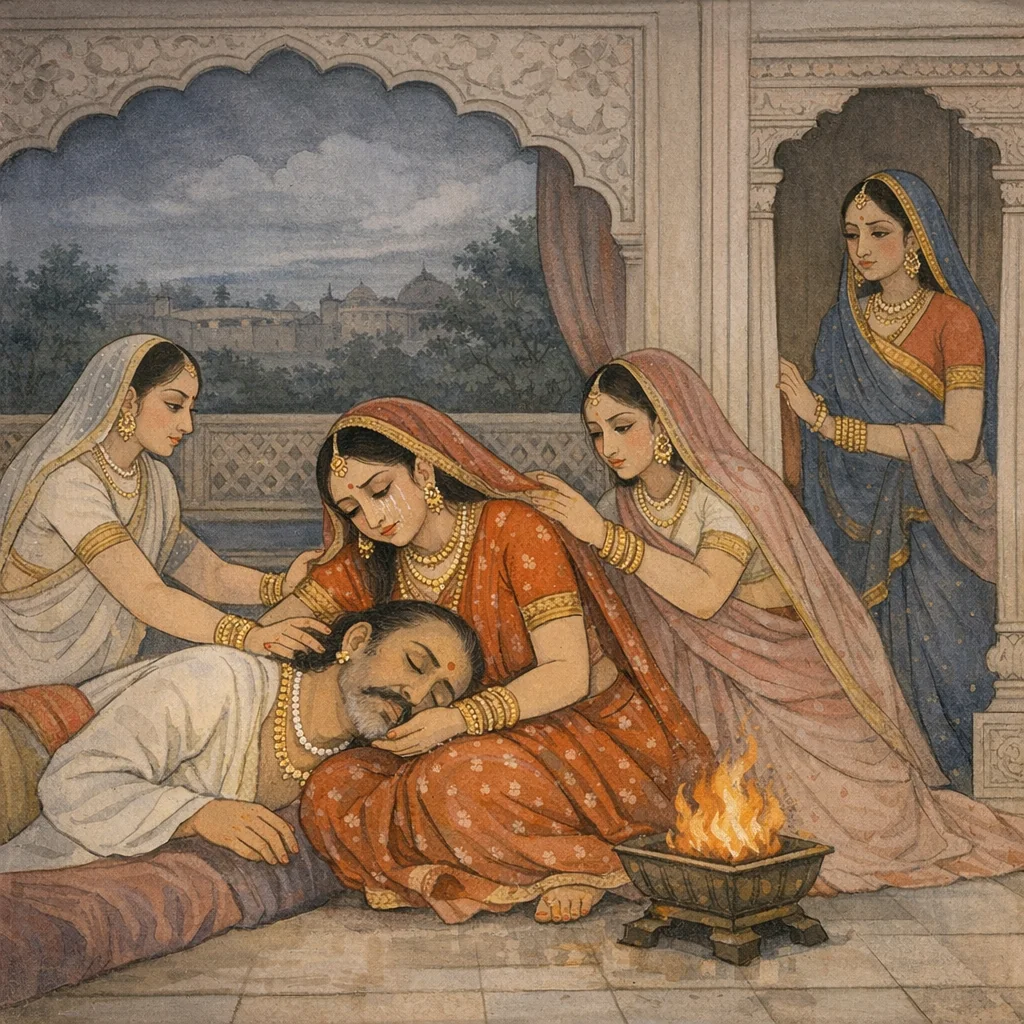
Sarga 66 stages a concentrated mourning sequence following Daśaratha’s ascent to heaven. Kausalyā, overwhelmed by grief, lifts the king’s head onto her lap and addresses Kaikeyī with accusatory lament, framing the catastrophe through stark similes (extinguished fire, waterless ocean, sun without radiance). Her speech expands the circle of suffering: Sītā’s vulnerability to the terrors of the forest, and Janaka’s likely collapse under grief. Kausalyā voices a self-destructive resolve to enter fire with her husband’s body, marking the extremity of widowhood anguish in royal contexts. Attendant women restrain and lead her away, while the ministers, instructed by senior authorities, preserve the corpse in an oil trough, explicitly postponing obsequies until a son is present—an articulation of dynastic-ritual protocol. The women of the palace lament collectively, and the city of Ayodhyā is depicted as dimmed and disordered, likened to moonless night or day without the sun. Public sentiment turns into denunciation of Kaikeyī, showing how private court decisions reverberate as civic trauma and moral judgment.
Shlokas
Verse 1
तमग्निमिव संशान्तमम्बुहीनमिवार्णवम्।हतप्रभमिवाऽऽदित्यं स्वर्गस्थं प्रेक्ष्य पार्थिवम्।।।।कौसल्या बाष्पपूर्णाक्षी विविधां शोककर्शिता।उपगृह्य शिरो राज्ञः कैकेयीं प्रत्यभाषत।।।।
Seeing the king gone to heaven—like a fire abruptly quenched, like an ocean bereft of water, like the sun stripped of radiance—Kausalyā, her eyes brimming with tears and wasted by many forms of grief, lifted the king’s head onto her lap and spoke to Kaikeyī.
Verse 2
तमग्निमिव संशान्तमम्बुहीनमिवार्णवम्।हतप्रभमिवाऽऽदित्यं स्वर्गस्थं प्रेक्ष्य पार्थिवम्।।2.66.1।। कौसल्या बाष्पपूर्णाक्षी विविधां शोककर्शिता।उपगृह्य शिरो राज्ञः कैकेयीं प्रत्यभाषत।।2.66.2।।
Seeing the king gone to heaven—like a fire suddenly quenched, like an ocean drained of water, like the sun stripped of radiance—Kausalyā, her eyes brimming with tears and wasted by many griefs, lifted the king’s head and addressed Kaikeyī.
Verse 3
सकामा भव कैकेयि भुङ्क्ष्व राज्यमकण्टकम्।त्यक्त्वा राजानमेकाग्रा नृशंसे दुष्टचारिणि।।।।
Be satisfied then, O Kaikeyī—enjoy a kingdom without obstacle. Having cast off the king with single-minded intent, O cruel one, O woman of wicked conduct!
Verse 4
विहाय मां गतो रामः भर्ता च स्वर्गतो मम।विपथे सार्थहीनेव नाहं जीवितुमुत्सहे।।।।
Rāma has gone away, leaving me behind; and my lord (Daśaratha) has gone to heaven. Like one who has strayed onto a wrong road without companions, I no longer have the will to live.
Verse 5
भर्तारं तं परित्यज्य का स्त्री दैवतमात्मनः।इच्छेज्जीवितुमन्यत्र कैकेय्यास्त्यक्तधर्मणः।।।।
What woman, after abandoning her husband—her own living deity—would still wish to live? None, except Kaikeyī, who has cast aside dharma.
Verse 6
न लुब्धो बुध्यते दोषान् किम्पाकमिव भक्षयन्।कुब्जानिमित्तं कैकेय्या राघवाणां कुलं हतम्।।।।
A greedy person, while eating the kimpāka fruit, does not perceive its defects. So too, under the hunchback’s influence, Kaikeyī has struck ruin upon the lineage of the Rāghavas.
Verse 7
अनियोगे नियुक्तेन राज्ञा रामं विवासितम्।सभार्यं जनकश्श्रुत्वा परितप्स्यत्यहं यथा।।।।
When Janaka hears that the king, compelled into an unrighteous course, has banished Rāma along with his wife, he will burn with anguish—just as I do.
Verse 8
स मामनाथां विधवां नाद्य जानाति धार्मिकः।रामः कमलपत्राक्षः जीवन्नाशमितो गतः।।।।
That righteous Rāma, lotus-petaled in his eyes, does not know today that I am left without refuge, a widow; though he still lives, for me he has gone as one lost beyond hope.
Verse 9
विदेहराजस्य सुता तथा सीता तपस्विनी।दुःखस्यानुचिता दुःखं वने पर्युद्विजिष्यति।।।।
So too will Sītā, the ascetic-hearted daughter of the king of Videha—one unfit to endure such hardship—be deeply shaken by sorrow in the forest.
Verse 10
नदतां भीमघोषाणां निशासु मृगपक्षिणाम्।निशम्य नूनं सन्त्रस्ता राघवं संश्रयिष्यति।।।।
Hearing at night the terrifying cries of beasts and birds, Sītā will surely be frightened and take refuge in Rāghava (Rāma).
Verse 11
वृद्धश्चैवाल्पपुत्रश्च वैदेहीमनुचिन्तयन्।सोऽपि शोकसमाविष्टो ननु त्यक्ष्यति जीवितम्।।।।
Old and without sons, Janaka too—constantly thinking of Vaidehī (Sītā)—will, overwhelmed by grief, surely abandon his life.
Verse 12
साऽहमद्यैव दिष्टान्तं गमिष्यामि पतिव्रता।इदं शरीर मालिङ्ग्य प्रवेक्ष्यामि हुताशनम्।।।।
I, a wife faithful to my husband, shall go to death this very day; clasping this body, I will enter the fire.
Verse 13
तां ततस्सम्परिष्वज्य विलपन्तीं तपस्विनीम्।व्यपनीय सुदुःखार्तां कौसल्यां व्यावहारिकाः।।।।
Embracing her as she wailed—Kausalyā, that afflicted queen— the attendant women gently led her away, stricken with profound grief.
Verse 14
तैलद्रोण्यामथामात्या सम्वेश्य जगतीपतिम्।राज्ञस्सर्वाण्यथादिष्टाश्चक्रुः कर्माण्यनन्तरम्।।।।
Then the ministers, acting as instructed, placed the lord of the earth (the king) in an oil-vat, and performed the prescribed procedures to be done immediately thereafter.
Verse 15
न तु सङ्कलनं राज्ञो विना पुत्रेण मन्त्रिणः।सर्वज्ञाः कर्तुमीषुस्ते ततो रक्षन्ति भूमिपम्।।।।
But the ministers—well-versed in such matters—did not wish to carry out the king’s funeral obsequies without a son present; therefore they kept watch over the ruler’s body.
Verse 16
तैलद्रोण्यां तु सचिवैश्शायितं तं नराधिपम्।हा मृतोऽयमिति ज्ञात्वा स्त्रियस्ताः पर्यदेवयन्।।।।
Seeing the lord of men laid in the oil-vat by the ministers, the women, realizing ‘Alas, he is dead,’ cried out in lamentation.
Verse 17
बाहूनुद्यम्य कृपणाः नेत्रप्रस्रवणैर्मुखैः।रुदन्त्य श्शोकसन्तप्ताः कृपणं पर्यदेवयन्।।।।
With arms raised, faces streaming with tears, burning in grief and sobbing, they lamented piteously and without restraint.
Verse 18
हा महाराज रामेण सततं प्रियवादिना।विहीनास्सत्यसन्धेन किमर्थं विजहासि नः।।।।
Alas, O great king—when we have already been deprived of Rāma, ever gentle of speech and steadfast in truth—why do you now abandon us?
Verse 19
कैकेय्या दुष्टभावायाः राघवेण वियोजिताः।कथं पतिघ्नया वत्स्याम स्समीपे विधवा वयम्।।।।
Torn away from Rāghava by Kaikeyī of wicked intent, and now made widows—how can we live near one who has become a slayer of her husband?
Verse 20
स हि नाथस्सदास्माकं तव च प्रभुरात्मवान्।वनं रामो गतश्श्रीमान्विहाय नृपतिश्रियम्।।।।
For Rāma—ever our protector and yours as well, self-possessed and noble—has indeed gone to the forest, abandoning the splendor of kingship.
Verse 21
त्वया तेन च वीरेण विना व्यसनमोहिताः।कथं वयं निवत्स्यामः कैकेय्या च विदूषिताः।।।।
Without you, and without that heroic Rāma, how can we go on living—overwhelmed by calamity and grief, and further humiliated by Kaikeyī?
Verse 22
यया तु राजा रामश्च लक्ष्मणश्च महाबलः।सीतया सह सन्त्यक्ता स्साकमन्यं न हास्यति।।।।
She who could cast off the king, and Rāma, and mighty Lakṣmaṇa—along with Sītā—whom else would that Kaikeyī not cast aside?
Verse 23
ता बाष्पेण च संवीताश्शोकेन विपुलेन च।व्यवेष्टन्त निरानन्दा राघवस्य वरस्त्रियः।।।।
Rāghava’s noble queens, shrouded in tears and engulfed in vast sorrow, lay writhing—bereft of all joy.
Verse 24
निशा चन्द्रविहीनेव स्त्रीव भर्तृविवर्जिता।पुरी नाराजतायोध्या हीना राज्ञा महात्मना।।।।
Ayodhyā, bereft of the great-souled king, no longer shone—like a night without the moon, like a woman forsaken by her husband.
Verse 25
बाष्पपर्याकुलजना हाहाभूतकुलाङ्गना।शून्यचत्वरवेश्मान्ता न बभ्राज यथापुरम्।।।।
With people distraught in tears, with household women crying out ‘alas, alas,’ and with courtyards and street-squares lying empty, the city no longer shone as it once had.
Verse 26
गते तु शोकात् त्रिदिवं नराधिपे महीतलस्थासु नृपाङ्गनासु च।निवृत्तचारस्सहसा गतो रविः प्रवृत्तचारा रजनी ह्युपस्थिता।।।।
When the lord of men, through grief, had gone to heaven—and the royal women lay upon the earth—the sun, as it were, abruptly halted his course and departed, and night, favourable to the roamers of darkness, suddenly arrived.
Verse 27
ऋते तु पुत्राद्धहनं महीपतेर्नरोचयन्ते सुहृदस्समागताः।इतीव तस्मिन् शयने न्यवेशयन् वनिचिन्त्य राजानमचिन्त्य दर्शनम्।।।।
But since no son was present, the assembled friends did not consent to light the king’s funeral fire; and so, after deliberation, they laid the king—now in an unlooked-for state—upon that bed.
Verse 28
गतप्रभा द्यौरिव भास्करं विना व्यपेतनक्षत्रगणेव शर्वरी।पुरी बभासे रहिता महात्मना न चास्रकण्ठाऽकुलमार्गचत्वरा।।।।
Bereft of that great-souled king, the city lost its radiance—like the sky without the sun, like a night emptied of its host of stars; and its streets and squares were filled with choking sobs.
Verse 29
नराश्च नार्यश्च समेत्य सङ्घशः विगर्हमाणा भरतस्य मातरम्।तदा नगर्यां नरदेवसङ्क्षये बभूवुरार्ता न च शर्म लेभिरे।।।।
Then, after the godlike king had perished, men and women in the city gathered in groups, denouncing Bharata’s mother; afflicted with anguish, they found no peace.
Frequently Asked Questions
The sarga highlights the dharma-protocol of antyeṣṭi: ministers refuse to perform the king’s funeral obsequies without the presence of a son, so they preserve the body in a tailadroṇī (oil trough) while awaiting rightful ritual agency.
Grief is portrayed as both personal and political: private choices (boons, exile) generate cascading suffering across family, allies, and city; the text implies that dharma must be safeguarded even amid emotional collapse, yet it records the moral cost of adharma through communal lament.
Ayodhyā is the central civic landmark, depicted through deserted squares and courtyards; culturally, the oil-trough preservation of the corpse and the deferred cremation rites foreground courtly funerary practice tied to dynastic legitimacy.