Sarga 65
अयोध्याकाण्डे पञ्चषष्टितमः सर्गः — Daśaratha’s Death Discovered in the Palace (Morning Rites Turn to Lament)
अयोध्याकाण्ड
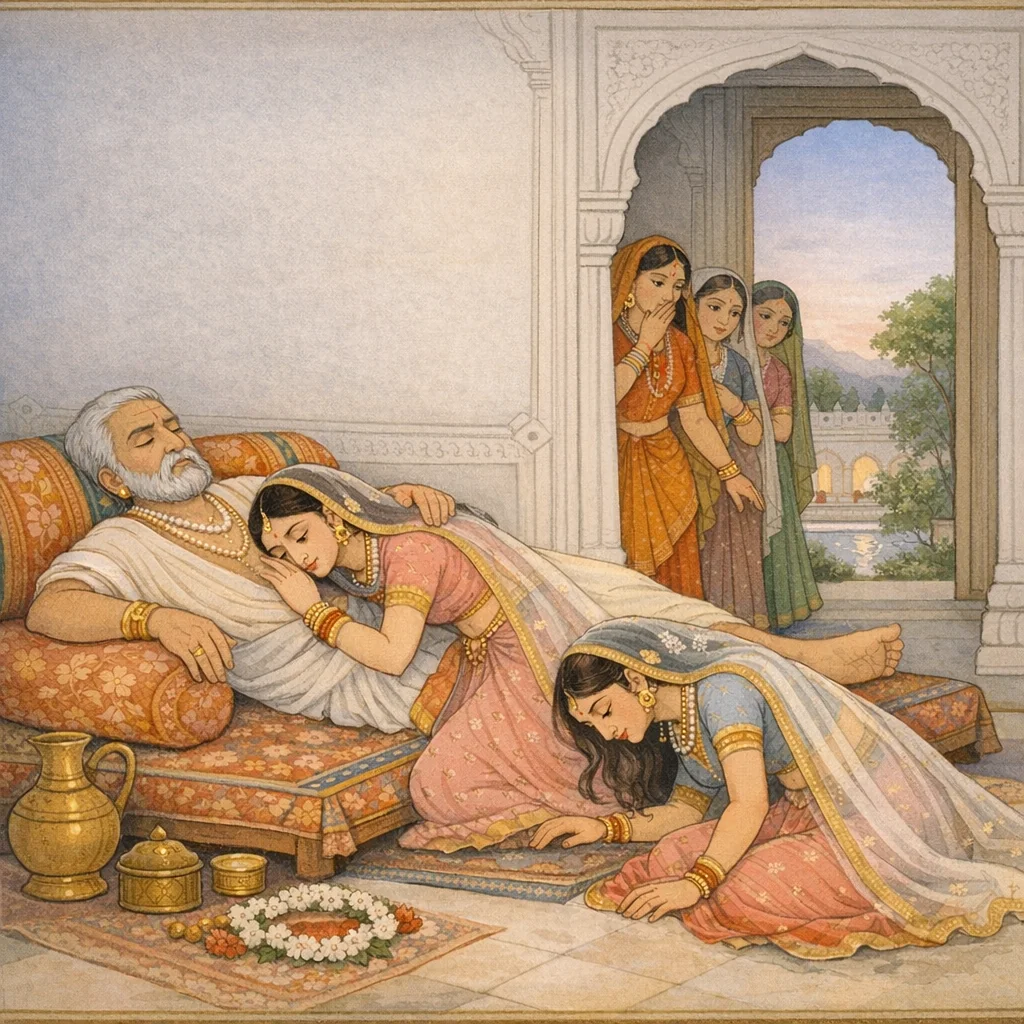
Sarga 65 stages a ritual-to-tragedy transition inside the royal residence. At dawn, panegyrists, bards (sūtāḥ), singers, and attendants arrive in established court protocol, reciting auspicious benedictions and filling the palace with praise, music, and sacred sound. Bathing preparations are assembled according to tradition: water scented with yellow sandal, vessels, unguents, and sensory offerings, all described as orderly and of excellent quality. Yet the king does not appear; attendants wait until sunrise, anxiety rising into suspicion. Bed-attending women approach Daśaratha’s chamber with restraint, touch the bed, and find no sign of life, trembling as their apprehension becomes certainty. The inner apartments erupt in loud wailing; Kausalyā and Sumitrā awaken to the cries, touch the king, and collapse in grief. Other queens led by Kaikeyī also fall senseless, and the palace—once resonant with eulogy—reverberates with lamentation, marking the public collapse of joy and the onset of collective mourning.
Shlokas
Verse 1
अथ रात्र्यां व्यतीतायां प्रातरेवापरेऽहनि।वन्दिनः पर्युपातिष्ठंस्तत्पार्थिव निवेशनम्।।।।सूताः परमसंस्कारा मङ्गलाश्चोत्तमश्रुताः।गायका: स्तुतिशीलाश्च निगदन्तः पृथक् पृथक्।।।।
When that night had passed, on the next day at early morning, panegyrists came to the king’s residence. Genealogists—highly accomplished, learned in auspicious lore—and singers skilled in praise arrived one after another, reciting benedictions aloud.
Verse 2
अथ रात्र्यां व्यतीतायां प्रातरेवापरेऽहनि।वन्दिनः पर्युपातिष्ठंस्तत्पार्थिव निवेशनम्।।2.65.1।।सूताः परमसंस्कारा मङ्गलाश्चोत्तमश्रुताः।गायका: स्तुतिशीलाश्च निगदन्तः पृथक् पृथक्।।2.65.2।।
When that night had passed, early the next morning panegyrists came to the king’s residence. Bards and genealogists—highly accomplished, learned, and speaking auspicious words—along with singers skilled in praise, arrived one after another, reciting their benedictions.
Verse 3
राजानं स्तुवतां तेषामुदात्ताभिहिताशिषाम्।प्रासादाऽभोगविस्तीर्णः स्तुतिशब्दोह्यवर्तत।।।।
The loud songs of praise—together with benedictions uttered in elevated tones by those eulogizing the king—spread throughout the whole expanse of the palace.
Verse 4
ततस्तु स्तुवतां तेषां सूतानां पाणिवादकाः।अपदानान्युदाहृत्य पाणिवादा नवादयन्।।।।
Then, as those bards sang, the palm-clappers beat time—reciting the king’s celebrated exploits and sounding their rhythmic claps.
Verse 5
तेन शब्देन विहगाः प्रतिबुद्धा विसस्वनुः।शाखास्थाः पञ्जरस्थाश्च ये राजकुलगोचराः।।।।
Awakened by that sound, the birds—some perched on branches and others in cages—began to chirp throughout the royal precincts.
Verse 6
व्याहृताः पुण्यशब्दाश्च वीणानां चापि निस्स्वनाः।आशीर्गेयं च गाथानां पूरयामास वेश्म तत्।।।।
Sacred utterances, the resonant notes of vīṇās, and the benedictory chants of metrical hymns filled that palace-hall completely.
Verse 7
तत श्शुचिसमाचाराः पर्युपस्थानकोविदाः।स्त्रीवर्ष धरभूयिष्ठा उपतस्थुर्यथापुरम्।।।।
Then, as was customary, attendants skilled in royal service and observant of purity-rules assembled—along with many women and eunuchs—to wait upon the palace.
Verse 8
हरिचन्दनसम्पृक्तमुदकं काञ्चनैर्घटैः।आनिन्युस्स्नानशिक्षाज्ञा यथाकालं यथाविधि।।।।
Those trained in the bathing-rites brought, at the proper time and according to rule, water mixed with yellow sandal paste in golden vessels.
Verse 9
मङ्गलालम्भनीयानि प्राशनीयान्युपस्करान्।उपनिन्युस्तथाप्यन्याः कुमारीबहुलाः स्त्रियः।।।।
Other women—many of them young maidens—also brought auspicious anointing materials, pleasing refreshments, and the ritual accessories required for completing the bathing ceremony.
Verse 10
सर्वलक्षणसम्पन्नं सर्वं विधिवदर्चितम्।सर्वं सुगुणलक्ष्मीवत्तद्बभूवाभिहारिकम्।।।।
All the articles meant for the king were complete in every proper mark, duly prepared according to rule, and altogether excellent and auspicious.
Verse 11
तत स्सूर्योदयं यावत्सर्वं परिसमुत्सुकम्।तस्थावनुपसम्प्राप्तं किंस्विदित्युपशङ्कितम्।।।।
Then all the attendants, fully prepared and eager, waited until sunrise; but when the king still did not appear, they began to suspect that something had gone wrong.
Verse 12
अथ याः कोसलेन्द्रस्य शयनं प्रत्यनन्तराः।ताः स्त्रियस्तु समागम्य भर्तारं प्रत्यबोधयन्।।।।
Thereafter, the women who had free access to the king of Kosala’s bedchamber came near and set about waking their lord.
Verse 13
तथाप्युचितवृत्ता स्ता विनयेन नयेन च।नह्यस्य शयनं स्पृष्ट्वा किञ्चिदप्युपलेभिरे।।।।
Even then, behaving with proper decorum—restrained and obedient—they touched his bed, yet perceived no sign at all.
Verse 14
ताः स्त्रियस्स्वप्नशीलज्ञाश्चेष्टासञ्चलनादिषुता वेपथुपरीताश्च राज्ञः प्राणेषु शङ्किताः।प्रतिस्रोतस्तृणाग्राणां सदृशं सञ्चकाशिरे।।।।
Those women, skilled in recognizing the marks of sleep from movement and other signs, trembled violently, fearing for the king’s very life—like reed-tips standing against a current.
Verse 15
अथ सन्देहमानानां स्त्रीणां दृष्ट्वा च पार्थिवम्।यत्तदाशङ्कितं पापं तस्य जज्ञे विनिश्चयः।।।।
Then, as the women looked closely upon the king while still wavering in doubt, the dreadful fear they had suspected hardened into certainty.
Verse 16
कौसल्या च सुमत्रच पुत्रशोकपराजिते।प्रसुप्ते न प्रबुध्येते यथा कालसमन्विते।।।।
Kauśalyā and Sumitrā, overcome by grief for their sons, lay fast asleep and did not awaken—as though seized by Death itself.
Verse 17
निष्प्रभा च विवर्णा च सन्ना शोकेन सन्नता।न व्यराजत कौसल्या तारेव तिमिरावृता।।।।
Kauśalyā, dull and pallid, sunk down with sorrow and slackened in body, did not shine—like a star veiled by darkness.
Verse 18
कौसल्याऽनन्तरं राज्ञस्सुमित्रा तदन्तनरम्।न स्म विभ्राजते देवी शोकाश्रुलुलितानना।।।।
By the king’s side lay Sumitrā, and next to her Kauśalyā; that queen, her face drenched and drooping with tears of grief, no longer shone with her former luster.
Verse 19
ते च दृष्ट्वा तथा सुप्ते शुभे देव्यौ च तं नृपम्।सुप्तमेवोद्गतप्राणमन्तःपुरमदृश्यत।।।।
Seeing the two noble queens asleep in that manner and the king as though merely sleeping—though his life-breath had departed—the women of the inner palace recognized that he had died in his sleep.
Verse 20
ततः प्रचुक्रुशुर्दीना स्सस्वरं ता वराङ्गनाः।करेणव इवारण्ये स्थानप्रच्युतयूथपाः।।।।
Then those noble women wailed aloud in distress, like female elephants in the forest when the leader of their herd has been driven from its place.
Verse 21
तासामाक्रन्दशब्देन सहसोद्धतचेतने।कौसल्या च सुमित्रा च त्यक्त निद्रे बभूवतुः।।।।
Startled by the sound of their wailing, Kausalyā and Sumitrā suddenly came to their senses and shook off sleep.
Verse 22
कौसल्या च सुमित्रा च दृष्ट्वा स्प़ृष्ट्वा च पार्थिवम्।हा नाथेति परिक्रुश्य पेततुर्धरणीतले।।।।
Kausalyā and Sumitrā, seeing the king and touching him, cried out “Ah, my lord!” and fell upon the ground.
Verse 23
सा कोसलेन्द्रदुहिता वेष्टमाना महीतले।न बभ्राज रजोध्वस्ता तारेव गगनाच्च्युता।।।।
Kausalyā, daughter of the lord of Kosala, rolled upon the earth; covered with dust, she no longer shone—like a star fallen from the sky.
Verse 24
नृपे शान्तगुणे जाते कौसल्यां पतितां भुवि।अपश्यंस्ताः स्त्रियः सर्वा हतां नागवधूमिव।।।।
When the king lay stilled and motionless, all the women saw Kausalyā fallen on the ground—like a female elephant struck down.
Verse 25
ततस्सर्वा नरेन्द्रस्य कैकेयीप्रमुखाः स्त्रियः।रुदन्त्य श्शोकसन्तप्ता निपेतुर्गतचेतनाः।।।।
Then all the king’s wives—led by Kaikeyī—burning with grief and weeping, lost consciousness and fell down.
Verse 26
ताभिस्स बलवान्नादः क्रोशन्तीभिरनुद्रुतः।येन स्फीतीकृतं भूयस्तद्गृहं समनादयत् ।। ।।
Followed by their wailing, a mighty sound arose; growing ever louder, it made the palace resound again and again.
Verse 27
तत् परित्रस्तन्त्रसम्भ्रान्त पर्युत्सुकजनाकुलम्।सर्वतस्तुमुलाक्रन्दं परितापार्तबान्धवम्।।।।सद्यो निपतितानन्दं दीनविक्लबदर्शनम्।बभूव नरदेवस्य सद्म दिष्टान्तमीयुषः।।।।
With the godlike king having met his end, that palace became instantly bereft of joy—crowded with anxious people, shaken and terrified, filled everywhere with tumultuous cries, and surrounded by kinsmen anguished with pain; it presented a miserable, stricken sight.
Verse 28
तत् परित्रस्तन्त्रसम्भ्रान्त पर्युत्सुकजनाकुलम्।सर्वतस्तुमुलाक्रन्दं परितापार्तबान्धवम्।।2.65.27।।सद्यो निपतितानन्दं दीनविक्लबदर्शनम्।बभूव नरदेवस्य सद्म दिष्टान्तमीयुषः।।2.65.28।।
On the king’s demise, the palace at once lost all joy—packed with anxious, frightened people, ringing everywhere with tumultuous cries, and full of relatives tormented by grief; it looked utterly wretched and broken.
Verse 29
अतीतमाज्ञाय तु पार्थिवर्षभं यशस्विनं सम्परिवार्य पत्नयः।भृशं रुदन्त्यः करुणं सुदुःखिताः प्रगृह्य बाहू व्यलपन्ननाथवत्।।।।
Realizing that the illustrious bull among kings had passed away, his wives gathered around him; in intense sorrow they wept bitterly and piteously, raising their arms and lamenting like those left without a protector.
Frequently Asked Questions
The pivotal action is the court’s continuation of prescribed morning rites and praise—performed in good faith—colliding with the hidden reality of the king’s death, forcing an immediate shift from ceremonial duty to truthful recognition and mourning.
The sarga underscores anityatā (the instability of worldly status) and shows how social order (vidhi, protocol, praise) cannot prevent loss; it also models communal response—grief acknowledged openly—when authority suddenly disappears.
The cultural focus is the Ayodhyā palace ecosystem—antaḥpura (inner apartments), royal service roles (vandinaḥ, sūtāḥ, attendants), and bathing-rite material culture (golden vessels, sandal-scented water, unguents, vīṇā music) that frame courtly life.