Sarga 62
अयोध्याकाण्डे द्विषष्टितमः सर्गः — Kausalyā consoles Daśaratha; grief, remorse, and nightfall
अयोध्याकाण्ड
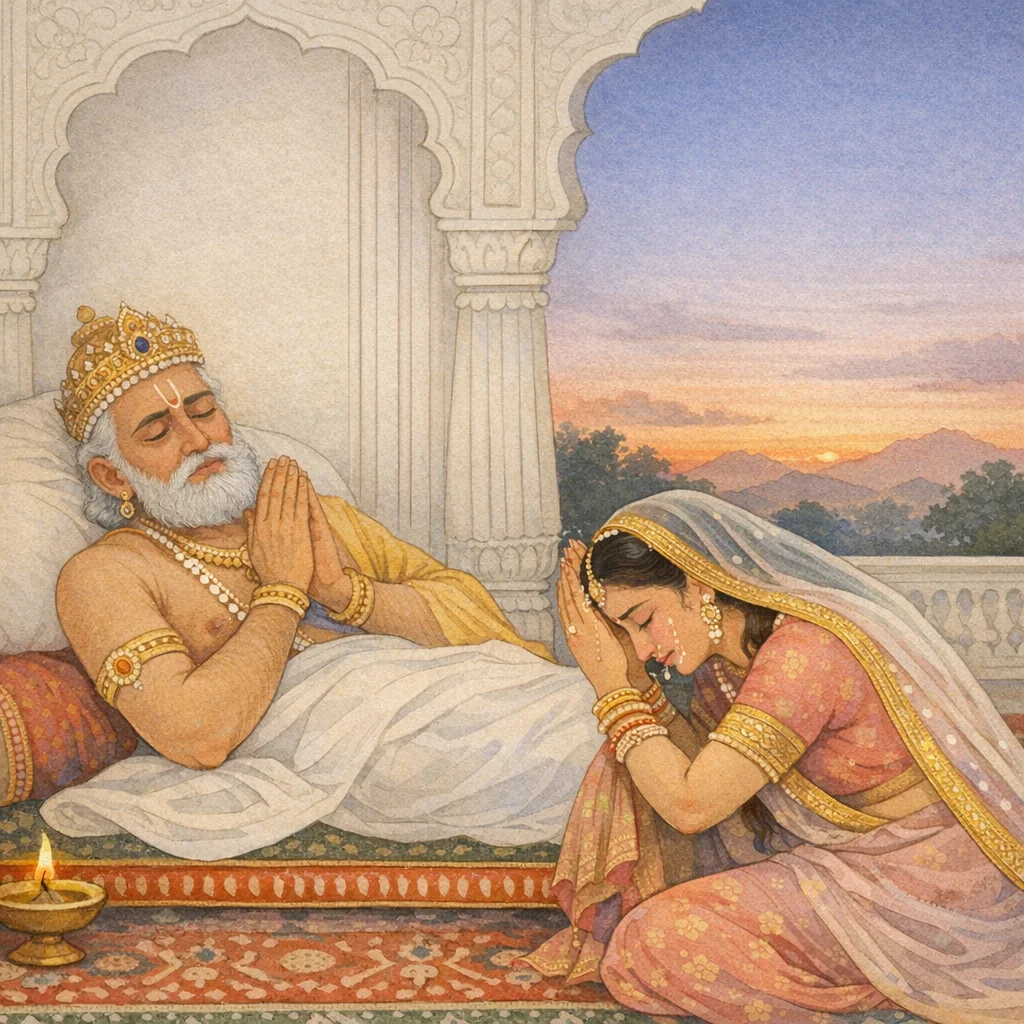
Sarga 62 stages a palace interior of moral psychology. After Kausalyā’s harsh speech (spoken in anger and grief), Daśaratha becomes distressed and falls into a faint, later regaining consciousness with heated sighs. His mind turns to remorse: alongside the immediate sorrow of Rāma’s separation, an earlier sinful act flashes back—his inadvertent killing of a sage’s son by śabdavedhin (sound-guided) archery—creating a doubled burden of culpability and loss. Trembling and downcast, he petitions Kausalyā with folded palms, framing the husband as a visible divinity for dharma-minded women, and asking her not to speak bitterly to one already overwhelmed. Kausalyā’s affect pivots from anger to compassion; she weeps profusely, makes anjali upon her head, and begs his pardon, admitting that son-grief drove her to improper harshness. She articulates an upadeśa on śoka: grief destroys fortitude, learning, and all stability; it is the greatest enemy and is harder to endure than an enemy’s blow. Even ascetics and the learned are deluded when the mind is submerged in grief. She measures time phenomenologically—five nights of exile feel like five years—and likens her swelling sorrow to the ocean rising with river torrents. As she speaks these heart-touching words, the sun’s rays fade and night arrives; Daśaratha, briefly consoled yet still overcome, falls under sleep’s influence.
Shlokas
Verse 1
एवं तु क्रुद्धया राजा राममात्रा सशोकया।श्रावितः परुषं वाक्यं चिन्तयामास दुःखितः।।।।
Thus compelled to hear the harsh words spoken in anger and grief by Rama’s mother, the king, distressed, sank into troubled reflection.
Verse 2
चिन्तयित्वा स च नृपो मुमोह व्याकुलेन्द्रियः।अथ दीर्घीण कालेन संज्ञामाप परन्तपः।।।।
After thinking it over, the king—his senses thrown into turmoil—fell into a swoon; and only after a long while did that subduer of foes regain consciousness.
Verse 3
स संज्ञामुपलभ्यैव दीर्घमुष्णं च निश्श्वसन्।कौसल्यां पार्श्वतो दृष्ट्वा पुन श्चिन्तामुपागमत्।।।।
Regaining consciousness, he breathed long, hot sighs; and seeing Kausalyā at his side, he once again fell into anxious brooding.
Verse 4
तस्य चिन्तयमानस्य प्रत्याभात्कर्म दुष्कृतम्।यदनेन कृतं पूर्वमज्ञानाच्छब्दवेधिना।।।।
As he pondered, a sinful deed flashed back to him—something he had once done in ignorance, shooting by sound alone.
Verse 5
अमनास्तेन शोकेन रामशोकेन च प्रभुः।द्वाभ्यामपि महाराज श्शोकाभ्यामन्वतप्यत।।।।
Broken in spirit, the lordly king was tormented by two griefs at once: that earlier sorrow and the sorrow born of separation from Rāma.
Verse 6
दह्यामान स्सशोकाभ्यां कौसल्यामाह भूपतिः।वेपमानोऽञ्जलिं कृत्वा प्रसादार्थमवाङ्मुखः।।।।
Burning with a twofold grief, the king—trembling, head bowed—addressed Kausalyā with folded hands, seeking to win her calm and forgiveness.
Verse 7
प्रसादये त्वां कौसल्ये रचितोऽयं मयाऽञ्जलिः।वत्सला चानृशंसा च त्वं हि नित्यं परेष्वपि।।।।
O Kausalyā, I beg you—this folded gesture is made by me for your grace. You are ever affectionate and never harsh, even toward those who oppose you.
Verse 8
भर्ता तु खलु नारीणां गुणवान्निर्गुणोऽपि वा।धर्मं विमृशमानानां प्रत्यक्षं देवि दैवतम्।।।।
O lady, for women who reflect on dharma, the husband—virtuous or even lacking virtue—stands as a visible divinity to be honored.
Verse 9
सा त्वं धर्मपरा नित्यं दृष्टलोक परावरा।नार्हसे विप्रियं वक्तुं दुखिःताऽपि सुदुःखितम्।।।।
You are ever devoted to dharma and have seen the world’s heights and depths; therefore, though grieving yourself, it does not befit you to speak harshly to one who is even more crushed by sorrow.
Verse 10
तद्वाक्यं करुणं राज्ञः श्रुत्वा दीनस्य भाषितम्।कौसल्या व्यसृजद्बाष्पं प्रणालीव नवोदकम्।।।।
Hearing the king’s pitiable words, spoken in wretchedness, Kausalya let her tears flow—like a water-spout releasing fresh rainwater.
Verse 11
सा मूर्ध्निबध्वा रुदती राज्ञः पद्ममिवाञ्जलिम्।सम्भ्रमादब्रवीत् त्रस्ता त्वरमाणाक्षरं वचः।।।।
Weeping, she lifted the king’s folded palms—like a lotus—up to her head; frightened and overwhelmed, she spoke in hurried, stumbling syllables.
Verse 12
प्रसीद शिरसा याचे भूमौ निपतितास्मि ते।याचितास्मि हता देव क्षन्तव्याऽहं न हि त्वया।।।।
Be gracious, my lord—I beg with bowed head; I have fallen to the ground before you. Yet, O king, I have been wounded by having to plead; I am not, indeed, one who should need to be forgiven by you.
Verse 13
नैषा हि सा स्त्री भवति श्लाघनीयेन धीमता।उभयोर्लोकयोर्वीर पत्या या सम्साद्यते।।।।
O heroic one, a woman who must be appeased by her husband—though he is wise and praiseworthy—does not truly attain well-being in either world.
Verse 14
जानामि धर्मं धर्मज्ञ त्वां जाने सत्यवादिनम्।पुत्रशोकार्तया तत्तु मया किमपि भाषितम्।।।।
O knower of dharma, I understand righteousness; and I know you to be a speaker of truth. But stricken by grief for my son, I said something improper.
Verse 15
शोको नाशयते धैर्यं शोको नाशयते श्रुतम्।शोको नाशयते सर्वं नास्ति शोकसमो रिपुः।।।।
Grief destroys fortitude; grief destroys sacred learning; grief destroys everything—there is no enemy equal to grief.
Verse 16
शक्य आपतित स्सोढुं प्रहारो रिपुहस्ततः।सोढुंमापतितश्शोकस्सुसूक्ष्मोऽपि न शक्यते।।।।
A sudden blow from an enemy’s hand may be endured; but sudden grief—however slight—cannot be borne.
Verse 17
धर्मज्ञा श्श्रुतिमन्तोऽपि छिन्नधर्मार्थसंशयाः।यतयो वीर मुह्यन्ति शोकसम्मूढचेतसः।।।।
O heroic one, even ascetics—men who know dharma, who are learned in scripture, and whose doubts about dharma and worldly good are cut away—become bewildered when grief overwhelms the mind.
Verse 18
वनवासाय रामस्य पञ्चरात्रोऽद्य गण्यते।य श्शोकहतहर्षायाः पञ्चवर्षोपमो मम।।।।
Today counts as the fifth night of Rāma’s forest-exile; yet for me—whose joy has been slain by sorrow—this span feels like five years.
Verse 19
तं हि चिन्तयमानाया श्शोकोऽयं हृदि वर्धते।नदीनामिव वेगेन समुद्रसलिलं महत्।।।।
As I keep thinking of him, this sorrow grows within my heart—like the mighty ocean swelling with the rushing force of rivers.
Verse 20
एवं हि कथयन्त्यास्तु कौसल्यायाश्शुभं वचः।मन्दरश्मिरभूत्सूर्यो रजनी चाभ्यवर्तत।।।।
As Kausalyā spoke these gentle and auspicious words, the sun’s rays grew faint, and night came on.
Verse 21
तथा प्रसादितो वाक्यैर्देव्या कौसल्यया नृपः।शोकेन च समाक्रान्तो निद्राया वशन्तोमेयिवान्।।।।
Thus soothed by Queen Kausalyā’s words, the king—still overcome by grief—seemed to pass under the power of sleep.
Frequently Asked Questions
The chapter presents a dual ethical crisis: Daśaratha’s immediate suffering from Rāma’s exile and his resurfacing guilt over a prior inadvertent killing committed through śabdavedhin archery. The dilemma is how a ruler and household must face consequences generated by earlier actions and vow-bound decisions while attempting moral repair through humility and reconciliation.
Kausalyā’s upadeśa frames śoka as the most formidable internal enemy: it erodes patience (dhairya), scriptural discernment (śruta), and overall stability, deluding even the learned and ascetic. The implied counsel is to recognize grief’s distortive power and to restore ethical speech, forgiveness, and composure as prerequisites for right judgment.
The sarga is primarily domestic and courtly rather than itinerant; the implied landmark is the royal interior of Ayodhyā. Cultural markers include anjali as a gesture of supplication, the dharma discourse on spousal divinity in normative ethics, and natural analogies (ocean/rivers; sunset/nightfall) used as literary landmarks to map interior emotion onto cosmic rhythms.