Sarga 59
एकोनषष्ठितमः सर्गः (Sarga 59): सुमन्त्रवाक्यं, अयोध्याविषादः, दाशरथिशोकसागरः
अयोध्याकाण्ड
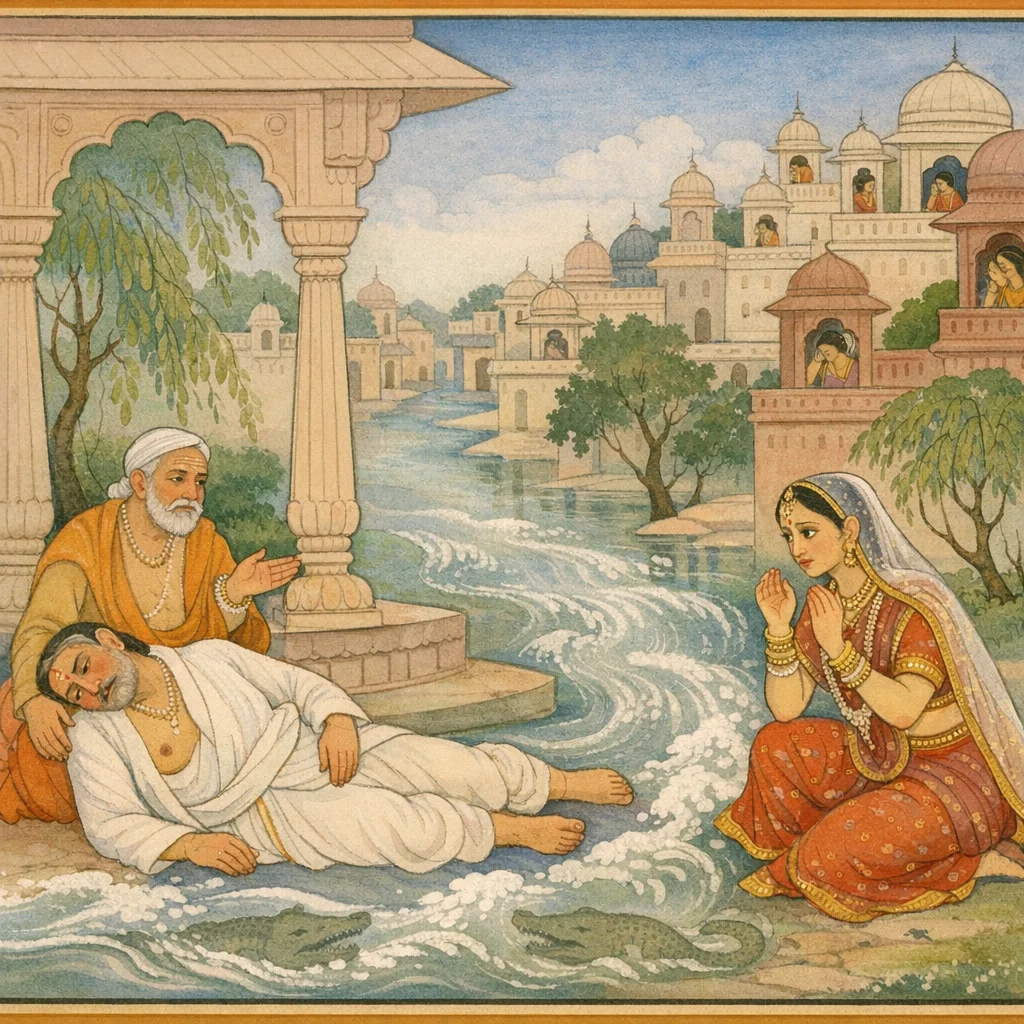
Sarga 59 continues Sumantra’s report to King Daśaratha after Rāma and Lakṣmaṇa proceed toward Prayāga, having crossed the Gaṅgā in ascetic garb. The charioteer recounts his helpless return: Lakṣmaṇa guarding Rāma, the horses refusing the path while ‘shedding hot tears,’ and Sumantra waiting with Guha in hope of being recalled. The chapter then shifts to a macrocosmic grief motif—trees, rivers, ponds, forests, and gardens appear withered or heated, as if the polity and ecology mirror Rāma’s calamity. Entering Ayodhyā without Rāma, Sumantra observes universal mourning: no greetings, repeated sighs, women weeping from mansions and palaces, and an undifferentiated anguish among friends, foes, and neutral citizens. Daśaratha responds in tear-choked self-indictment: he acted hastily ‘for the sake of a woman,’ without counsel, blaming Kaikeyī’s incitement and invoking destiny’s destructive force. He implores Sumantra to take him to Rāma, declaring he cannot live even a moment without seeing him (and Sītā). The sarga culminates in an extended metaphor of the ‘ocean of sorrow’—with Kaikeyī as the mare-mouth, Mantharā’s words as crocodiles, and tears as foam—after which Daśaratha collapses unconscious, and Kausalyā is seized by renewed fear.
Shlokas
Verse 1
इति ब्रुवन्तं तं सूतं सुमन्त्रं मन्त्रिसत्तमम्।ब्रूहि शेषं पुनरिति राजा वचनमब्रवीत्।।2.59.1।।
As Sumantra—the charioteer and best of ministers—was speaking thus, the king said: “Tell me the rest again.”
Verse 2
तस्य तद्वचनं श्रुत्वा सुमन्त्रो बाष्पविक्लबः।कथयामास भूयोऽपि रामसन्देशविस्तरम्।।2.59.2।।
Hearing those words, Sumantra—overcome with tears—once again narrated in fuller detail the message sent by Rama.
Verse 3
जटाः कृत्वा महाराज चीरवल्कलधारिणौ।गङ्गामुत्तीर्य तौ वीरौ प्रयागाभिमुखौ गतौ।।2.59.3।।
O great king, those two heroes, wearing bark garments and with matted locks, crossed the Gaṅgā and went onward facing toward Prayāga.
Verse 4
अग्रतो लक्ष्मणो यातः पालयन्रघुनन्दनम्।तांस्तथा गच्छतो दृष्ट्वा निवृत्तोऽस्म्यवशस्तदा।।2.59.4।।
Lakṣmaṇa went in front, guarding Rāma, the delight of the Raghu line. Seeing them depart in that manner, I turned back then—helpless.
Verse 5
ममत्वश्वा निवृत्तस्य न प्रावर्तन्त वर्त्मनि।उष्णमश्रु प्रमुञ्चन्तो रामे सम्प्रस्थिते वनम्।।2.59.5।।
When Rāma had set out for the forest and I turned back, my horses would not move on the road—shedding hot tears.
Verse 6
उभाभ्यां राजपुत्राभ्यामथ कृत्वाहमञ्जलिम्।प्रस्थितो रथमास्थाय तद्दुःखमपि धारयन्।।2.59.6।।
Then, having saluted both princes with folded hands, I mounted the chariot and set out—holding my grief in check.
Verse 7
गुहेन सार्धं तत्रैव स्थितोऽस्मि दिवसान्बहून्।आशया यदि मां रामः पुन श्शब्दापयेदिति।।2.59.7।।
Together with Guha, I stayed right there for many days, hoping: ‘Perhaps Rāma will call me back again.’
Verse 8
विषये ते महाराज रामव्यसनकर्शिताः।अपि वृक्षाः परिम्लानास्सपुष्पाङ्कुरकोरकाः।।2.59.8।।
O great king, throughout your realm—even the trees, though bearing flowers, shoots, and buds—have withered, oppressed by the calamity that has befallen Rāma.
Verse 9
उपतप्तोदका नद्यः पल्वलानि सरांसि च।परिशुष्कपलाशानि वनान्युपवनानि च।।2.59.9।।
The rivers run with heated waters; ponds and lakes too are affected; and the forests and gardens have foliage that has shriveled and dried up.
Verse 10
न च सर्पन्ति सत्त्वानि व्यासा न प्रचरन्ति च।रामशोकाभिभूतं तन्निष्कूजमभवद्वनम्।।2.59.10।।
Creatures did not move about, and even wild beasts no longer roamed. That forest, as though overwhelmed by grief for Rāma, became silent—without a sound.
Verse 11
लीनपुष्करपत्राश्च नरेन्द्र कलुषोदकाः।सन्तप्तपद्माः पद्मिन्यो लीनमीनविहङ्गमाः।।2.59.11।।
O king, the lotus-lakes had turbid waters; their blue-lotus leaves were sunk and shrivelled; their lotuses were scorched and withered; fish and water-birds lay hidden away.
Verse 12
जलजानि च पुष्पाणि माल्यानि स्थलजानि च।नाद्य भान्त्यल्पगन्धीनि फलानि च यथापुरम्।।2.59.12।।
Flowers born in water and garlands of land-born flowers—indeed even fruits—today do not appear as before; their fragrance is faint and their splendour diminished.
Verse 13
अत्रोद्यानानि शून्यानि प्रलीनविहगनि च।न चाभिरामा नारामान्पश्यामि मनुजर्षभ।।2.59.13।।
Here the pleasure-gardens are empty, and the birds have vanished into hiding. O best of men, I no longer see the parks as lovely as they once were.
Verse 14
प्रविशन्तमयोध्यां मां न कश्चिदभिनन्दति।नरा राममपश्यन्तो निश्श्वसन्ति मुहुर्मुहुः।।2.59.14।।
When I entered Ayodhyā, no one greeted me. The people, not seeing Rāma, kept sighing again and again.
Verse 15
देव राजरथं दृष्ट्वा विना राममिहागतम्।दुःखादश्रुमुखस्सर्वो राजमार्गगतो जनः।।2.59.15।।
O lord, seeing the royal chariot arrive here without Rama, all the people who had gathered along the king’s highway were in anguish, their faces wet with tears.
Verse 16
हर्म्यैर्विमानैः प्रासादैरवेक्ष्यरथमागतम्।हाहाकारकृतानार्यो रामादर्शनकर्शिताः।।2.59.16।।
From mansions, lofty multi-storied buildings, and palaces, the women saw the chariot arrive; tormented by not seeing Rama, they raised cries of lament—“Alas! Alas!”
Verse 17
आयतैर्विमलैर्नेत्रैरश्रुवेगपरिप्लुतैः।अन्योन्यमभिवीक्षन्तेऽव्यक्तमार्ततराः स्त्रियः।।2.59.17।।
The women—stricken with deeper anguish—looked silently at one another, their large clear eyes flooded by rushing tears.
Verse 18
नामित्राणां न मित्राणामुदासीनजनस्य च।अहमार्ततया किञ्चिद्विशेषमुपलक्षये।।2.59.18।।
In that agony, I could not discern even the slightest difference: among enemies, among friends, and among the indifferent alike, the distress appeared the same.
Verse 19
अप्रहृष्टमनुष्या च दीननागतुरङ्गमा।आर्तस्वरपरिम्लाना विनिश्श्वसितनिस्स्वना।।2.59.19।।निरानन्दा महाराज रामप्रव्राजनातुरा।कौसल्या पुत्रहीनेव अयोध्या प्रतिभाति मा।।2.59.20।।
Its people were joyless; even elephants and horses were spiritless. The city seemed worn by cries of anguish and resounded with deep, despairing sighs.
Verse 20
अप्रहृष्टमनुष्या च दीननागतुरङ्गमा।आर्तस्वरपरिम्लाना विनिश्श्वसितनिस्स्वना।।2.59.19।।निरानन्दा महाराज रामप्रव्राजनातुरा।कौसल्या पुत्रहीनेव अयोध्या प्रतिभाति मा।।2.59.20।।
O great king, joyless and stricken by Rama’s banishment, Ayodhya appears to me like Kausalyā herself—bereft of her son.
Verse 21
सूतस्य वचनं श्रुत्वा वाचा परमदीनया।बाष्पोपहतया राजा तं सूतमिदमब्रवीत्।।2.59.21।।
Hearing the charioteer’s words, the king—his voice utterly broken and choked with tears—spoke these words to Sumantra.
Verse 22
कैकेय्या विनियुक्तेन पापाभिजनभावया।मया न मन्त्रकुशलैर्वृद्धैस्सह समर्थितम्।।2.59.22।।
Urged on by Kaikeyī—whose intent and alliances were sinful—I did not take counsel and confirmation with elder advisers skilled in statecraft.
Verse 23
न सुहृद्भिर्नचामात्यैर्मन्त्रयित्वा न नैगमैः।मयायमर्थस्सम्मोहात् स्त्रीहेतो स्सहसा कृतः।।2.59.23।।
Without consulting friends, ministers, or prudent citizens, I committed this deed in delusion—rashly, and for the sake of a woman.
Verse 24
भवितव्यतया नूनमिदं वा व्यसनं महत्।कुलस्यास्य विनाशाय प्राप्तं सूत यदृच्छया।।2.59.24।।
Surely this great calamity has come by the force of destiny, O charioteer—arriving, as it were, to bring ruin upon this very lineage.
Verse 25
सूत यद्यस्ति ते किञ्चिन्मया तु सुकृतं कृतम्।त्वं प्रापयाऽऽशु मां रामं प्राणास्सन्त्वरयन्तिमाम्।।2.59.25।।
O charioteer, if I have ever done even the least good to you, then quickly take me to Rāma—my very life-breath is hurrying me toward death.
Verse 26
यद्यद्यापि ममैवाज्ञा निवर्तयतु राघवम्।न शक्ष्यामि विना रामं मुहूर्तमपि जीवितुम्।।2.59.26।।
If even now my command could bring Rāghava back, then let it do so—for without Rāma I cannot live even for a moment.
Verse 27
अथवाऽपि महाबाहुर्गतो दूरं भविष्यति।मामेव रथमारोप्य शीघ्रं रामाय दर्शय।।2.58.27।।
Or if the mighty-armed one has already gone far, then place me at once upon the chariot and quickly bring me to the sight of Rāma.
Verse 27
अथवाऽपि महाबाहुर्गतो दूरं भविष्यति।मामेव रथमारोप्य शीघ्रं रामाय दर्शय।।2.58.27।।
Or if the mighty-armed one has already gone far, then place me at once upon the chariot and quickly bring me to the sight of Rāma.
Verse 28
वृत्तदंष्ट्रो महेष्वासः क्वासौ लक्ष्मणपूर्वजः।यदि जीवामि साध्वेनं पश्येयं सीतया सह।।2.59.28।।
Where is that great archer with well-formed teeth—the elder brother of Lakṣmaṇa? If only I might see him well, together with Sītā, I could still go on living.
Verse 29
लोहिताक्षं महाबाहुमामुक्तमणिकुण्डलम्।रामं यदि न पश्येयं गमिष्यामि यमक्षयम्।।2.59.29।।
If I do not behold Rāma—red-eyed, mighty-armed, wearing gem-studded earrings—I will go to Yama’s realm, the abode of death.
Verse 30
अतो नु किं दुःखतरं सोऽहमिक्ष्वाकुनन्दनम्।इमामवस्थामापन्नो नेह पश्यामि राघवम्।।2.59.30।।
What sorrow could be greater than this—that I, fallen into such a state, still do not see Rāghava, the delight of the Ikṣvāku line?
Verse 31
हा राम रामानुज हा हा वैदेहि तपस्विनि।न मां जानीत दुःखेन म्रियमाणतमनाथवत्।।2.59.31।।
Alas, Rāma! Alas, Rāma’s younger brother! Alas, Vaidehī—poor suffering one! You do not know that, from grief, I am dying like one without refuge.
Verse 32
स तेन राजा दुःखेन भृशमर्पितचेतनः।अवगाढस्सुदुष्पारं शोकसागरमब्रवीत्।।2.59.32।।
Thus the king, his mind utterly overwhelmed by that sorrow, plunged into an impassable sea of grief, spoke on.
Verse 33
रामशोकमहाभोगस्सीताविरहपारगः।श्वसितोर्मि महावर्तो बाष्पफेनजालाविलः।।2.59.33।।बाहुविक्षेपमीनौघो विक्रन्दित महास्वनः।प्रकीर्णकेशशैवालः कैकेयीबडबामुखः।।2.59.34।।ममाश्रुवेगप्रभवः कुब्जावाक्यमहाग्रहः।वरवेलो नृशंसाया रामप्रव्राजनायतः।।2.59.35।।यस्मिन्बत निमग्नोऽहं कौसल्ये राघवं विना।दुस्तरो जीवता देवि मयाऽयं शोकसागरः।।2.59.36।।
This ‘sea of sorrow’ has the vast breadth of grief for Rāma, and the far shore is Sītā’s separation. Its waves and whirlpools are my sighs, and its waters are churned and clouded with the foam of tears.
Verse 34
रामशोकमहाभोगस्सीताविरहपारगः।श्वसितोर्मि महावर्तो बाष्पफेनजालाविलः।।2.59.33।।बाहुविक्षेपमीनौघो विक्रन्दित महास्वनः।प्रकीर्णकेशशैवालः कैकेयीबडबामुखः।।2.59.34।।ममाश्रुवेगप्रभवः कुब्जावाक्यमहाग्रहः।वरवेलो नृशंसाया रामप्रव्राजनायतः।।2.59.35।।यस्मिन्बत निमग्नोऽहं कौसल्ये राघवं विना।दुस्तरो जीवता देवि मयाऽयं शोकसागरः।।2.59.36।।
Its shoals of fish are my flailing arms; its great roar is my cries. My dishevelled hair is its algae, and Kaikeyī is its baḍabā-mouth—the devouring mare-faced fire of the sea.
Verse 35
रामशोकमहाभोगस्सीताविरहपारगः।श्वसितोर्मि महावर्तो बाष्पफेनजालाविलः।।2.59.33।।बाहुविक्षेपमीनौघो विक्रन्दित महास्वनः।प्रकीर्णकेशशैवालः कैकेयीबडबामुखः।।2.59.34।।ममाश्रुवेगप्रभवः कुब्जावाक्यमहाग्रहः।वरवेलो नृशंसाया रामप्रव्राजनायतः।।2.59.35।।यस्मिन्बत निमग्नोऽहं कौसल्ये राघवं विना।दुस्तरो जीवता देवि मयाऽयं शोकसागरः।।2.59.36।।
Its source is the torrent of my tears; its great crocodiles are the hunchback’s words. Its shoreline is the cruel queen’s boons, and its wide expanse is Rāma’s banishment.
Verse 36
रामशोकमहाभोगस्सीताविरहपारगः।श्वसितोर्मि महावर्तो बाष्पफेनजालाविलः।।2.59.33।।बाहुविक्षेपमीनौघो विक्रन्दित महास्वनः।प्रकीर्णकेशशैवालः कैकेयीबडबामुखः।।2.59.34।।ममाश्रुवेगप्रभवः कुब्जावाक्यमहाग्रहः।वरवेलो नृशंसाया रामप्रव्राजनायतः।।2.59.35।।यस्मिन्बत निमग्नोऽहं कौसल्ये राघवं विना।दुस्तरो जीवता देवि मयाऽयं शोकसागरः।।2.59.36।।
Alas, Kauśalyā, I am sunk in this ocean of sorrow; without Rāghava, I cannot cross it alive, my queen.
Verse 37
अशोभनं योऽहमिहाद्य राघवं दिदृक्षमाणो न लभे सलक्ष्मणम्।इतीव राजा विलपन्महायशाः पपात तूर्णं शयने समूर्छितः।।2.59.37।।
‘How inauspicious—here I am, longing to see Rāghava, yet unable to see him with Lakṣmaṇa!’ Lamenting thus, the illustrious king collapsed at once upon the bed, unconscious.
Verse 38
इति विलपति पार्थिवे प्रणष्टे करुणतरं द्विगुणं च रामहेतोः।वचनमनुनिशम्य तस्य देवी भयमगमत्पुनरेव राममाता।।2.59.38।।
As the king lamented and lost consciousness—his sorrow for Rāma growing even more pitiful and doubled—Rāma’s mother, the queen, hearing his words, was once again seized by fear.
Frequently Asked Questions
The pivotal action is Daśaratha’s admission that he authorized Rāma’s exile hastily and without counsel—an ethical failure of kingship procedure (consultation with ministers, elders, and prudent citizens) compounded by personal attachment and Kaikeyī’s demands.
The sarga teaches that governance requires deliberation and restraint: when authority is exercised without wise counsel and dharmic reflection, the ruler becomes morally accountable for cascading social suffering, even if he later attributes events to destiny.
Key landmarks include the Gaṅgā crossing, the route toward Prayāga, and the civic space of Ayodhyā—especially royal roads, palaces, and pleasure-gardens—used to map how public culture and the natural environment register Rāma’s absence.