Sarga 58
अष्टपञ्चाशः सर्गः (Sarga 58) — Daśaratha Questions Sumantra; Messages from the Forest Threshold
अयोध्याकाण्ड
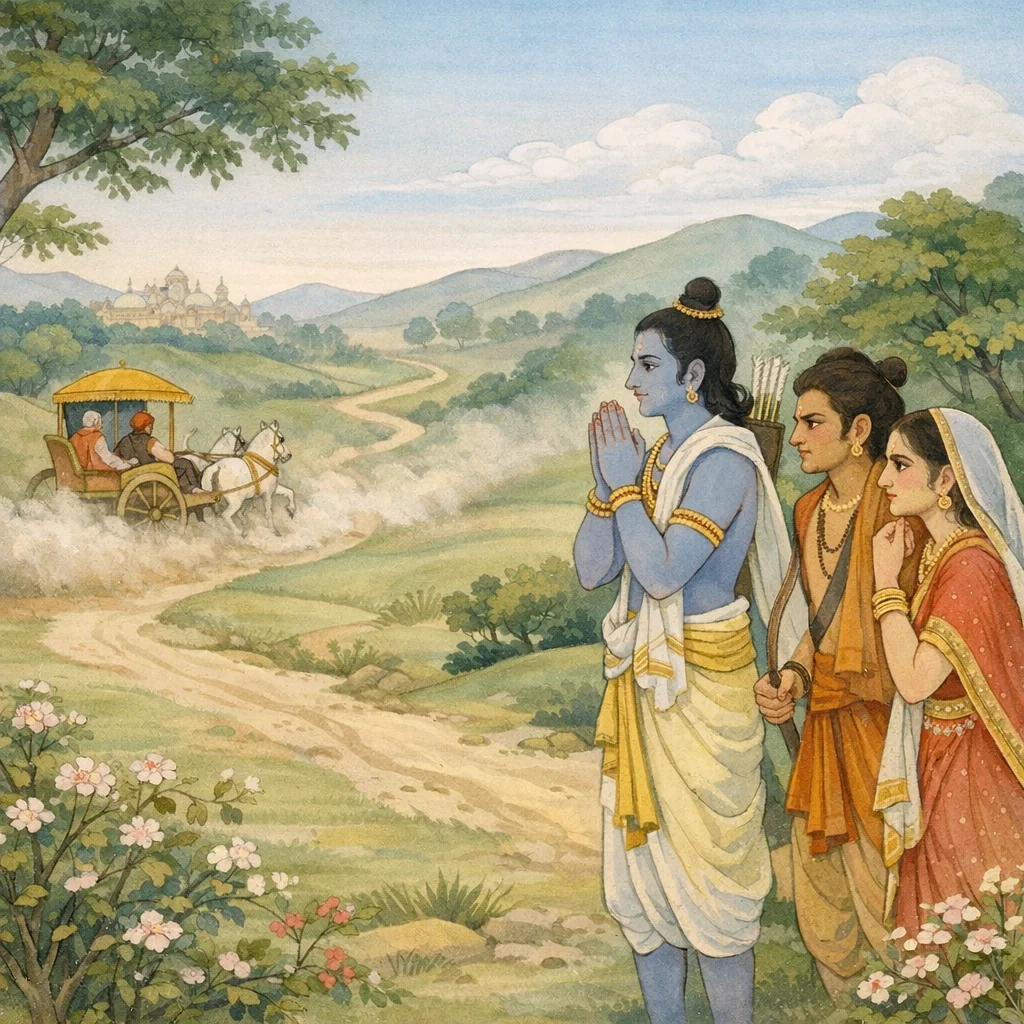
After regaining consciousness, King Daśaratha summons Sumantra to obtain precise news of Rāma. The king’s questions emphasize material details—where Rāma sat, slept, and what he ate—revealing grief’s need for concrete narrative as a substitute for presence. Sumantra approaches with folded hands and describes the king as aged, dust-covered, and sighing like a newly captured elephant, establishing a scene of political collapse through somatic imagery. Sumantra reports Rāma’s dharmic conduct at the forest’s edge: with añjali and bowed head, Rāma instructs that salutations and inquiries of welfare be conveyed to the inner palace, especially to Kausalyā, urging ritual regularity, service to Daśaratha ‘as to a god,’ humility among co-wives, and careful maintenance of relations with Kaikeyī. Rāma also frames rājadharma regarding Bharata: treat him as king, report welfare, and advise equal honor to all mothers and obedience to the aged monarch. The report then shifts to Lakṣmaṇa’s anger and moral protest against the banishment, while Sītā appears stunned, then breaks into tears upon Sumantra’s departure. The sarga closes with the tableau of Rāma weeping with folded hands, supported by Lakṣmaṇa, and Sītā gazing at the royal chariot—an image of separation that fuses personal sorrow with the ethics of duty.
Shlokas
Verse 1
प्रत्याश्वस्तो यदा राजा मोहात्प्रत्यागतं पुनः।अथाऽजुहाव तं सूतं रामवृत्तान्तकारणात्।।।।
When the king, having recovered from his fainting delusion and regained himself, then summoned that charioteer—so as to learn the true account of Rāma.
Verse 2
अथ सूतो महाराजं कृताञ्जलिरुपस्थितः।राममेवानुशोचन्तं दुःखशोकसमन्वितम्।।।।वृद्धं परमसन्तप्तं नवग्रहमिव द्विपम्।विनिश्वसन्तं ध्यायन्तमस्वस्थ मिव कुङञरम्।।।।
Then the charioteer approached the great king with folded hands. Daśaratha—aged, overwhelmed by grief and sorrow, brooding only on Rāma—kept heaving deep sighs, like a newly captured elephant, sick and distressed.
Verse 3
अथ सूतो महाराजं कृताञ्जलिरुपस्थितः।राममेवानुशोचन्तं दुःखशोकसमन्वितम्।।2.58.2।।वृद्धं परमसन्तप्तं नवग्रहमिव द्विपम्।विनिश्वसन्तं ध्यायन्तमस्वस्थ मिव कुङञरम्।।2.58.3।।
Then the charioteer approached the great king with folded hands. The aged monarch, overwhelmed by grief and sorrow, lamented only for Rāma—brooding and sighing deeply, like a newly captured, ailing elephant.
Verse 4
राजा तु रजसा सूतं ध्वस्ताङ्गं समुपस्थितम्।अश्रुपूर्णमुखं दीनमुवाच परमार्तवत्।।।।
Seeing the charioteer standing near—his body coated with dust, his face drenched in tears, and his spirit crushed—the king spoke to him in overwhelming anguish.
Verse 5
क्वनु वत्स्यति धर्मात्मा वृक्षमूलमुपाश्रितः।सोऽत्यन्तसुखित स्सूत किमशिष्यति राघवः।।।।
“Where will that righteous one live, taking shelter at the foot of a tree? He who has known only the highest comforts—O charioteer—what will Rāghava eat?”
Verse 6
दुःखस्यानुचितो दुःखं सुमन्त्र शयनोचितः।भूमिपालात्मजो भूमौ शेते कथमनाथवत्।।।।
“O Sumantra, he is unfit for suffering and used to a proper bed. How can the son of the earth’s guardian lie upon the bare ground like one without protection?”
Verse 7
यं यान्तमनुयान्ति स्म पदातिरथकुञ्जराः।स वत्स्यति कथं रामो विजनं वन माश्रितः।।।।
Wherever Rāma went, foot-soldiers, chariots, and elephants used to follow him. How will that Rāma now live, having taken refuge in a lonely, desolate forest?
Verse 8
व्यालैर्मृगैराचरितं कृष्णसर्पनिषेवितम्।कथं कुमारौ वैदेह्या सार्धं वन मुपस्थितौ।।।।
How can the two princes, together with Vaidehī, remain in a forest roamed by wild beasts and animals, and frequented by black serpents?
Verse 9
सुकुमार्या तपस्विन्या सुमन्त्र सह सीतया।राजपुत्रौ कथं पादैरवरुह्य रथाद्गतौ।।।।
O Sumantra, how did the two princes go on foot, after alighting from the chariot, together with Sītā—so delicate and now living like an ascetic in suffering?
Verse 10
सिद्धार्थः खलु सूत त्वं येन दृष्टौ ममाऽत्मजौ।वनान्तं प्रविशन्तौ तावश्विनाविवमन्दरम्।।।।
“Truly, O charioteer, you are blessed—since you beheld my two sons as they entered the forest’s outskirts, like the Aśvins approaching Mandara.”
Verse 11
किमुवाच वचो रामः किमुवाच च लक्ष्मणः।सुमन्त्र वनमासाद्य किमुवाच च मैथिली।।।।
“What words did Rāma speak? What did Lakṣmaṇa say? And, O Sumantra, upon reaching the forest, what did Maithilī (Sītā) say?”
Verse 12
आसितं शयितं भुक्तं सूत रामस्य कीर्तय।जीविष्यामहमेतेन ययातिरिव साधुषु।।।।
Tell me, O charioteer, where Rāma sat, where he slept, and what he ate. By hearing this I shall go on living—like Yayāti sustained in the company of the righteous.
Verse 13
इति सूतो नरेन्द्रेण बोधित स्सज्जमानया।उवाच वाचा राजानं स बाष्पपरिबद्धया।।।।
Thus questioned by the king, the charioteer spoke to him—his words faltering and his voice choked with tears.
Verse 14
अब्रवीन्मां महाराज धर्ममेवानुपालयन्।अञ्जलिं राघवः कृत्वा शिरसाऽभिप्रणम्य च।।।।
“O great king,” (said the charioteer), “Rāghava, ever upholding Dharma, spoke to me after folding his hands and bowing his head in reverence.”
Verse 15
सूत मद्वचनात्तस्य तातस्य विदितात्मनः।शिरसा वन्दनीयस्य वन्द्यौ पादौ महात्मनः।।।।
“O charioteer, convey from me to my father—noble, self-possessed, and worthy of reverence—that I bow my head to his feet, which are themselves worthy of homage.”
Verse 16
सर्वमन्तःपुरं वाच्यं सूत मद्वचनात्त्वया।आरोग्यमविशेषेण यथार्हं चाभिवादनम्।।।।
“O charioteer, convey on my behalf to the entire inner household—without distinction—my enquiry after their health, and my salutations in a manner fitting each one’s rank.”
Verse 17
माता च मम कौसल्या कुशलं चाभिवादनम्।अप्रमादं च वक्तव्या ब्रूयाश्चैनामिदं वचः।।।।
“And to my mother Kauśalyā convey my welfare and my salutations. Tell her also to remain vigilant, and say to her these words.”
Verse 18
धर्मनित्या यथाकालमग्न्यगारपरा भव।देवि देवस्य पादौ च देववत्परिपालय।।।।
“O lady, be ever steadfast in Dharma; at the proper times attend to the rites in the fire-chamber; and serve the feet of your lord as you would serve a god.”
Verse 19
अभिमानं च मानं च त्यक्त्वा वर्तस्व मातृषु।अनु राजानमार्यां च कैकेयीमम्ब कारय।।।।
“Casting aside ego and pride, live harmoniously with the other queens as with mothers. And, O mother, guide venerable Kaikeyī to remain well-disposed toward the king.”
Verse 20
कुमारे भरते वृत्तिर्वर्तितव्या च राजवत्।अर्थज्येष्ठा हि राजानो राजधर्ममनुस्मर।।।।
“And toward the young Bharata you should behave as toward a king. For kings are ‘senior’ by virtue of kingship; remember the dharma of royalty.”
Verse 21
भरतः कुशलं वाच्यो वाच्यो मद्वचनेन च।सर्वास्वेव यथान्यायं वृत्तिं वर्तस्व मातृषु।।।।
Convey my well-being to Bharata; and also tell him, in my name, that he should conduct himself with due fairness toward all our mothers.
Verse 22
वक्तव्यश्च महाबाहुरिक्ष्वाकुकुलनन्दनः।पितरं यौवराज्यस्थो राज्यस्थमनुपालय।।2.58.22।।
Tell that mighty-armed delight of the Ikṣvāku line (Bharata): established as prince-regent, he should safeguard the kingdom by obediently supporting his father who remains on the throne.
Verse 23
अतिक्रान्तवया राजा मास्मैनं व्यवरोरुधः।कुमार राज्ये जीव त्वं तस्यैवाज्ञाप्रवर्तनात्।।।।
The king is advanced in years—do not obstruct him in any way. Live as prince-regent by carrying out his commands alone.
Verse 24
अब्रवीच्चापि मां भूयो भृशमश्रूणि वर्तयन्।मातेव मम माता ते द्रष्टव्या पुत्रगर्धिनी।।।।
And again, shedding many tears, he spoke to me: “My mother—yearning for her son—should be cared for by you as though she were your own mother.”
Verse 25
इत्येवं मां महराज ब्रुवन्नेव महायशाः।रामो राजीवताम्राक्षो भृशमश्रूण्यवर्तयत्।।।।
Thus speaking to me, O great king, the illustrious Rāma—his lotus-reddened eyes—shed tears in abundance.
Verse 26
लक्ष्मणस्तु सुसङ्कृद्धो निश्श्वसन्वाक्यमब्रवीत्।केनायमपराधेन राजपुत्रो विवासितः।।।।
But Lakṣmaṇa, fiercely enraged and breathing hard, spoke: “For what offence has this prince been sent into exile?”
Verse 28
यदि प्रव्राजितो रामो लोभकारणकारितम्।वरदाननिमित्तं वा सर्वथा दुष्कृतं कृतम्।।।।
If Rāma has been driven into exile—whether propelled by greed for the kingdom or on the pretext of boons—then in every way a grievous wrong has been done.
Verse 29
इदं तावद्यथाकाममीश्वरस्य कृते कृतम्।रामस्य तु परित्यागे न हेतु मुपलक्षये।।।।
This, at least, has been done as though by sheer arbitrary will—perhaps even under the guise of duty toward the Lord; but for abandoning Rāma I perceive no valid reason at all.
Verse 30
असमीक्षय समारब्धं विरुद्धं बुध्दिलाघवात्।जनयिष्यति सङ्क्रोशं राघवस्य विवासनम्।।।।
Rāghava’s banishment—begun without due reflection, contrary to justice, and from poor judgment—will surely give rise to public lamentation and outcry.
Verse 31
अहं तावन्महाराजे पितृत्वं नोपलक्ष्ये।भ्राता भर्ता च बन्धुश्च पिता च मम राघवः।।।।
“For my part, I no longer recognize fatherhood in the great king. For me, Rāghava alone is brother, protector, kinsman—and father.”
Verse 32
सर्वर्लोकप्रियं त्यक्त्वा सर्वलोकहिते रतम्।सर्वलोकोऽनुरज्येत कथं त्वाऽनेनकर्मणा।।।।
“After abandoning Rama—beloved by all and devoted to the welfare of all—how could the world ever be pleased with you for such a deed?”
Verse 33
सर्वप्रजाभिरामं हि रामं प्रव्राज्य धार्मिकम्।सर्वलोकं विरुध्येमं कथं राजा भविष्यसि।।।।
“Having exiled righteous Rama—who delights all subjects—and thereby setting yourself against the whole world, how will you still be a king?”
Verse 34
जानकी तु महाराज निश्श्वसन्ती मनस्विनी।भूतोपहतचित्तेव विष्ठिता विस्मृता स्मिता।।।।
“But Jānakī, O great king—tender-hearted—stood heaving deep sighs, as though her mind were struck by some spirit: stunned, oblivious, and yet faintly smiling.”
Verse 35
अदृष्टपूर्वव्यसना राज्यपुत्री यशस्विनी।तेन दुःखेन रुदती नैव मां किञ्चिदब्रवीत्।।।।
“That illustrious princess—who had never before known adversity—was weeping in that sorrow and could not speak a single word to me.”
Verse 36
उद्वीक्षमाणा भर्तारं मुखेन परिशुष्यता।मुमोच सहसा बाष्पं मां प्रयान्तमुदीक्ष्य सा।।।।
“Seeing me about to depart, she looked toward her husband with a face gone dry and pale, and suddenly she released a flood of tears.”
Verse 37
तथैव रामोऽश्रुमुखः कृताञ्जलिः स्थितोऽभवल्लक्ष्मणबाहुपालितः।तथैव सीता रुदती तपस्विनी निरीक्षते राजरथं तथैव माम्।।।।
“So too Rama stood with tear-filled face and folded hands, supported by Lakshmana’s arms; and so too Sita—wretched with grief—kept looking at the royal chariot, and at me as well.”
Frequently Asked Questions
The sarga presents the ethical tension between enforced exile and rightful governance: Daśaratha seeks sustaining detail about Rāma’s hardship, while Rāma responds through disciplined dharma—sending salutations, prescribing household conduct, and affirming rājadharma toward Bharata despite personal loss.
Dharma is shown as performative and communicative: even at the moment of separation, Rāma prioritizes respectful speech, ritual order, care for elders, and social equilibrium; Lakṣmaṇa’s anger simultaneously illustrates the moral intuition that unjust action destabilizes legitimacy.
The narrative emphasizes the forest threshold (वनान्त) as a liminal space where royal life converts to ascetic exile; culturally, the अग्न्यागार (fire-ritual chamber), अन्तःपुर (inner apartments), and राजरथ (royal chariot) mark palace order now receding, framed by similes of the Ashvins, Mandara, and Yayati.