Sarga 57
सप्तपञ्चाशः सर्गः — Sumantra’s Return to Ayodhya and the Palace’s Lament
अयोध्याकाण्ड
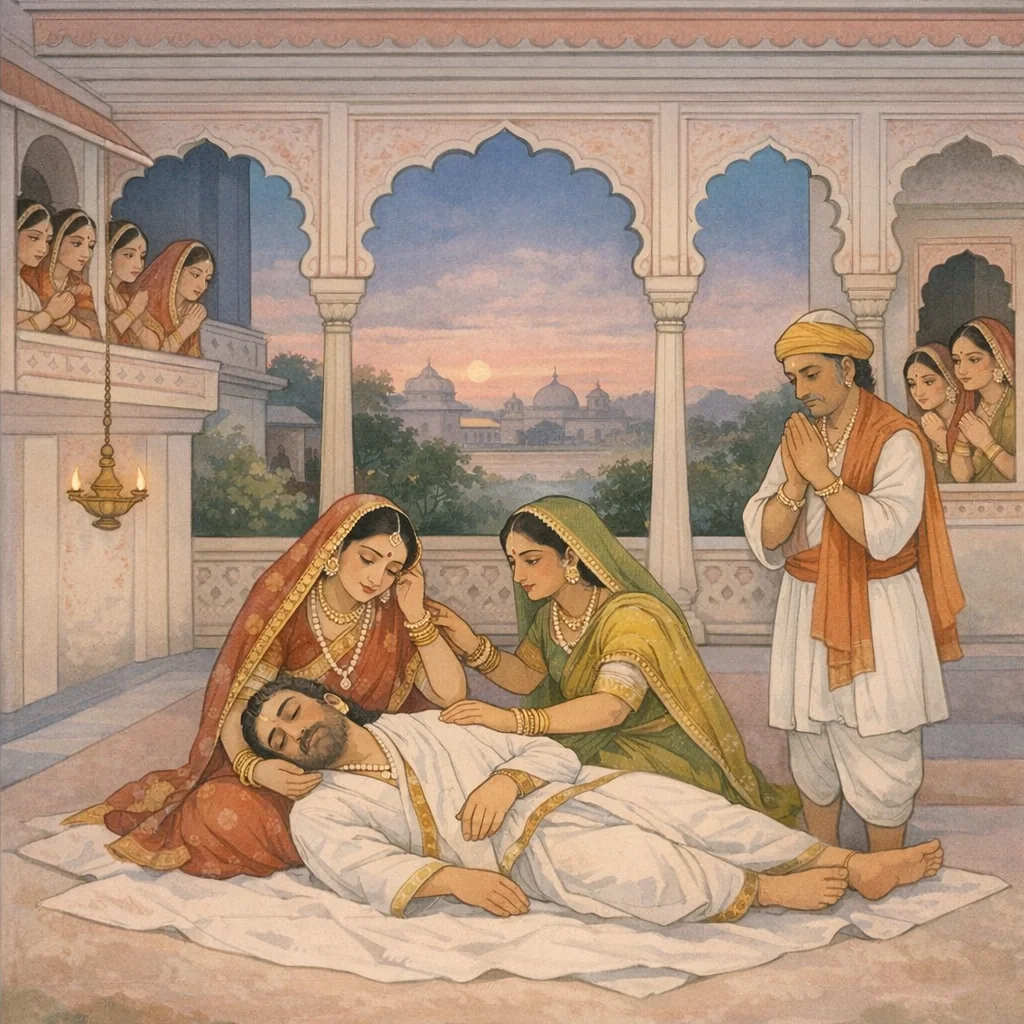
Sarga 57 tracks the narrative re-entry into Ayodhyā through Sumantra’s perspective after he is permitted to depart from Rāma at the Gaṅgā. Guha, after accompanying and speaking with Sumantra until Rāma reaches the southern bank, returns home grief-stricken. Sumantra journeys swiftly back, observing forests, rivers, lakes, villages, and towns, and reaches Ayodhyā on the third day at dusk to find it silent and cheerless. Crowds surge toward him asking “Where is Rāma?”, and the city’s people lament that they will no longer see the righteous prince in sacrifices, weddings, assemblies, and charitable gatherings—recalling his paternal governance. Entering the palace, Sumantra passes the crowded courtyards as women in mansions and palaces cry out, their eyes flooded with tears; whispers among Daśaratha’s wives anticipate the difficulty of addressing Kausalyā. Sumantra finally meets the king, conveys Rāma’s message verbatim, and Daśaratha, overwhelmed by grief, swoons and falls. The inner apartments erupt in lament; Kausalyā, aided by Sumitrā, raises the fallen king, urges him to question the messenger without fear (Kaikeyī being absent), and then collapses herself—triggering a citywide resurgence of mourning.
Shlokas
Verse 1
कथयित्वा सुदुःखार्तस्सुमन्त्रेण चिरं सह।रामे दक्षिणकूलस्थे जगाम स्वगृहं गुहः।।।।
After speaking for a long while with Sumantra—tormented with deep sorrow—Guha went back to his own home once Rāma had reached the southern bank.
Verse 2
भरद्वाजाभिगमनं प्रयागे च सहाऽसनम्।आगिरेर्गमनं तेषां तत्रस्थैरुपलक्षितम्।।।।
Those stationed there could discern their arrival at Bharadvāja’s hermitage at Prayāga, their stay with him, and their onward journey up to the mountain (Citrakūṭa).
Verse 3
अनुज्ञातस्सुमन्त्रोऽथ योजयित्वा हयोत्तमान्।अयोध्यामेव नगरीं प्रययौ गाढदुर्मनाः।।।।
Permitted to depart, Sumantra harnessed the finest horses and set out for the city of Ayodhya, his heart weighed down with sorrow.
Verse 4
स वनानि सुगन्धीनि सरितश्च सरांसि च।पश्यन्नतिययौ शीघ्रं ग्रामाणि नगराणि च।।।।
He swiftly passed on, gazing as he went at the fragrant forests, the rivers and lakes, and also the villages and towns along the way.
Verse 5
तत स्सायाह्न समये तृतीयेऽहनि सारथिः।अयोध्यां समनुप्राप्य निरानन्दां ददर्श ह।।।।
Then, on the third day at dusk, the charioteer reached Ayodhyā and saw the city bereft of joy.
Verse 6
स शून्यामिव निश्शब्दां दृष्ट्वा परमदुर्मनाः।सुमन्त्रश्चिन्तयामास शोकवेगसमाहतः।।।।
Seeing the city as though empty and silent, Sumantra—deeply dejected and struck by a surge of grief—fell into anxious reflection.
Verse 7
कच्चिन्न सगजा साऽश्वा सजना सजनाधिपा।रामसन्तापदुःखेन दग्धा शोकाग्निना पुरी।।।।
“Surely the city has not been burned by the fire of sorrow—by the pain of Rāma’s suffering—together with its elephants and horses, its people, and its lord?”
Verse 8
इति चिन्तापरस्सूतो वाजिभिश्शीघ्रपातिभिः।नगरद्वारमासाद्य त्वरितः प्रविवेश ह।।।।
Thus absorbed in anxious thought, the charioteer, borne by swift-running horses, reached the city-gate and quickly entered.
Verse 9
सुमन्त्रमभियान्तं तं शतशोऽथ सहस्रशः।क्व राम इति पृच्छन्तस्सूतमभ्यद्रवन्नराः।।।।
As Sumantra advanced, men by the hundreds and thousands ran up to the charioteer, asking, “Where is Rāma?”
Verse 10
तेषां शशंस गङ्गायामहमापृच्छ्य राघवम्।अनुज्ञातो निवृत्तोऽस्मि धार्मिकेण महात्माना।।।।
I took leave of Rāghava on the bank of the Gaṅgā; permitted by that great-souled, righteous man, I have returned—so he reported to them.
Verse 11
ते तीर्णा इति विज्ञाय बाष्पपूर्णमुखा जनाः।अहो धिगिति निश्श्वस्य हा रामेति च चुक्रुशुः।।।।
When they learned, “They have crossed,” the people—faces filled with tears—sighed, crying, “Ah, shame on us!” and “Alas, Rāma!”
Verse 12
शुश्राव च वचस्तेषां बृन्दं बृन्दं च तिष्ठताम्।हतास्म खलु ये नेह पश्याम इति राघवम्।।।।
He also heard their words as they stood in clusters: “Truly we are ruined, since hereafter we shall not see Rāghava.”
Verse 13
दानयज्ञविवाहेषु समाजेषु महत्सु च।न द्रक्ष्यामः पुन र्जातु धार्मिकं राममन्तरा।।।।
In charities, sacrifices, weddings, and great public gatherings—we shall never again see righteous Rāma in our midst.
Verse 14
किं समर्थं जनस्यास्य किं प्रियं किं सुखावहम्।इति रामेण नगरं पितृवत्परिपालितम्।।।।
Ever considering, “What benefits these people? What pleases them? What brings them happiness?”—thus did Rāma protect the city like a father.
Verse 15
वातायनगतानां च स्त्रीणामन्वन्तरापणम्।रामशोकाभितप्तानां शुश्राव परिदेवनम्।।।।
He heard the lamentations—of women at the windows and of those in the market-streets—burning with grief over Rāma.
Verse 16
स राजमार्गमध्येन सुमन्त्रः पिहिताननः।यत्र राजा दशरथस्तदेवोपययौ गृहम्।।।।
Sumantra, muffling his face, drove along the middle of the royal highway and went straight to that very palace where King Daśaratha was.
Verse 17
सोऽवतीर्य रथाच्छीघ्रं राजवेश्म प्रविश्य च।कक्ष्या स्सप्ताभिचक्राम महाजनसमाकुलाः।।।।
Quickly alighting from the chariot, he entered the royal residence and passed through seven courtyards, all crowded with people.
Verse 18
हर्म्यै र्विमानैः प्रासादैरवेक्ष्याथ समागतम्।हाहाकारकृता नार्यो रामदर्शनकर्शिताः।।।।
Then women, looking down from mansions, lofty multi-storied buildings, and palaces, saw him arrive; distressed by the absence of a sight of Rāma, they cried out in lamentation.
Verse 19
आयतैर्विमलैर्नेत्रैरश्रुवेगपरिप्लुतैः।अन्योन्यमभिवीक्षन्तेऽव्यक्तमार्ततराः स्त्रियः।।।।
The women, in even deeper anguish, looked at one another in silence, their large clear eyes flooded by the rush of tears.
Verse 20
ततो दशरथस्त्रीणां प्रासादेभ्य स्तत स्ततः।रामशोकाभितप्तानां मन्दं शुश्राव जल्पितम्।।।।
Then, from various quarters of the palace, he heard the faint murmuring of Daśaratha’s wives, scorched by grief for Rāma.
Verse 21
सह रामेण निर्यातो विना राम मिहागतः।सूतः किन्नाम कौसल्यां शोचन्तीं प्रतिवक्ष्यति।।।।
He departed with Rāma, yet has returned here without Rāma—what, indeed, can the charioteer say in reply to grieving Kausalyā?
Verse 22
यथा च मन्ये दुर्जीवमेवं न सुकरं ध्रुवम्।आच्छिद्य पुत्रे निर्याते कौसल्या यत्र जीवति।।।।
Indeed, I think it is surely hard for Kausalyā to go on living in any manner at all, once her son has departed—torn away from her.
Verse 23
सत्यरूपं तु तद्वाक्यं राज्ञ: स्त्रीणां निशामयन्।प्रदीप्तमिव शोकेन विवेश सहसा गृहम्।।।।
Hearing those words of the king’s wives—words embodying truth—he at once entered the inner chambers, as though the place were aflame with grief.
Verse 24
स प्रविश्याष्टमीं कक्ष्यां राजानं दीनमातुरम्।पुत्रशोकपरिम्लानमपश्यत्पाण्डुरे गृहे।।।।
Entering the eighth courtyard, he saw the king in a pale chamber—wretched and anguished, withered by sorrow for his son.
Verse 25
अभिगम्य तमासीनं नरेन्द्रे मभिवाद्य च।सुमन्त्रो रामवचनं यथोक्तं प्रत्यवेदयत्।।।।
Approaching the king as he sat, Sumantra paid him obeisance and then reported Rama’s message exactly as it had been spoken.
Verse 26
स तूष्णीमेव तच्छ्रुत्वा राजा विभ्रान्तचेतनः।मूर्छितो न्यपतद्भूमौ रामशोकाभिपीडितः।।।।
Hearing those words, the king remained silent; his mind reeled, and, crushed by grief for Rama, he fainted and fell upon the ground.
Verse 27
ततोऽन्तःपुरमाविद्धं मूर्छिते पृथिवीपतौ।उद्धृत्य बाहू चुक्रोश नृपतौ पतितेक्षितौ।।।।
Then, when the lord of the earth lay unconscious, the women of the inner palace were thrown into turmoil; raising their arms, they cried aloud as the king lay fallen on the ground.
Verse 28
सुमित्रया तु सहिता कौसल्या पतितं पतिम्।उत्थापयामास तदा वचनं चेदमब्रवीत्।।।।
Then Kausalya, supported by Sumitra, lifted up her husband who had fallen, and spoke these words.
Verse 29
इमं तस्य महाभाग दूतं दुष्करकारिणः।वनवासादनुप्राप्तं कस्मान्न प्रतिभाषसे।।।।
O noble king, why do you not question this messenger who has returned from the forest—sent from him (Rama), the doer of difficult deeds?
Verse 30
अद्यैवमनयं कृत्वा व्यपत्रपसि राघव।उत्तिष्ठ सुकृतं तेस्तु शोके नस्या त्सहायता।।।।
O Rāghava, are you now ashamed after committing this wrong? Rise up; let the merit of keeping your pledged word be yours—yet in grief there will be no help.
Verse 31
देव यस्या भयाद्रामं नानुपृच्छसि सारथिम्।नेह तिष्ठिति कैकेयी विस्रब्धं प्रतिभाष्यताम्।।।।
O king, she out of fear of whom you do not question the charioteer about Rama—Kaikeyi is not here now; speak freely, without anxiety.
Verse 32
सा तथोक्त्वा महाराजं कौसल्या शोकलालसा।धरण्यां निपपाताऽशु बाष्पविप्लुतभाषिणी।।।।
Having spoken thus to the great king, Kausalya—consumed by sorrow, her voice drowned in tears—suddenly fell upon the ground.
Verse 33
एवं विलपतीं दृष्ट्वा कौसल्यां पतितां भुवि।पतिं चावेक्ष्य ता स्सर्वा सुस्वरं रुरुदुः स्त्रियः।।।।
Seeing Kausalya lamenting and fallen to the ground, and looking also upon their husband (the king) in that state, all the women wailed loudly together.
Verse 34
तत स्तमन्तःपुरनादमुत्थितं समीक्ष्य वृद्धा स्तरुणाश्च मानवाः।स्त्रियश्च सर्वा रुरुदु स्समन्ततः पुरं तदासीत्पुनरेव सङ्कुलम्।।।।
Then, seeing that cry rising from the women’s quarters, the people—old and young—and all the women wailed on every side; and the city once again became crowded (with those gathering in distress).
Frequently Asked Questions
The pivotal action is the transmission of Rāma’s message to Daśaratha: Sumantra must report faithfully while the court confronts the ethical consequences of exile—public duty and private grief colliding in the king’s incapacity.
The sarga frames grief as a social force: when dharma is upheld through painful renunciation, the community’s emotional response becomes a measure of moral legitimacy, and leadership is shown vulnerable to attachment and separation.
Key landmarks include the Gaṅgā riverbank (leave-taking), Prayāga and Bharadvāja’s āśrama (observed waypoint), and the implied route toward Citrakūṭa; culturally, the text highlights assemblies, sacrifices, weddings, charitable venues, marketplaces, and palace architecture as markers of civic life disrupted by exile.