Sarga 44
सुमित्रोपदेशः — Sumitra’s Consolation to Kausalya
अयोध्याकाण्ड
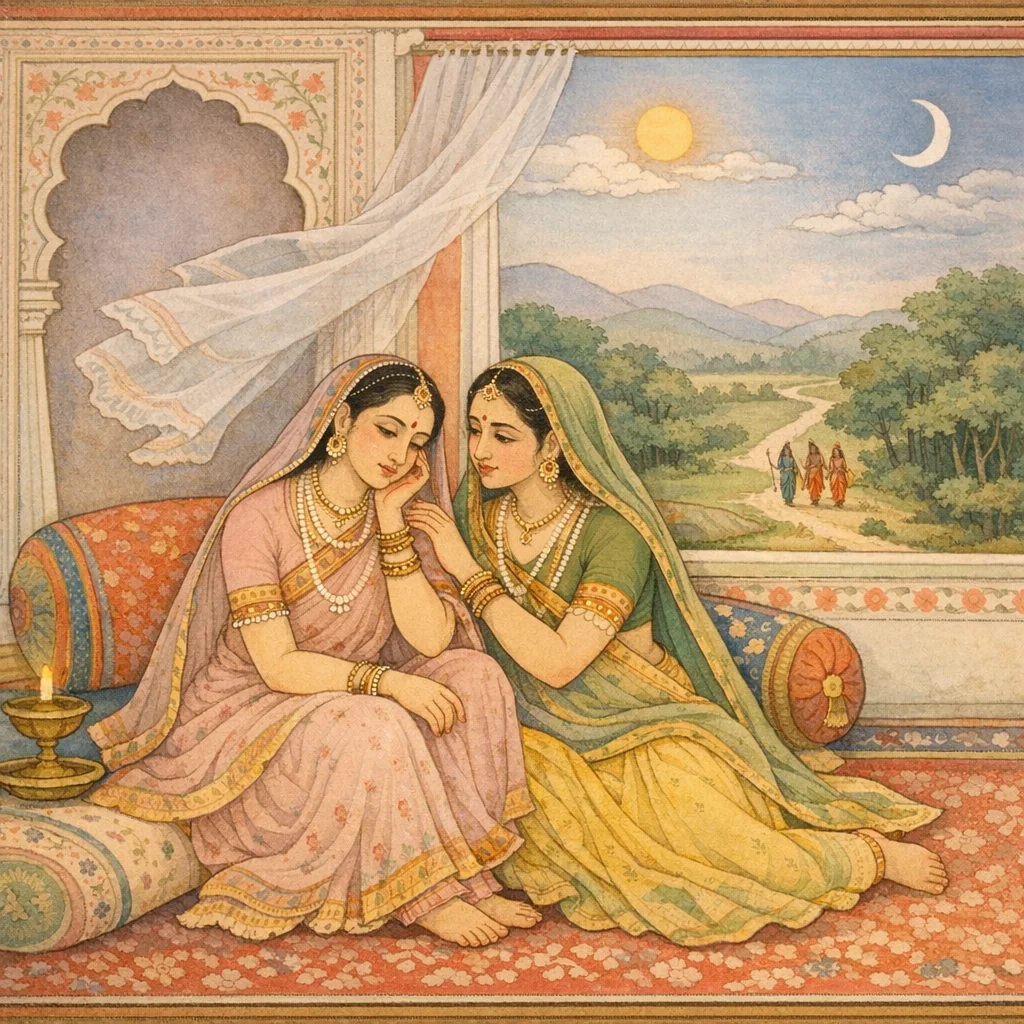
Sarga 44 is a consolatory discourse in which Queen Sumitrā addresses the grieving Kausalyā while Rāma has departed for forest-exile. Sumitrā reframes lamentation as unnecessary by emphasizing Rāma’s dharma-stability, his adherence to Daśaratha’s truthful vow, and the merit (pretya-phala) of conduct practiced by the wise. She strengthens confidence through layered assurances: Lakṣmaṇa’s noble companionship and martial readiness; Sītā’s deliberate choice to share hardship; and cosmic imagery suggesting nature itself will attend Rāma (breeze, moon, sun). The speech then pivots to Rāma’s invincibility and legitimacy—divine weapons received from Viśvāmitra, enemies destroyed within his arrow-range, and the certainty of future return and coronation. Sumitrā repeatedly projects a future scene of reunion (Rāma bowing at Kausalyā’s feet; tears of joy replacing tears of sorrow), culminating in Kausalyā’s grief dissolving immediately, likened to a thin autumn cloud dispersing.
Shlokas
Verse 1
विलपन्ती तथा तां तु कौसल्यां प्रमदोत्तमाम्।इदं धर्मे स्थिता धर्म्यं सुमित्रा वाक्यमब्रवीत्।।।।
As Kausalyā, the foremost of women, lamented thus, Sumitrā—firmly established in dharma—spoke to her these righteous words.
Verse 2
तवार्ये सद्गुणैर्युक्तः पुत्र स्स पुरुषोत्तमः।किं ते विलपितेनैवं कृपणं रुदितेन वा।।।।
O noble lady, your son is the highest among men, endowed with true virtues. What purpose is served by lamenting like this, or by such helpless weeping?
Verse 3
यस्तवार्ये गतः पुत्रस्त्यक्त्वा राज्यं महाबलः।साधु कुर्वन् महात्मानं पितरं सत्यवादिनम्।।।।शिष्टैराचरिते सम्यक्छश्वत्प्रेत्यफलोदये।रामो धर्मे स्थित श्रेष्ठो न स शोच्यः कदाचन।।।।
O noble lady, your mighty son has departed after renouncing the kingdom, so as to uphold the righteous, truth-speaking word of his great-souled father. He stands established in dharma—the excellent path properly practiced by the virtuous, whose enduring fruits ripen in the world beyond; therefore Rāma is never to be mourned.
Verse 4
यस्तवार्ये गतः पुत्रस्त्यक्त्वा राज्यं महाबलः।साधु कुर्वन् महात्मानं पितरं सत्यवादिनम्।।2.44.3।।शिष्टैराचरिते सम्यक्छश्वत्प्रेत्यफलोदये।रामो धर्मे स्थित श्रेष्ठो न स शोच्यः कदाचन।।2.44.4।।
O noble lady, your mighty son has departed after renouncing the kingdom, so as to uphold the righteous, truth-speaking word of his great-souled father. He stands established in dharma—the excellent path properly practiced by the virtuous, whose enduring fruits ripen in the world beyond; therefore Rāma is never to be mourned.
Verse 5
वर्तते चोत्तमां वृत्तिं लक्ष्मणोऽस्मिन् सदानघः।दयावान् सर्वभूतेषु लाभस्तस्य महात्मनः।।।।
Blameless Lakṣmaṇa, compassionate toward all beings, has maintained the highest conduct in this matter; this is a true gain for that great-souled one.
Verse 6
अरण्यवासे यद्दुःखं जानती वै सुखोचिता।अनुगच्छति वैदेही धर्मात्मानं तवात्मजम्।।।।
Sītā, the princess of Videha—though accustomed to comfort—has knowingly followed your righteous son, embracing the hardships of forest-dwelling.
Verse 7
कीर्तिभूतां पताकां यो लोके भ्रमयति प्रभुः।धर्मसत्यव्रतधनः किं न प्राप्तस्तवात्मजः।।।।
Your capable son, for whom righteousness, truth, and vowed conduct are true wealth, is making the banner of fame wave throughout the world—what, indeed, has such a son not attained?
Verse 8
व्यक्तं रामस्य विज्ञाय शौचं माहात्म्यमुत्तमम्।न गात्रमंशुभि स्सूर्य स्सन्तापयितुमर्हति।।।।
It is plain that, knowing Rāma’s stainless purity and supreme greatness, even the Sun does not presume to torment his body with scorching rays.
Verse 9
शिवस्सर्वेषु कालेषु काननेभ्यो विनिस्सृतः।राघवं युक्तशीतोष्णस्सेविष्यति सुखोऽनिलः।।।।
At every season, a gracious and pleasant breeze—tempered in cold and heat—will come forth from the woods and attend upon Rāghava.
Verse 10
शयानमनघं रात्रौ पितेवाभिपरिष्वजन्।रश्मिभि स्संस्पृशन् शीतैश्चन्द्रमाह्लादयिष्यति।।।।
When the sinless Rāma sleeps at night, the moon will gladden him—touching him with cool rays, like a father embracing his son.
Verse 11
ददौ चास्त्राणि दिव्यानि यस्मै ब्रह्मा महौजसे।दानवेन्द्रं हतं दृष्ट्वा तिमिध्वजसुतं रणे।।।।स शूरः पुरुषव्याघ्रः स्वबाहुबलमाश्रितः।असन्त्रस्तोऽप्यरणस्थो वेश्मनीव निवत्स्यति।।।।
To that mighty Rāma, Brahmā-like Viśvāmitra bestowed divine weapons, after seeing him slay in battle Timidhvaja’s son—Subāhu, lord among demons. That hero, tiger among men, relying on the strength of his own arms, will live in the forest without fear, as if in his own palace.
Verse 12
ददौ चास्त्राणि दिव्यानि यस्मै ब्रह्मा महौजसे।दानवेन्द्रं हतं दृष्ट्वा तिमिध्वजसुतं रणे।।2.44.11।।स शूरः पुरुषव्याघ्रः स्वबाहुबलमाश्रितः।असन्त्रस्तोऽप्यरणस्थो वेश्मनीव निवत्स्यति।।2.44.12।।
To that mighty Rāma, Brahmā-like Viśvāmitra bestowed divine weapons after witnessing him slay Subāhu, Timidhvaja’s son, a lord among demons, in battle. That fearless hero will dwell in the forest supported by his own strength, as though he were in his palace.
Verse 13
यस्येषुपथमासाद्य विनाशं यान्ति शत्रवः।कथं न पृथिवी तस्य शासने स्थातुमर्हति।।।।
When enemies who come within the range of his arrows meet destruction, how could the earth not be fit to stand under his rule?
Verse 14
या श्री श्शौर्यं च रामस्य या च कल्याणसत्वता।निवृत्तारण्यवास स्स क्षिप्रं राज्यमवाप्स्यति।।।।
With Rāma’s splendour, valour, and auspicious inner strength, once his forest-dwelling ends he will swiftly attain the kingdom.
Verse 15
सूर्यस्यापि भवेत्सूर्यो ह्यग्नेरग्नि प्रभोः प्रभुः।श्रियः श्रीश्च भवेदग्र्या कीर्तिः कीर्त्याः क्षमाक्षमा।।।।दैवतं दैवतानां च भूतानां भूतसत्तमः।तस्य के ह्यगुणा देवि वने वाप्यथवा पुरे।।।।
O Devi, for the sun he is as the sun; for fire, as fire; for rulers, the ruler; for prosperity, prosperity itself; for fame, the highest fame; for the forbearing, forbearance. A divinity among the gods, the best among beings—what fault could there be in him, whether in the forest or in the city?
Verse 16
सूर्यस्यापि भवेत्सूर्यो ह्यग्नेरग्नि प्रभोः प्रभुः।श्रियः श्रीश्च भवेदग्र्या कीर्तिः कीर्त्याः क्षमाक्षमा।।2.44.15।।दैवतं दैवतानां च भूतानां भूतसत्तमः। तस्य के ह्यगुणा देवि वने वाप्यथवा पुरे।।2.44.16।।
O Devi, he is the very deity of the gods and the highest among all beings. Where, indeed, could any fault be found in him—whether he lives in the forest or in the city?
Verse 17
पृथिव्या सह वैदेह्या श्रिया च पुरुषर्षभः।क्षिप्रं तिसृभिरेताभि स्सह रामोऽभिषेक्ष्यते।।।।
Rama, the bull among men, will soon be consecrated—together with these three: the Earth, Vaidehī (Sītā), and Śrī (Fortune).
Verse 18
दुःखजं विसृजन्त्यस्रं निष्क्रामन्तमुदीक्ष्य यम्।अयोध्यायां जनास्सर्वे शोकवेगसमाहताः।।।कुशचीरधरं देवं गच्छन्तमपराजितम्।सीतेवानुगता लक्ष्मी स्तस्य किं नाम दुर्लभम्।।।।
When all the people of Ayodhyā saw him setting out, they were struck by a surge of grief and shed tears born of sorrow. Yet he went forth—godlike, unconquered, clothed in kuśa-grass and bark; and with him Fortune followed, as though she were Sītā herself. What could ever be difficult for such a man?
Verse 19
दुःखजं विसृजन्त्यस्रं निष्क्रामन्तमुदीक्ष्य यम्।अयोध्यायां जनास्सर्वे शोकवेगसमाहताः।2.44.18।।कुशचीरधरं देवं गच्छन्तमपराजितम्।सीतेवानुगता लक्ष्मी स्तस्य किं नाम दुर्लभम्।।2.44.19।।
Seeing him depart, all the people of Ayodhyā—overwhelmed by the force of grief—shed tears born of sorrow. Still he went, divine and unconquered, wearing kuśa-grass and bark; and Fortune followed him as though she were Sītā. What, indeed, could be unattainable for him?
Verse 20
धनुर्ग्रहवरो यस्य बाणखड्गास्त्रभृत्स्वयम्।लक्ष्मणो व्रजति ह्यग्रे तस्य किं नाम दुर्लभम्।।।।
What could be unattainable for Rama, before whom Lakṣmaṇa goes in the lead—himself bearing arrows, swords, and weapons, and foremost in the mastery of the bow?
Verse 21
निवृत्तवनवासं तं द्रष्टासि पुनरागतम्।जहिशोकं च मोहं च देवि सत्यं ब्रवीमि ते।।।।
O Devi, you will see him returned when his forest-dwelling is complete. Abandon grief and delusion—I speak the truth to you.
Verse 22
शिरसा चरणावेतौ वन्दमानमनिन्दितेपुनर्द्रक्ष्यसि कल्याणि पुत्रं चन्द्रमिवोदितम्।।।।
O irreproachable and auspicious one, you will again see your son—like the rising moon—bowing to your feet with his head.
Verse 23
पुनः प्रविष्टं दृष्ट्वा तमभिषिक्तं महाश्रियम्।समुत्स्रक्ष्यसि नेत्राभ्यां क्षिप्रमानन्दजं पयः।।।।
When you see him re-enter, consecrated and radiant with great splendor, you will soon pour forth from your eyes tears that are born of joy.
Verse 24
मा शोको देवि दुःखं वा न रामे दृश्यतेऽशिवम्।क्षिप्रं द्रक्ष्यसि पुत्रं त्वं ससीतं सहलक्ष्मणम्।।।।
Do not grieve, O Devi, nor sink into sorrow—nothing inauspicious is to be seen in Rama. Soon you will see your son again, with Sītā and with Lakṣmaṇa.
Verse 25
त्वया शेषो जनश्चैव समाश्वास्यो यदाऽनघे।किमिदानीमिदं देवि करोषि हृदि विक्लबम्।।।।
O sinless lady, O queen—when it is for you to console all those who remain, why do you now make your own heart falter in fear?
Verse 26
नार्हा त्वं शोचितुं देवि यस्यास्ते राघवस्सुतः।न हि रामात्परो लोके विद्यते सत्पथे स्थितः।।।।
O queen, you are not fit to grieve—you have Rāma, the son of the Raghus, as your son. In this world there is none superior to Rāma, who stands firm on the good path.
Verse 27
अभिवादयमानं तं दृष्ट्वा ससुहृदं सुतम्।मुदाऽश्रृ मोक्ष्यसे क्षिप्रं मेघलेखेव वार्षिकी।।।।
Seeing your son—surrounded by his friends—bowing to you in reverence, you will soon shed tears of joy, like a monsoon cloud-streak releasing rain.
Verse 28
पुत्रस्ते वरदः क्षिप्रमयोध्यां पुनरागतः।पाणिभ्यां मृदुपीनाभ्यां चरणौ पीडयिष्यति।।।।
Your son—the giver of boons—will soon return again to Ayodhyā, and with his soft, full hands he will press your feet.
Verse 29
अभिवाद्य नमस्यन्तं शूरं ससुहृदं सुतम्।मुदाऽस्रैः प्रोक्ष्यसि पुनर्मेघराजिरिवाचलम्।।।।
As your brave son—accompanied by his friends—greets you and bows, you will again sprinkle him with tears of joy, like a band of clouds wetting a mountain.
Verse 30
आश्वासयन्ती विविधैश्च वाक्यैर्वाक्योपचारे कुशलाऽनवद्या।रामस्य तां मातरमेवमुक्त्वादेवी सुमित्रा विरराम रामा।।।।
Thus speaking in many ways to console Rāma’s mother, Queen Sumitrā—irreproachable and skilled in the art of speech, gentle in nature—fell silent.
Verse 31
निशम्य तल्लक्ष्मणमातृवाक्यंरामस्य मातुर्नरदेवपत्न्या:।सद्यश्शरीरे विननाश शोकःशरद्गतो मेघ इवाल्पतोयः।।।।
Hearing those words spoken by Lakṣmaṇa’s mother, the grief in the body of the queen—Rāma’s mother—vanished at once, like an autumn cloud with little water.
Frequently Asked Questions
The dilemma is whether grief-driven lament is appropriate when Rāma’s exile is undertaken to uphold a truthful paternal vow; Sumitrā argues that dharma-aligned renunciation is not a cause for despair but for moral confidence.
Sumitrā teaches that śoka can be dispelled by dharmic reasoning: virtue, truthful commitments, and disciplined conduct generate both worldly stability and trans-worldly merit, making endurance and composure the proper response.
Ayodhyā functions as the civic reference point for separation and anticipated return, while the araṇya/vanavāsa represents the cultural ideal of ascetic hardship; coronation (abhiṣeka) is invoked as the ritual marker of restored kingship.