Sarga 4
अयोध्याकाण्डे चतुर्थः सर्गः — Rāma Summoned; Pushya Coronation Decision
अयोध्याकाण्ड
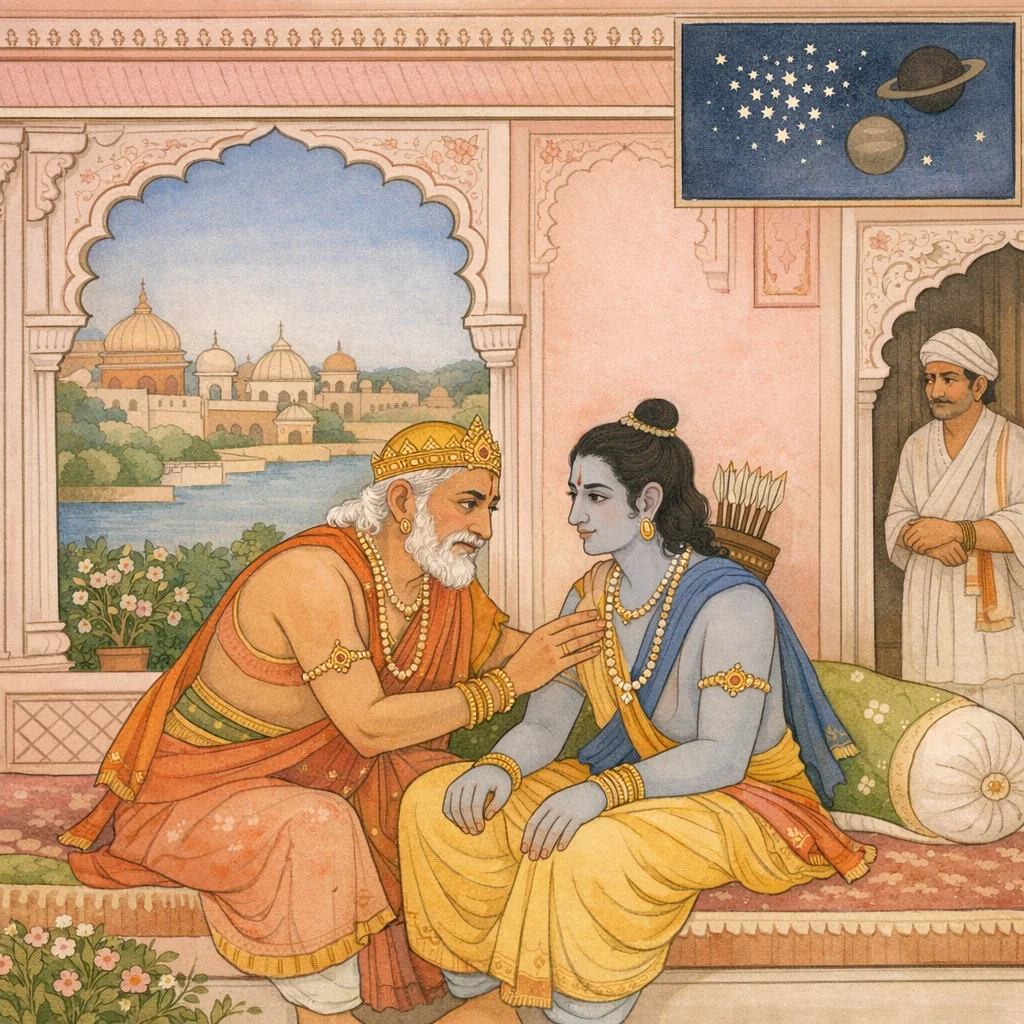
After the citizens depart, Daśaratha reconvenes counsel with ministers and fixes a decisive state action: Rāma’s installation as yuvarāja is to occur immediately, timed to the auspicious Pushya nakṣatra. Sumantra is dispatched to bring Rāma; the repeated summons produces apprehension in Rāma, indicating the court’s gravity and the volatility of palace affairs. In a private audience, Daśaratha receives Rāma with affection and then frames his rationale: having fulfilled life’s aims and ritual obligations, he sees only one remaining duty—Rāma’s consecration. He cites public desire (prakṛti-icchā) for Rāma’s rule, but also introduces a second, urgent register: ominous dreams and astrological affliction of his natal star by formidable grahas (Sun, Mars, Rāhu), suggesting impending danger to the king. This convergence of public mandate, auspicious timing, and ominous portents yields a policy of haste: coronate before the mind wavers and before destabilizing contingencies arise. Daśaratha prescribes preparatory vrata—fasting, sleeping on darbha grass, vigilance by friends—and notes Bharata’s absence as a favourable window, while still warning about the fickleness of human minds. Rāma, permitted to depart, immediately informs Kauśalyā; she is shown in devotional practice (prāṇāyāma meditation on Janārdana/Viṣṇu). Joyful blessings follow, and Rāma shares the prospective royal fortune with Lakṣmaṇa, emphasizing fraternal co-governance and inner solidarity, before returning with Sītā.
Shlokas
Verse 1
गतेष्वथ नृपो भूयः पौरेषु सह मन्त्रिभिः।मन्त्रयित्वा ततश्चक्रे निश्चयज्ञस्सनिश्चयम्।।2.4.1।।श्व एव पुष्यो भविताश्वोऽभिषेच्यस्तु मे सुतः।रामो राजीवताम्राक्षो यौवराज्य इति प्रभुः।।2.4.2।।
After the citizens had departed, the king—skilled in firm decision—again consulted with his ministers and resolved: “Tomorrow the Puṣya constellation will be ascendant; tomorrow my son Rāma, lotus-reddened of eye, shall be consecrated as heir-apparent.”
Verse 2
गतेष्वथ नृपो भूयः पौरेषु सह मन्त्रिभिः।मन्त्रयित्वा ततश्चक्रे निश्चयज्ञस्सनिश्चयम्।।2.4.1।।श्व एव पुष्यो भविताश्वोऽभिषेच्यस्तु मे सुतः।रामो राजीवताम्राक्षो यौवराज्य इति प्रभुः।।2.4.2।।
“Tomorrow, when Puṣya is in ascendance, my son Rāma—lotus-eyed with copper-red hues—shall be consecrated as heir-apparent,” declared the king.
Verse 3
अथाऽन्तर्गृहमाविश्य राजा दशरथस्तदा।सूतमामन्त्रयामास रामं पुनरिहानय।।2.4.3।।
Then King Daśaratha entered his inner chambers and summoned the charioteer, saying, “Bring Rāma here again.”
Verse 4
प्रतिगृह्य स तद्वाक्यं सूतः पुनरुपाययौ।रामस्य भवनं शीघ्रं राममानयितुं पुनः।।2.4.4।।
Having received that command, the charioteer returned at once, quickly reaching Rama’s residence again in order to bring Rama back.
Verse 5
द्वार्स्थैरावेदितं तस्य रामायाऽऽगमनं पुनः।श्रुत्वैव चापि रामस्तं प्राप्तं शङ्कान्वितोऽभवत्।।2.4.5।।
The door-keepers reported to Rāma that he (Sumantra) had arrived again. The moment Rāma heard that he had come back, he was filled with apprehension.
Verse 6
प्रवेश्य चैनं त्वरितं रामो वचनमब्रवीत्।यदागमनकृत्यं ते भूयस्तद्ब्रूह्यशेषतः।।2.4.6।।
Rāma quickly had him admitted and said: “Tell me fully—what is the purpose of your coming back again so soon?”
Verse 7
तमुवाच तत स्सूतो राजा त्वां द्रष्टुमिच्छति।श्रुत्वा प्रमाणमत्र त्वं गमनायेतराय वा।।2.4.7।।
Then the charioteer said to him: “The king wishes to see you. Having heard it, you alone are the authority here—whether to go, or otherwise.”
Verse 8
इति सूतवच श्श्रुत्वा रामोऽथ त्वरयाऽन्वितः।प्रययौ राजभवनं पुनर्द्रष्टुं नरेश्वरम्।।2.4.8।।
Hearing the charioteer’s words, Rāma—seized with haste—set out for the royal palace to see the lord of men again.
Verse 9
तं श्रुत्वा समनुप्राप्तं रामं दशरथो नृपः।प्रवेशयामास गृहं विवक्षुः प्रियमुत्तमम्।।2.4.9।।
Hearing that Rāma had arrived, King Daśaratha had him shown into his inner apartment, wishing to tell him something exceedingly pleasing.
Verse 10
प्रविशन्नेव च श्रीमान्राघवो भवनं पितुः।ददर्श पितरं दूरात्प्रणिपत्य कृताञ्जलिः।।2.4.10।।
As the illustrious Rāghava entered his father’s palace, he saw his father from afar and, with hands folded, bowed down in reverence.
Verse 11
प्रणमन्तं समुत्थाप्य तं परिष्वज्य भूमिपः।प्रदिश्य चास्मै रुचिरमासनं पुनरब्रवीत्।।2.4.11।।
Seeing him bowing, the king lifted him up, embraced him, offered him a splendid seat, and then spoke again.
Verse 12
राम वृद्धोऽस्मि दीर्घायुर्भुक्ता भोगा मयेप्सिताः।अन्नवद्भिः क्रतुशतै स्तथेष्टं भूरिदक्षिणैः।।2.4.12।।
“Rāma, I have lived long and have grown old. I have enjoyed the pleasures I desired, and I have performed hundreds of sacrifices—rich in food and abundant gifts.”
Verse 13
जातमिष्टमपत्यं मे त्वमद्यानुपमं भुवि।दत्तमिष्टमधीतं च मया पुरुषसत्तम।।2.4.13।।
“Best of men, in you I have today gained the beloved child I longed for—without equal on earth. I have given gifts, performed sacrifices, and also pursued sacred study.”
Verse 14
अनुभूतानि चेष्टानि मया वीर सुखान्यपि।देवर्षिपितृविप्राणामनृणोऽस्मि तथाऽत्मनः।।2.4.14।।
“O hero, I have tasted the pleasures I sought; and toward the gods, sages, ancestors, and brahmins—as also toward my own self—I am now free of debt.”
Verse 15
न किञ्चिन्मम कर्तव्यं तवान्यत्राभिषेचनात्।अतो यत्त्वामहं ब्रूयां तन्मे त्वं कर्तुमर्हसि।।2.4.15।।
“There is nothing more for me to do, except your consecration. Therefore, whatever I tell you, you should rightly carry it out for my sake.”
Verse 16
अद्य प्रकृतयस्सर्वास्त्वामिच्छन्ति नराधिपम्।अतस्त्वां युवराजानमभिषेक्ष्यामि पुत्रक।।2.4.16।।
Today all my subjects wish to have you as their king; therefore, my dear son, I shall consecrate you as heir-apparent.
Verse 17
अपि चाद्याऽशुभान्राम स्वप्ने पश्यामि दारुणान्।सनिर्घाता दिवोल्का च पततीह महास्वना।।2.4.17।।
And further, O Rāma, these days I behold dreadful, inauspicious signs in dreams—even by day: meteors fall here with thunder, resounding loudly.
Verse 18
अवष्टब्धं च मे राम नक्षत्रं दारुणैर्ग्रहैः।आवेदयन्ति दैवज्ञाः सूर्याङ्गारकराहुभिः।।2.4.18।।
And, O Rāma, the astrologers report that my birth-star has been afflicted by formidable planets—Sun, Mars, and Rāhu.
Verse 19
प्रायेण हि निमित्तानामीदृशानां समुद्भवे।राजा हि मृत्युमाप्नोति घोरां वाऽऽपदमृच्छति।।2.4.19।।
When omens of this kind arise, it commonly happens that a king either meets death or is struck by a dreadful calamity.
Verse 20
तद्यावदेव मे चेतो न विमुह्यति राघव।तावदेवाभिषिञ्चस्व चला हि प्राणिनां मतिः।।2.4.20।।
Therefore, O Rāghava, while my mind has not yet fallen into confusion, let your consecration be done at once—for the mind of living beings is indeed unsteady.
Verse 21
अद्य चन्द्रोऽभ्युपगतः पुष्यात्पूर्वं पुनर्वसू।श्वः पुष्ययोगं नियतं वक्ष्यन्ते दैवचिन्तकाः।।2.4.21।।
Today the Moon has entered Punarvasū, which precedes Puṣya; and tomorrow, the astrologers will surely declare the Moon’s conjunction with Puṣya.
Verse 22
ततः पुष्येऽभिषिञ्चस्व मनस्त्वरयतीव माम्। श्वस्त्वाऽहमभिषेक्ष्यामि यौवराज्ये परन्तप।।2.4.22।।
Therefore, let your consecration be in Puṣya—my mind seems to urge me on. O subduer of foes, tomorrow I shall install you as heir-apparent.
Verse 23
तस्मात्त्वयाऽद्य प्रभृति निशेयं नियतात्मना।सह वध्वोपवस्तव्या दर्भप्रस्तरशायिना।।2.4.23।।
Therefore, from tonight onward, with self-restraint—together with your wife—you should keep the fast and sleep upon a spread of darbha grass.
Verse 24
सुहृदश्चाप्रमत्तास्त्वां रक्षन्त्वद्य समन्ततः।भवन्ति बहु विघ्नानि कार्याण्येवंविधानि हि।।2.4.24।।
Let your friends also guard you vigilantly on every side from today onward; for undertakings of this kind are indeed beset with many obstacles.
Verse 25
विप्रोषितश्च भरतो यावदेव पुरादितः।तावदेवाभिषेकस्ते प्राप्तकालो मतो मम।।2.4.25।।
So long as Bharata is away from this city, your consecration is, in my judgment, the timely and fitting course.
Verse 26
कामं खलु सतां वृत्ते भ्राता ते भरतस्स्थितः।ज्येष्ठानुवर्ती धर्मात्मा सानुक्रोशो जितेन्द्रियः।।2.4.26।।
Truly, your brother Bharata stands in the conduct of the noble: he follows his elder, is righteous in spirit, compassionate, and master of his senses.
Verse 27
किन्तु चित्तं मनुष्याणामनित्यमिति मे मतिः।सतां च धर्मनित्यानां कृतशोभि च राघव।।2.4.27।।
Yet, O Rāghava, it is my view that the minds of men are inconstant—even those of the virtuous, even those steadfast in dharma, even when made auspicious.
Verse 28
इत्युक्त स्सोऽभ्यनुज्ञात श्श्वोभाविन्यभिषेचने।व्रजेति रामः पितरमभिवाद्याभ्ययाद्गृहम्।।2.4.28।।
Having thus spoken about the consecration to be held the next day, Daśaratha gave Rāma leave, saying, “Go.” Rāma bowed to his father and returned to his own residence.
Verse 29
प्रविश्य चात्मनो वेश्मराज्ञोद्दिष्टेऽभिषेचने।तत्क्षणेन विनिर्गम्य मातुरन्तपुरं ययौ।।2.4.29।।
With the king having fixed the consecration, Rāma entered his own residence; but at once, he came out again and went to his mother’s inner apartments.
Verse 30
तत्र तां प्रवणामेव मातरं क्षौमवासिनीम्।वाग्यतां देवतागारे ददर्शाऽऽयाचतीं श्रियम्।।2.4.30।।
There he saw his mother—clad in fine garments—absorbed in devotion, silent in the shrine-room, praying for royal fortune.
Verse 31
प्रागेव चागता तत्र सुमित्रा लक्ष्मण स्तथा।सीता चानायिता श्रुत्वा प्रियं रामाभिषेचनम्।।2.4.31।।
Sumitrā and Lakṣmaṇa had already come there; and Sītā too—having heard the welcome news of Rāma’s consecration—had been summoned in.
Verse 32
तस्मिन् काले हि कौशल्या तस्थावामीलितेक्षणा।सुमित्रयाऽन्वास्यमाना सीतया लक्ष्मणेन च।।2.4.32।।
At that time Kauśalyā stood with eyes half-closed in contemplation, attended by Sumitrā, Sītā, and Lakṣmaṇa.
Verse 33
श्रुत्वा पुष्येण पुत्रस्य यौवराज्याऽभिषेचनम्।प्राणायामेन पुरुषं ध्यायमाना जनार्दनम्।।2.4.33।।
Having heard that her son’s consecration as heir-apparent would be performed under the Puṣya constellation, she meditated—by breath-control—upon Janārdana, the Supreme Lord.
Verse 34
तथा सनियमामेव सोऽभिगम्याभिवाद्य च।उवाच वचनं रामो हर्षयंस्तामनिन्दिताम्।।2.4.34।।
As she remained absorbed in disciplined observance, Rāma approached, bowed to her, and spoke words that increased the joy of that blameless lady.
Verse 35
अम्ब पित्रा नियुक्तोऽस्मि प्रजापालनकर्मणि।भविता श्वोऽभिषेको मे यथा मे शासनं पितुः।।2.4.35।।
“Mother, my father has appointed me to the work of protecting and governing the people. My consecration will take place tomorrow, in accordance with my father’s command.”
Verse 36
सीतयाप्युपवस्तव्या रजनीयं मया सह।एवमृत्विगुपाध्यायै स्सह मामुक्तवान्पिता।।2.4.36।।
“Tonight Sītā too must fast along with me; and so also the officiating priests and the preceptors. This is what my father told me.”
Verse 37
यानि यान्यत्र योग्यानि श्वोभाविन्यभिषेचने।तानि मे मङ्गलान्यद्य वैदेह्याश्चैव कारय।।2.4.37।।
Since the consecration is to take place tomorrow, have performed today all auspicious rites that are fitting—both for me and for Vaidehī (Sītā).
Verse 38
एतच्छ्रुत्वा तु कौशल्या चिरकालाभिकाङ्क्षितम्।हर्षबाष्पकलं वाक्यमिदं राममभाषत।।2.4.38।।
Hearing these long-cherished tidings, Kausalyā addressed Rama—her words sweet yet blurred by tears of joy.
Verse 39
वत्स राम चिरं जीव हतास्ते परिपन्थिनः।ज्ञातीन्मे त्वं श्रिया युक्त स्सुमित्रायाश्च नन्दय।।2.4.39।।
“My child, Rama—live long; may your foes be destroyed. Endowed with royal prosperity, bring joy to my kinsfolk and to Sumitrā’s as well.”
Verse 40
कल्याणे बत नक्षत्रे मयि जातोऽसि पुत्रक।येन त्वया दशरथो गुणैराराधितः पिता।।2.4.40।।
“Ah, my son—you were born to me under a fortunate star; and by your virtues you have delighted your father Daśaratha.”
Verse 41
अमोघं बत मे क्षान्तं पुरुषे पुष्करेक्षणे। येयमिक्ष्वाकुराज्यश्रीः पुत्र त्वां संश्रयिष्यति।।2.4.41।।
“Ah, my endurance in devotion to the lotus-eyed Lord has not been in vain, my son—for the royal fortune of the Ikṣvāku line will now rest upon you.”
Verse 42
इत्येवमुक्तो मात्रेदं रामो भ्रातरमब्रवीत्।प्राञ्जलिं प्रह्वमासीनमभिवीक्ष्य स्मयन्निव।।2.4.42।।
Thus addressed by his mother, Rama looked at his brother—seated humbly with folded hands—and, as if with a gentle smile, spoke these words.
Verse 43
लक्ष्मणेमां मया सार्धं प्रशाधि त्वं वसुन्धराम्।द्वितीयं मेऽन्तरात्मानं त्वामियं श्रीरुपस्थिता।।2.4.43।।
“Lakṣmaṇa, rule this earth together with me. This royal fortune has come to you as well, for you are to me like a second inner self.”
Verse 44
सौमित्रे भुङ्क्ष्व भोगांत्स्वमिष्टान्राज्यफलानि च।जीवितं च हि राज्यं च त्वदर्थमभिकामये।।2.4.44।।
“O Saumitra, enjoy the pleasures you desire and the fruits of sovereignty as well; indeed, I seek both life and kingdom for your sake.”
Verse 45
इत्युक्त्वा लक्ष्मणं रामो मातरावभिवाद्य च।अभ्यनुज्ञाप्य सीतां च जगाम स्वं निवेशनम्।।2.4.45।।
Having thus spoken to Lakṣmaṇa, Rama paid reverence to his two mothers; then, having taken leave with Sītā’s consent as well, he returned to his own dwelling.
Frequently Asked Questions
The pivotal action is Daśaratha’s decision to expedite Rāma’s yuvarāja-abhiṣeka. The ethical tension lies in balancing public consent and dynastic duty against instability signaled by omens and the acknowledged fickleness of human intention—prompting a policy of immediate, dharma-framed action.
The chapter teaches that governance requires timely resolve (niścaya) anchored in duty, while recognizing impermanence in mental states and external conditions. It also models disciplined preparation—vrata, restraint, vigilance—as an ethical technology for undertaking high-stakes public rites.
Cultural landmarks include the royal inner apartments, the devatāgāra (domestic shrine space), and coronation protocol tied to nakṣatra timing (Punarvasu → Pushya) and graha discourse (Sun–Mars–Rāhu). Ritual markers such as darbha-bed fasting and priestly supervision situate the episode within courtly-vedic ceremonial culture.