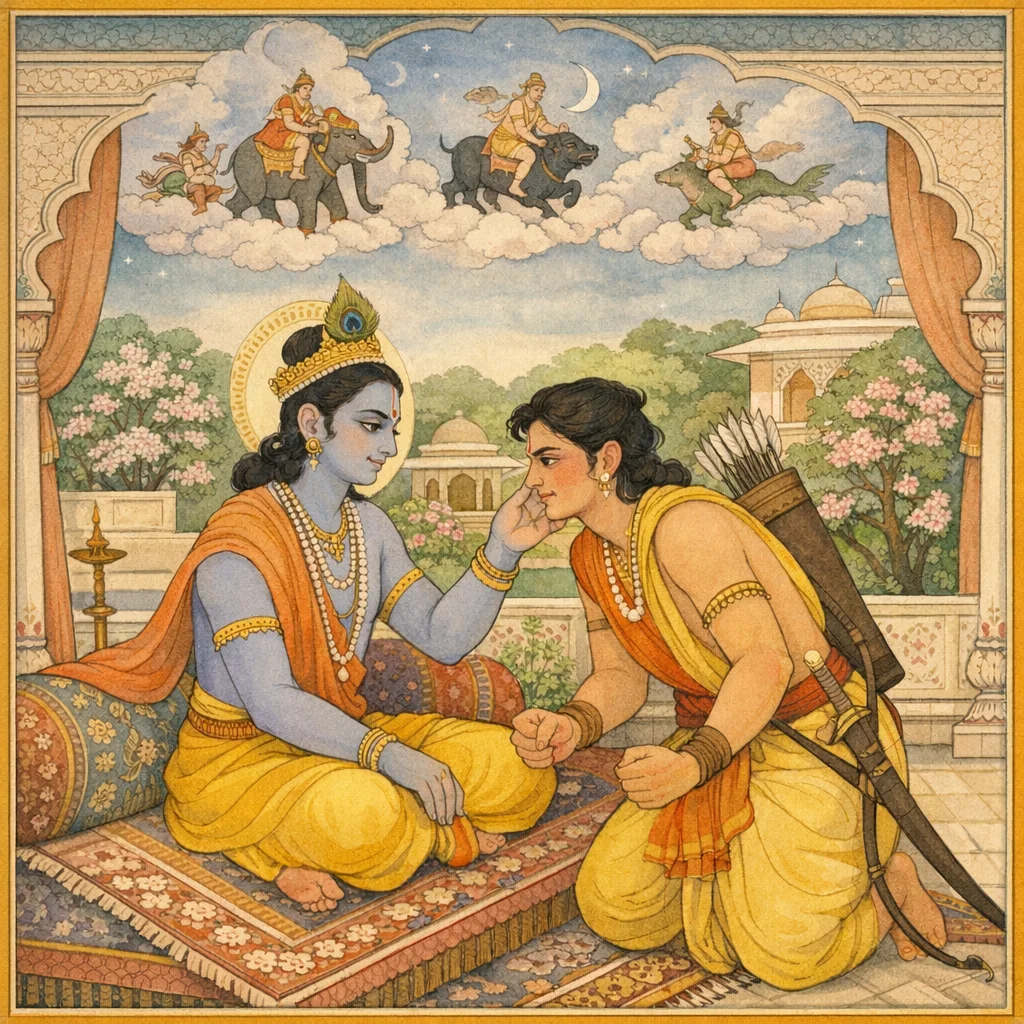
Sarga 23
लक्ष्मणक्रोधः—दैवपुरुषकारविवादः (Lakshmana’s Wrath and the Debate on Destiny vs Human Effort)
अयोध्याकाण्ड
Sarga 23 presents a tightly argued ethical confrontation between Lakṣmaṇa and Rāma. As Rāma speaks, Lakṣmaṇa oscillates inwardly between grief and joy, then externalizes rage through vivid animal and martial imagery (serpent-like hissing, lion-like visage). He rejects the legitimacy of consecrating anyone other than Rāma and frames the proposed reversal as socially abhorrent. Lakṣmaṇa attacks the appeal to destiny (दैव), calling it powerless, and insists that valor and agency (पुरुषकार) can ‘turn back’ fate, repeatedly promising to defeat any obstruction to Rāma’s coronation—even invoking cosmic-scale resistance (lokapālas, three worlds) as insufficient. His rhetoric escalates into threats of violent reprisal, inventorying weapons and battlefield outcomes, and culminates in an offer of total servitude: Rāma need only name the enemy and command. Rāma responds by consoling him, wiping tears, and reaffirming a principled commitment to the father’s word as the ‘right path’ (सत्पथ), thereby re-centering the episode on obedience, restraint, and dharmic consistency.
Shlokas
Verse 1
इति ब्रुवति रामे तु लक्ष्मणोऽधश्शिरा मुहुः।श्रृत्वा मध्यं जगामेव मनसा दुःखहर्षयोः।।।।
As Rāma spoke in this way, Lakṣmaṇa listened with his head bowed, his mind repeatedly slipping into a middle state between grief and sudden joy.
Verse 2
तदा तु बध्द्वा भ्रुकुटीं भ्रुवोर्मध्ये नरर्षभः।निशश्वास महासर्पो बिलस्थ इव रोषितः।।।।
Then Lakṣmaṇa, the best of men, knitted a frown between his brows and breathed out harshly—like a great serpent, enraged within its hole.
Verse 3
तस्य दुष्प्रतिवीक्षं तद्भ्रुकुटीसहितं तदा।बभौ क्रुद्धस्य सिंहस्य मुखस्य सदृशं मुखम्।।।।
Then his face, hard to look upon and knit with a frown, appeared like the face of an enraged lion.
Verse 4
अग्रहस्तं विधुन्वंस्तु हस्ती हस्तमिवात्मनः।तिर्यगूर्ध्वं शरीरे च पातयित्वा शिरोधराम्।।।।अग्राक्ष्णा वीक्षमाणस्तु तिर्यग्भ्रातरमब्रवीत्।
Shaking his forearm like an elephant lifting its trunk, and jerking his neck side-to-side and up-and-down, Lakshmana cast a sharp, slanting glance at his brother and spoke.
Verse 5
अस्थाने सम्भ्रमो यस्य जातो वै सुमहानयम्।।।।धर्मदोष प्रसङ्गेन लोकस्यानतिशङ्कया।कथंह्येतदसम्भ्रान्तस्त्वद्विधो वक्तुमर्हति।।।।यथा दैवमशौडीरं शौण्डीर क्षत्रियर्षभ।
This great haste has arisen in you at the wrong moment—out of fear that dharma may be harmed, and out of anxiety about what people may decide. How can one like you, unshaken in courage, speak as though destiny were mighty, when in truth it is powerless, O bull among kshatriyas?
Verse 6
अस्थाने सम्भ्रमो यस्य जातो वै सुमहानयम्।।2.23.5।।धर्मदोष प्रसङ्गेन लोकस्यानतिशङ्कया।कथंह्येतदसम्भ्रान्तस्त्वद्विधो वक्तुमर्हति।।2.23.6।।यथा दैवमशौडीरं शौण्डीर क्षत्रियर्षभ।
At an improper moment this great agitation has arisen in you—through concern about dharma and anxiety over people’s judgment. How can a steadfast man like you speak as if fate were powerful, O brave one, the best of kshatriyas, when fate is in fact without strength?
Verse 7
किन्नाम कृपणं दैवमशक्तमभिशंससि।।।।पापयोस्ते कथं नाम तयोश्शङ्का न विद्यते।
Why do you praise this pitiable, powerless thing called “destiny”? How is it that you feel no suspicion toward those two wrongdoers?
Verse 8
सन्ति धर्मोपधा श्लक्ष्णाः धर्मात्मन्किं न बुध्यसे।।।।तयोस्सुचरितं स्वार्थं शाठ्यात्परिजिहीर्षतोः।
O righteous one, do you not understand? There exist subtle stratagems—deceptions clothed in dharma—by which those two, through sheer craft, seek to seize selfish advantage while maintaining a show of good conduct.
Verse 9
यदि नैवं व्यवसितं स्याद्धि प्रागेव राघव।।।।तयोः प्रागेव दत्तश्च स्याद्वरः प्रकृतश्च सः।
O Rāghava, had this not been resolved beforehand in just this way, that boon—natural to be granted—would have been fulfilled for them long ago.
Verse 10
लोकविद्विष्टमारब्धं त्वदन्यस्याभिषेचनम्।नोत्सहे सहितुं वीर तत्र मे क्षन्तुमर्हसि।।।।
The consecration that has been set in motion for someone other than you is hateful in the eyes of the world. I cannot bear it, O hero—please forgive me for speaking so in this matter.
Verse 11
येनेय मागता द्वैधं तव बुद्धिर्महामते।स हि धर्मो मम द्वेष्यः प्रसङ्गाद्यस्य मुह्यसि।।।।
O great-minded one, the very ‘righteousness’ by which your judgment has been driven into this dilemma—because of whose pressure you are bewildered—such a dharma is hateful to me.
Verse 12
कथं त्वं कर्मणा शक्तः कैकेयीवशवर्तिनः।करिष्यसि पितुर्वाक्यमधर्मिष्ठं विगर्हितम्।।।।
When by action you are capable (of resisting), how can you carry out the words of your father—words unjust and contemptible—spoken under Kaikeyī’s control?
Verse 13
यद्ययं किल्बिषाद्भेदः कृतोऽप्येवं न गृह्यते।जायते तत्र मे दुःखं धर्मसङ्गश्च गर्हितः।।।।
If this treacherous breach—born of guilt—though committed, is still not recognized for what it is, then grief arises in me; and this clinging to ‘dharma’ becomes blameworthy.
Verse 14
मनसाऽपि कथं कामं कुर्यास्त्वं कामवृत्तयोः।तयोस्त्वहितयोर्नित्यं शत्र्वोः पित्रभिधानयोः।।।।
How could you, even in your mind, fulfill the wish of those two driven by desire—ever hostile to your welfare—enemies merely bearing the name of ‘parents’?
Verse 15
यद्यपि प्रतिपत्तिस्ते दैवी चापि तयोर्मतम्।तथाप्युपेक्षणीयं ते न मे तदपि रोचते।।।।
Even if you think their insistence is ‘destiny’ itself, still you ought to disregard it; even that idea does not please me.
Verse 16
विक्लबो वीर्यहीनो यस्स दैवमनुवर्तते।वीरास्सम्भावितात्मानो न दैवं पर्युपासते।।।।
The timid and strengthless alone follow destiny; valiant men of self-respect do not wait upon fate.
Verse 17
दैवं पुरुषकारेण यः समर्थः प्रबाधितुम्।न दैवेन विपन्नार्थः पुरुषस्सोऽवसीदति।।।।
A man who is able to strike back against destiny through human effort is not thwarted in his aims by fate, nor does he sink into despair.
Verse 18
द्रक्ष्यन्ति त्वद्य दैवस्य पौरुषं पुरुषस्य च।दैवमानुषयोरद्य व्यक्ता व्यक्तिर्भविष्यति।।।।
Today they will see the power of destiny and the power of man; today the distinction between fate and human agency will become plainly manifest.
Verse 19
अद्य मत्पौरुषहतं दैवं द्रक्ष्यन्ति वै जनाः।यद्दैवादाहतं तेऽद्य दृष्टं राज्याभिषेचनम्।।।।
Today the people will see destiny struck down by my valor—just as today they have seen your royal consecration struck down by destiny.
Verse 20
अत्यङ्कुशमिवोद्दामं गजं मदबलोद्धतम्।प्रधावितमहं दैवं पौरुषेण निवर्तये।।।।
I will turn back destiny by my valor—like restraining a wild elephant, unmanageable even to the goad, charging ahead in the intoxication of its own strength.
Verse 21
लोकपालास्समस्ता स्ते नाद्य रामाभिषेचनम्।न च कृत्स्नास्त्रयो लोका विहन्युः किं पुनः पिता।।।।
Even if all the guardians of the quarters stood together, they could not obstruct Rāma’s consecration today; nor could all the three worlds—what then to say of our father?
Verse 22
यैर्निवासस्तवारण्ये मिथो राजन्समर्थितः।अरण्ये ते निवत्स्यन्ति चतुर्दश समास्तथा।।।।
O king, those who, in concert, have supported your dwelling in the forest—those very ones will themselves live in the forest for fourteen years.
Verse 23
अहं तदाशां छेत्स्यामि पितुस्तस्याश्च या तव।अभिषेकविघातेन पुत्रराज्याय वर्तते।।।।
Therefore I will cut down that desire—of our father and of her—by which, through obstructing your consecration, she aims to secure the kingdom for her son.
Verse 24
मद्बलेन विरुद्धाय न स्याद्दैवबलं तथा।प्रभविष्यति दुःखाय यथोग्रं पौरुषं मम।।।।
Against anyone who stands opposed to my strength, even the power of fate would not bring such suffering as my fierce valor will bring.
Verse 25
ऊर्ध्वं वर्षसहस्रान्ते प्रजापाल्यमनन्तरम्।आर्यपुत्राः करिष्यन्ति वनवासं गते त्वयि।।।।
After you have ruled the people—indeed, even after a thousand years—when you depart to dwell in the forest, your noble sons will then govern in your stead.
Verse 26
पूर्वं राजर्षिवृत्त्या हि वनवासो विधीयते।प्रजा निक्षिप्य पुत्रेषु पुत्रवत्परिपालने।।।।
In earlier times, following the conduct of royal sages, forest-retirement was ordained only after entrusting the people to one’s sons—who would protect them as their own children.
Verse 27
स चेद्राजन्यनेकाग्रे राज्यविभ्रमशङ्कया।नैवमिच्छसि धर्मात्मन् राज्यं राम त्वमात्मनि।।।।प्रतिजाने च ते वीर माऽभूवं वीरलोकभाक्।राज्यं च तव रक्षेयमहं वेलेव सागरम्।।।।
If, O righteous Rāma, you do not wish to take the kingdom because the king is distracted and you fear disorder in the realm, then, O hero, I swear this to you: may I never attain the heroes’ world if I do not protect your kingdom—like the shore that holds the ocean in check.
Verse 28
स चेद्राजन्यनेकाग्रे राज्यविभ्रमशङ्कया।नैवमिच्छसि धर्मात्मन् राज्यं राम त्वमात्मनि।।2.23.27।।प्रतिजाने च ते वीर माऽभूवं वीरलोकभाक्।राज्यं च तव रक्षेयमहं वेलेव सागरम्।।2.23.28।।
O valiant one, I swear this to you: may I never attain the heroes’ world if I do not protect your kingdom—just as the shore holds firm and protects the ocean.
Verse 29
मङ्गलैरभिषिञ्चस्व तत्र त्वं व्यापृतो भव।अहमेको महीपालानलं वारयितुं बलात्।।।।
Proceed with the consecration using auspicious rites and remain engaged in that task; I alone am sufficient, by my strength, to hold back the kings (who might oppose you).
Verse 30
न शोभार्थाविमौ बाहू न धनुर्भूषणाय मे।नाऽसिराबन्धनार्थाय न शरास्तम्भहेतवः।।।।अमित्रदमनार्थं मे सर्वमेतच्चतुष्टयम्।
These arms of mine are not for ornament; this bow is not for adornment; this sword is not merely to be strapped on; and these arrows are not meant to sit idle. This whole set of four is for the subduing of enemies.
Verse 31
न चाहं कामयेऽत्यर्थं यस्स्याच्छत्रुर्मतो मम।।।।असिना तीक्ष्णधारेण विद्युच्चलितवर्चसा।प्रगृहीतेन वै शत्रुं वज्रिणं वा न कल्पये।।।।
I do not at all wish that anyone should be deemed my enemy; but once I grasp my sharp-edged sword, blazing like a flash of lightning, I will not spare that enemy—even if it were Vajrin (Indra) himself.
Verse 32
न चाहं कामयेऽत्यर्थं यस्स्याच्छत्रुर्मतो मम।।2.23.31।।असिना तीक्ष्णधारेण विद्युच्चलितवर्चसा।प्रगृहीतेन वै शत्रुं वज्रिणं वा न कल्पये।।2.23.32।।
I do not desire enmity with anyone; yet, once I seize my keen-edged sword, radiant like lightning, I will not spare an enemy—even if it were Indra, the thunderbolt-bearer.
Verse 33
खड्गनिष्पेषनिष्पिष्टैर्गहना दुश्चरा च मे।हस्त्यश्वनरहस्तोरुशिरोभिर्भविता मही।।।।
The earth will become, because of me, dense and impassable—strewn with elephant-trunks, horses, and the hands, thighs, and heads of warriors crushed and hacked by the sword.
Verse 34
खड्गधाराहता मेऽद्य दीप्यमाना इवाद्रयः।पतिष्यन्ति द्विपा भूमौ मेघा इव सविद्युतः।।।।
Struck today by the edge of my sword, elephants will fall upon the ground like blazing mountains, like clouds lit with lightning crashing down.
Verse 35
बद्धगोधाङ्गुलित्राणे प्रगृहीतशरासने।कथं पुरुषमानी स्यात्पुरुषाणां मयि स्थिते।।।।
When I stand among men with my arm-guard (godhā) and finger-protector fastened, bow in hand and ready, how could any man among men still boast of his manliness?
Verse 36
बहुभिश्चैकमत्यस्यन्नेकेन च बहून्जनान्।विनियोक्ष्याम्यहं बाणान्नृवाजिगजमर्मसु।।।।
Hurling many arrows at one, and with a single arrow striking many, I will direct my shafts to the vital points of men, horses, and elephants.
Verse 37
अद्य मेऽस्त्रप्रभावस्य प्रभावः प्रभविष्यति।राज्ञश्चाप्रभुतां कर्तुं प्रभुत्वं तव च प्रभोः।।।।
O Lord, today the might of my weapon-skill will show itself—able to strip the king of authority and establish your sovereignty.
Verse 38
अद्य चन्दनसारस्य केयूरामोक्षणस्य च।वसूनां च विमोक्षस्य सुहृदां पालनस्य च।।।।अनुरूपाविमौ बाहू राम कर्म करिष्यतः।अभिषेचनविघ्नस्य कर्तृ़णां ते निवारणे।।।।
Today these arms—fit for sandal paste, for armlets, for the giving away of wealth, and for protecting friends—will do their proper work, O Rama: they will restrain those who obstruct your consecration.
Verse 39
अद्य चन्दनसारस्य केयूरामोक्षणस्य च।वसूनां च विमोक्षस्य सुहृदां पालनस्य च।।2.23.38।।अनुरूपाविमौ बाहू राम कर्म करिष्यतः।अभिषेचनविघ्नस्य कर्तृ़णां ते निवारणे।।2.23.39।।
Today these arms—meant for sandal paste, for armlets, for giving wealth, and for guarding friends—will perform their fitting task, O Rama: preventing those who create obstacles to your consecration.
Verse 40
ब्रवीहि कोऽद्यैव मया वियुज्यताम्तवा सुहृत्प्राणयशस्सुहृज्जनैः।यथा तवेयं वसुधा वशे भवेत्तथैव मां शाधि तवास्मि किङ्करः।।।।
Tell me: who is your enemy that, this very day, I should separate from life, fame, and allies? Command me how this earth may come under your control—I am your servant.
Verse 41
विमृज्य बाष्पं परिसान्त्व्यचासकृत्स लक्ष्मणं राघववंशवर्धनः।उवाच पित्र्ये वचने व्यवस्थितंनिबोध मामेष हि सौम्य सत्पथः।।।।
Wiping away his tears again and again and consoling Lakshmana repeatedly, Rama—who upholds the Raghu line—said: “Understand me, gentle one. I stand firm in my father’s word; this indeed is the true path.”
Frequently Asked Questions
The dilemma is whether Rama should resist an unjust political outcome (the blocked coronation and exile) through forceful action, or uphold filial duty by accepting Dasharatha’s command influenced by Kaikeyi.
The chapter stages a debate between determinism and agency, but resolves ethically in favor of disciplined dharma: Rama treats fidelity to a rightful vow as a higher good than immediate political correction, while Lakshmana embodies the counter-impulse of protective activism.
The setting is implicitly Ayodhya’s royal-political sphere, with cultural markers of kingship and warfare—coronation rites (abhiṣeka), martial equipment (bow, sword, arrows, protective gear), and cosmological references (lokapālas, three worlds) used to scale the argument.